Source Garden Storage Rack for Home Hotel Restaurant
Compare 30 Garden Storage Rack options featuring metal construction, multiple sizes, and modern designs suitable for living rooms, hotels, and restaurants. These standing racks offer multifunctional organization with high-standard quality and eco-friendly materials.
Key considerations
Products List




$4.95 - $5.26
MOQ: 300 Pieces


Comprehensive Sourcing Guide
Strategic Sourcing Guide for Garden Storage Racks
Navigating the global market for garden storage racks requires a disciplined approach that distinguishes between residential utility and industrial-grade durability. The term "Garden Storage Rack" often encompasses a broad spectrum of products, ranging from lightweight, multi-functional organizers for small patios to heavy-duty steel structures designed for industrial tool storage or large-scale facility management. Buyers must carefully align their specific operational needs with the technical attributes of available inventory to ensure value and longevity. This guide synthesizes available market data to provide a framework for evaluating suppliers, verifying specifications, and managing procurement risks without relying on unverified claims.
Technical Specifications and Structural Integrity
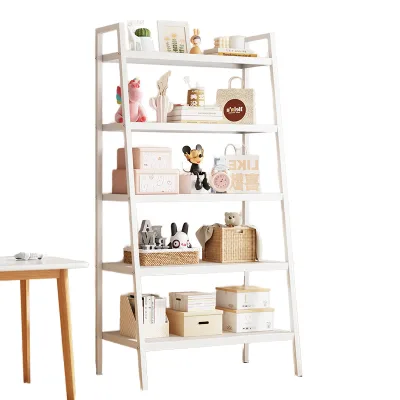
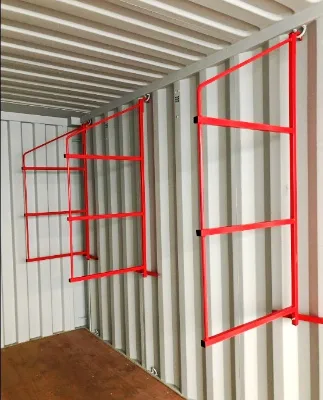
The foundation of any successful procurement begins with a rigorous analysis of technical specifications. In the current market, garden storage racks are frequently constructed from metal materials, specifically steel, which offers a balance of strength and corrosion resistance. The structural design often varies significantly between product lines. Some units are classified as "Non-folding Racks" with a "Standing Type" installation, suggesting a permanent or semi-permanent fixture ideal for dedicated storage zones. Others may feature "Movable" capabilities or "Double Sides" configurations to maximize space efficiency in tight environments.
A critical dimension to verify is the number of tiers and the overall height. Market observations indicate products ranging from "Three-Layer" units to "Four-Layer" configurations. Specific model data highlights dimensions such as a length of 35cm, width of 35cm, and a height of 100cm for smaller units, while larger variants may extend to 60cm in length. The "dimensional tolerance" for these structures is a vital metric for buyers requiring precise fitment; observed data suggests a tolerance of less than ±5mm, which ensures that components fit together without excessive gaps or misalignment. Furthermore, the "weight tolerance" is typically maintained within a range of less than ±1%, indicating a high degree of manufacturing consistency.
Buyers should also scrutinize the "capacity" and "weight" ratings. While some units are designed for general sundries with a capacity of less than 10L, others are engineered for heavy industrial loads, with weight ratings spanning from 150kg to 500kg. The "structure" is consistently described as a "Rack," and the "closed" status is often "Open," allowing for easy access to stored items. Understanding whether the product is a "Single Side" or "Double Sides" unit is essential for space planning, as is the distinction between "Connected" systems and standalone units.
Compliance, Certification, and Material Standards
When sourcing from international markets, particularly from regions like Beijing, China, verifying compliance with international standards is non-negotiable. The material composition is a primary factor in determining the product's lifespan and safety. The predominant material identified in the supply chain is "Metal," with specific references to "Steel." This material choice supports the "High Standard" quality claims often associated with these products. However, the mere mention of metal is insufficient; buyers must demand evidence of specific manufacturing standards.
Trusted market data indicates that reputable suppliers often adhere to rigorous certification frameworks. Key standards to verify include RoHS (Restriction of Hazardous Substances), REACH (Registration, Evaluation, Authorisation and Restriction of Chemicals), and ISO9001:2000. These certifications ensure that the metal components are free from harmful substances and that the manufacturing process adheres to consistent quality management protocols. The "prod_standard" field in supplier documentation should explicitly list these certifications. Without such documentation, buyers risk acquiring products that may degrade quickly in outdoor garden environments or fail to meet local safety regulations.
Additionally, the "Feature" of the product often includes "Eco-Friendly" or "Sustainable" attributes. While these are valuable selling points, they must be substantiated by the aforementioned certifications. The "Development" type is typically described as "Conventional," implying that the design relies on established engineering principles rather than experimental technology, which can be a positive indicator of reliability. Buyers should request test reports or certification copies to confirm that the "High Standard" claim is backed by third-party validation.
Cost Drivers and Pricing Dynamics
The pricing landscape for garden storage racks is highly variable, influenced by material costs, manufacturing complexity, and order volume. Observed market data reveals a price range spanning from $0.85 to $2,268 USD. This vast disparity underscores the importance of defining the scope of the purchase before engaging with suppliers. The lower end of the spectrum likely corresponds to small, single-item units with minimal customization, such as basic three-tier organizers. In contrast, the higher end reflects large-scale industrial solutions, custom configurations, or bulk orders with significant logistical components.
Several factors drive these costs. The "MOQ" (Minimum Order Quantity) is a primary variable, with observed ranges from 1 piece to 3,000 pieces. A buyer ordering a single unit will face a significantly higher per-unit cost compared to a bulk purchaser. The "Packing" method also influences the final price; units packed as "1pc/box" or in "Carton" formats incur different packaging and shipping expenses. Furthermore, the "Customization" availability is a major cost driver. While many suppliers offer customization, the complexity of altering dimensions, colors (such as "Black" or "White" finishes), or structural features will increase the unit price and potentially the lead time.
Buyers must also consider the "Selling Units." If the supplier sells in "Single item" increments, the administrative overhead per unit is higher. Conversely, bulk purchasing allows for economies of scale. The "Usage" classification also impacts pricing; "Industrial" or "Tool Rack" applications often command a premium over "Home Hotel Restaurant" or "Living Room" variants due to the increased material thickness and load-bearing requirements.
Typical Applications and Space Utilization
Understanding the intended application is crucial for selecting the right product. The market data indicates a diverse range of "applicable spaces." While the core keyword is "garden storage," the actual utility extends far beyond outdoor landscaping. Products are frequently marketed for "Home Hotel Restaurant" environments, suggesting versatility in hospitality and residential settings. Specific attributes like "Living Room" applicability point to indoor organizational uses, while "Garage" and "Industrial Wastewater" mentions highlight heavy-duty, utilitarian functions.
The "Functional Design" is often described as "Multifuction" or "Multifunction," allowing a single rack to serve multiple purposes. For instance, a "Modern Fashionable" style unit might be used for displaying plants in a living room or storing tools in a garage. The "Installation Type" of "Standing Type" makes these units suitable for various floor types, from concrete patios to indoor tiles. The "Mobility" is generally "Fixed," though some models offer "Movable" options, which is beneficial for temporary storage needs or reconfigurable spaces.
Buyers should map their specific storage needs against the "Product Usage" and "Application" fields. A "Tool Rack" application requires a different structural integrity than a rack intended for "Sundries." The "Classification" as a "Non-folding Rack" implies a permanent solution, whereas other categories might offer foldable alternatives. The "Style" of "Modern Fashionable" suggests that aesthetic integration is a priority for certain buyers, particularly in residential or hospitality contexts.
Supplier Evaluation and Verification Protocols
Evaluating suppliers requires a methodical approach to ensure reliability and quality. The "place of origin" is a significant data point, with "Beijing, China" being a prominent source for these products. While this location indicates a specific manufacturing hub, it does not guarantee quality on its own. Buyers must verify the supplier's adherence to the previously mentioned standards (RoHS, REACH, ISO9001:2000).
The "Quality" attribute is listed as "High Standard," but this is a claim that must be validated. Buyers should request samples to physically inspect the "Metal" or "Steel" construction, checking for weld quality, finish consistency, and dimensional accuracy against the specified tolerance of <±5mm. The "Model Number" (e.g., SL-S206, KL Series, KM Series) serves as a unique identifier; cross-referencing these numbers with technical datasheets can reveal the specific capabilities of each unit.
Furthermore, the "Serviceability" is described as "Common Use," which implies the product is designed for general maintenance and ease of use. However, buyers should inquire about the "Development" status and whether the supplier offers ongoing support or spare parts. The "Customization" availability is another key evaluation point; a supplier that can accommodate specific "Color" or "Size" requests demonstrates flexibility and a customer-centric approach.
Quality Control and Long-Term Procurement
Ensuring long-term value requires a robust quality control strategy. The "Weight Tolerance" of <±1% is a strong indicator of manufacturing precision, but it must be verified through random sampling during the production process. Buyers should establish clear acceptance criteria based on the "dimensional tolerance" and "material" specifications. Any deviation beyond these limits could indicate a compromised supply chain or inconsistent production quality.
The "Packing" specification, such as "1pc/box" or "Carton," is critical for preventing damage during transit. Poor packaging can lead to scratches, dents, or structural deformation, negating the "High Standard" quality of the product itself. Buyers should ensure that the packaging is robust enough to protect the "Steel" or "Metal" components, especially for units with a "Weight" of up to 500kg.
Long-term procurement considerations also involve the "Lead Time" and "MOQ" flexibility. While specific lead times are not provided in the data, the "MOQ" range of 1 to 3,000 suggests that suppliers can accommodate both trial orders and large-scale deployments. Buyers should negotiate terms that allow for scaling up orders without significant price penalties. Additionally, the "Sustainable" and "Eco-Friendly" features should be monitored over time to ensure the product remains compliant with evolving environmental regulations.
Comparative Analysis of Product Attributes
To facilitate decision-making, the following table summarizes key attributes observed in the market for garden storage racks. This comparison helps buyers quickly identify which product lines align with their specific requirements.
| Attribute | Residential/Small Scale | Industrial/Heavy Duty |
|---|---|---|
| Material | Metal (Steel) | Steel |
| Tiers | Three-Layer, Four-Layer | Multiple Sizes, Up to 5m Height |
| Dimensions | ~35x35x100cm to 60x35x100cm | 0-5m Height Range |
| Weight Capacity | <10L (General Sundries) | 150-500kg |
| Installation | Standing Type | Fixed, Movable Options |
| Style | Modern Fashionable | Conventional, Functional |
| Certifications | RoHS, REACH, ISO9001:2000 | RoHS, REACH, ISO9001:2000 |
| Usage | Home, Hotel, Living Room | Industrial, Garage, Tool Rack |
| Customization | Available (Color, Size) | Available (Structure, Capacity) |
This table illustrates the spectrum of options available. Buyers must carefully match their needs to the correct column. A residential buyer seeking a "Modern Fashionable" unit for a "Living Room" should focus on the smaller dimensions and aesthetic finishes. Conversely, an industrial buyer requiring a "Tool Rack" with a capacity of 500kg must prioritize the structural integrity and weight ratings of the heavy-duty options.
Final Procurement Considerations
In conclusion, sourcing garden storage racks involves a complex interplay of technical specifications, compliance requirements, and cost management. The market offers a wide array of products, from small, stylish organizers to massive industrial racks. Buyers must remain vigilant in verifying claims against the provided data, ensuring that the "High Standard" and "Sustainable" attributes are backed by tangible evidence such as certifications and test results. By adhering to a disciplined evaluation process that prioritizes dimensional accuracy, material quality, and supplier reliability, buyers can secure storage solutions that meet their operational needs while minimizing risk. The key to success lies in detailed specification matching and rigorous supplier vetting, ensuring that the final procurement delivers on both performance and value.
FAQs
What materials are used for garden storage racks?
Garden storage racks are primarily constructed from metal, specifically steel, to ensure durability. This material choice supports high-standard quality and structural integrity for both residential and industrial applications.
Which certifications should I verify for these racks?
You should verify that products meet RoHS, REACH, and ISO9001:2000 standards. These certifications confirm the metal components are free from harmful substances and manufactured under consistent quality management protocols.
How do I determine the correct capacity for my needs?
Capacity varies significantly, with some units holding less than 10 liters while others support weights up to 500kg. Select based on whether you need storage for sundries or heavy industrial tools.
Can I customize the dimensions and color of the rack?
Customization is available for dimensions and colors such as black or white. However, altering specifications like length or tier count may affect the unit price and potentially extend the lead time.
What is the typical dimensional tolerance for these units?
The dimensional tolerance is typically less than plus or minus 5mm to ensure precise fitment. This tolerance helps guarantee that components align correctly without excessive gaps during assembly.
Where are these garden storage racks manufactured?
The primary place of origin for these products is Beijing, China. Buyers should verify that suppliers from this location adhere to the required international safety and quality standards.
What is the minimum order quantity for purchasing racks?
The minimum order quantity ranges from 1 piece to 3000 pieces depending on the supplier. Smaller orders may have higher per-unit costs compared to bulk purchases that benefit from economies of scale.