Source Gasoline Engine Driven Water Pump for Agriculture, Drainage, Irrigation
Find 30 verified options for the Gasoline Engine Driven Water Pump designed for agriculture, drainage, and irrigation. Buyers can compare specifications like flow rate, head height, and engine power to select the right unit for their needs.
Key considerations
Products List


Gasoline Water Pump, 2 Inch Water Pump, 7HP Gasoline Engine, Clean Water Pump
$110.00 - $130.00
MOQ: 50 Pieces


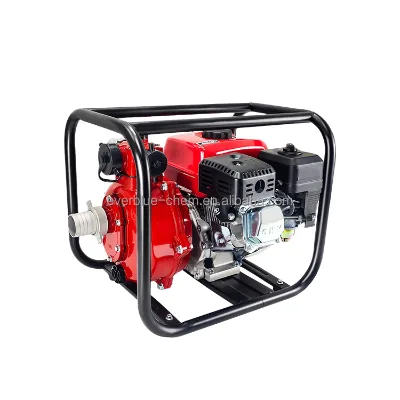


Comprehensive Sourcing Guide
Strategic Sourcing Guide for Gasoline Engine Driven Water Pumps
Understanding Technical Specifications and Variability
When sourcing gasoline engine driven water pumps, buyers must navigate a landscape of diverse technical configurations rather than a single uniform product. The available inventory reveals a complex matrix of attributes where specific models serve distinct operational needs. A primary observation in the current market is the variation in pump theory and structure. While some units are identified as gear pumps with mixed flow theory, others are explicitly classified as centrifugal pumps with single-suction impellers. This distinction is critical because gear pumps typically offer positive displacement characteristics suitable for high-viscosity fluids or precise dosing, whereas centrifugal pumps are optimized for high-volume water transfer in irrigation and drainage scenarios.
The power source is a consistent feature across the observed range, with gasoline engines serving as the primary driver. Specific engine configurations noted include single-cylinder, air-forced cooling, two-stroke designs. Displacement figures for these engines can vary, with documented instances of 52cc units delivering a rated power of 1.4kW at 7500 RPM. However, buyers should not assume all units share these exact metrics. The maximum head, which dictates the vertical lift capability, shows a range from 10 to 30 meters, with some specific models targeting the 25-30 meter bracket. Similarly, flow capacity is not uniform; observed maximum capacities range from 50 to 200 liters per minute, with some high-performance units capable of 15 cubic meters per hour.
The physical dimensions and port sizes also require careful verification. Suction and displacement ports are observed at 38.1mm (1.5 inches), but other specifications list standards of 2 inches and 3 inches. The mounting height and shaft position are equally variable, with options including horizontal split pump casings, horizontal pump shafts, and suction centrifugal mounting heights. Buyers must cross-reference these technical data points against their specific site requirements, such as the required lift height, the diameter of the discharge pipe, and the available space for the unit. The fuel tank capacity is another variable, with documented examples showing a 900ml capacity, which may influence the operational duration between refills in remote locations.
Compliance and Certification Verification
In the global B2B market, regulatory compliance is a non-negotiable aspect of procurement. The supplied data indicates that certain models carry certifications such as CE, ISO9001, and CCC. These designations suggest adherence to specific European safety standards, international quality management systems, and Chinese compulsory certification requirements. However, the presence of these certifications in the general product description does not guarantee that every individual unit in a shipment possesses them. Buyers must treat these as potential attributes that require explicit verification on a per-order basis.
The origin of the products is frequently cited as China, with specific manufacturing hubs noted in Taizhou City and Taizhou, Zhejiang. While these regions are known for pump manufacturing, the location alone does not confer quality. The buyer's responsibility is to request valid, current certification documents for the specific batch being purchased. For international trade, the CE mark is particularly significant for entry into European markets, while ISO9001 indicates a structured quality management process. The CCC mark is mandatory for products sold within China, but its presence on an export item confirms the manufacturer's domestic compliance status.
Buyers should also verify the product standards listed in the documentation. Observed packaging standards include dimensions such as 38.5 x 3 x 37 cm and 52 x 39 x 43 cm, which reflect the physical footprint of the unit. These dimensions are essential for logistics planning but do not constitute a technical standard for the pump's performance. The absence of specific industry standards (such as ISO 5199 for centrifugal pumps) in the provided text means buyers must explicitly ask suppliers to confirm which international or national standards the pump design and manufacturing process adhere to. Relying solely on the generic "CE, ISO9001" label without requesting the certificate numbers or validity dates is a procurement risk.
Cost Drivers and Pricing Dynamics
The pricing structure for gasoline engine driven water pumps is influenced by a combination of technical complexity, material composition, and order volume. The observed price range spans from $1.2 to $300, a variance that reflects the difference between small, lightweight units and larger, more robust industrial models. This wide spectrum indicates that the unit price is highly dependent on the specific configuration selected. Factors such as the engine displacement, the maximum head and flow capacity, and the materials used in the casing (noted as metal in the data) are primary cost drivers.
Material selection plays a significant role in the final cost. Units constructed with high-grade metals will generally command a higher price point compared to those using lighter alloys or composite materials, although the latter may offer weight advantages for portable applications. The complexity of the pump structure, such as whether it is a single-stage or multi-stage design, also impacts manufacturing costs. Single-stage pumps, as noted in the specifications, are generally less complex and may be more cost-effective for standard irrigation tasks, whereas more complex structures might be required for higher pressure applications.
Order volume is another critical determinant of cost. The observed Minimum Order Quantity (MOQ) ranges from 1 to 500 units. Buyers purchasing small quantities, perhaps for immediate project needs, may face a higher per-unit cost. Conversely, bulk orders approaching the higher end of the MOQ range can leverage economies of scale to reduce the unit price. The packaging method, whether color boxes with brown cartons or simple cartons, also contributes to the cost. More elaborate packaging may be necessary for retail distribution, while industrial buyers might prefer minimal packaging to reduce shipping weight and cost.
Typical Applications and Operational Context
Gasoline engine driven water pumps are versatile tools designed for a wide array of applications, primarily centered around agriculture, drainage, and irrigation. The data explicitly links these pumps to "Sprinkler Irrigation Equipment" and "Siphon Irrigation" modes, highlighting their utility in agricultural settings where electricity may be unavailable. The application field is clearly defined as agriculture, making these pumps ideal for moving water from rivers, lakes, or reservoirs to fields for crop irrigation.
Beyond agriculture, the specifications suggest suitability for drainage tasks. The "Ground Drainage and Irrigation Machinery Type" classification and the "Drainage & Irrigation Mode" attribute indicate that these units are capable of handling water removal from flooded areas, construction sites, or low-lying agricultural plots. The maximum suction capability of 8 meters allows for effective water extraction from sources slightly below the pump level, a common requirement in field operations. The media type is specified as "Sea Water Pump" in some contexts, which implies a design consideration for corrosive environments, although buyers should verify the specific material compatibility for saltwater applications to prevent rapid degradation.
The versatility of these pumps extends to emergency response scenarios. Their portability, indicated by the relatively low gross weight (e.g., 9.6 kg) and compact dimensions, makes them suitable for rapid deployment in flood relief or disaster recovery operations. The gasoline power source ensures they can operate independently of the electrical grid, a crucial feature for remote or infrastructure-damaged locations. However, the specific application must match the pump's technical limits; for instance, a pump with a 10-meter maximum head is unsuitable for deep well applications requiring higher pressure.
Supplier Evaluation and Selection Criteria
Selecting a reliable supplier for gasoline engine driven water pumps requires a rigorous evaluation process that goes beyond the basic product listing. Buyers should prioritize suppliers who can provide transparent documentation regarding the product's origin and manufacturing standards. The data points to specific origins like Taizhou City and Taizhou, Zhejiang, which are established manufacturing clusters. However, the presence of a location in the description does not guarantee the quality of the specific factory producing the unit.
Buyers should assess the supplier's ability to customize products. The attribute "Customization: Available" suggests flexibility in meeting specific client needs, such as altering port sizes, engine types, or packaging requirements. A supplier that offers customization is often better equipped to handle unique project specifications than one offering only standard off-the-shelf models. Additionally, the condition of the product is listed as "New," but buyers must ensure that the supply chain guarantees brand-new units and not refurbished or reconditioned stock.
The supplier's capacity to handle logistics is another evaluation factor. The data includes loading quantities for 20-foot and 40-foot high cube containers (684 PCS and 1595 PCS respectively), which indicates the supplier's experience with bulk shipping. A supplier with a proven track record in container loading and export documentation is less likely to encounter delays or logistical errors. Buyers should also inquire about the supplier's after-sales support, including the availability of spare parts and technical assistance, as these pumps are mechanical devices that may require maintenance or repair in the field.
Quality Control and Long-Term Procurement Considerations
Implementing a robust quality control (QC) protocol is essential when sourcing gasoline engine driven water pumps. Given the variability in specifications, buyers should establish clear acceptance criteria before production begins. This includes verifying the engine performance, checking the pump head and flow rates against the agreed specifications, and inspecting the material quality of the casing and impeller. The "Open" impeller type noted in some specifications requires careful inspection to ensure it is free from casting defects that could lead to cavitation or reduced efficiency.
Long-term procurement considerations involve planning for the lifecycle of the equipment. Buyers should evaluate the availability of spare parts, such as impellers, seals, and engine components, to ensure the pumps remain operational over time. The "New" condition of the initial product is a starting point, but the durability of the materials, particularly the metal casing, will determine the service life. Corrosion resistance is a key factor, especially if the pumps are used for sea water or in humid environments.
Buyers should also consider the environmental impact and safety features of the pumps. While the data mentions "Air-Forced Cool" engines, which are standard for this class, verifying the emission compliance of the gasoline engines is increasingly important in many markets. Long-term contracts should include clauses for periodic quality audits and performance testing to ensure that the supplied units continue to meet the required standards. Finally, maintaining a relationship with a supplier who can provide consistent quality and support is more valuable than securing the lowest initial price, as it reduces the risk of downtime and replacement costs in the future.
Comparative Analysis of Key Product Attributes
To facilitate informed decision-making, the following table summarizes the key technical attributes observed in the current market data. This comparison highlights the variability that buyers must navigate when selecting a specific model.
| Attribute | Observed Range / Options | Relevance to Procurement |
|---|---|---|
| Pump Theory | Mixed Flow, Centrifugal, Positive-Displacement | Determines efficiency and fluid handling characteristics. |
| Structure | Gear Pump, Centrifugal | Affects maintenance needs and suitability for specific media. |
| Max. Head | 10-30m, 25-30m | Critical for determining vertical lift capability. |
| Max. Flow | 50-200 L/min, 15 cbm/H | Defines the volume of water moved per unit time. |
| Engine Type | Single Cylinder, Air-Forced Cool, 2 Stroke | Influences fuel efficiency, weight, and maintenance frequency. |
| Displacement | 52cc (Example) | Correlates with power output and fuel consumption. |
| Port Size | 38.1mm (1.5 Inch), 2 Inch, 3 Inch | Must match existing piping infrastructure. |
| Certification | CE, ISO9001, CCC | Indicates regulatory compliance and quality management. |
| Origin | China (Taizhou City, Zhejiang) | May influence shipping costs and lead times. |
| Material | Metal | Affects durability and resistance to corrosion. |
This table serves as a reference point for buyers to ensure they are requesting the correct specifications. It underscores the importance of not assuming uniformity across the product category and emphasizes the need for precise communication with suppliers to secure the exact configuration required for the intended application. By carefully analyzing these attributes, buyers can mitigate risks and ensure the selected Gasoline Engine Driven Water Pump delivers optimal performance in their specific operational context.
FAQs
What engine type powers these gasoline water pumps?
These pumps use single-cylinder, air-forced cooling, two-stroke engines. Specific models feature a 52cc displacement delivering 1.4kW power at 7500 RPM to ensure reliable operation in remote agricultural fields without electricity.
Which certifications are available for these pump models?
Available certifications include CE, ISO9001, and CCC for specific batches. Buyers must verify these documents per order as the presence of these marks in general descriptions does not guarantee every unit meets these standards.
How much water can the pump move per minute?
Maximum capacity ranges from 50 to 200 liters per minute depending on the model. Some high-performance units achieve 15 cubic meters per hour, suitable for various irrigation and drainage needs.
Can I customize the pump specifications for my project?
Customization is available for specific client requirements like port sizes or engine types. Buyers should confirm exact customization options with the supplier before placing an order to ensure compatibility.
What is the maximum vertical lift height for these pumps?
The maximum head ranges from 10 to 30 meters, with some models reaching 25 to 30 meters. This lift capability allows effective water transfer from sources slightly below the pump level.
Where are these gasoline pumps manufactured?
Products originate from China, specifically manufacturing hubs in Taizhou City and Taizhou, Zhejiang. Buyers should request specific factory details to verify quality standards for their procurement needs.
What is the minimum order quantity for these pumps?
The minimum order quantity ranges from 1 to 500 units depending on the supplier. Smaller orders may have higher per-unit costs while bulk orders leverage economies of scale.