Source Gasoline Engine for Generators, Pumps, and Lawn Mowers
Compare 30 Gasoline Engine listings from verified manufacturers in China. Buyers can evaluate single-cylinder models with air cooling, varying weights, and CE certifications for diverse industrial applications.
Key considerations
Products List




Comprehensive Sourcing Guide
Strategic Sourcing Guide for Gasoline Engine Procurement
Understanding Technical Specifications and Variants
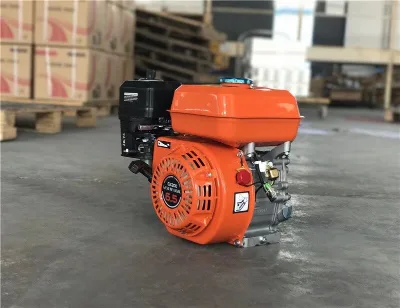
When sourcing gasoline engines for B2B applications, the primary objective is to align technical specifications with the intended operational load. The market offers a diverse range of configurations, necessitating a granular review of core attributes before initiating any procurement cycle. A fundamental observation in the current supply landscape is the prevalence of single-cylinder architectures. This configuration is standard for portable and compact power solutions, offering a balance between simplicity and reliability. The combustion cycle is predominantly four-stroke, which ensures efficient fuel consumption and lower emissions compared to two-stroke alternatives, making it suitable for applications requiring sustained operation.
The cooling mechanism is another critical differentiator. Most units in the current catalog utilize air-cooling systems, which rely on airflow generated by the engine's rotation to dissipate heat. This design eliminates the need for complex liquid cooling loops, reducing maintenance requirements and overall weight. The piston movement is consistently reciprocating, driving the crankshaft through a linear motion that is converted into rotational energy. The intake pressure impulse is typically naturally aspirated, meaning the engine draws air in without the aid of turbochargers or superchargers. This simplifies the engine block design and reduces the initial capital expenditure for the buyer.
Fuel type is a non-negotiable specification for this category. The engines are designed specifically for gasoline, which dictates the fuel delivery system and carburetor or injection setup. The cylinder arrangement often follows an "L" form, a compact layout that optimizes space within the engine casing. Buyers must verify the specific model number against their application needs, as the market includes distinct variants such as the 168F-1, 192F, GX270, ZH2500FS, ZH90, and QL-168FA. Each model corresponds to different power outputs and physical dimensions. For instance, the physical size of certain units is recorded as 300 x 290 x 280mm, while others may vary significantly based on the power rating.
| Model Variant | Cylinder Configuration | Cooling Type | Stroke Cycle | Typical Weight Range |
|---|---|---|---|---|
| 168F-1 | Single-Cylinder | Air-Cooled | Four-Stroke | 13kg - 31kg |
| 192F | Single-Cylinder | Air-Cooled | Four-Stroke | Variable |
| GX270 | Single-Cylinder | Air-Cooled | Four-Stroke | Variable |
| ZH2500FS | Single-Cylinder | Air-Cooled | Four-Stroke | 10.6kg - 31kg |
| ZH90 | Single-Cylinder | Air-Cooled | Four-Stroke | Variable |
| QL-168FA | Single-Cylinder | Air-Cooled | Four-Stroke | Variable |
The weight of the engine is a crucial logistical factor. Observed net weights in the supply chain range from approximately 10.6kg to 31kg. This variance is often due to the materials used in construction, such as aluminum components which reduce overall mass while maintaining structural integrity. The speed of the engine is another parameter that requires verification, with some units operating at low speeds and others at higher RPMs depending on the load requirements. Buyers should explicitly confirm the speed rating for their specific use case to ensure compatibility with the driven machinery.
Compliance and Certification Verification
Navigating the regulatory landscape is essential for international trade. The Gasoline Engine market is heavily influenced by regional safety and environmental standards. A primary observation is the prevalence of CE certification, which indicates conformity with health, safety, and environmental protection standards for products sold within the European Economic Area. Many suppliers list CE as a standard compliance mark, often accompanied by ISO standards. Specific instances in the market show compliance with ISO2000 and general ISO standards, suggesting a commitment to quality management systems.
Beyond European standards, buyers targeting other regions must verify additional certifications. For example, the Soncap certificate is frequently mentioned, which is a mandatory conformity assessment program for products imported into Nigeria. This indicates that the supplier has experience navigating West African regulatory requirements. In the North American market, ETL certification is observed for specific power engine lines, signaling compliance with safety standards set by Intertek. The presence of these certifications is not universal across all listed products; therefore, buyers must request specific documentation for the exact model they intend to purchase.
The standardization of the product is another layer of compliance. While some listings refer to a "Standard" designation, others specify detailed compliance with ISO and CE. It is vital for the buyer to distinguish between a generic "standard" claim and a specific, verifiable certification. The origin of the manufacturing plays a role in the certification process. Factories located in Taizhou and Zhejiang, China, are common hubs for this production. These regions have established supply chains that support the production of engines meeting international standards. However, the buyer must ensure that the specific batch of engines being purchased carries the valid certification marks, as these can vary by production run.
Cost Drivers and Pricing Structures
The pricing of gasoline engines is influenced by a complex interplay of factors, including material costs, certification fees, and production volume. The observed price range in the market spans from $10 to $10,000 USD. This wide disparity reflects the diversity of the product line, ranging from small, single-cylinder units to larger, more complex assemblies. The lower end of the spectrum typically corresponds to basic air-cooled, single-cylinder engines with minimal features. The higher end may include engines with advanced ignition modes, higher power outputs, or those bundled with additional components like generators.
Material composition is a significant cost driver. Engines utilizing aluminum for critical components, such as the cylinder block or head, often command a higher price due to the material cost and the manufacturing processes required to cast and machine aluminum. Conversely, engines with heavier steel components may be priced lower but offer different durability characteristics. The customization options available also impact the final cost. Suppliers offering customization services allow buyers to tailor the engine to specific requirements, which inevitably adds to the production cost compared to off-the-shelf standard models.
Payment terms are another financial consideration for B2B buyers. The market supports a variety of payment methods, including T/T (Telegraphic Transfer), L/C (Letter of Credit), D/P (Documents against Payment), D/A (Documents against Acceptance), Western Union, and Cash. The choice of payment method can affect the overall cost of the transaction, particularly regarding banking fees and the risk premium associated with different instruments. For large orders, L/C is often preferred to mitigate risk, while smaller transactions may utilize T/T or Western Union.
Minimum Order Quantity (MOQ) is a critical factor in determining the unit cost. The observed MOQ range spans from 1 to 1000 units. Buying in smaller quantities, such as a single unit or a small batch, will result in a higher per-unit cost due to the fixed costs of setup and logistics. Conversely, ordering at the higher end of the MOQ spectrum, such as 1000 units, typically unlocks volume discounts. Buyers must balance their inventory needs with the financial benefits of bulk purchasing. The lead time, often cited as 30 days after confirmation, also influences cost planning, as longer lead times may require earlier capital allocation or alternative sourcing strategies to avoid production delays.
Typical Applications and Functional Requirements
Gasoline engines are versatile power sources designed for a wide array of applications. The core function of these engines is to provide reliable electric power, particularly for emergency use when the main power grid fails. This makes them ideal for backup power systems in residential, commercial, and industrial settings. The "Professional Engineer Team" support mentioned by suppliers suggests that these engines are often integrated into complex systems requiring technical expertise for installation and maintenance.
The specific application dictates the required specifications. For portable equipment, the low weight and air-cooling features are paramount. Units weighing around 10.6kg or 13kg are suitable for handheld or small portable generators. Larger units, weighing up to 31kg, are better suited for stationary applications or larger machinery. The "Liquid Column" spraying shape mentioned in some specifications may relate to specific fuel delivery systems or cooling mechanisms used in specialized applications, though this is less common in standard air-cooled engines.
The "L" cylinder arrangement and single-cylinder design make these engines particularly suitable for compact machinery where space is limited. This includes agricultural tools, small construction equipment, and portable pumps. The four-stroke cycle ensures that the engine can run for extended periods without the high maintenance frequency associated with two-stroke engines. The naturally aspirated intake system is sufficient for most non-turbocharged applications, providing a balance of performance and simplicity.
Buyers should also consider the "Professional Generator Manufacturer with R&D Capacity" aspect of the suppliers. This indicates that the engines are not just generic components but are often part of a broader ecosystem of power generation solutions. The ability to customize the engine allows for integration into specific generator sets or machinery. The "Export Carton" packaging ensures that the engines are protected during transit, which is crucial for maintaining the integrity of the engine before installation.
Supplier Evaluation and Business Type Analysis
Selecting the right supplier is as critical as selecting the right engine. The market includes "Professional Generator Manufacturers with R&D Capacity," which distinguishes them from simple trading companies. These manufacturers possess the technical expertise to design, develop, and produce engines that meet specific performance criteria. The presence of an "After Selling Service" team, described as a "Professional Engineer Team," is a strong indicator of supplier reliability. This team is responsible for troubleshooting, maintenance guidance, and technical support, which is vital for minimizing downtime in B2B operations.
The business type of the supplier should be verified to ensure they are the actual manufacturers or authorized distributors. Suppliers located in Taizhou and Zhejiang, China, are known for their manufacturing capabilities. The "Factory Location" is a key piece of information that buyers should verify to ensure the product is sourced directly from the production facility. This reduces the risk of counterfeit products and ensures that the quality control measures are applied at the source.
Certifications are a primary metric for supplier evaluation. A supplier that can provide CE, Soncap, and ETL certifications demonstrates a commitment to international standards. The ability to navigate different regulatory environments, such as the Soncap requirements for Nigeria or ETL for North America, indicates a mature supply chain. Buyers should request copies of these certificates and verify their validity with the issuing bodies.
The payment terms offered by the supplier also reflect their financial stability and business practices. A supplier offering a range of payment options, including T/T, L/C, and D/P, shows flexibility and confidence in their business model. However, buyers should exercise caution with terms like "Western Union" or "Cash" for large transactions, as these offer less protection than bank-backed instruments like L/C. The "Delivery Time" of 30 days after confirmation is a standard benchmark, but buyers should confirm this timeline in writing to ensure it aligns with their project schedules.
Quality Control and Long-Term Procurement Considerations
Quality control is the backbone of a successful procurement strategy. The "One Set Per Carton" and "Strong Export Carton" packaging standards indicate a focus on protecting the product during transit. However, buyers must implement their own quality control measures upon receipt. This includes inspecting the engine for physical damage, verifying the model number against the purchase order, and checking the certification labels. The "Net Weight" should be verified as well, as discrepancies can indicate missing components or manufacturing defects.
Long-term procurement considerations involve the availability of spare parts and the longevity of the engine. The "Four-Stroke" design and "Single-Cylinder" architecture are generally robust, but the quality of internal components like the piston and cylinder determines the engine's lifespan. The use of aluminum in construction can offer weight savings but may require specific maintenance practices to prevent wear. Buyers should inquire about the availability of spare parts, such as gaskets, filters, and ignition components, to ensure the engine can be maintained over its operational life.
The "Customization" feature is a double-edged sword. While it allows for tailored solutions, it can complicate the supply chain if the customized parts are not standard. Buyers should ensure that the customized components are compatible with standard maintenance procedures and that the supplier has the capacity to produce replacement parts for these custom configurations. The "Speed" and "Intake Pressure Impulse" specifications should be monitored over time to ensure the engine continues to perform within the expected parameters.
Finally, the "Loading Port" of Ningbo or Shanghai Port is a logistical detail that affects shipping costs and timelines. Buyers should factor in the distance from these ports to their final destination when calculating the total cost of ownership. The "Professional Engineer Team" support should be leveraged for long-term maintenance planning, ensuring that the engines are serviced according to the manufacturer's recommendations. By focusing on these quality control and long-term factors, buyers can secure a reliable supply of gasoline engines that meet their operational needs for years to come.
FAQs
What certifications do gasoline engines typically have?
Most units carry CE certification for European safety standards. Some models also include Soncap for Nigeria or ETL for North America, depending on the specific power engine line and intended export destination.
How are these gasoline engines cooled?
The engines utilize an air-cooled system that relies on airflow generated by rotation to dissipate heat. This design eliminates complex liquid cooling loops, reducing maintenance needs and overall weight for portable applications.
Which cylinder configurations are available for these engines?
The market predominantly features single-cylinder machines with an L-shaped cylinder arrangement. This compact layout optimizes space within the casing while maintaining the reliability required for portable power solutions and small machinery.
Can buyers customize the Gasoline Engine specifications?
Yes, customization is available to tailor the engine to specific operational requirements. Buyers should note that custom orders may impact lead times and pricing compared to standard off-the-shelf models like the 168F-1 or 192F.
What is the typical lead time for delivery?
The standard delivery time is 30 days after confirmation of the order. This timeline allows for production scheduling and quality checks, ensuring the engine meets the required specifications before shipping from the factory.
Where are these gasoline engines manufactured?
Manufacturing facilities are primarily located in Taizhou and Zhejiang, China. These regions host professional generator manufacturers with R&D capabilities that support the production of engines meeting international standards like ISO and CE.
What fuel type do these engines require?
The engines are designed specifically for gasoline fuel. This requirement dictates the fuel delivery system and carburetor setup, ensuring efficient combustion for the four-stroke cycle used in most single-cylinder portable units.