Source Gasoline Engine Portable Tamper for Road, Trench, and Foundation Work
Explore 30 listings for the Gasoline Engine Portable Tamper, comparing models like the ND-4 and HCR90. Buyers can evaluate specs such as 1.6HP output, 4200n excitation force, and 25cm compaction depth across various suppliers in China.
Key considerations
Products List


High Flexibility Portable Petrol Engine Tamper for Railway Maintenance
$400.00 - $500.00
MOQ: 1 Pieces

Safe and Reliable Portable Petrol Engine Tamper with Stable Performance
$400.00 - $500.00
MOQ: 1 Pieces


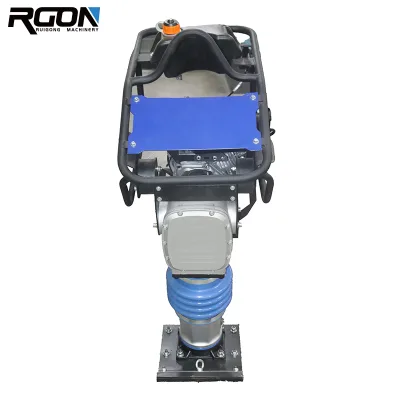
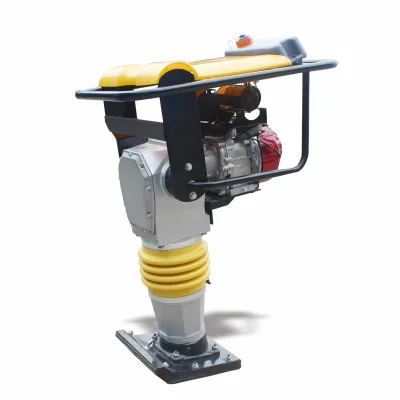


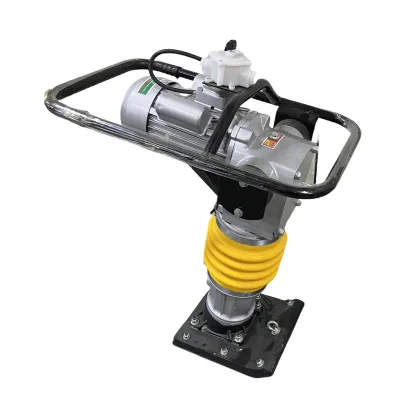
Top Quality Plate Compactor with Gasoline Engine Tamper Machine Sale
$5000.00 - $8000.00
MOQ: 1 Pieces

Comprehensive Sourcing Guide
Sourcing Guide for Gasoline Engine Portable Tamper Equipment
Understanding Core Technical Specifications
When sourcing a Gasoline Engine Portable Tamper, also known as a tamping rammer or jumping rammer, buyers must first align their requirements with the specific mechanical attributes observed in the market. The primary function of this equipment is to compact soil, asphalt, and other granular materials in confined spaces where larger rollers cannot operate. The observed product data indicates a diverse range of configurations, from single-drum units to biaxial dual-drum systems, though the portable category typically favors single-drum designs for maneuverability.
A critical specification to verify is the engine type. While the core keyword specifies a gasoline engine, the available market data lists engines as Diesel, Gasoline, or Electric. Buyers must explicitly confirm the fuel type during the inquiry phase to ensure the unit matches the operational fuel availability at the job site. The power output is another vital metric; observed listings show motor power ranging from 4kW to 5.5HP (approximately 4.1kW to 4.1kW, noting the 5.5HP conversion). The output power for specific models is listed as 1.6HP, which suggests a significant variance in machine size and intended load capacity.
The vibration characteristics define the compaction efficiency. The data highlights a vibration frequency between 120-150Hz and a jumping height of 45-75mm for certain models, while others list a jump height of 40-60mm. The impact force, often referred to as centrifugal force in technical sheets, varies significantly, with observed values of 13.5KN and 15KN for heavy-duty units, and 10kN for lighter models. The working method is consistently listed as "Vibration," and the travel speed is noted at 25cm/s for specific configurations. Buyers should verify that the observed centrifugal force and impact force align with the soil density and depth requirements of their specific project.
Compliance and Certification Verification
In the international construction machinery market, certification serves as a baseline indicator of manufacturing quality and safety. The supplied product facts consistently reference ISO 9001 certification, often appearing as "ISO9001" or "ISO 9001:ISO 9001." This standard indicates that the manufacturer has established a quality management system. However, buyers must be cautious, as some listings combine certification with performance metrics in a single string, such as "ISO 9001:ISO 9001:Compaction Depth:25cm." This formatting suggests that the certification status and the compaction depth are being presented together, but they are distinct attributes.
Beyond ISO 9001, the CE mark is frequently observed in the product data. The presence of the CE certification implies conformity with health, safety, and environmental protection standards for products sold within the European Economic Area. Buyers sourcing from China, the primary origin location noted in the data, should request valid CE documentation to ensure the equipment meets the necessary regulatory requirements for their target market. It is important to note that while "CE" appears in the low-confidence background, it is also explicitly listed in the high-confidence facts. Therefore, verifying the authenticity of the CE certificate with the issuing body is a mandatory step before finalizing a purchase.
Buyers should also look for specific model standards. The data lists various model identifiers such as ND-4, C80T, and HCR90. While these are specific to the manufacturer's internal coding, they serve as unique identifiers for the technical specifications. When evaluating compliance, ensure that the model number provided in the contract matches the physical unit delivered and that the associated technical data sheet corresponds to the observed specifications like the 80kg standard weight or the 5306501000mm dimensions.
Cost Drivers and Pricing Structure
The pricing landscape for gasoline engine portable tamps is influenced by several factors, including engine power, compaction force, and build quality. The observed listed price range in the market spans from $142.55 to $8,000. This wide disparity indicates that the market includes both entry-level, lightweight units and heavy-duty, industrial-grade machines. The lower end of the spectrum likely corresponds to smaller units with lower horsepower and impact force, such as those with 1.6HP output or 10kN impact force. Conversely, the higher price points likely reflect machines with higher motor power (5.5HP), greater centrifugal force (13.5KN or 15KN), and more robust construction materials.
Minimum Order Quantity (MOQ) is another cost driver. The observed MOQ range is 1 to 20 units. For small contractors or individual buyers, an MOQ of 1 allows for direct procurement without the need for bulk investment. However, for larger projects or distributors, negotiating an MOQ closer to 20 might yield better per-unit pricing. The production origin is consistently listed as China, with a specific mention of Henan as a production hub. This geographic concentration can influence logistics costs and lead times, as shipping from a centralized manufacturing region may offer more competitive freight rates compared to dispersed suppliers.
Packaging also impacts the final cost. The data indicates that products are packed in wooden crates, wooden pallets, or wooden boxes. While this packaging is essential for protecting the machinery during transit, it adds to the overall weight and volume, potentially increasing shipping costs. Buyers should clarify whether the packaging is included in the unit price or billed separately, as this can affect the total landed cost.
Typical Applications and Operational Environments
Gasoline engine portable tamps are designed for specific operational environments and applications. The observed usage environment is listed as -5°C to 40°C. This range suggests that the equipment is suitable for temperate climates but may require special considerations for extreme cold or high-heat conditions. Buyers operating in regions with temperatures outside this range should verify the manufacturer's recommendations for cold-start procedures or cooling systems.
The primary application is soil compaction, as indicated by keywords such as "Compactor Soil," "Soil Compactor Rammer," and "Vibratory Earth Rammer Compactor." The observed compaction depth of 25cm is a key performance metric for these machines. This depth is suitable for backfilling trenches, compacting layers of asphalt, and preparing foundations for small structures. The "Sheep Foot Roller" grinding wheel type mentioned in the data is unusual for a portable rammer and may refer to a specific attachment or a misclassification in the source data; buyers should clarify the actual compaction shoe type, which is typically a flat or curved steel plate designed for soil.
The working method is vibration, and the travel speed of 25cm/s indicates a relatively slow, controlled operation. This speed is necessary to ensure effective energy transfer into the soil. The equipment is also described as a "Rammer Compactor Machine" and "Pneumatic Tamping Rammer," suggesting versatility in handling different soil types. However, the "Pneumatic" designation in the keywords might refer to the mechanism of the piston or be a generic search term, as the primary power source is listed as a petrol or diesel engine. Buyers should confirm the transmission mechanism to ensure it matches their operational expectations.
Supplier Evaluation and Product Attributes
Evaluating suppliers requires a focus on the consistency of product attributes and the clarity of specifications. The data shows a mix of attributes, including "Condition: New" and "Customization: Available." The availability of customization is a significant advantage for buyers with unique project requirements, such as specific dimensions or engine configurations. The standard product dimensions vary, with examples like 350x360x1030mm, 600500690mm, and 5306501000mm. Buyers must ensure that the dimensions provided match the physical space constraints of their job site.
The axle configuration is another critical attribute. The data mentions a "Biaxial Dual-Drum" axle, which is more common in roller compactors than portable tamps. For a portable tamper, a single-drum design is standard. Buyers should verify the axle type to avoid receiving a machine that is not suitable for the intended application. The "Jump Height" and "Vibration Frequency" are also key differentiators. A jump height of 45-75mm indicates a high-impact machine suitable for deep compaction, while 40-60mm suggests a lighter unit.
When evaluating suppliers, buyers should look for those who provide clear documentation of the model number, such as ND-4, C80T, or HCR90. These identifiers help in tracking spare parts and ensuring compatibility. The presence of multiple keywords like "Rammer Shoe," "Electric Rammer Compactor," and "Vibration Rammer" suggests that the market is saturated with varied terminology. Buyers must filter these keywords to find the specific Gasoline Engine Portable Tamper they need, rather than being misled by generic terms.
Quality Control and Long-Term Procurement
Quality control for portable tamping rammers should focus on the durability of the engine and the vibration system. The observed motor power ranges from 4kW to 5.5HP, and the engine type can be Diesel, Gasoline, or Electric. Buyers must ensure that the engine selected is of high quality and capable of sustained operation. The "Condition: New" attribute is a baseline, but buyers should also inspect the build quality of the frame and the compaction shoe. The "Sheep Foot Roller" attribute, if applicable, should be checked for wear resistance and material hardness.
Long-term procurement considerations include the availability of spare parts and the ease of maintenance. The "Customization: Available" attribute suggests that suppliers may offer tailored solutions, which can be beneficial for long-term contracts. However, buyers should also verify the lead time and the ability of the supplier to deliver replacement parts promptly. The origin location of Henan, China, is a major manufacturing hub, which generally implies a robust supply chain, but buyers should still confirm the lead times to avoid project delays.
The packaging standard of wooden crates and pallets is a positive indicator of care in shipping, but buyers should also consider the environmental impact and disposal of wooden packaging. For long-term operations, the energy efficiency of the engine and the fuel consumption rate are important factors. While specific fuel consumption data is not provided in the source facts, buyers should request this information to calculate the total cost of ownership.
Strategic Sourcing Recommendations
To successfully source a Gasoline Engine Portable Tamper, buyers should adopt a structured approach that prioritizes technical verification and supplier reliability. The first step is to define the specific project requirements, including the soil type, required compaction depth, and available power sources. Once these requirements are clear, buyers can filter the market data to identify models that match the observed specifications, such as the 1.6HP output or the 13.5KN centrifugal force.
Next, buyers should verify the certification status of the supplier. The presence of ISO 9001 and CE certification is a strong indicator of quality, but buyers must request valid certificates to ensure compliance. The price range of $142.55 to $8,000 offers flexibility, but buyers should avoid the lowest-priced options if they compromise on engine quality or build durability. The MOQ range of 1 to 20 allows for both small and large orders, so buyers should negotiate based on their volume needs.
Finally, buyers should establish a clear communication channel with the supplier to confirm all technical details, including the engine type, dimensions, and packaging. The observed data provides a solid foundation for these discussions, but the final specifications must be agreed upon in writing to prevent misunderstandings. By following these steps, buyers can secure a reliable Gasoline Engine Portable Tamper that meets their project needs and ensures long-term operational efficiency.
FAQs
What engine types are available for Gasoline Engine Portable Tamper units?
Available engine types include petrol, diesel, and electric options. Buyers must explicitly confirm the fuel type during inquiry to ensure the unit matches operational fuel availability at the job site.
Which certifications should I verify for these compaction machines?
Products typically hold ISO 9001 and CE certifications. Buyers should request valid CE documentation to ensure equipment meets regulatory requirements for their target market.
How much does a Gasoline Engine Portable Tamper cost?
Listed prices range from 142.55 to 8000 USD. The lower end likely corresponds to smaller units with lower horsepower, while higher prices reflect heavy-duty industrial-grade machines.
What is the minimum order quantity for these compactors?
The observed minimum order quantity ranges from 1 to 20 units. Small contractors can procure single units, while larger projects may negotiate bulk orders for better pricing.
Can I find customized Gasoline Engine Portable Tamper options?
Customization is available for buyers with unique project requirements. Suppliers may offer tailored solutions for specific dimensions or engine configurations to meet distinct operational needs.
Where are these Gasoline Engine Portable Tamper machines manufactured?
Products originate from China, with Henan noted as a specific production hub. This geographic concentration can influence logistics costs and lead times for international buyers.
What is the maximum compaction depth for these rammers?
The observed compaction depth is 25cm for specific models. This depth is suitable for backfilling trenches and compacting layers of asphalt in confined spaces.