Source Gasoline Earth Auger with Planting Hole Digger for Farm, Garden, and Concrete
Find 30 Gasoline Earth Auger with Planting Hole Digger options featuring 2-stroke engines and high-carbon steel augers. Compare models with displacements from 49cc to 63cc and digging depths up to 150cm for garden, farm, and concrete surface applications.
Key considerations
Products List

Gasoline Post Hole Digger Soil Digging Machine Earth Auger with Ground Drill
$70.00 - $180.00
MOQ: 2 Pieces


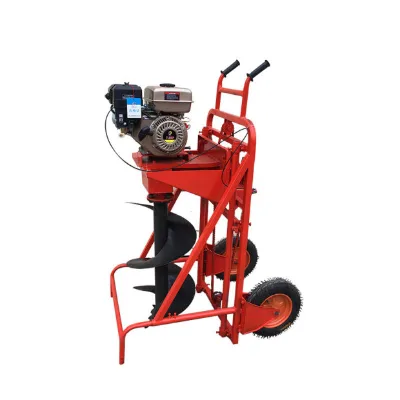


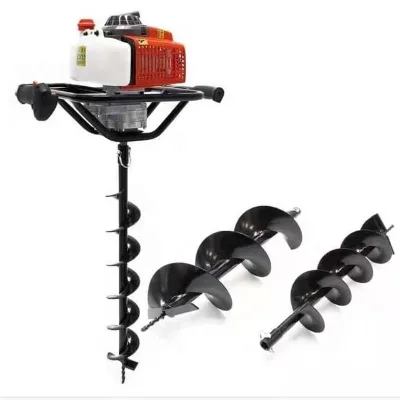


Comprehensive Sourcing Guide
Gasoline Earth Auger with Planting Hole Digger Sourcing Guide
Sourcing a gasoline earth auger with a planting hole digger requires a clear understanding of the diverse mechanical configurations available in the current market. Buyers often encounter listings that vary significantly in power output, drilling depth, and physical weight, which directly impacts suitability for specific tasks. The observed product range includes models with displacements from 49cc to 63cc, indicating a spectrum from lightweight handheld units to more robust, heavy-duty machines. Understanding these variations is critical for aligning procurement with operational needs, whether for residential gardening, agricultural planting, or commercial construction projects.
The market signals suggest a wide disparity in pricing and minimum order quantities, reflecting the heterogeneity of the supply base. Prices observed range from approximately $4.96 to $5,300, while minimum order quantities (MOQs) span from single units to batches of 300. This variance implies that buyers can source single replacement units or bulk fleets, but must carefully evaluate the supplier’s tier and the specific model’s complexity. High-cost items often correlate with heavier weights, larger drilling diameters, or specialized features like concrete surface drilling capabilities, necessitating a thorough review of technical specifications before committing to a purchase.
Product Scope and Observed Listing Signals
The product scope encompasses a variety of earth auger models designed for different soil conditions and drilling requirements. Listings indicate the presence of both 2-stroke and 4-stroke engine configurations, with specific models featuring gasoline or diesel power sources. For instance, some units are specified with a 63cc displacement and a 1HP rating, suitable for general garden and farm applications, while others boast higher outputs like 2.2HP with a 51.7cc displacement. The digging tool type is consistently identified as a planting hole digger, but the matched engines and core components, such as specific engine models like the 1e44f-5, vary, suggesting that buyers must verify the exact engine compatibility for maintenance and parts sourcing.
Physical attributes and packaging details also provide significant insight into the product’s intended use and logistics requirements. Weight ranges from lightweight 5.0 kg units to heavy 150 kg machines, indicating a split between portable handheld augers and stationary or heavy-duty walk-behind models. Packaging varies from standard export cartons to wood packaging, which is often required for heavier or more fragile machinery to prevent damage during transit. Additionally, the volume of some units is listed as 2cbm, highlighting the substantial space these machines occupy in shipping containers, a factor that significantly influences freight costs and supply chain planning for international buyers.
Technical Specifications to Verify
When evaluating technical specifications, buyers must prioritize the drill diameter and depth capabilities to ensure the machine meets their operational requirements. Observed data shows auger drill diameters ranging from 20cm to 60cm, with specific models offering drill bit sizes of 100mm, 150mm, 200mm, and 300mm. Depth capabilities are also critical, with some units specified to dig between 50cm and 150cm. Buyers should verify the maximum torque and rotational speed of the transmission system, as these factors determine the machine’s ability to penetrate hard or rocky soils. Mismatched specifications can lead to inefficient operation or premature wear of the auger bits and gearbox.
Engine performance and fuel system details are another crucial area for verification. While many listings mention gasoline power, specific parameters such as displacement, rated power output, and mixed fuel ratio differ across models. For example, one model has a rated power output of 1.45kw/2.0HP with a mixed fuel ratio of 40:1, while another offers 1.65kw/2.2HP with a 25:1 ratio. Tank capacity is consistently noted as 1.2L for certain handheld models, but buyers must confirm if larger engines require external fuel tanks or different capacities. Verifying the engine brand and model, such as the SL-WA44F-5 series or EA-1/EA-2/EA-3 models, is essential for ensuring access to spare parts and technical support.
Compliance and Safety Documentation
Compliance and safety documentation are vital for ensuring that the purchased earth auger meets local regulatory standards and operational safety requirements. Buyers should request certificates of conformity and verify if the products hold relevant certifications, such as CE marking, which indicates adherence to European health, safety, and environmental protection standards. Although certification status is noted as low-confidence in some contexts, buyers must actively seek out valid documentation from suppliers to avoid customs clearance issues and ensure legal operation in their target markets. This is particularly important for machinery with high power outputs or those intended for commercial use.
Safety features and operational manuals are equally important components of the documentation package. Buyers should ensure that the supplier provides comprehensive user manuals in the local language, detailing safe operating procedures, maintenance schedules, and emergency shutdown protocols. Given the high operating efficiency and potential hazards associated with rotating auger bits, machines should be equipped with appropriate safety guards and emergency stop mechanisms. Verifying the availability of video outgoing-inspections, as mentioned in some listings, can also provide buyers with visual confirmation of the machine’s condition and functionality before shipment, reducing the risk of receiving defective or non-compliant equipment.
Cost Drivers and Commercial Terms
Cost drivers for gasoline earth augers include the engine type, material quality, and manufacturing complexity. Units made from high-carbon steel, as observed in some listings, tend to be more durable but may also be heavier and more expensive. The inclusion of core components like specific engines and motors also significantly impacts the price. Buyers should analyze the total cost of ownership, including fuel consumption, maintenance costs, and the availability and price of spare parts. Models with higher horsepower and larger drilling capacities will generally command higher prices but may offer better efficiency and productivity for large-scale projects.
Commercial terms such as MOQ, lead times, and payment terms vary widely among suppliers. With MOQs ranging from 1 to 300 units, buyers can negotiate more favorable terms for bulk purchases, including discounts and customized packaging. However, it is essential to clarify lead times and production schedules to ensure timely delivery, especially for large orders. Payment terms should be structured to protect the buyer’s interests, such as using secure payment methods or escrow services. Additionally, buyers should inquire about warranty periods, with some suppliers offering a 1-year warranty, and clarify the scope of coverage for parts and labor.
Supplier Qualification and Quality Control
Supplier qualification is a critical step in ensuring the reliability and consistency of the earth auger supply. Buyers should assess the supplier’s manufacturing capabilities, quality control processes, and track record in the industry. Suppliers located in regions like Taizhou, Zhejiang, and Henan, China, may have different specializations and production capacities. Verifying the supplier’s business license, export history, and customer reviews can provide insights into their reliability and professionalism. Additionally, suppliers that offer customization services may be better suited for buyers with specific requirements or branding needs.
Quality control measures should be clearly defined and agreed upon before placing an order. Buyers should request detailed quality inspection reports and verify that the supplier conducts rigorous testing on each unit before shipment. The availability of video outgoing-inspections, as noted in some listings, can be a valuable tool for verifying the machine’s condition and functionality. Buyers may also consider hiring third-party inspection agencies to conduct pre-shipment inspections, ensuring that the products meet the agreed-upon specifications and quality standards. Establishing a clear process for handling defects or non-conforming products is also essential for mitigating risks.
Long-Term Procurement Checks
Long-term procurement checks involve monitoring supplier performance and maintaining strong relationships to ensure consistent supply and quality. Buyers should regularly review supplier performance metrics, such as on-time delivery rates, product quality, and responsiveness to issues. Establishing a feedback loop with the supplier can help identify and address potential problems early, preventing disruptions in the supply chain. Additionally, buyers should stay informed about market trends and technological advancements in earth auger technology, allowing them to make informed decisions about future purchases and upgrades.
Continuous improvement and adaptation are key to successful long-term procurement. Buyers should periodically reassess their requirements and explore new suppliers or technologies that may offer better value or performance. Building a diverse supplier base can also help mitigate risks associated with single-source dependencies. Furthermore, buyers should invest in training for their operators and maintenance staff to ensure the proper use and care of the earth augers, extending the lifespan of the equipment and reducing long-term costs. By maintaining a proactive approach to procurement, buyers can optimize their operations and achieve better outcomes over time.
FAQs
What is the power source for this earth auger?
The power source is petrol or gasoline, as specified in the product attributes. This gasoline-powered engine ensures reliable operation for garden and farm applications without needing external electricity.
Which engine displacement is available for this model?
Available displacements include 63cc and 51.7cc depending on the specific model configuration. These engines are designed to deliver sufficient torque for digging planting holes in various soil conditions.
Can I customize the drilling tool diameter?
Customization is available for the drilling tool diameter, which ranges from 100mm to 300mm. Buyers can select specific sizes like 200mm or 300mm to match their planting requirements.
How deep can this auger drill into the ground?
The drilling depth capability ranges from 50cm to 150cm depending on the soil type and model. This depth is suitable for planting trees and installing posts in garden or farm settings.
What is the warranty period for this machine?
The product comes with a 1-year warranty covering core components like the engine and motor. This ensures protection against manufacturing defects during the initial year of operation.
Where is this gasoline earth auger manufactured?
The product originates from locations in China, specifically Taizhou, Zhejiang, and Henan. Some units are also produced in Yongkang, Jinhua, Zhejiang Province, ensuring diverse manufacturing sources.
What is the weight of the earth auger drill machine?
The weight varies by model, with some units weighing 5.0kg and others up to 150kg. The lighter models are hand-held, while heavier versions may be designed for more intensive concrete surface applications.