Source Gasoline Generator Carburetor for Engines, Pumps, and Gensets
Find 30 listings for the Gasoline Generator Carburetor with varying specifications like aluminium alloy or iron construction. Buyers can compare models such as 152F, 168F, and 2900 carburetor types alongside their MOQs and warranty terms.
Key considerations
Products List


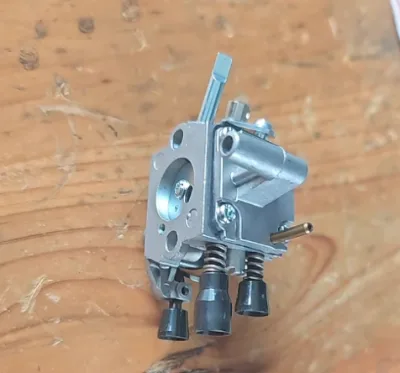


2.8kw 168f Dual Fuel Carburetor for Generator Engine Gasoline LPG Carburetor
$7.20 - $8.00
MOQ: 200 Pieces


Bison Carburetor Gasoline Generator Parts and Accessories Carburetor 30mm
$3.68 - $9.88
MOQ: 10 Pieces


Comprehensive Sourcing Guide
Strategic Sourcing Guide for Gasoline Generator Carburetors
Understanding Technical Specifications and Component Variability
When sourcing a Gasoline Generator Carburetor, buyers must first navigate a landscape of highly specific technical configurations. The core component, often identified as an Aluminium Alloy Carburetor, serves as the critical interface for fuel-air mixture regulation within the engine. However, the supplied data reveals a significant variance in material composition across different listings. While some units are explicitly constructed from Aluminium Alloy, others are fabricated using a combination of Iron and Plastic, or pure Iron. This distinction is not merely cosmetic; it dictates the thermal expansion properties, corrosion resistance, and overall durability of the part under varying load conditions.
The engine compatibility is equally complex. The product models listed span a wide array of engine families, including specific designations such as 152/168F, 170F, 190F, and the GX series (GX160, GX200, GX210, GX270, GX390, GX420). Furthermore, specific model numbers like "2900 carburetor," "7000 carburetor," and "2500 carburetor" suggest applications for generators with distinct power outputs or rotational speeds. Buyers must verify that the carburetor's internal jetting and throttle linkage match the specific engine displacement and airflow requirements. The engine type is generally noted as a Diesel Engine in some contexts, yet the fuel specification is explicitly listed as Gasoline. This apparent contradiction highlights the necessity for rigorous cross-referencing of the engine's actual fuel system requirements against the carburetor's intended application, as a mismatch can lead to immediate operational failure.
The physical characteristics of the unit also vary. Observed weights are recorded at 160g for specific aluminium variants, while the number of cylinders and strokes differ across the product range. Some units are designed for four-stroke, air-cooled engines with a naturally aspirated intake pressure impulse, arranged in an L-form cylinder configuration. Others may be associated with electric motor applications or AC synchronous generators, indicating that the carburetor is part of a larger assembly system. The "Intelligent Automatic Generator Controller" function mentioned in some attributes suggests that certain carburetor assemblies may integrate with electronic control units, requiring precise voltage and current specifications, although one data point lists the current as 0, necessitating a check on whether this refers to the carburetor itself or the controller module.
Compliance Verification and Certification Standards
Navigating the regulatory landscape is a critical step in the procurement process. The supplied facts indicate that certain products carry certifications such as CE, RoHS, and ISO9001. These are not merely marketing labels but represent adherence to specific safety and quality management standards. The CE mark implies conformity with health, safety, and environmental protection standards for products sold within the European Economic Area. RoHS compliance ensures that the product restricts the use of specific hazardous materials, which is increasingly important for export markets concerned with environmental impact. ISO9001 certification indicates that the manufacturer operates under a quality management system that meets international standards for consistency and customer satisfaction.
However, buyers must exercise caution. The provided data lists these certifications with varying levels of confidence. While CE and ISO9001 appear in the high-confidence facts, there is also a mention of "Low-confidence background" regarding these same standards. This discrepancy suggests that while some suppliers may hold valid certificates, others might be claiming compliance without verified documentation. It is imperative for the buyer to request valid, up-to-date certification documents directly from the supplier before placing an order. The verification process should include checking the certificate number against the issuing body's database to ensure authenticity.
Additionally, the product origin is listed as China, with specific mentions of Shanghai and Taizhou, Zhejiang. While these are major manufacturing hubs, the location alone does not guarantee compliance. Buyers should verify that the specific factory producing the unit adheres to the claimed standards. The "Quality Class" is described as "High Quatity" (likely a typo for High Quality), but this is a subjective claim. Objective verification comes from the presence of valid third-party test reports and the ability of the supplier to provide traceability for the raw materials, such as the aluminium or iron used in construction.
Cost Drivers and Economic Considerations
The pricing structure for gasoline generator carburetors is influenced by several factors, including material composition, production complexity, and order volume. The observed price range in the market spans from 0.99 to 85 USD, a wide disparity that reflects the diversity in product quality and specifications. The lower end of this range likely corresponds to basic iron or iron-plastic models intended for smaller, less demanding engines, while the higher end may represent precision-machined aluminium alloy units with advanced features or those bundled with intelligent controllers.
Material costs play a significant role in pricing. Aluminium alloy is generally more expensive than iron or plastic composites due to the cost of raw materials and the energy-intensive nature of its processing. However, aluminium offers superior weight-to-strength ratios and better heat dissipation, which can justify a higher price point for high-performance applications. The weight of the unit, observed at 160g for specific models, serves as a proxy for material density and volume, which directly impacts the cost.
Order volume is another critical economic driver. The Minimum Order Quantity (MOQ) varies significantly, with observed ranges from 1 to 1000 units. Some suppliers offer an MOQ of 100 pieces, while others may allow for single-unit purchases or require bulk orders of up to 1000 pieces. Buyers must balance the unit price against the total investment. While bulk orders often yield a lower per-unit cost, they require a larger upfront capital outlay and carry the risk of inventory obsolescence if the part does not fit future needs. Conversely, low MOQs offer flexibility but may come with a higher per-unit price. The "Stock" availability is also a factor; with some listings showing 1000 pieces in stock and others indicating immediate availability, buyers can often secure faster delivery for in-stock items, potentially reducing logistics costs.
Typical Applications and Operational Context
Gasoline generator carburetors are essential components for a variety of power generation and mechanical systems. The primary application is in portable and standby generators, where the carburetor regulates the fuel supply to the internal combustion engine. The data indicates compatibility with engines used in gensets, water pumps, and general engine applications. The "Parts for: Engine, Generator, Water Pump etc." note confirms the versatility of these components across different machinery types.
The operational context is defined by the engine type and cooling method. Most units are designed for air-cooled, four-stroke engines, which are common in portable generators due to their simplicity and lack of need for a complex cooling system. The "Naturally Aspirated" intake pressure impulse suggests these carburetors are suited for standard atmospheric conditions without forced induction. The "Easy Start" and "Long Working Time" attributes highlight performance goals for users who require reliable ignition and sustained operation, particularly in remote locations or emergency situations.
The specific engine models listed, such as the 152/168F and GX series, are widely used in small to medium-sized generators. These engines are often found in construction sites, agricultural settings, and residential backup power systems. The "AC Synchronous Generator" mention suggests that the carburetor is part of a system designed to produce alternating current, which is the standard for most electrical grids and appliances. Buyers must ensure that the carburetor's fuel delivery rate matches the engine's power output requirements to prevent issues such as flooding, lean running, or stalling under load.
Supplier Evaluation and Sourcing Strategy
Evaluating suppliers requires a multi-faceted approach that goes beyond price comparison. The origin of the product, specifically from China (Shanghai, Taizhou, Zhejiang), indicates a concentration of manufacturing capabilities in these regions. Buyers should assess the supplier's ability to provide consistent quality across different batches. The "High Quatity" claim is subjective; therefore, the evaluation should focus on the supplier's track record, response time, and willingness to provide samples for testing.
The customization options available are a significant advantage for buyers with specific requirements. The fact that "Customization: Available" is a high-confidence attribute suggests that suppliers can modify the carburetor to fit unique engine specifications or packaging needs. This flexibility is valuable for businesses that need to integrate the component into specialized machinery. However, customization may increase lead times and costs, so buyers should clarify the scope of customization and the associated timeline before committing to an order.
Packaging and logistics are also critical factors. The product is typically packed into boxes or cartons, with some listings specifying "Each Packed Into Box" and others noting "Carton Packaging." Proper packaging is essential to prevent damage during transit, especially for precision components like carburetors. Buyers should verify that the packaging is robust enough to withstand shipping conditions and that the supplier has experience in handling international logistics.
Quality Control and Inspection Protocols
Implementing a robust quality control (QC) protocol is essential to mitigate the risks associated with sourcing from a diverse market. Given the variance in materials and specifications, buyers should establish clear acceptance criteria before production begins. Key inspection points should include the material composition (verifying aluminium alloy vs. iron/plastic), dimensional accuracy, and the integrity of the internal passages.
Visual inspection should be conducted to check for surface defects, such as casting flaws or improper machining, which could affect performance. Functional testing is equally important; the carburetor should be tested for fuel flow rate, idle stability, and throttle response. The "Easy Start" and "Strong Power" attributes should be validated through practical testing rather than relying solely on supplier claims.
For bulk orders, a pre-shipment inspection (PSI) is recommended. This involves a third-party inspector visiting the supplier's facility to verify that the production batch meets the agreed-upon specifications. The inspection should cover a random sample size based on statistical standards, such as AQL (Acceptable Quality Limit). Additionally, buyers should request test reports that verify the product's compliance with the claimed certifications, such as CE and RoHS.
Long-Term Procurement and Supply Chain Resilience
Sourcing gasoline generator carburetors is not a one-time transaction but part of a long-term supply chain strategy. Buyers should consider the availability of spare parts and the potential for future customization needs. The "1 Year" and "3months-1year" warranty periods indicate that suppliers are willing to stand behind their products, but the specific terms should be clearly defined in the contract. A longer warranty period may indicate higher confidence in product durability.
Inventory management is another consideration. With stock levels ranging from 1000 pieces to immediate availability, buyers can plan their procurement cycles to minimize downtime. However, reliance on a single supplier can be risky. Diversifying the supplier base to include multiple manufacturers from different regions within China can help mitigate supply chain disruptions.
Finally, buyers should monitor market trends and technological advancements. As engine technology evolves, carburetor designs may need to adapt to meet new efficiency and emission standards. Maintaining a relationship with suppliers who offer customization and stay updated on industry standards will ensure that the procurement strategy remains effective and competitive in the long run. By focusing on technical verification, quality assurance, and strategic supplier relationships, buyers can secure a reliable supply of high-performance gasoline generator carburetors.
FAQs
What material is used for the Gasoline Generator Carburetor?
The carburetor is primarily constructed from Aluminium Alloy, though some variants use Iron or a combination of Iron and Plastic. Buyers must verify the specific material composition for their engine to ensure proper thermal expansion and durability under load.
Which engine models are compatible with this carburetor?
This component fits engines such as the 152F, 168F, 170F, 190F, and the GX series including GX160 through GX420. Specific model numbers like 2900 or 7000 carburetor also indicate compatibility with distinct generator power outputs and rotational speeds.
Can I find suppliers offering customization for this part?
Yes, customization is available for this product to meet unique engine specifications or packaging needs. Buyers should clarify the scope of modification and associated lead times before placing an order to ensure the part integrates correctly into their machinery.
What certifications do the suppliers typically hold?
Many listed products carry CE, RoHS, and ISO9001 certifications indicating compliance with safety and quality standards. Buyers should request valid, up-to-date documentation directly from the supplier to verify authenticity before finalizing any procurement agreement.
How much is the minimum order quantity for this item?
The minimum order quantity varies, with observed ranges from 1 to 1000 units and a specific listing at 100 pieces. Buyers must balance the unit price against the total investment, considering that bulk orders often yield lower per-unit costs.
What is the typical warranty period for this carburetor?
Warranty periods range from 3 months to 1 year depending on the specific supplier and product listing. Buyers should confirm the exact duration and terms of coverage in the contract to protect against potential manufacturing defects or premature failure.