Source Gear Drive Corn Header for Corn, Rice, Wheat Harvesting
Find 14 Gear Drive Corn Header units available for agricultural applications including corn, rice, and wheat. Buyers can compare specifications such as power source, working width, and certification details from verified suppliers in China.
Key considerations
Products List

Premium Quality Corn Header for Agricultural Machinery Solutions
$4700.00 - $5000.00
MOQ: 1 Pieces
Shandong Denon Agricultural Machinery Manufacturing Co., Ltd.

Advanced Precision Corn Header for Superior Crop Yields
$4700.00 - $5000.00
MOQ: 1 Pieces
Shandong Denon Agricultural Machinery Manufacturing Co., Ltd.

High Efficiency OEM Corn Header for Farming Equipment
$4700.00 - $5000.00
MOQ: 1 Pieces
Shandong Denon Agricultural Machinery Manufacturing Co., Ltd.


High-Performance OEM Corn Header for Superior Crop Yield
$4700.00 - $5000.00
MOQ: 1 Pieces
Shandong Denon Agricultural Machinery Manufacturing Co., Ltd.


Comprehensive Sourcing Guide
Strategic Sourcing Guide for Gear Drive Corn Headers
Understanding the Technical Architecture of Gear Drive Systems
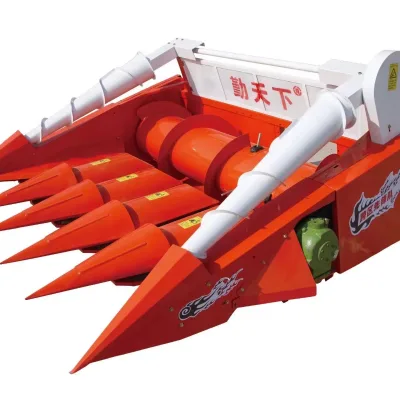
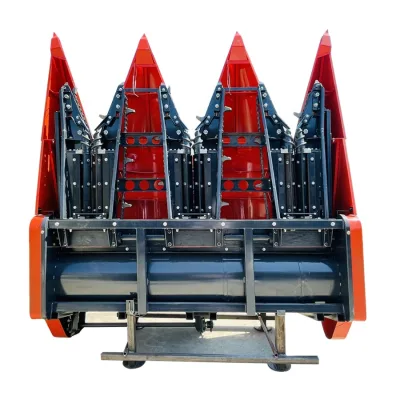
When evaluating a Gear Drive Corn Header, the primary focus must be on the mechanical transmission architecture that transfers power from the tractor to the harvesting mechanism. The core component in this configuration is the hard shaft transmission, which is explicitly observed in the current market offerings. This system relies on a gear drive mechanism to ensure consistent power delivery to the cutting and gathering units. Unlike belt-driven systems that may slip under heavy load, a gear drive offers a direct mechanical connection, which is critical for maintaining the rotational speed required for efficient corn harvesting.
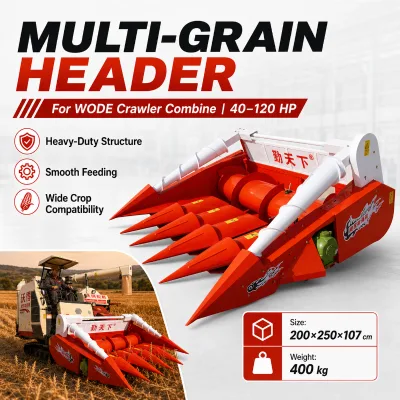
The power source for these units is typically a tractor, though some configurations may integrate a diesel engine directly into the header assembly. The engine power requirements observed in the market range significantly, from 40 HP to 120 HP, depending on the specific model and the intended scale of operation. This variability means that buyers must match the header's power requirements precisely with their existing tractor fleet or investment in new power units. The core components of these machines consistently include gears, gearboxes, and engines, forming the backbone of the machine's durability.
The physical dimensions of the headers vary based on the model number, such as the 4YG-5, 4YG-3, or CH-1. These models correspond to different working widths and overall package sizes. For instance, specific models have been observed with dimensions around 2000 mm for working width, while others may have a single package size of 200x250x107 cm or 200x250x135 cm. The row distance for these headers typically falls within the 2200 mm to 3200 mm range, allowing for flexibility in different field configurations. Understanding these physical constraints is essential for ensuring the header fits the tractor's hitch and the field's row spacing.
Compliance, Certification, and Quality Verification
In the B2B procurement of agricultural machinery, verifying compliance and certification is a non-negotiable step. The market data indicates that ISO9001 certification is a high-confidence attribute associated with specific product listings. Buyers should prioritize suppliers who can provide documentation proving adherence to the ISO9001 quality management standard. This certification suggests that the manufacturer has established processes for consistent quality control, which is vital for machinery that operates under demanding agricultural conditions.
Beyond general quality management, the machinery test report is a critical document that buyers must request. The presence of a provided machinery test report indicates that the unit has undergone specific performance evaluations. While the specific test results are not detailed in the general product attributes, the availability of this report allows the buyer to verify the machine's performance claims regarding productivity, safety, and noise levels. The key selling points often cited include high productivity, high safety levels, low noise levels, and long service life. However, these are observations from the market and should be treated as claims that require verification through the test report rather than guaranteed attributes for every unit.
Quality is another fundamental attribute, with "Good" being a standard descriptor for the condition of the machinery. The condition is consistently listed as "New," ensuring that buyers receive factory-fresh equipment. The warranty period observed is typically 1 Year, which serves as a baseline for after-sales support. Buyers must clarify the scope of this warranty, specifically covering core components like the gearbox and engine. It is important to note that while "Reach" is mentioned in low-confidence background data, it should not be relied upon as a confirmed certification status without direct supplier confirmation.
Cost Drivers and Pricing Dynamics
The pricing for gear drive corn headers is influenced by several factors, including the model complexity, engine power, and packaging requirements. The observed price range in the market spans from 295 USD to 5800 USD. This wide variance suggests that the market includes both smaller, simpler attachments and larger, more complex harvesting units with integrated engines or advanced features. The minimum order quantity (MOQ) is generally low, ranging from 1 to 2 units, which facilitates procurement for individual farms or small cooperatives without requiring bulk commitments.
Packaging plays a significant role in the final cost and logistics. Different models utilize different packing methods, including pallets, nude packing, neutral packing in carton boxes, or optional packing. The choice of packaging affects the shipping cost and the risk of damage during transit. For example, a unit with a single gross weight of 400.0 kg requires specific freight considerations compared to lighter models. The weight of the machinery, often around 400 KG, is a key factor in determining shipping rates and the type of transport vehicle required.
Buyers should also consider the "Selling Units" structure, which is typically listed as a single item. This means that the quoted price usually covers the complete header assembly, including all necessary mounting hardware and gears. However, the "Engine Power" variability (40 HP to 120 HP) implies that higher-powered models will naturally command a higher price point. The "Optional" nature of some specifications, such as the standard dimensions or packing, allows for customization but may introduce variable costs depending on the specific configuration requested.
Typical Applications and Operational Versatility
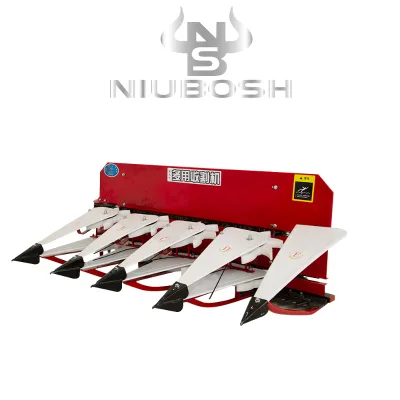
Gear drive corn headers are primarily designed for the harvesting of corn, as indicated by the specific application field of "Agriculture" and the "Corn" application tag. However, the versatility of these machines is a significant advantage. Some models are designed to be multifunctional, capable of harvesting rice, corn, and wheat. This adaptability is crucial for farmers who grow multiple crop types and need to maximize the utility of their equipment. The "Horizontal Cut Harvester" type and "Side Hanging Type" design suggest that these headers are optimized for specific mounting configurations on tractors, ensuring stability and efficiency during operation.
The usage classification includes "Grain Harvester," "Corn Harvester," and "Other," highlighting the broad applicability of these units. The "Picking" harvest method indicates that the header is designed to selectively gather the crop, which is essential for maintaining grain quality and minimizing waste. The "Machine Type" is further categorized as either a "Reaper Harvester" or a "Combine Harvester," depending on the specific model and its integration with the rest of the harvesting system.
The working width of 2000 mm is a standard specification for many of these units, providing a balance between coverage speed and maneuverability in the field. The "Row Distance" of 2200 to 3200 mm allows the header to accommodate various row spacings found in different agricultural regions. This flexibility ensures that the equipment can be used in diverse farming environments, from large-scale commercial farms to smaller, more traditional plots. The "Eco-Friendly" and "Energy Saving" key selling points suggest that modern designs are also focused on reducing fuel consumption and environmental impact, although these claims should be validated against the specific engine specifications and test reports.
Supplier Evaluation and Origin Verification
When sourcing gear drive corn headers, verifying the origin of the machinery is a critical step in supplier evaluation. The primary production locations identified in the market are Dezhou, China, and Hebei, China, with a broader designation of "Mainland, China." Knowing the specific province of origin can help buyers understand the local manufacturing capabilities and supply chain logistics. For instance, Dezhou and Hebei are known industrial hubs with established manufacturing sectors for agricultural machinery.
The brand name "NIUBOSHI" is observed in the product listings, serving as a specific identifier for certain models. However, buyers should not limit their search to a single brand. The market contains various models with different model numbers, such as 4LZY-2.3, 4YG-5, and CH-1. The presence of a "Customization: Available" attribute indicates that suppliers are willing to tailor the machinery to specific buyer requirements, which is a positive sign for a supplier's flexibility and customer service orientation.
Buyers should evaluate suppliers based on their ability to provide the "Machinery Test Report" and their adherence to the "ISO9001" standard. The "Quality: Good" attribute is a general observation, but the specific performance of the gear drive system should be verified through the test data. Additionally, the "Warranty: 1 Year" is a standard offering, but the terms of the warranty, including coverage for core components like the gear and gearbox, should be clearly defined in the contract. The "Single Package Size" and "Single Gross Weight" data are essential for logistics planning, ensuring that the supplier can handle the shipping requirements effectively.
Quality Control and Long-Term Procurement Considerations
Ensuring the long-term reliability of a Gear Drive Corn Header requires a robust quality control strategy. The "Core Components" listed as Gear, Gearbox, and Engine are the most critical parts to inspect. These components are subject to high stress during operation, and their durability directly impacts the service life of the machine. The "Long Service Life" is a key selling point, but it is contingent on the quality of these components and the maintenance practices of the operator.
Buyers should request detailed specifications for the gear and gearbox materials and manufacturing processes. The "Hard Shaft" transmission system must be inspected for alignment and wear resistance. The "Low Noise Level" claim suggests that the gears are well-machined and lubricated, but this should be verified during a demonstration or through the machinery test report. The "High Safety Level" is another critical factor, ensuring that the machine operates without posing undue risks to the operator.
For long-term procurement, the availability of spare parts is paramount. The "Gearbox" and "Engine" are core components that may require replacement or repair over time. Buyers should verify that the supplier has a reliable supply chain for these parts. The "Packing: Optional" and "Pallet" or "Nude Packing" options should be selected based on the shipping distance and the risk of damage. Proper packing ensures that the machine arrives in the condition specified, minimizing the risk of pre-operational defects.
The "Condition: New" status is standard, but buyers must ensure that the machine is not a refurbished unit sold as new. The "1 Year" warranty provides a safety net, but proactive maintenance is essential for maximizing the machine's lifespan. The "Energy Saving" and "Eco-Friendly" attributes suggest that the machine is designed for efficiency, which can lead to long-term cost savings in fuel and operational expenses. By focusing on these quality control measures and long-term considerations, buyers can make informed decisions that ensure the reliability and efficiency of their gear drive corn headers.
FAQs
What certifications do gear drive corn headers have?
Some models carry ISO9001 certification for quality management. Buyers should verify this documentation directly as not every unit lists it, ensuring the manufacturer meets established quality control standards for agricultural machinery.
How is the power transmitted in these harvesters?
The transmission system uses a hard shaft with a gear drive mechanism. This direct mechanical connection ensures consistent power delivery from the tractor to the cutting units without the slippage risks associated with belt-driven systems.
Can I customize the specifications of the header?
Customization is available for many models to meet specific operational needs. Buyers can request adjustments to dimensions or features, though specific options depend on the supplier's capabilities and the chosen model configuration.
What is the typical warranty period for these machines?
The standard warranty period observed is one year for the machinery. This coverage typically applies to the unit as a whole, but buyers must confirm if core components like the gearbox and engine are included in the terms.
Which models are suitable for harvesting corn and wheat?
Models like CH-1 and 4LZY-2.3 are designed for multiple crops including rice, corn, and wheat. These multifunctional headers allow farmers to harvest different grain types using the same equipment for greater operational versatility.
What are the standard packaging options for shipping?
Packaging options include pallets, nude packing, or neutral packing in carton boxes. The choice depends on the specific model and shipping requirements, with some units listed as having optional packing configurations to suit logistics needs.
Where are these gear drive harvesters manufactured?
Primary production origins include Dezhou, China, and Hebei, China. Buyers should verify the specific place of origin for their order, as these regions are known industrial hubs for agricultural machinery manufacturing in mainland China.