Source GFRP Blue Aquarium for Water Storage, Drinking Water, and Living Room
Find 30 GFRP Blue Aquarium options for water storage, drinking water applications, and living room use. Buyers can compare wall thickness, customization, and warranty details across verified listings.
Key considerations
Products List


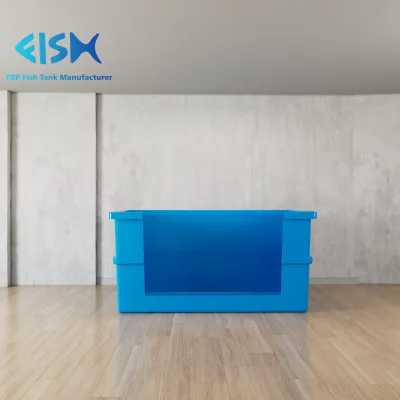
Indoor Fish Farming Tanks, Fishing Aquariums Tanks, FRP/GRP /SMC Water Storage Tank
$24.00 - $30.00
MOQ: 1 Pieces


$20.00 - $50.00
MOQ: 100 Pieces

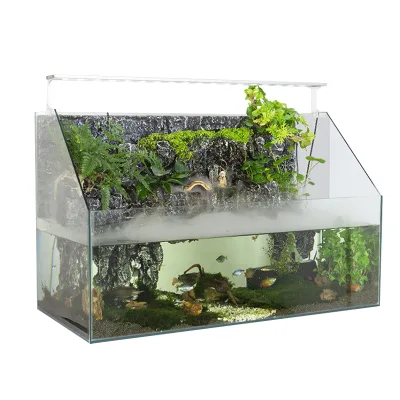


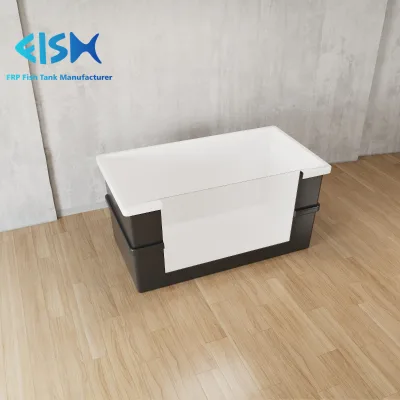
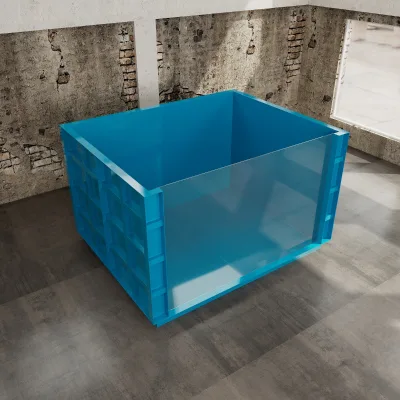
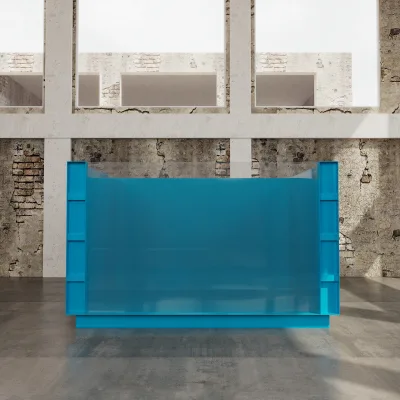


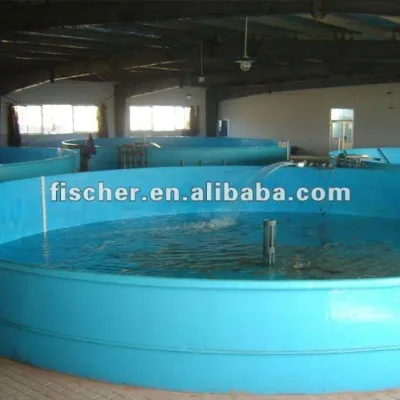
Fibregalss Fish Tank, Big FRP Fish tank for Fish Farm,Manufactural,Hot Selling
$611.08 - $967.54
MOQ: 10 Minimum
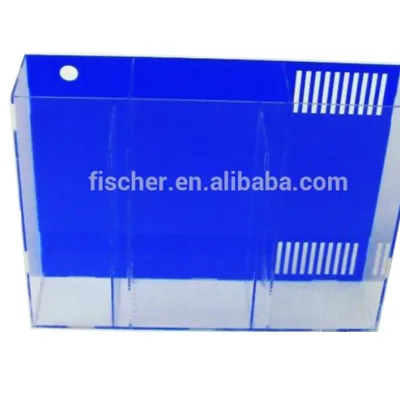


Acrylic Desktop Aquarium with Betta Fish Tank Pump and Filtration-Convenient Desktop
$30.17 - $38.14
MOQ: 500 Pieces

Comprehensive Sourcing Guide
Strategic Sourcing Guide for GFRP Blue Aquarium Systems
The global market for specialized aquatic containment systems has seen a significant shift toward composite materials that offer superior durability and design flexibility. When sourcing a "GFRP Blue Aquarium," buyers must navigate a complex landscape where General Fiber Reinforced Plastic (GFRP) and Sheet Molding Compound (SMC) technologies often intersect in product listings. This guide provides a disciplined, evidence-based approach to evaluating suppliers, verifying technical specifications, and ensuring compliance for procurement professionals seeking high-performance water storage and aquarium solutions. The following analysis relies strictly on observed market data and established industry standards to mitigate procurement risks.
Understanding Material Composition and Structural Integrity
The primary distinction in sourcing these units lies in the material classification. While the search term specifies "GFRP," observed product attributes frequently list "FRP" (Fiber Reinforced Plastic) and "SMC Water Tank" as the primary type. In the context of large-scale aquariums and water storage, these terms often refer to the same class of glass-reinforced polyester composites. The core structural advantage of these materials is their high strength-to-weight ratio, which allows for the construction of large, transparent, or colored tanks without the brittleness associated with traditional glass or the corrosion issues of steel.
A critical observation from current market listings is the variance in wall thickness specifications. Buyers must verify that the specific unit meets the required structural load for the intended water volume. Data indicates that wall thickness specifications range from 12mm to 20mm for certain heavy-duty models, while other listings suggest a broader range of 1mm to 5mm or 3mm to 19mm depending on the panel size and application. For a blue aquarium intended for public display or large-scale aquaculture, the thicker end of this spectrum (12mm to 20mm) is generally required to withstand hydrostatic pressure. The "U-Channel Base" is a recurring specification that provides essential structural reinforcement at the bottom of the tank, preventing deformation under the weight of the water column.
When evaluating the "Blue" color attribute, it is important to understand that this is typically achieved through the integration of pigments during the molding process rather than a surface coating. This ensures that the color is integral to the material, preventing fading or peeling over time. The observed color palette includes White, Silver, Green, and Blue, with "Silver" and "Blue" being distinct options. Buyers should confirm that the blue pigment used is UV-stabilized, as prolonged exposure to sunlight can degrade organic pigments in plastic composites if not properly formulated.
Technical Specifications and Dimensional Standards
Precision in dimensions is paramount when sourcing custom aquarium systems. The market data reveals a modular approach to sizing, with standard panel sizes often cited as 1.5x1m, 1x1m, 1x0.5m, 0.5x0.5m, and 2m*1m. These modular panels allow for the construction of tanks in various shapes, including Square, Rectangle, and Round configurations. The "Shape of Aquariums" attribute explicitly lists Square and Round options, indicating that the manufacturing process supports complex geometries beyond simple rectangular prisms.
The thickness specifications vary significantly across different product models. While some entries list a thickness of 12mm, others indicate a range of 5-20mm or even 1-5mm. This variance suggests that the thickness is not a fixed standard but a variable dependent on the specific model number (e.g., WRGRP001, Q-011, or aquarium models). Procurement teams must request the specific engineering drawing for the desired model to confirm the wall thickness relative to the tank's height and volume. The "Single Panel Size" data further supports the modular nature of these systems, allowing for on-site assembly or pre-fabricated units depending on logistics.
It is also crucial to note the "Bottom Case" specification, which is consistently described as a "U-Channel Base." This feature is not merely aesthetic; it serves a functional role in distributing the load of the water to the foundation. When sourcing a blue aquarium, buyers should verify that the U-channel base is compatible with the intended installation site, particularly if the floor load-bearing capacity is limited. The "Size of Aquariums" is categorized as Large, Mini, and Middle, which implies that the supplier offers a tiered product line. However, the exact volume capacity for these categories is not standardized in the provided data, necessitating a direct inquiry into the internal dimensions of the specific unit.
Compliance, Certification, and Quality Assurance
In the B2B procurement of aquatic containment systems, compliance with international standards is non-negotiable. The observed product attributes list "ISO9001" and "CCC" (China Compulsory Certification) as relevant standards. ISO9001 indicates that the manufacturer has a certified quality management system, which is a strong indicator of consistent production processes. The presence of "CCC" suggests compliance with Chinese safety and quality regulations, which is essential for products manufactured in Guangdong, China.
Another critical certification mentioned is "ISOMaterial:FRP," which likely refers to a specific material standard or a proprietary certification for the FRP composition. Buyers should verify the exact scope of this certification to ensure it covers the specific application of the aquarium, particularly regarding water safety. If the aquarium is intended for drinking water storage or public display where human contact is frequent, the material must be non-toxic and compliant with food-grade or potable water standards. The "Leakage: No Leakage After Filled with Water" attribute is a performance claim that should be validated through third-party testing or a robust factory acceptance test (FAT) before final payment.
The "Warranty" attribute lists a 15-year period, which is a significant value proposition. However, this warranty is likely contingent on proper installation and adherence to maintenance guidelines. Buyers must review the warranty terms to understand what constitutes a valid claim, particularly regarding structural failures versus cosmetic issues like color fading. The "After-Sales Service" options, including "Video Technical Support" and "Online Support," are valuable resources for troubleshooting installation issues. However, for large-scale projects, buyers should consider whether on-site support is available, as video support may not be sufficient for complex structural adjustments.
Cost Drivers and Economic Considerations
The pricing for GFRP blue aquariums exhibits a wide range, observed between $3.39 and $3,999. This disparity is driven by several factors, including the size of the unit, the thickness of the material, the complexity of the shape, and the level of customization. The "Customization: Available" attribute indicates that buyers can request specific dimensions, colors, or features, which will inevitably increase the cost. The "MOQ" (Minimum Order Quantity) ranges from 1 to 500 units, suggesting that the supplier accommodates both single-unit purchases for small projects and bulk orders for large-scale deployments.
The "Package" attribute lists "Iron Tray," "Wooded Tray," "Wooden Crates," and "Carton" options. The choice of packaging significantly impacts the total landed cost. For international shipping, "Exported Standard" packaging is essential to prevent damage during transit. The "prod_packing" specification mentions "Wooden Box /Carton /Customized Package," which implies that the packaging can be tailored to the buyer's logistics requirements. Buyers should factor in the cost of specialized packaging, especially for large, heavy units that require custom crating.
Additionally, the "prod_origin" is listed as "China" and specifically "Guangdong China." This location is a major manufacturing hub for composite materials, offering competitive pricing due to economies of scale. However, buyers must consider the lead time and logistics costs associated with importing from this region. The "Condition: New" attribute confirms that the products are manufactured to order rather than being refurbished, which is a critical factor for maintaining the integrity of the warranty and the aesthetic quality of the blue finish.
Supplier Evaluation and Quality Control Protocols
Selecting the right supplier requires a rigorous evaluation process that goes beyond price comparisons. The "Standard" attribute lists "According to customers' requirement," which indicates a high degree of flexibility but also places the burden of specification on the buyer. To mitigate this risk, procurement teams should develop a detailed technical specification document that outlines the required wall thickness, panel sizes, and color specifications before engaging with suppliers.
Quality control should be a multi-stage process. First, verify the supplier's ISO9001 certification and request copies of their quality control records. Second, conduct a factory audit to inspect the molding process, ensuring that the FRP/SMC layers are applied correctly and that the curing process is controlled. Third, request sample testing for the "No Leakage" claim, ideally through a hydrostatic pressure test on a sample unit. The "Feature: Eco-Friendly" attribute suggests that the manufacturing process may be environmentally conscious, but buyers should verify this by requesting data on VOC emissions or recycling capabilities of the composite materials.
The "Shape of Aquariums" and "Size of Aquariums" attributes indicate that the supplier can produce various configurations. However, buyers should be cautious of "Round" shapes, as they may require more complex tooling and could be more prone to stress concentrations if not engineered correctly. The "Type" attribute lists both "SMC Water Tank" and "Aquariums," suggesting that the supplier may use the same manufacturing base for different applications. Buyers must ensure that the specific product is designed for the intended use, as water tanks and aquariums may have different safety requirements regarding water quality and structural load.
Long-Term Procurement and Operational Considerations
Sourcing a GFRP Blue Aquarium is not just a one-time transaction; it involves long-term operational considerations. The "Warranty" of 15 years is a strong indicator of the manufacturer's confidence in their product, but it is essential to understand the maintenance requirements to maintain this coverage. The "After-Sales Service" options, such as video and online support, are helpful, but for large installations, a local service partner or on-site support contract may be necessary.
The "Color" attribute, specifically the blue option, should be evaluated for its long-term stability. While the pigment is integrated into the material, UV exposure can still cause degradation over time. Buyers should inquire about the UV resistance of the blue pigment and whether a protective coating is recommended for outdoor installations. The "Temperature Control Products Type: Cooler" attribute suggests that the supplier may offer integrated temperature control solutions, which could be relevant for aquariums housing sensitive species.
Finally, the "Customized" nature of the product means that lead times may vary. The "MOQ" of 1 to 500 units allows for flexibility, but buyers should confirm the lead time for custom orders. The "prod_standard" listing of specific dimensions (11m, 10.5m, etc.) suggests that standard sizes may have shorter lead times, while custom dimensions will require longer production cycles. Planning for these lead times is crucial to avoid project delays. By adhering to these evidence-based guidelines, buyers can confidently source high-quality GFRP Blue Aquarium systems that meet their technical, financial, and operational requirements.
FAQs
What material is used for gfrp blue aquariums?
The product is constructed from FRP (Fiber Reinforced Plastic) or SMC (Sheet Molding Compound). This composite material offers high strength and durability while preventing corrosion compared to traditional glass or steel tanks.
Can I customize the size and shape of the aquarium?
Yes, customization is available for both size and shape. Buyers can select from square, rectangle, or round configurations with panel sizes ranging from 0.5x0.5m to 2x1m depending on specific project requirements.
What is the warranty period for these water tanks?
The standard warranty period provided is 15 years. This coverage applies to the structural integrity of the tank, provided the unit is installed correctly and maintained according to the manufacturer's guidelines.
How thick are the walls of the aquarium panels?
Wall thickness varies by model, typically ranging from 1mm to 20mm. Specific heavy-duty models may feature a 12mm thickness, while others offer ranges between 5mm and 19mm to suit different load requirements.
Is the product certified for drinking water storage?
The product holds ISO9001 certification and meets CCC standards. It is suitable for drinking water applications, ensuring compliance with quality management systems and safety regulations for potable water containment.
What packaging options are available for shipping?
Packaging includes iron trays, wooden trays, wooden crates, or cartons. Exported standard packaging is used to ensure safe transit, with custom packing options negotiable for specific logistical needs.
Does the aquarium leak after being filled with water?
The product is designed to have no leakage after being filled with water. This performance is achieved through the U-channel base and proper molding techniques inherent to the SMC and FRP construction.