Source Gift Bouquet Packaging Tissue Paper for Events, Crafts, and Retail
Compare 30 listings for Gift Bouquet Packaging Tissue Paper with options in CMYK or Pantone colors, recycled materials, and custom sizes. Buyers can review sample times, MOQs, and packaging details to select suitable suppliers for various applications.
Key considerations
Products List


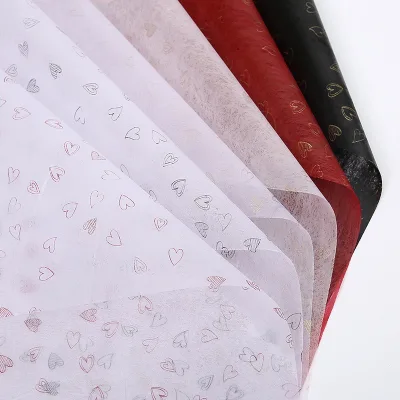

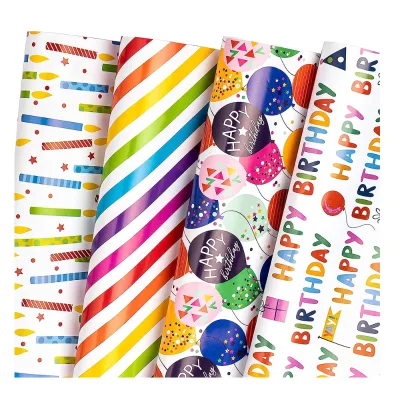
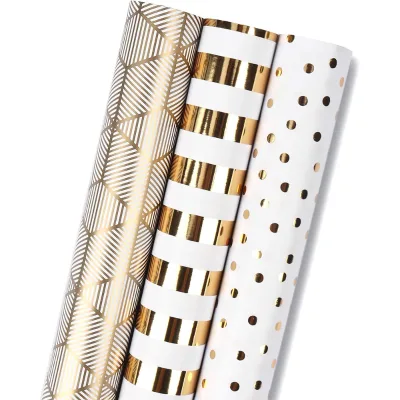

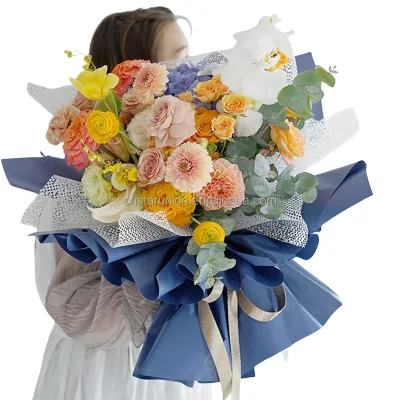
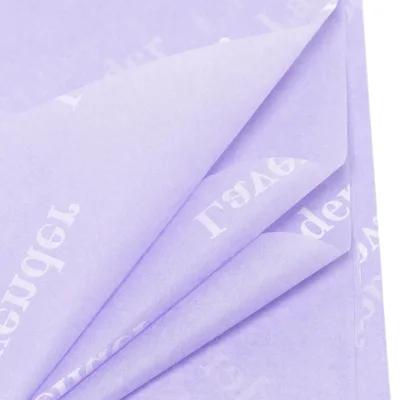
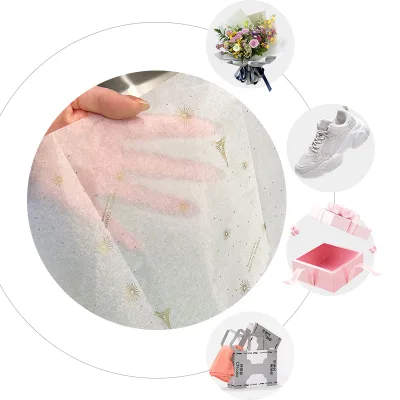
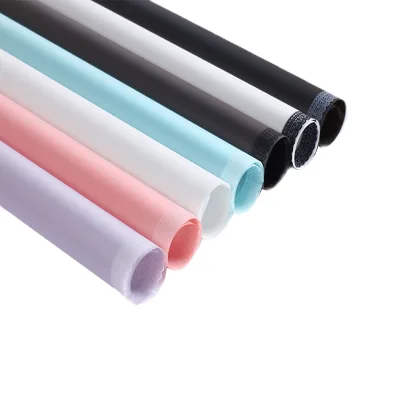


Flower Clothing, Flower Gift Packaging, Paper Bouquet, Paper Wrapping with Printed
$0.10 - $0.15
MOQ: 2000 Pieces


Comprehensive Sourcing Guide
Strategic Sourcing Guide for Gift Bouquet Packaging Tissue Paper
Understanding Product Specifications and Material Composition
When sourcing Gift Bouquet Packaging Tissue Paper, the primary objective is to identify materials that balance aesthetic appeal with structural integrity. Based on current market observations, the core raw material for these products is typically wood pulp, a standard choice that ensures the paper is soft, absorbent, and suitable for wrapping delicate floral arrangements. The physical dimensions of the tissue paper vary significantly depending on the specific application, with observed specifications ranging from 50cm to 100cm in width and lengths extending up to 100cm. Common standardized sizes include 58x58cm, 50x70cm, and 60x60cm, though custom dimensions are frequently available to meet unique bouquet shapes.
The weight of the tissue paper is a critical technical parameter that influences both the cost and the perceived quality. Market data indicates a weight specification of approximately 17GSM (grams per square meter), which suggests a lightweight, translucent material ideal for creating volume and softness without adding excessive bulk. However, buyers must verify the exact GSM for each supplier, as variations exist. The transparency level is generally opaque, ensuring that the color of the paper is vivid and that the contents of the bouquet are not overly visible, which is often a desired aesthetic for gift presentation.
Surface handling and coating processes further define the product's utility. Some variants feature aqueous coating, which can enhance durability and provide a slight sheen, while others remain uncoated to maintain a natural, rustic texture. The color palette is extensive, with options ranging from standard black, pink, red, and white to a broader selection of 19 distinct colors. Additionally, customization allows for CMYK or Pantone color matching, enabling brands to align packaging with specific corporate identities or event themes. The style of the finished product often leans toward simplicity, focusing on clean lines and elegant presentation rather than complex embossing or heavy texturing.
Compliance, Certification, and Environmental Standards
In the realm of gift packaging, environmental compliance has become a non-negotiable factor for many B2B buyers. A high-confidence attribute observed in the market is the use of recycled materials. This feature is increasingly demanded by retailers and consumers who prioritize sustainability. When evaluating potential suppliers, procurement teams should explicitly verify the percentage of recycled content and the source of the wood pulp. While the supplied data confirms the availability of recycled material options, it does not specify third-party certifications such as FSC (Forest Stewardship Council) or PEFC (Programme for the Endorsement of Forest Certification). Buyers must request documentation to confirm these certifications, as they are essential for meeting corporate sustainability goals and regulatory requirements in various international markets.
Regarding chemical safety, the surface coatings applied to the tissue paper must be free from harmful substances. The mention of aqueous coating suggests a water-based process, which is generally safer than solvent-based alternatives. However, buyers should not assume compliance without verification. It is crucial to request Safety Data Sheets (SDS) and test reports confirming that the inks and coatings meet relevant food contact standards, especially since the product is listed for usage in both gift packaging and food packaging. The absence of specific certification names in the general data means that buyers must treat "compliance" as a variable to be validated rather than a guaranteed attribute of every listed product.
Furthermore, the standard of production varies. While some products adhere to specific dimensional standards like 58x58cm or 50x70cm, others are labeled as "customized" or "big," indicating a lack of rigid standardization. This variability requires buyers to establish clear quality benchmarks during the supplier evaluation phase. The origin of the products is predominantly China, with specific manufacturing hubs noted in Zhejiang. While this provides insight into the supply chain geography, it does not inherently dictate quality. Buyers should ensure that the manufacturing facilities in these regions adhere to international quality management systems, such as ISO 9001, even if not explicitly stated in the initial product listing.
Cost Drivers and Pricing Dynamics
The pricing of Gift Bouquet Packaging Tissue Paper is influenced by a complex interplay of factors, including material costs, customization levels, order volume, and logistics. The observed price range in the market spans from $0.01 to $1500 per unit or batch, reflecting the vast difference between single sample orders and large-scale industrial procurement. This wide range underscores the importance of understanding the Minimum Order Quantity (MOQ) structure. MOQs can vary dramatically, from as low as 20 bags to as high as 30,000 units.
For buyers with smaller requirements, the cost per unit may be higher due to the fixed costs of setup and customization. Conversely, large-volume orders benefit from economies of scale, significantly reducing the unit price. The customization of the product is a major cost driver. Features such as custom logo printing, specific Pantone color matching, and tailored dimensions require additional setup time and resources, which are reflected in the final price. While samples are often available for free, the freight cost is typically collected from the buyer, adding a small but necessary expense to the initial evaluation phase.
Logistics and packaging also play a significant role in the total cost of ownership. The standard packaging method involves 20 pieces per bag and 100 bags per carton, or similar configurations like 38 pieces per bag. This standardized packing facilitates efficient shipping and storage but must be aligned with the buyer's warehouse capabilities. The lead time for production is another critical cost factor. Standard delivery times are estimated at about 20 days after the deposit is received, though fast delivery options of 7 days are available for stock items. Rush orders or custom production outside of stock availability will inevitably incur higher costs and require careful budget planning.
Typical Applications and Usage Scenarios
Gift Bouquet Packaging Tissue Paper serves a dual purpose in the B2B market: functional protection and aesthetic enhancement. The primary usage is for gift packaging, where the paper is used to wrap flowers, fill voids in gift boxes, and create a luxurious unboxing experience. The versatility of the product extends to craft applications, making it suitable for DIY projects, event decorations, and retail displays. The "Gift & Craft" industrial use classification highlights its broad applicability across various sectors, from florists and event planners to retail stores and corporate gifting departments.
The material's suitability for food packaging is another notable application. This dual-use capability allows businesses to streamline their procurement by sourcing a single material for multiple needs, provided the specific batch meets food safety standards. The opaque nature of the paper ensures that the contents remain hidden until the moment of unwrapping, building anticipation and excitement. The availability of a wide color range, including 19 standard colors and custom options, allows for thematic consistency. For instance, a wedding planner might select specific shades of pink and white to match a bridal theme, while a corporate client might opt for black or white for a sleek, professional look.
The simplicity of the style often associated with these products makes them adaptable to various design philosophies. Whether used in a minimalist presentation or as a vibrant accent in a colorful arrangement, the tissue paper acts as a versatile canvas. The ability to customize the logo or graphic design further enhances its utility for branding. Businesses can imprint their logos directly onto the tissue paper, turning a simple wrapping material into a powerful marketing tool that reinforces brand identity every time a gift is opened.
Supplier Evaluation and Verification Protocols
Selecting the right supplier for Gift Bouquet Packaging Tissue Paper requires a rigorous evaluation process that goes beyond the initial product listing. Buyers should prioritize suppliers who demonstrate transparency regarding their production capabilities and quality control measures. The availability of customization is a key indicator of a supplier's flexibility, but it must be balanced with their ability to maintain consistency. When a supplier offers "customized" standards and sizes, it is essential to verify their tolerance levels and the precision of their cutting and packaging processes.
One of the most critical aspects of supplier evaluation is the verification of sample quality. While samples are often available for free, the condition of the sample and the speed of delivery can provide insights into the supplier's operational efficiency. The observed sample time of 3-5 days is a benchmark for responsiveness. Buyers should request samples that match the exact specifications of the intended order, including the specific color, weight, and coating. It is also advisable to test the samples for durability, color fastness, and compatibility with the intended packaging machinery.
The origin of the product, specifically Zhejiang, China, is a significant factor in the supply chain. Buyers should investigate the specific manufacturing facilities in this region to ensure they have the capacity to meet demand during peak seasons. The lead time of about 20 days after deposit receipt is a standard expectation, but buyers must confirm this with the specific supplier to avoid delays. Additionally, the shipping method, whether by carton or other means, should be evaluated for its impact on product protection during transit. Suppliers who offer robust packaging solutions, such as the standard 100 bags per carton, help minimize the risk of damage during shipping.
Quality Control and Long-Term Procurement Strategy
Implementing a robust quality control (QC) strategy is essential for maintaining the integrity of Gift Bouquet Packaging Tissue Paper throughout the supply chain. Buyers should establish clear acceptance criteria based on the technical specifications observed, such as weight (17GSM), dimensions (e.g., 58x58cm), and color accuracy. Regular inspections should be conducted to ensure that the recycled material content remains consistent and that the aqueous coating is applied uniformly. For products intended for food packaging, periodic testing for chemical migration and safety compliance is mandatory.
Long-term procurement considerations involve building a resilient supply chain that can adapt to changing market demands. This includes diversifying the supplier base to mitigate risks associated with single-source dependencies. While the current data points to suppliers in China, buyers should explore opportunities to source from other regions if geopolitical or logistical factors pose a threat. The ability to customize products is a strategic advantage, but it requires close collaboration with suppliers to ensure that design changes do not compromise quality or lead times.
Furthermore, buyers should focus on developing a partnership with suppliers who are committed to continuous improvement. This includes staying updated on new materials, such as enhanced recycled content or more sustainable coatings, and incorporating these innovations into the product line. The flexibility to adjust order volumes, from small batches of 20 bags to large orders of 30,000 units, allows buyers to manage inventory efficiently and respond to market fluctuations. By maintaining open communication and setting clear expectations regarding quality, delivery, and customization, buyers can ensure a steady supply of high-quality Gift Bouquet Packaging Tissue Paper that meets the evolving needs of their customers.
Comparative Analysis of Product Attributes
To facilitate informed decision-making, the following table summarizes the key attributes observed in the market for Gift Bouquet Packaging Tissue Paper. This comparison highlights the variability in specifications and helps buyers identify the features most relevant to their specific needs.
| Attribute | Observed Range/Options | Key Considerations for Buyers |
|---|---|---|
| Raw Material | Wood Pulp, Recycled Materials | Verify percentage of recycled content and source sustainability. |
| Dimensions | 50x70cm, 58x58cm, 60x60cm, 60x100cm, Custom | Confirm exact size requirements for bouquet fit. |
| Weight | 17GSM, <0.5 kg | Check GSM for desired thickness and opacity. |
| Color Options | Black, Pink, Red, White, 19 Colors, CMYK/Pantone | Ensure color matching capabilities for branding. |
| Surface Treatment | Aqueous Coating, Uncoated | Select based on desired finish (matte vs. slight sheen). |
| Transparency | Opaque | Confirm opacity level for product concealment. |
| Customization | Logo, Size, Color, Standard | Assess setup costs and lead times for custom orders. |
| Packaging | 20PCS/Bag, 100bags/CTN; 38PCS/Bag | Verify packing density for shipping efficiency. |
| Lead Time | 7 days (Stock), ~20 days (Custom) | Plan production schedules accordingly. |
| MOQ | 20 bags to 30,000 units | Align order volume with budget and storage capacity. |
This structured approach to evaluating product attributes ensures that buyers can make data-driven decisions that align with their operational requirements and quality standards. By focusing on these core elements, procurement teams can secure a reliable supply of Gift Bouquet Packaging Tissue Paper that enhances their product offerings and satisfies end-user expectations.
FAQs
What raw materials are used for this tissue paper?
The primary raw material is wood pulp, ensuring softness and absorbency. Some variants feature recycled materials for sustainability, though specific certification percentages must be verified with the supplier before purchase.
Can I get custom sizes for my bouquet packaging needs?
Yes, custom sizes are available to meet unique bouquet shapes. Standard options include 58x58cm and 50x70cm, but buyers can request tailored dimensions to fit specific packaging requirements exactly.
How fast can I receive samples of the tissue paper?
Samples are available within 3 to 5 days after request. While the samples themselves are often free, the buyer must typically cover the freight costs for shipping the sample to their location.
What is the minimum order quantity for bulk purchases?
Minimum order quantities vary significantly, ranging from 20 bags to 30,000 units depending on the supplier and customization level. Buyers should confirm the specific MOQ structure before placing a large order.
Are these products suitable for food packaging applications?
Yes, the product is listed for both gift and food packaging usage. However, buyers must verify that the specific batch meets food safety standards and request relevant test reports before using it for food contact.
Which colors are available for custom branding projects?
Options include standard colors like black, pink, red, and white, as well as a palette of 19 distinct colors. Custom CMYK or Pantone matching is also available for specific corporate identity alignment.
What is the typical lead time for production after deposit?
Standard delivery takes about 20 days after the deposit is received. For stock items, fast delivery options of 7 days may be available, but custom production will require the full standard lead time.