Source Glass Lunch Box for Food Storage, Travel, and Kitchen Use
Explore 30 verified listings for Glass Lunch Box options suitable for food storage, travel, and kitchen organization. Buyers can compare capacities ranging from 100ml to 1500ml, certifications like FDA and LFGB, and customization features to find the right supplier.
Key considerations
Products List


Glass Lunch Box with Plastic Cover Microwave Reheat Food Refrigerator Safe
$1.50 - $2.00
MOQ: 1000 Pieces


Glass Food Container Glass Lunch Box Glass Container Amber Color High Borosilicate
$0.80 - $1.30
MOQ: 1000 Pieces

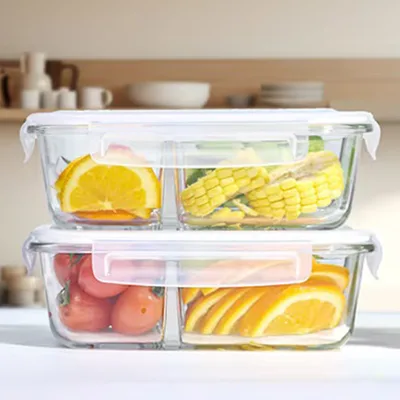
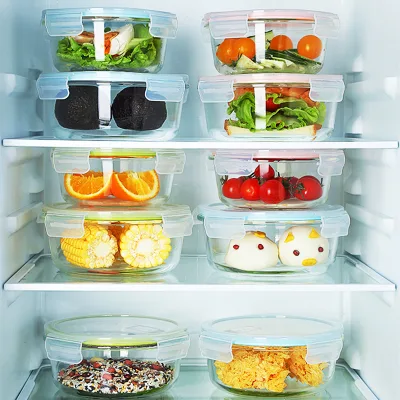


Custom 3 Compartment Meal Prep Containers Glass Lunch Box with Dividers
$0.85 - $5.00
MOQ: 1000 Pieces

Custom Label Meal Prep Mixing and Serving Glass Lunch Box with Compartments
$0.85 - $5.00
MOQ: 1000 Pieces


Personalized Custom Food Storage Box with Lid Leakproof Glass Lunch Container Kids
$0.85 - $5.00
MOQ: 1000 Pieces


Leakproof Stackable Food Container Stainless Steel Lunch Box with Glass Cover
$2.99 - $6.99
MOQ: 300 Pieces
Comprehensive Sourcing Guide
Strategic Sourcing Guide for Glass Lunch Box Procurement
Navigating the global market for glass lunch boxes requires a precise understanding of material science, regulatory compliance, and supply chain logistics. The observed market data indicates a diverse landscape where products range from single-use concepts to durable, high-borosilicate solutions. Buyers must distinguish between items marketed as "stocked" inventory and those requiring custom manufacturing runs. This guide synthesizes available product attributes to provide a disciplined framework for evaluating suppliers, ensuring that procurement decisions are grounded in verified facts rather than marketing assertions.
Material Composition and Thermal Performance
The foundational attribute of any Glass Lunch Box is its raw material composition, which dictates thermal resistance and durability. In the current market, a significant portion of listings specifies "High Borosilicate" as the raw material. This is a critical differentiator from standard soda-lime glass, as borosilicate glass offers superior resistance to thermal shock. Products derived from this material are frequently described with features such as "Heatable" and "Microwavable," indicating their suitability for direct heating applications.
When evaluating technical specifications, buyers should verify the specific capacity ranges available. Observed data points to a standardization around specific volumes, including 300ml, 500ml, 1000ml, and 1500ml options. Some listings reference a standard of "1040ml," while others provide a broader range of "100ML-500ML." The variation in capacity suggests that procurement strategies must align with the intended use case, whether for individual portion control or family-style storage. Furthermore, the distinction between "Non-Disposable" and "Disposable" attributes is vital. While some products are marketed with eco-friendly and disposable features, the high-performance glass variants are explicitly labeled as non-disposable, implying a longer lifecycle and a focus on reusability.
Regulatory Compliance and Certification Verification
Compliance is a non-negotiable aspect of sourcing food-contact glassware. The observed product attributes list a robust array of certifications, including FDA, CE/EU, CIQ, LFGB, and EEC. These certifications are not merely labels but represent adherence to specific safety standards regarding chemical leaching and physical safety. For instance, FDA certification is a baseline requirement for products entering the United States market, ensuring the glass does not release harmful substances when in contact with food. Similarly, LFGB (German Food and Feed Code) and CE/EU standards are essential for European distribution, covering heavy metal migration and thermal shock testing.
Buyers must treat these certifications as verified attributes of specific product lines rather than universal guarantees for all glass lunch boxes. The presence of "CIQ" (China Inspection and Quarantine) indicates that the product has passed specific export inspections. When requesting documentation, procurement teams should ask for valid certificate numbers and the specific scope of the certification to ensure they match the intended application. It is important to note that while some listings mention "EEC" (European Economic Community) standards, the specific regulatory framework may have evolved; therefore, verifying the current validity of the CE mark against the latest EU regulations is a prudent step.
Cost Drivers and Minimum Order Quantities
Understanding the cost structure of glass lunch boxes requires analyzing the interplay between customization, packaging, and order volume. The observed market data reveals a price range of $0.50 to $6.99 USD, a wide spectrum that reflects differences in material quality, capacity, and branding. Lower-priced items often correspond to standard capacities like 300ml or 500ml with minimal customization, while higher-priced units may include complex features such as custom logos, specific packaging, or larger capacities like 1500ml.
Minimum Order Quantities (MOQ) are another significant cost driver. The data indicates an MOQ range from 50 to 5,000 units. Specific listings show an MOQ of 2,000 pieces for certain custom models, while others allow for smaller trial orders. This variance suggests that buyers can negotiate based on their volume needs. For companies seeking to test the market, the availability of "Free Sample" options is a crucial leverage point. Samples allow for physical verification of the "Heatable" and "Microwavable" claims before committing to a bulk order. Additionally, the "Carton Packaging" and "Color Box" options noted in the data imply that packaging costs are factored into the unit price, and buyers should clarify whether these are included in the quoted price or billed separately.
Customization Capabilities and Product Attributes
The flexibility of the supply chain is evident in the "Customization" attributes observed. Suppliers offer customization for logos, packaging, and even custom shapes. This is particularly relevant for brands looking to differentiate their lunch box offerings. The data confirms that "Customized" options are available, ranging from simple logo printing to full product design changes. However, buyers must balance this desire for customization against the potential increase in MOQ and lead time.
Color options also play a role in product differentiation. While some listings specify "Unicolor," others offer "Multicolor" options. The choice between a single color and a multicolor range can impact production complexity and cost. Furthermore, the "Stocked" attribute indicates that certain models are available for immediate shipment, which is ideal for urgent procurement needs. In contrast, "Non-Customized" items may offer faster delivery times but less brand alignment. The "Eco-Friendly" feature is consistently highlighted, suggesting that sustainability is a key selling point. Buyers should verify how this claim is substantiated, whether through the material itself (borosilicate glass) or through the packaging materials used.
Supplier Evaluation and Geographic Considerations
Geographic origin is a critical factor in supplier evaluation, influencing logistics costs, lead times, and regulatory familiarity. The data points to two primary manufacturing hubs: Jiangsu, China, and Liling, Hunan, China, with additional references to Anhui, China. Jiangsu is known for its advanced manufacturing capabilities, often associated with higher-quality glass production. Liling, on the other hand, is historically a hub for ceramics and glassware, potentially offering competitive pricing.
Lead times are another metric for supplier reliability. The observed delivery time ranges from 7 to 15 days, which is relatively short for international shipping. However, this timeframe likely refers to production time post-order confirmation and may not include transit time. Buyers should clarify whether this lead time includes the time required for custom logo printing or if it applies only to stocked items. Supplier evaluation should also consider the "After-sale Service" capabilities, such as "Online Technical Support," which can be crucial for resolving issues related to product defects or usage questions. The presence of a "1 Year Warranty" on some models indicates a manufacturer's confidence in product durability, which should be factored into the risk assessment.
Quality Control and Long-Term Procurement Strategy
Implementing a robust quality control (QC) strategy is essential for maintaining product integrity. Given the fragility of glass, the "Single package size" and "Single gross weight" (e.g., 0.250 kg) are critical for calculating shipping costs and ensuring safe transit. Buyers should verify that the "Carton Packaging" is designed to prevent breakage during transit, especially for high-volume orders. The "Installation Position" of "Freestanding" and "Design Style" of "Modern" suggest that the product is designed for retail display and consumer use, requiring a high aesthetic standard.
Long-term procurement considerations involve assessing the scalability of the supplier. The availability of models with different capacities (300ml to 1500ml) and features (microwavable, heatable) allows for a diversified product portfolio. Buyers should also consider the "Kitchen Storage Type" and "Application" aspects, such as use in cabinets, pantries, or for specific food types like spices and sundries. Ensuring that the supplier can maintain consistent quality across different production runs is vital. Regular audits, sample testing for thermal shock resistance, and verification of certification validity should be part of the ongoing supplier management process.
Comparative Analysis of Product Specifications
To facilitate decision-making, the following table summarizes key observed attributes across different product profiles found in the market data. This comparison highlights the trade-offs between customization, capacity, and certification.
| Attribute | Profile A (Standard) | Profile B (Custom/High-Capacity) | Profile C (Compact/Stocked) |
|---|---|---|---|
| Raw Material | High Borosilicate | High Borosilicate | Glass |
| Capacity | 300ml, 500ml, 1000ml, 1500ml | 1000ml, 1500ml | 100ML-500ML |
| Certifications | FDA, CE/EU, LFGB, EEC | FDA, CIQ, LFGB, EEC | FDA, CE/EU, CIQ, LFGB, EEC |
| Customization | Logo, Packaging | Custom Shape, Logo | Non-Customized |
| MOQ | 50 - 2000 PCS | 2000 PCS | 50 - 5000 PCS |
| Feature | Eco-Friendly, Heatable | Stocked, Custom Shape | Microwavable, Disposable |
| Origin | Jiangsu, China | Liling, Hunan, China | Anhui, China |
| Lead Time | 7-15 Days | 7-15 Days | 7-15 Days |
This table illustrates that while certifications are widespread, the specific combination of capacity and customization options varies by manufacturer. Buyers must align their specific needs with the profile that best matches their operational requirements.
Conclusion
Sourcing glass lunch boxes involves a careful balance of technical specifications, regulatory compliance, and supply chain logistics. The market offers a wide range of options, from standard 300ml containers to large 1500ml storage solutions, all backed by a variety of certifications including FDA and LFGB. By rigorously verifying material composition, understanding the implications of MOQ and lead times, and evaluating supplier capabilities in customization and quality control, buyers can build a resilient supply chain. The focus should remain on verified attributes rather than unconfirmed claims, ensuring that the final product meets the safety and performance standards required for food contact applications.
FAQs
What certifications do glass lunch boxes typically have?
Glass lunch boxes typically hold FDA, CE/EU, CIQ, LFGB, and EEC certifications. These verify safety for food contact and compliance with international standards, ensuring the product does not leach harmful substances during use.
Can glass lunch boxes be used in microwaves?
Yes, many glass lunch boxes are microwavable and heatable. This capability depends on the raw material, often high borosilicate glass, which resists thermal shock and allows for safe direct heating applications.
What is the minimum order quantity for custom glass lunch boxes?
The minimum order quantity ranges from 50 to 5,000 units depending on the supplier. Custom orders with specific logos or shapes often require higher MOQs, such as 2,000 pieces, while stocked items may have lower thresholds.
Which capacities are available for glass lunch boxes?
Available capacities include 300ml, 500ml, 1000ml, and 1500ml, with some models ranging from 100ml to 500ml. Buyers should select the volume that best fits their intended portion control or family-style storage needs.
How long does delivery take for Glass Lunch Box orders?
Delivery times typically range from 7 to 15 days after order confirmation. This period covers production and preparation, though it may vary based on customization requirements and the specific supplier's location in China.
Can buyers get free samples before placing a bulk order?
Yes, free samples are often available for verification before committing to a bulk purchase. This allows buyers to physically test features like heat resistance and packaging quality without immediate financial risk.
Where are glass lunch boxes primarily manufactured?
Glass lunch boxes are primarily manufactured in Jiangsu, Liling, Hunan, and Anhui, China. These regions are known for their glassware production capabilities, offering a mix of advanced manufacturing and competitive pricing.