Source Glossy Inkjet Blank Card for ID, Education, and Projects
Compare 30 Glossy Inkjet Blank Card options from Chinese manufacturers. These printable PVC cards support offset, silk screen, and digital printing with customizable sizes and chip options for ID, education, and project use.
Key considerations
Products List


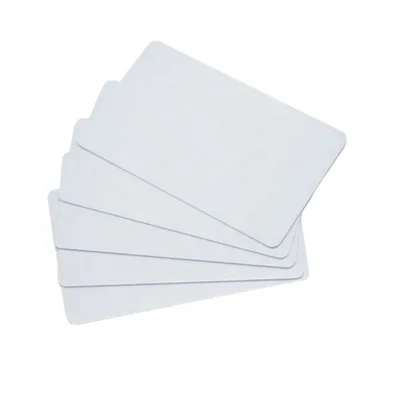
High Quality White Inkjet PVC Card Blank Printable Card for Inkjet Printer
$0.03 - $0.05
MOQ: 2000 Pieces


Comprehensive Sourcing Guide
Sourcing Guide for Glossy Inkjet Blank Cards
Understanding Product Specifications and Core Attributes
When sourcing glossy inkjet blank cards, buyers must first establish a precise understanding of the physical and functional specifications that define this category. The core product is a printable PVC card designed specifically for use with inkjet printers, distinguishing it from thermal transfer or laser-printable alternatives. The standard physical dimensions for these cards align with the CR80 format, typically measuring 85.6mm by 54mm, with a thickness of 0.76mm (often referred to as 30mil). This thickness is critical for ensuring the card feeds correctly through standard ID card trays and printer mechanisms without jamming.
The surface finish is a primary differentiator in this market. The "glossy" designation indicates a specific coating applied to the PVC substrate to facilitate ink absorption and drying. This coating allows the card to accept both normal dye ink and pigment ink, which is a vital consideration for buyers selecting the appropriate ink type for their specific printing environment. The cards are generally opaque, ensuring that the printed content is fully visible and not compromised by the card's background. While the standard color is blank white, the customization options available in the market allow for various aesthetic finishes, including matte or glossy surface treatments depending on the specific supplier's capabilities.
The material composition is consistently PVC (Polyvinyl Chloride), which provides the necessary durability and flexibility for ID card applications. The cards are engineered to be double-sided printable, a feature that expands their utility for applications requiring information on both faces. The surface finish is often described as glossy coated, which enhances the visual quality of the printed output. Buyers should verify that the specific product listing confirms the "glossy" attribute, as some suppliers may offer mixed inventory that includes matte or semi-gloss options. The standard size of 85.5x54x0.76 mm is a common industry benchmark, though some listings may specify slight variations like 85.6mm in width.
Technical Compatibility and Printing Processes
The technical viability of glossy inkjet blank cards relies heavily on their compatibility with specific printing hardware and processes. These cards are explicitly designed for direct printing by inkjet printers, with Epson and Canon models frequently cited as the primary compatible devices. The printing process involves the use of an ID card tray or a specific PVC ID card tray to hold the card securely during the printing cycle. This tray ensures that the card remains flat and aligned, preventing misfeeds that could damage the printer or result in defective cards.
The printing methods supported by these cards include inkjet printing, which is the primary mechanism for applying color and data. However, the market also lists capabilities for offset printing, silk screen printing, digital printing, and laser printing, suggesting that while the core product is optimized for inkjet, the underlying PVC substrate may be versatile enough for other methods depending on the coating. The "Printed by Epson or Canon Inkjet Printer" attribute highlights a specific compatibility requirement that buyers must adhere to; using incompatible printer brands may lead to poor print quality or hardware issues.
The absorption characteristics of the card are tailored for normal dye or pigment inks. This means the surface coating is engineered to accept these specific ink chemistries without smearing or excessive bleeding. The "Absorb Ink" attribute confirms that the card is not merely a passive surface but an active component of the printing system. For buyers planning to use high-volume printing, the lead time for production is a significant factor, with typical ranges cited between 3 to 5 working days for standard orders. However, for larger or custom orders, delivery times may extend to 5-7 days or longer, depending on the supplier's capacity and the complexity of the customization.
Cost Drivers and Pricing Structures
The pricing of glossy inkjet blank cards is influenced by several dynamic factors, including order volume, customization requirements, and the specific material grade. The observed price range in the market spans from $0.03 to $2.50 USD per unit, a wide spectrum that reflects the diversity of product quality and order sizes. At the lower end of this range, buyers are likely purchasing standard, non-customized cards in high volumes. The Minimum Order Quantity (MOQ) varies significantly, ranging from as few as 1 unit for sampling or small projects to 5,000 units for bulk industrial procurement.
Volume is the most significant cost driver. As the order quantity increases, the unit price typically decreases due to economies of scale in manufacturing and packaging. The packaging method also impacts the final cost; standard cartons are common, but specialized packaging like paper boxes within cartons may incur additional charges. The weight of the product, with a single gross weight of 0.006 Kg, is a factor in logistics calculations, though the overall shipping cost will be more heavily influenced by the total volume and weight of the shipment.
Customization is another major cost variable. While the base product is a blank white card, requests for specific colors, custom designs, or the integration of chip options (such as contact chips, HF, LF, or UHF) will increase the unit price. The inclusion of chips transforms the card from a simple printable surface into a functional data storage device, adding complexity to the manufacturing process. Buyers should be aware that the "Customized" attribute is available, but the specific cost implications depend on the extent of the customization required. Additionally, the choice of delivery method, whether by express, air, or sea, will affect the total landed cost, with express shipping offering speed at a premium and sea freight providing cost savings for large, non-urgent shipments.
Compliance, Certification, and Quality Verification
When sourcing glossy inkjet blank cards, verifying compliance and quality is essential to ensure the product meets industry standards and regulatory requirements. While specific certification names are not universally mandated for all blank PVC cards, buyers should verify that the supplier adheres to relevant international standards for card dimensions and material safety. The standard dimension of 85.5x54x0.76 mm is a widely accepted benchmark, and deviations from this size could result in compatibility issues with existing card readers and printers.
Quality verification should focus on the consistency of the surface coating and the durability of the PVC material. Buyers should request samples to test the card's ability to absorb ink without smudging and to ensure that the glossy finish does not peel or degrade over time. The "Feature" attribute often lists characteristics such as waterproofing and double-sided printing capability; these claims should be validated through practical testing rather than accepted solely on product descriptions. The waterproof nature of the card is particularly important for applications where the card may be exposed to moisture or handling in various environments.
Certification checks should also include an assessment of the supplier's production standards. While specific certification bodies are not listed in the general product data, buyers should inquire about the supplier's adherence to ISO standards or other quality management systems. The origin of the product, typically China, is a known manufacturing hub for PVC cards, but buyers must ensure that the specific factory maintains consistent quality control. The "prod_standard" attribute provides a baseline for dimensions, but buyers should verify that the supplier's actual production matches these specifications. Additionally, the "Chip Options" attribute suggests that if the card includes a chip, it must meet specific communication standards for the intended application, such as HF or UHF compatibility.
Typical Applications and Use Cases
Glossy inkjet blank cards serve a wide range of applications, driven by their versatility and ease of use. One of the primary use cases is educational purposes, where these cards are utilized for student IDs, library cards, and event badges. The ability to print directly onto the card using standard inkjet printers makes them an attractive option for schools and educational institutions that need to produce large quantities of identification cards quickly and cost-effectively. The double-sided printable feature allows for the inclusion of both student information and photos on a single card.
Project use is another significant application area, particularly for temporary events, conferences, and workshops. The short lead time of 3-5 working days makes these cards ideal for projects with tight deadlines. The customizable nature of the cards allows organizers to print event-specific branding, logos, and details directly onto the card surface. The glossy finish enhances the visual appeal of the printed graphics, making the cards suitable for professional presentations and high-quality identification.
In the broader context of identity management, these cards are used for ordinary ID card applications where high-level security features are not required. The "Read-Write Method" of ordinary ID card suggests that these cards can be used for basic access control or data storage, though they may not support the advanced encryption found in more specialized smart cards. The availability of chip options, including contact and contactless technologies, expands their utility to more complex applications. However, for simple identification needs, the blank PVC card remains a robust and reliable solution. The waterproof feature ensures that the cards remain functional in various environmental conditions, making them suitable for both indoor and outdoor use.
Supplier Evaluation and Quality Control Protocols
Evaluating suppliers for glossy inkjet blank cards requires a systematic approach to ensure reliability and product consistency. Buyers should prioritize suppliers who provide clear and detailed product specifications, including the exact dimensions, thickness, and surface finish. The "prod_model" attribute, which varies across different listings (e.g., 20231023q, 10P, card005), indicates that suppliers often use internal model numbers to differentiate between product variants. Buyers should request a detailed specification sheet that maps these model numbers to the actual physical and functional attributes of the card.
Quality control protocols should be established to verify the consistency of the product. This includes testing the card's compatibility with the intended printer models, such as Epson or Canon, to ensure smooth feeding and high-quality print results. The "Print Tool" attribute, specifically the ID card tray, should be verified to ensure it is compatible with the supplier's cards. Buyers should also test the card's durability, checking for resistance to scratching, peeling, and ink smudging. The "Surface Finish" attribute, whether glossy or matte, should be consistent across the entire batch to avoid visual inconsistencies in the final product.
Supplier evaluation should also consider the logistics and delivery capabilities. The "Transport" and "Delivery Way" attributes indicate that suppliers offer various shipping methods, including express, air, and sea. Buyers should assess the supplier's ability to meet lead time requirements, which typically range from 3 to 7 days. The "prod_packing" attribute, which may include standard cartons or paper boxes, should be verified to ensure that the packaging protects the cards during transit. A reliable supplier will provide clear information on packaging standards and handling procedures to minimize the risk of damage during shipping.
Long-Term Procurement and Strategic Considerations
For buyers planning long-term procurement of glossy inkjet blank cards, strategic considerations extend beyond the initial purchase price. Consistency in product quality is paramount, as variations in the surface coating or PVC thickness can lead to printing issues and increased waste over time. Buyers should establish a relationship with a supplier who can guarantee consistent quality across multiple orders, rather than switching suppliers based solely on price fluctuations. The "Customization" attribute offers flexibility, but buyers should ensure that the supplier can maintain the same quality standards when customizing orders.
Inventory management is another critical factor. Given the lead times of 3-7 days, buyers should plan their orders to avoid stockouts, especially for high-volume applications. The ability to order in bulk with a low MOQ of 1 unit allows for flexible inventory management, enabling buyers to test new products or adjust to changing demand without committing to large stock levels. The "Single Gross Weight" of 0.006 Kg is a useful metric for calculating storage and shipping costs, but buyers should also consider the total volume of the shipment when planning logistics.
Finally, buyers should monitor the market for technological advancements and new product offerings. The "Chip Options" attribute suggests that the market is evolving to include more advanced features, such as contactless chips and UHF technology. Staying informed about these developments can help buyers make strategic decisions about when to upgrade their card systems. The "Application" attribute, covering educational and project use, indicates that the demand for these cards is driven by specific industry needs. By understanding these trends, buyers can position themselves to leverage new technologies and maintain a competitive edge in their respective fields.
FAQs
What printers are compatible with these cards?
These cards are designed for direct printing by Epson or Canon inkjet printers. They utilize an ID card tray to ensure proper feeding and alignment during the printing cycle.
What is the standard thickness of the card?
The standard thickness is 0.76mm, which is also referred to as 30mil. This dimension ensures the card feeds correctly through standard ID card trays without jamming.
Can the cards be printed on both sides?
Yes, the cards are double-sided printable to expand their utility for various applications. This feature allows for the inclusion of information and graphics on both faces of the card.
What is the typical lead time for orders?
The typical lead time ranges from 3 to 5 working days for standard orders. Larger or custom orders may require up to 5 to 7 days depending on supplier capacity.
What material are the blank cards made from?
The cards are made from PVC, which provides necessary durability and flexibility for ID applications. This material supports a glossy coated surface finish for better ink absorption.
What is the minimum order quantity for these cards?
The minimum order quantity ranges from 1 unit for sampling to 5000 units for bulk procurement. Pricing varies significantly based on the specific volume ordered by the buyer.
What chip options are available for these cards?
Chip options include contact chips or no chip with HF, LF, or UHF capabilities. These options transform the card into a functional data storage device for specific applications.