Source Gold Plated Stainless Steel Necklace and Bracelet Set for Fashion, Gifts, and Formal Occasions
Explore 30 listings of Gold Plated Stainless Steel Necklace and Bracelet Set options featuring various styles and customization. Buyers can compare specifications like weight, model codes, and packaging to find the right pieces for fashion, gifts, and formal occasions.
Key considerations
Products List
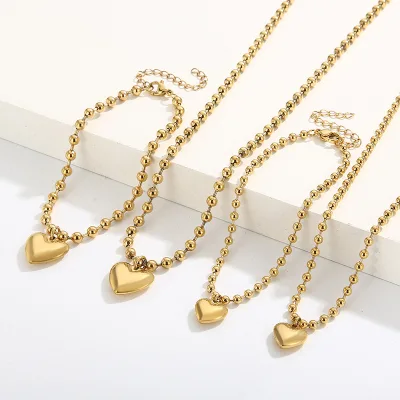
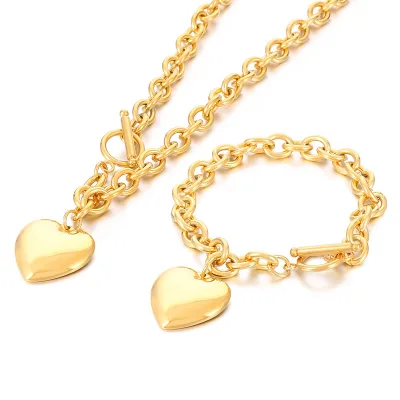


Stainless Steel Necklace Bracelets Jewelry Sets Gold Plated Zircon Necklace
$2.35 - $2.58
MOQ: 59 Pieces


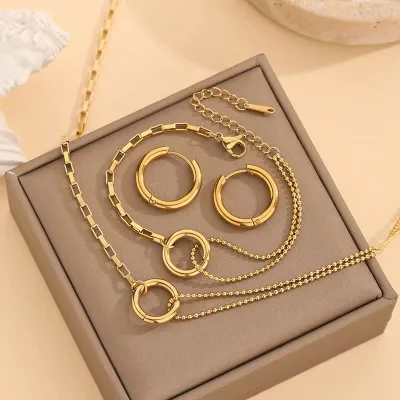


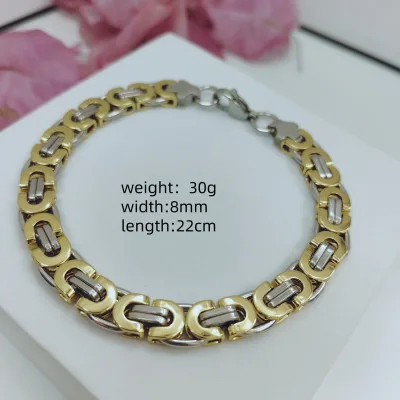
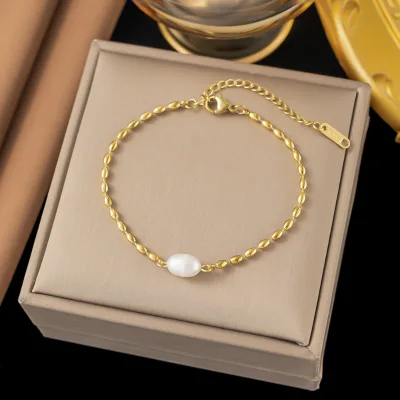
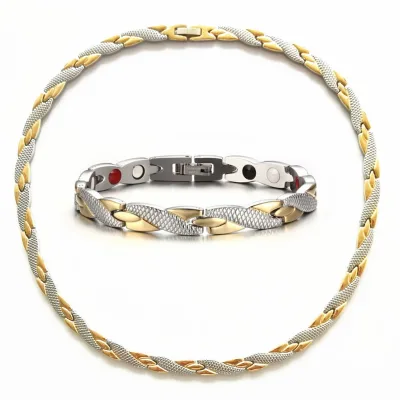
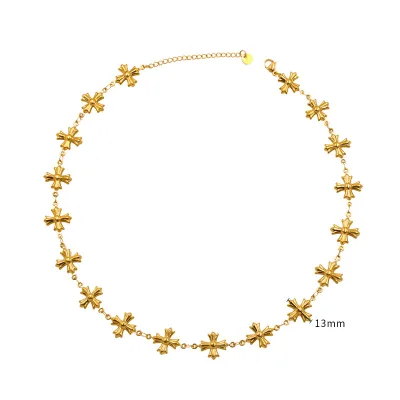
Comprehensive Sourcing Guide
Strategic Sourcing Guide for Gold Plated Stainless Steel Jewelry Sets
Procuring a Gold Plated Stainless Steel Necklace and Bracelet Set requires a nuanced understanding of material properties, plating durability, and supply chain verification. In the B2B market, buyers often seek a balance between aesthetic appeal and long-term wear resistance. The core keyword suggests a specific combination of materials and finishes that must be validated against actual product specifications. This guide outlines the critical factors for sourcing these items, focusing on technical attributes, compliance, cost structures, and quality assurance protocols derived from observed market data.
Technical Specifications and Material Verification
The foundation of a successful procurement order lies in verifying the exact material composition and plating standards. Stainless steel is frequently cited as the base material due to its corrosion resistance and durability, making it superior to base metals for jewelry intended for daily wear. However, the term "gold plated" implies a surface treatment that varies significantly in thickness and quality. Buyers must distinguish between electroplating and physical vapor deposition (PVD), as the latter generally offers superior adhesion and longevity.
When evaluating product listings, specific attributes such as "Plating: Gold" or "Plating: Gold, Silver" serve as initial indicators. However, these are observations rather than guarantees of performance. The standard "15g" or "75g" listed in product data often refers to the weight of the item, which correlates directly with the volume of gold used in the plating process. A heavier item does not automatically imply a thicker gold layer, but it does suggest a more substantial base structure.
The following table outlines key technical attributes observed in the market that buyers should verify during the sourcing process:
| Attribute Category | Observed Market Data | Verification Requirement |
|---|---|---|
| Base Material | Stainless Steel | Confirm alloy grade (e.g., 316L) for hypoallergenic properties. |
| Plating Finish | Gold, Silver, Mixed | Request PPM (parts per million) thickness data for gold layer. |
| Product Models | KS227098-ZJZL, KS226593-KFC | Cross-reference model numbers with specific design blueprints. |
| Dimensions | 4mm, 5mm, 6mm, 8mm | Verify chain link width and bracelet circumference (e.g., 50cm+5cm). |
| Weight | 15g, 32g, 56g, 59g | Confirm if weight includes packaging or is net product weight. |
| Pendant Shapes | Cross, Circle, Flower | Ensure shape dimensions match design specifications for consistency. |
Buyers must also note the "prod_standard" values, which can range from weight specifications like "15g" to length specifications like "50cm+6cm". These figures are critical for inventory planning and sizing. For instance, a standard of "50cm+6cm" suggests an adjustable chain, a feature often required for unisex or female-specific designs. The "prod_packing" attribute, observed as "Box" or "OPP Bag," also influences the final presentation and cost structure.
Compliance, Certification, and Safety Standards
In the jewelry sector, compliance is not merely a regulatory hurdle but a brand protection mechanism. While the provided data does not list specific certifications like ISO or REACH, buyers must actively request proof of compliance for nickel content and heavy metals. Stainless steel is generally hypoallergenic, but the gold plating process can introduce trace elements if not managed correctly.
The "prod_origin" is listed as "China," with specific mentions of "Guangdong, China" as a place of origin. This region is a major hub for jewelry manufacturing, but it also necessitates rigorous supplier vetting. Buyers should verify that the supplier adheres to international safety standards regarding lead, cadmium, and nickel release. Although the data mentions "High Quality" as a feature, this is a subjective claim. Objective verification requires third-party laboratory test reports.
Furthermore, the "Customized" attribute appears in two forms: "Customized" and "Non-Customized." This distinction is vital for compliance. Customized items, especially those with "Customized Logo" features, may require additional documentation to ensure the logo material does not violate safety regulations. For products intended for "Formal Occasions" or "Wedding" usage, the compliance threshold is often higher, as these items are frequently gifted and subject to stricter consumer expectations.
Cost Drivers and Pricing Dynamics
Understanding the cost drivers for gold plated stainless steel sets is essential for budgeting and margin analysis. The observed price range of 0.74 to 17 USD indicates a wide spectrum of product tiers. The lower end of this range likely corresponds to items with thinner plating, simpler designs, or bulk packaging like "OPP Bag." The higher end may reflect items with "Star Fashion" styling, complex pendant shapes, or premium "Box" packaging.
Several factors influence the final unit cost:
- Plating Thickness: Thicker gold plating increases material costs significantly.
- Design Complexity: Items with "Pendant Shape: Cross" or "Flower" may require more intricate casting or assembly, driving up labor costs.
- Customization: "Customized Logo" and "Customization: Available" options typically incur setup fees and higher per-unit costs.
- MOQ (Minimum Order Quantity): The observed MOQ range of 2 to 100 units affects the per-unit price. Higher volumes generally reduce the cost per piece, but the "MOQ: 50PS" or "50sets" constraints must be met to access these rates.
Buyers should be cautious of prices that seem abnormally low. A price point near the bottom of the observed range might indicate a very thin plating that could tarnish quickly. Conversely, prices near the top may include value-added services like custom packaging or extended warranties. The "Selling Units: Single Item" attribute suggests that some suppliers sell individually, while others may offer bulk sets, which impacts the overall procurement cost.
Typical Applications and Market Segmentation
The versatility of gold plated stainless steel jewelry allows it to serve multiple market segments. The data indicates a broad "Suitable for" range, including "Unisex," "Male," and "Female." This flexibility makes the product line attractive for retailers targeting diverse demographics. The "Style" attributes, ranging from "Fashion" and "Star Fashion" to "Simple," further expand the potential applications.
Specific use cases identified in the product data include:
- Formal Occasions: Items with "Style: Fashion" and "Occasion: Formal Occasions" are suitable for corporate events, galas, and professional settings.
- Gift Giving: The "Usage: Decoration, Gift" and "Application: Anniversary, Gift, Wedding, Party" tags highlight the product's role in the gifting economy.
- Daily Wear: The durability of stainless steel makes these sets ideal for everyday use, particularly for "Male" and "Unisex" markets where ruggedness is preferred.
The "prod_model" variations, such as "KS227098-ZJZL" or "JewelryA330," suggest that manufacturers offer distinct collections for different occasions. For example, a "Cross" pendant might be marketed for religious or formal events, while a "Circle" or "Flower" pendant might target casual or fashion-forward consumers. Understanding these segmentation nuances helps buyers align their inventory with specific customer needs.
Supplier Evaluation and Quality Control Protocols
Evaluating a supplier for gold plated stainless steel jewelry requires a multi-faceted approach. Since the data does not provide specific supplier names, buyers must rely on the attributes provided to assess potential partners. Key evaluation criteria include the consistency of "prod_standard" values and the reliability of "prod_packing" methods.
Quality control should focus on the following areas:
- Plating Adhesion: Conduct salt spray tests to ensure the gold plating does not peel or discolor.
- Dimensional Accuracy: Verify that chain lengths (e.g., "45cm+5cm") and pendant sizes match the "prod_standard" specifications.
- Packaging Integrity: Ensure that "Box" or "OPP Bag" packaging protects the jewelry during transit, especially for items with delicate "Pendant Shapes."
- Customization Accuracy: If "Customized Logo" is requested, verify the placement and clarity of the logo on the final product.
Buyers should also assess the supplier's ability to handle "Customization: Available" requests. The presence of "Customized: Non-Customized" in the data suggests that some suppliers offer both standard and custom lines. A reliable supplier should be able to switch between these modes without compromising quality. The "Feature: High Quality" claim should be backed by sample testing before placing a large order.
Long-Term Procurement Considerations
Sourcing gold plated stainless steel jewelry is not a one-time transaction but a long-term partnership. Buyers must consider the scalability of the supply chain and the consistency of product quality over time. The "prod_origin" being "China" implies a robust manufacturing ecosystem, but it also requires clear communication channels to manage lead times and quality issues.
Key long-term considerations include:
- Inventory Management: With an MOQ range of 2 to 100, buyers can start with small orders to test the market. However, maintaining a consistent stock of popular models like "KS229591-Z" requires reliable lead time management.
- Design Evolution: The "Style: Star Fashion" and "Simple" trends may shift. Suppliers should be agile enough to update designs based on market feedback.
- Sustainability: While not explicitly mentioned in the data, buyers should inquire about the environmental impact of the plating process and packaging materials.
- Customer Feedback: Monitor returns and complaints related to plating wear or color changes. This data will inform future sourcing decisions and supplier selection.
By adhering to these guidelines, buyers can navigate the complexities of the gold plated stainless steel jewelry market. The focus should remain on verifying technical specifications, ensuring compliance, and building relationships with suppliers who can deliver consistent quality. The observed data provides a solid foundation for these decisions, but active due diligence remains the cornerstone of successful B2B procurement.
FAQs
What materials are used for gold plated stainless steel sets?
The base material is stainless steel, ensuring durability and corrosion resistance. These items feature gold plating as a surface finish, available in single or mixed colors like silver and gold depending on the specific model.
Which customization options are available for these jewelry sets?
Customization is available for many items, including customized logos and specific design requests. Buyers can choose between non-customized standard models or fully customized versions depending on the supplier's capability.
How do I determine the correct size for a stainless steel necklace?
Standard chain lengths vary, with common specifications including 45cm plus a 5cm extension or 50cm plus a 6cm extension. Some models also list specific pendant dimensions like 4mm or 8mm widths to guide sizing.
Can I find unisex gold plated stainless steel jewelry sets?
Yes, many products are suitable for unisex wear, while others are specifically designed for male or female demographics. The style ranges from simple and fashion-forward to star fashion designs to suit various preferences.
What is the typical minimum order quantity for these sets?
The minimum order quantity ranges from 2 to 100 units depending on the supplier and product model. Specific listings may require 50 pieces or 50 sets as a baseline for ordering custom or standard items.
Which packaging types are used for these jewelry products?
Products are typically packed in individual boxes or OPP bags based on the specific item and order requirements. The packaging choice affects presentation and protection, with box packaging often used for formal occasions.
Where are these gold plated stainless steel sets manufactured?
The products originate from China, with specific manufacturing hubs located in Guangdong. This region is a major center for producing stainless steel jewelry with gold plating finishes for global export.