Source Gold Plated VGA Splitter Cable for Monitor, Computer, Game Player
Compare 30 listings for the Gold Plated VGA Splitter Cable designed for multimedia, monitor, and computer applications. Buyers can evaluate specifications like length, connector types, and certifications such as RoHS and CE to find suitable suppliers.
Key considerations
Products List




Comprehensive Sourcing Guide
Strategic Sourcing Guide for Gold Plated VGA Splitter Cables
Understanding Technical Specifications and Signal Integrity
When sourcing a Gold Plated VGA Splitter Cable, buyers must first distinguish between the physical transmission medium and the signal conversion logic often implied by the keyword. The provided product data indicates a diverse range of connectivity solutions, including specific models like the "WD20B-002" and "WD20B-003," which are explicitly identified as VGA to VGA Type cables. These products are designed for signal transmission between devices such as computers, monitors, multimedia players, and game consoles. The core technical requirement for a high-performance splitter cable involves the preservation of analog video signals over a distance without degradation.
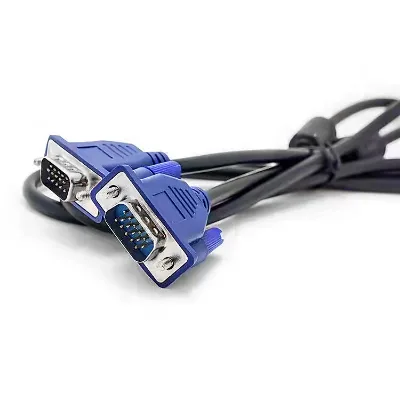
The material composition is a critical factor in determining signal quality. The observed data specifies that the wire core material can be either bare copper wire or tinned wire, with copper being a primary material of construction. The outer sheath is frequently noted as PVC, providing necessary insulation and flexibility. For the connector interface, the data highlights nickel-plated materials, which serve as a base layer before the application of gold plating. Gold plating is essential in this context because it resists oxidation and corrosion, ensuring a stable electrical connection over time. The pin configuration is a vital specification, with the data noting that connectors typically feature more than 10 pins, which aligns with the standard 15-pin D-sub connector used for VGA signals.
Length is another variable that requires careful selection based on the deployment environment. The product listings show a wide range of lengths, from short 6-inch segments to 25-centimeter cables, and even longer transmission distances up to 66 feet (approximately 20 meters). The "Length" attribute is often listed as optional, suggesting that buyers should verify the specific run length required for their installation to avoid signal attenuation. While the standard resolution is cited as 1080P, the actual performance of a splitter cable depends heavily on the quality of the shielding and the integrity of the conductors. Buyers should verify that the cable supports the specific resolution and refresh rate required by their display equipment, as the mere presence of a gold-plated connector does not guarantee high-definition performance if the internal wiring is substandard.
Compliance and Certification Verification
Navigating the regulatory landscape is a non-negotiable step in B2B procurement, particularly for electronic components entering global markets. The supplied product facts reveal a strong emphasis on compliance, with multiple certifications consistently appearing in the data. The most frequently observed certifications include RoHS (Restriction of Hazardous Substances), CE (Conformité Européenne), and UL (Underwriters Laboratories). Some listings also mention ISO standards and CCC (China Compulsory Certification), indicating that manufacturers are catering to both domestic Chinese markets and international export requirements.
The presence of "Rohs Compliant with" in the standard attributes confirms that the materials used, including the copper core and PVC sheath, adhere to restrictions on hazardous substances. This is crucial for maintaining environmental safety and meeting regulatory standards in the European Union and other regions with similar legislation. The CE marking suggests that the product meets EU safety, health, and environmental requirements, while the UL certification points to adherence to North American safety standards. For a buyer, verifying these certifications is not merely a box-checking exercise; it is a risk mitigation strategy. A supplier that can provide valid, up-to-date certificates for RoHS, CE, and UL demonstrates a commitment to quality control and regulatory adherence.
However, buyers must exercise caution regarding the specific scope of these certifications. The data lists certifications alongside various product models, but it does not explicitly state that every single SKU in a supplier's catalog carries every listed certification. Therefore, procurement teams should request specific test reports or certificates of conformity for the exact model numbers they intend to purchase. The presence of "ISOCCS" in the data suggests a broader quality management system, but the specific ISO standard (e.g., ISO 9001) should be confirmed. Relying on general marketing claims without verifying the documentation for the specific batch or model can lead to compliance failures at customs or in the end-user market.
Cost Drivers and Pricing Dynamics
The pricing structure for gold plated VGA splitter cables is influenced by several tangible factors, as evidenced by the observed market data. The listed price range spans from $0.01 to $50, a wide variance that reflects differences in cable length, connector quality, packaging, and order volume. The minimum order quantity (MOQ) ranges from 100 to 10,000 units, indicating that unit costs are heavily dependent on the scale of the purchase. Buyers purchasing small quantities may face higher per-unit costs, while those ordering in bulk can leverage economies of scale to reduce the price significantly.
Material costs are a primary driver of the final price. The use of high-purity copper or tinned wire, as opposed to cheaper alternatives like aluminum-clad copper, directly impacts the cost. Similarly, the thickness and quality of the gold plating on the connectors affect the price; a thicker gold layer offers better durability and conductivity but increases manufacturing costs. The packaging method also plays a role. The data shows options ranging from simple polybags to customized packaging or cardboard boxes containing specific accessories. Customized packaging, often requested for branding purposes, adds to the overall cost but may be necessary for retail distribution.
Lead times are another cost consideration. The observed delivery time of 30-40 days suggests that production and shipping can be a significant factor in the total cost of ownership. Longer lead times may necessitate higher inventory holding costs or earlier planning, which can impact cash flow. Buyers should negotiate terms that align with their production schedules to avoid rush fees or stockouts. Additionally, the "Small Orders: Accepted" attribute indicates flexibility for buyers who cannot meet high MOQs, though this flexibility often comes with a premium price per unit. Understanding these cost drivers allows buyers to make informed decisions that balance budget constraints with quality requirements.
Typical Applications and Deployment Scenarios
The versatility of gold plated VGA splitter cables makes them suitable for a wide array of applications, as detailed in the product specifications. The primary use case is for VGA signal transmission between devices, specifically connecting computers to monitors, projectors, and multimedia displays. The data explicitly lists applications including multimedia, monitor, computer, DVD players, and game players. This broad applicability makes these cables essential in office environments, educational institutions, and home entertainment systems.
In commercial settings, such as conference rooms or classrooms, VGA splitters are often used to duplicate a single video source to multiple displays. This allows for synchronized presentations or digital signage without the need for multiple computers. The "VGA to VGA" type designation in the data supports this use case, indicating that the cable is designed to maintain signal integrity when splitting the output. The standard 1080P resolution capability ensures that high-definition content can be displayed clearly, which is critical for professional presentations and gaming.
The data also mentions specific models like the "RJ45 to VGA Adapter" and "HDMI to VGA Converter Cable," suggesting that the market includes hybrid solutions for connecting modern devices to legacy VGA displays. While the core keyword focuses on splitter cables, the presence of these adapters indicates that buyers may need to consider compatibility with various input sources. For instance, a computer with only HDMI output may require a converter to utilize a VGA splitter. The "Usage" attribute confirms that these products are intended for signal transmission, but the specific application depends on the source and destination devices. Buyers should assess their existing infrastructure to determine if a simple splitter cable is sufficient or if additional conversion hardware is required.
Supplier Evaluation and Quality Assurance
Evaluating suppliers for gold plated VGA splitter cables requires a rigorous approach to ensure that the products meet the stated specifications. The origin of the products is consistently listed as China, with specific mentions of Ningbo as a production hub. This geographic concentration suggests a mature supply chain, but it also necessitates thorough due diligence. Buyers should verify the supplier's manufacturing capabilities, focusing on their quality control processes and adherence to the certifications mentioned earlier.
The "Customization: Available" attribute indicates that suppliers are willing to tailor products to specific buyer needs, such as custom lengths, colors, or branding. However, customization introduces complexity into the quality assurance process. Buyers must ensure that the customized components, such as the outer sheath or connector plating, still meet the required standards. The data notes that the shape of the product can be round wire or rectangle, and the color is typically black, but customization options should be clearly defined in the purchase order to avoid discrepancies.
Quality control should extend beyond the final product inspection to include raw material verification. The use of tinned wire versus bare copper wire, for example, should be confirmed through material safety data sheets or supplier declarations. The "Delivery Time" of 30-40 days provides a window for pre-shipment inspections, allowing buyers to verify that the products match the samples and specifications before they are shipped. It is also advisable to request third-party testing reports, especially for certifications like RoHS and CE, to ensure that the claims are backed by independent verification.
Long-Term Procurement Considerations
Sourcing gold plated VGA splitter cables is not just a one-time transaction but part of a long-term supply chain strategy. The "Small Orders: Accepted" feature suggests that suppliers are flexible, but buyers should aim to establish a stable relationship with a single supplier to ensure consistency in quality and pricing. The variability in lead times and MOQs across different suppliers can create supply chain disruptions if not managed carefully. Buyers should consider the total cost of ownership, including the cost of potential replacements due to early failure or compatibility issues.
The obsolescence of VGA technology is a long-term consideration. While the current market demand for VGA cables remains strong, particularly in legacy systems and specific industrial applications, the shift towards digital interfaces like HDMI and DisplayPort is ongoing. Buyers should assess the longevity of their current infrastructure and plan for a transition strategy. However, for the immediate future, high-quality VGA splitter cables remain a critical component for many organizations. Ensuring that the cables sourced are durable and compliant with current standards will extend their useful life and reduce the frequency of replacements.
Finally, the packaging and logistics aspects should be optimized for long-term efficiency. The data mentions various packing options, from polybags to cardboard boxes. Selecting packaging that protects the cables during transit and storage is essential to prevent damage and maintain product quality. Customized packaging can also enhance brand visibility and customer satisfaction, but it must be balanced against the additional cost. By focusing on these long-term factors, buyers can build a resilient supply chain that supports their operational needs while adapting to future technological changes.
FAQs
What certifications do gold plated vga splitter cables typically have?
These cables typically hold RoHS, CE, and UL certifications. Some listings also include ISO and CCC marks, ensuring compliance with international safety and environmental standards for electronic components.
Which materials are used for the wire core in these cables?
The wire core material is either bare copper wire or tinned wire. Copper is the primary conductor, while the outer sheath is frequently made of PVC for insulation and flexibility.
Can buyers request custom packaging for these splitter cables?
Yes, customization is available for packaging options like polybags or customized boxes. Suppliers may also pack items in cardboard boxes containing specific accessories depending on the order requirements.
What is the standard delivery time for these products from China?
The standard delivery time is typically 30 to 40 days. This lead time accounts for production and shipping from origins like Ningbo, China, to the destination market.
How does the minimum order quantity vary for these cables?
The minimum order quantity ranges from 100 to 10,000 units. Some suppliers accept small orders, though this flexibility often affects the per-unit pricing structure.
What is the maximum transmission distance for these VGA cables?
The transmission distance can reach up to 66 feet, which is approximately 20 meters. Buyers should verify specific length options as they are often listed as optional or vary by model.
Which connector types are supported by these splitter cables?
Supported connector types include VGA Male to VGA Female and HDMI to VGA configurations. The connectors often feature more than 10 pins and may be nickel-plated for durability.