Source GPON FTTH Router with IGMP Snooping For Home And Business
Find a GPON FTTH Router with IGMP Snooping for reliable fiber connectivity. Compare 30 models featuring Gigabit ports, dual-band WiFi, and EPON/GPON compatibility. Evaluate specifications like 12VDC power supply and CE/RoHS certifications to select the right ONU for your optical network needs.
Key considerations
Products List


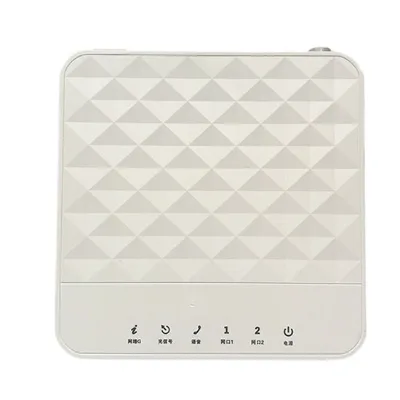


Professional Router LTE SIM Card WiFi Router Wireless Hotspot 3G 4G Router
$18.00 - $26.00
MOQ: 1 Pieces


Comprehensive Sourcing Guide
GPON FTTH Router with IGMP Snooping Sourcing Guide
Procuring GPON FTTH routers equipped with IGMP snooping requires a precise understanding of optical network termination requirements and multicast traffic management. These devices serve as the critical interface between the service provider’s passive optical network and the end-user’s local area network. The inclusion of IGMP snooping is essential for efficiently managing multicast streams, such as IPTV, by preventing unnecessary broadcast traffic from congesting the LAN. Buyers must distinguish between standard ONTs and more advanced routers that integrate routing capabilities, ensuring the selected unit supports the specific protocol versions required by their ISP.
The market offers a variety of form factors, from compact single-port modems to multi-port routers with integrated Wi-Fi. Observations indicate that many listings feature Gigabit Ethernet ports and dual-band wireless capabilities, catering to modern bandwidth demands. However, the presence of IGMP snooping is not universal across all GPON devices. Sourcing teams must explicitly verify this feature in technical datasheets, as it is often a firmware-dependent function rather than a hardware standard. Failure to confirm this capability can lead to poor video quality and network inefficiencies in multicast-heavy environments.
Product Scope and Observed Listing Signals
Current market listings reveal a diverse range of GPON and EPON compatible devices, with models like the PG-1G9601 and PG-4GP9607 representing common configurations. These units typically support G652D and G657A fiber types, ensuring compatibility with standard single-mode fiber installations used in FTTH deployments. The observed product attributes highlight a strong emphasis on Gigabit data rates and dual-band Wi-Fi support, which are now standard expectations for residential and small business connections. Buyers should note that while many devices list "New" condition and various certifications, the specific inclusion of IGMP snooping must be cross-referenced with the model number.
Price and minimum order quantity (MOQ) signals vary significantly, with observed price ranges spanning from low-cost single units to higher-tier bulk pricing. Supply ability figures suggest that manufacturers can handle substantial monthly volumes, indicating robust production capabilities for large-scale deployments. However, the presence of certifications like ISO, CE, and RoHS does not automatically guarantee advanced software features like IGMP snooping. Procurement specialists should treat these certifications as baseline compliance markers rather than indicators of functional depth. It is crucial to request detailed firmware specifications to confirm multicast support before committing to any purchase order.
Technical Specifications to Verify
When evaluating GPON routers for IGMP snooping, the optical interface type is a primary technical consideration. Most observed listings specify SC/UPC connectors, which are standard for many residential installations, but buyers must confirm compatibility with their existing fiber infrastructure. The wavelength specifications of 1310nm for upstream and 1490nm for downstream are typical for GPON systems, ensuring proper signal transmission. Additionally, the power supply requirements, often listed as 12VDC 1A, must be matched with local voltage standards and plug types to avoid operational issues in different regions.
Beyond optical parameters, the Ethernet port configuration and Wi-Fi standards are critical for end-user performance. Many modern units feature four Gigabit LAN ports and support both 2.4GHz and 5GHz bands, with some newer models incorporating Wi-Fi 6 technology for improved throughput. Buyers should verify the work mode, as some devices operate primarily as access points or bridges, while others function as full routers. The presence of specific buttons like Reset and WPS indicates user-friendly management features, but the underlying firmware must explicitly support IGMP v2 and v3 snooping to effectively manage multicast traffic.
Compliance and Safety Documentation
Regulatory compliance is a non-negotiable aspect of sourcing electronic networking equipment for international markets. The observed listings frequently cite CE, RoHS, and ISO certifications, which indicate adherence to European safety, environmental, and quality management standards. These certifications are vital for ensuring that the devices do not contain hazardous substances and meet electromagnetic compatibility requirements. Buyers must request valid certificate copies and verify their authenticity through the issuing bodies, as counterfeit documentation is a risk in global supply chains.
In addition to product-level certifications, buyers should inquire about regional regulatory approvals specific to their target markets, such as FCC in the United States or MIC in Japan. The physical dimensions and packaging details, such as carton box specifications, also play a role in logistics and storage efficiency. Understanding the net and gross weights helps in calculating shipping costs and warehouse space requirements. Ensuring that all documentation is up-to-date and matches the specific model being ordered prevents customs delays and ensures smooth deployment in regulated environments.
Cost Drivers and Commercial Terms
The total cost of ownership for GPON routers is influenced by several factors, including the complexity of the firmware and the quality of the optical components. Devices with advanced features like IGMP snooping, dual-band Wi-Fi, and Wi-Fi 6 support typically command higher prices than basic ONTs. Buyers should analyze the price range in the context of the features offered, recognizing that lower-cost options may lack the necessary software capabilities for multicast management. Volume discounts are often available, with supply abilities indicating that manufacturers can accommodate large orders, which can significantly reduce per-unit costs.
Commercial terms such as warranty periods and return policies are critical for mitigating procurement risk. Observed warranty times range from 13 to 18 months, which is standard for consumer-grade networking equipment. Buyers should negotiate extended warranty options for bulk purchases to ensure long-term support. Additionally, clear definitions of defect rates and replacement procedures should be established in the contract. Understanding the MOQ requirements is also essential, as some suppliers may have minimum order thresholds that impact inventory management and cash flow for smaller procurement teams.
Supplier Qualification and Quality Control
Selecting a reliable supplier for GPON routers requires a thorough assessment of their manufacturing capabilities and quality control processes. Buyers should verify the supplier’s production location, with many listings indicating origins in Guangdong, China, a major hub for electronics manufacturing. It is important to conduct factory audits or request third-party inspection reports to ensure that production lines adhere to strict quality standards. Suppliers with high supply abilities should demonstrate consistent output quality and reliable lead times to support large-scale deployments.
Quality control measures should include pre-shipment inspections and functional testing of each unit. Buyers should request test reports that verify optical power levels, Ethernet port functionality, and Wi-Fi performance. Specifically, suppliers should be able to demonstrate that IGMP snooping functions correctly under various network conditions. Establishing a clear communication channel for technical support and firmware updates is also crucial. A qualified supplier will provide comprehensive documentation and responsive assistance to resolve any issues that arise during installation or operation.
Long-Term Procurement Checks
Long-term success in sourcing GPON routers depends on the supplier’s ability to provide ongoing firmware updates and technical support. As network requirements evolve, features like IGMP snooping may need updates to support new multicast protocols or security enhancements. Buyers should establish a service level agreement that guarantees timely access to firmware patches and bug fixes. Regular reviews of supplier performance, including delivery times and product quality, help maintain a high standard of procurement.
Additionally, buyers should monitor market trends for new technologies, such as Wi-Fi 6E or 10G-PON, to ensure their procurement strategy remains future-proof. Building a relationship with suppliers who offer scalable solutions allows for flexibility in expanding network infrastructure. It is also important to stay informed about regulatory changes that may impact device compliance. By maintaining a proactive approach to supplier management and technology monitoring, organizations can ensure a reliable and efficient FTTH network deployment.
FAQs
What fiber types does this GPON FTTH Router with IGMP Snooping support?
The listed ONT products support G652D and G657A fiber types, which are common standards for FTTH installations. G657A offers better bend resistance, making it suitable for tight indoor routing, while G652D is widely used in outdoor and distribution cabling. Confirm fiber compatibility with your existing drop cable before ordering.
How is the optical interface configured on these GPON FTTH routers?
These units use an SC/UPC optical interface for the fiber connection. SC/UPC connectors are widely used in FTTH deployments, so patch cords with matching SC/UPC polishing are needed to avoid return-loss issues. Verify that your installed splitters and patch panels use SC/UPC, or plan an adapter, before placing an order.
Which power supply requirements apply to the GPON FTTH router models?
The listed models run on 12V DC at 1A, with power draw around 12W or lower. This makes them suitable for standard FTTH customer-premises installations using an ordinary wall adapter. Check that local plug types and backup power arrangements, if any, match the 12V DC input specification.
Can these GPON FTTH routers be customized for specific network deployments?
Yes, customization is listed as available on these product pages. Typical requests include firmware, branding, packaging, and configuration adjustments, though exact options should be confirmed with the supplier before ordering. Customization may affect MOQ and lead time, so clarify these terms early when planning an FTTH rollout.
What warranty period is offered for these GPON FTTH routers?
Listed warranty times range from 13 to 18 months depending on the product variant. The warranty generally covers manufacturing defects under normal use, but specific terms such as replacement procedures and exclusions should be confirmed directly with the supplier. Keep purchase records to support any warranty claim during the coverage period.
How does IGMP snooping help in GPON FTTH router deployments?
IGMP snooping allows the router to forward multicast traffic, such as IPTV streams, only to ports that requested it, reducing unnecessary bandwidth use on the LAN. This is important for service providers delivering IPTV over FTTH. Confirm that the specific model and firmware version include the IGMP snooping features your network requires.
What wavelengths do these GPON FTTH routers operate on?
The listed units operate at 1310/1490nm, the standard wavelength pair for GPON and EPON downstream and upstream transmission in FTTH networks. This compatibility allows the ONT to work with standard OLT equipment on the same PON tree. Ensure your OLT follows the same GPON or EPON standard to avoid interoperability issues.