Source Greaseproof Kraft Paper Food Tray for Fast Food Barbecue Nachos
Compare 30 Greaseproof Kraft Paper Food Tray options from Chinese manufacturers. These disposable trays feature customizable sizes, heat resistance, and eco-friendly materials suitable for fast food, barbecue, and hot dog applications.
Key considerations
Products List


Greaseproof Kraft Paper Container for Fast Food Disposable Snack Serving Tray
$0.01 - $0.02
MOQ: 100000 Pieces

Leak-Resistant Disposable Container: Kraft Paper Fast Food Snack Serving Tray
$0.01 - $0.02
MOQ: 100000 Pieces


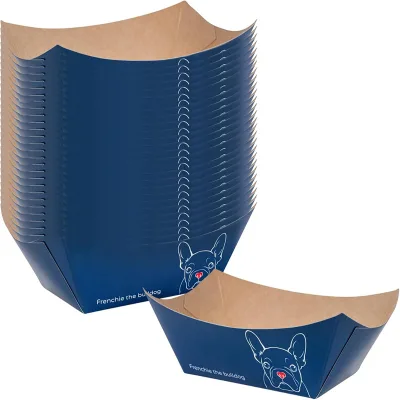


Grease-Resistant Kraft Paper Food Tray for Snacks BBQ and Takeaway Dishes
$0.01 - $0.01
MOQ: 50 Pieces


Biodegradable Kraft Paper Tray for Environmentally Conscious Restaurant Use
$0.01 - $0.01
MOQ: 50 Pieces


$0.02 - $0.02
MOQ: 30000 Pieces
Comprehensive Sourcing Guide
Strategic Sourcing Guide for Greaseproof Kraft Paper Food Trays
Understanding Technical Specifications and Material Composition
When sourcing greaseproof kraft paper food trays, the primary focus must be on the material integrity and functional specifications that ensure food safety and structural reliability. The core material identified in available market data is Kraft Paper, specifically noted as Food Grade Paper. This distinction is critical, as not all kraft paper is suitable for direct food contact. The product attributes indicate a range of paper types available, including Paperboard, Craft Paper, and White Paper, allowing buyers to select based on specific aesthetic or functional needs. The "Wood Color" and "Brown" color options are standard observations for unbleached kraft varieties, which often signal a natural, eco-friendly positioning.
A significant technical variable is the greaseproofing capability. While the term "greaseproof" is central to the keyword, the specific chemical treatments or coatings applied to achieve this are not explicitly detailed in the general product facts. Buyers must verify the specific barrier technology used. The observed product types include "Boat Type Food Container" and general "Food Tray" designs, with a specific "Disposable Kraft Paper Tray" classification. These trays are engineered for heat and cold resistance, a vital specification for serving hot items like barbecue or nachos, as well as cold desserts. The printing capabilities vary, with some listings offering single-sided printing and others two-sided options. Surface finishing techniques such as embossing, glossy lamination, and matt lamination are available, which can influence the grease resistance and visual appeal.
The sizing specifications are highly customizable. The market data reveals a wide range of model sizes, specifically denoted by weight capacities: 0.25 LB, 0.4 LB, 0.5 LB, 1 LB, 2 LB, 2.5 LB, and 3 LB. This granularity allows for precise matching to menu items, from small condiment portions to large main course servings. The standard production model numbers, such as TL-F251009014 and TL-F251008001, suggest that while custom sizes are accepted, there are established baseline molds in the supply chain. The "Custom Size Accepted" attribute confirms that OEM and ODM capabilities are prevalent, enabling brands to create unique shapes that fit their specific packaging requirements.
Compliance, Certification, and Food Safety Standards
Navigating the regulatory landscape is a non-negotiable aspect of sourcing food-grade packaging. The supply chain data explicitly mentions certifications such as CE/EU and FDA. These are high-confidence indicators of compliance with major international safety standards. FDA compliance is particularly crucial for products intended for the North American market, ensuring the paper and any coatings do not leach harmful substances into food. Similarly, CE/EU certification indicates adherence to European safety and health requirements. However, buyers must treat these as observations of specific supplier capabilities rather than universal guarantees for every listed product.
The "Food Grade Paper" material attribute reinforces the safety profile, but verification is essential. The usage data lists applications for "Food" and "Egg," suggesting the material's versatility across different food types. Buyers should request specific migration test reports for heavy metals, fluorine, and other potential contaminants, especially if the trays are intended for high-fat or high-acid foods. The "Eco-Friendly Aspect" is another compliance-related attribute that often aligns with sustainability regulations in the EU and increasingly in the US. This implies the material may be biodegradable or compostable, but the exact standards (such as EN 13432 or ASTM D6400) should be verified against the specific supplier's documentation.
It is important to note that while "Custom size" is listed as a standard, the "prod_standard" field also references specific weight capacities. This suggests that while the dimensions can be customized, the structural integrity must still meet certain industry benchmarks for load-bearing. The "Standard Export Carton" packing method implies that the packaging itself is designed to protect the product during international shipping, which is a logistical compliance factor. Buyers should ensure that the supplier's quality management system is certified, as this underpins the consistency of the FDA and CE claims.
Cost Drivers and Pricing Dynamics
The pricing structure for greaseproof kraft paper food trays is influenced by several dynamic factors, primarily driven by material costs, order volume, and customization levels. The observed price range in the market data is notably low, spanning from $0.01 to $1.00 USD per unit. This wide range reflects the variability in size, thickness, and order quantity. Smaller trays (0.25 LB) will naturally cost less than larger 3 LB containers, and the unit price is heavily dependent on the Minimum Order Quantity (MOQ).
The MOQ data presents a significant cost driver. The observed range is extensive, from 50 units up to 300,000 units. Specific listings indicate an MOQ of 20,000 units for certain designs, while others suggest a range of 10,000 to 50,000 pieces per design, with negotiable terms. This high-volume requirement is typical for paper-based food packaging due to the economies of scale in paper production and printing. Buyers with lower volume needs may face higher per-unit costs or may need to negotiate with suppliers who offer lower MOQs at a premium. The "Negotiable" status of the MOQ suggests flexibility, but it often comes with a trade-off in unit price or lead time.
Customization is another major cost variable. The availability of "Custom Color," "Customer Logo Accepted," and "Custom Size" options adds layers of complexity to the manufacturing process. Custom molds for unique sizes or specific lamination finishes like embossing will incur setup fees and higher per-unit costs compared to standard stock items. The "Cartoon" (likely a typo for Carton) packing specification also impacts cost; standard export cartons are included, but specialized internal packaging or branding on the outer cartons will increase the total landed cost. Buyers should analyze the total cost of ownership, including shipping and potential inventory holding costs, rather than focusing solely on the unit price.
Typical Applications and Industry Use Cases
The versatility of greaseproof kraft paper food trays makes them suitable for a diverse range of food service applications. The industry applications data explicitly lists Fast Food, Barbecue, Nachos, and Hot Dogs. These categories share common characteristics: they often involve greasy, hot, or messy foods that require a container with strong grease resistance and heat tolerance. The "Boat Type" design is particularly well-suited for items like nachos, fries, or hot dogs, where the shape helps contain the food and prevents spillage.
Beyond the listed categories, the "Food" and "Egg" usage tags suggest utility in breakfast service, bakery items, and general catering. The "Disposable" nature of the product aligns with the operational needs of high-volume food service environments where sanitation and speed are paramount. The "Eco-Friendly Aspect" makes these trays increasingly attractive to modern consumers and businesses aiming to reduce their plastic footprint. This sustainability angle is a significant marketing advantage for brands in the fast-casual and quick-service restaurant sectors.
The "Packing Food" application indicates that these trays are also used for retail food packaging, such as pre-packaged meals or take-away orders from grocery stores. The ability to customize the logo allows businesses to use the tray as a branding tool, turning a disposable item into a marketing asset. The heat and cold resistance properties ensure that the trays can handle a wide temperature range, making them suitable for both hot take-out meals and cold desserts or salads.
Supplier Evaluation and Sourcing Strategy
Evaluating suppliers for greaseproof kraft paper food trays requires a rigorous approach to verifying claims and capabilities. The origin data points to China, specifically Zhejiang, as a primary manufacturing hub. This region is known for its robust paper processing industry, but buyers must conduct due diligence to ensure quality consistency. The "Million Pack" brand name appears in the data, serving as an example of a supplier identity, but buyers should not limit their search to this single entity. Instead, the focus should be on the supplier's ability to meet the specific technical and compliance requirements outlined in the sourcing guide.
Key evaluation criteria should include the supplier's experience with FDA and CE certifications, their capacity to handle custom orders, and their track record for on-time delivery. The "OEM/ODM" standard indicates that many suppliers offer design and manufacturing services, which is beneficial for brands seeking unique packaging solutions. Buyers should request samples to test grease resistance, heat tolerance, and structural integrity under real-world conditions. The "Standard Export Carton" packing suggests that the supplier has experience with international logistics, but buyers should verify the packaging standards to ensure the product arrives undamaged.
The negotiation of MOQ and lead times is a critical part of the supplier evaluation. While the data shows an MOQ of 20,000 units for some products, others offer ranges of 10,000 to 50,000. Buyers should assess whether the supplier can accommodate their specific volume needs without compromising on quality or price. The "Negotiable" status of the MOQ suggests that there is room for discussion, but buyers should be prepared to commit to a volume that justifies the production run.
Quality Control and Long-Term Procurement Considerations
Maintaining consistent quality is essential for long-term procurement success. The "Disposable" nature of the product means that any quality failure can directly impact the customer experience and brand reputation. Buyers should implement a robust quality control plan that includes pre-production sample approval, in-process inspections, and final random sampling. The "Custom Size Accepted" and "Custom Color" options introduce variables that require strict adherence to specifications. Buyers should establish clear tolerance limits for dimensions, color matching, and print quality.
The "Waterproof" function is a key performance attribute that must be verified. While the data lists this as an attribute, the actual performance can vary based on the specific coating or treatment used. Buyers should request test reports for water resistance and grease penetration to ensure the trays meet the required standards for their intended use. The "Heat and Cold Resistance" attribute also requires validation, particularly for products intended for hot foods. Thermal testing should be conducted to ensure the tray does not warp, leak, or release harmful substances at high temperatures.
Long-term procurement considerations include supply chain resilience and sustainability. The reliance on paper as a raw material means that buyers should monitor the availability and pricing of pulp and kraft paper. Diversifying suppliers or maintaining a strategic inventory buffer can mitigate risks associated with supply chain disruptions. The "Eco-Friendly Aspect" is a growing trend, and buyers should consider the end-of-life options for the trays, such as compostability or recyclability, to align with corporate sustainability goals. Continuous communication with suppliers regarding material innovations and regulatory changes will help ensure that the procurement strategy remains effective and compliant over time.
Comparative Analysis of Product Attributes
To facilitate decision-making, the following table summarizes the key attributes observed in the market data for greaseproof kraft paper food trays. This comparison highlights the variability in specifications and helps buyers identify the features most relevant to their specific needs.
| Attribute Category | Observed Values/Options | Relevance to Buyer |
|---|---|---|
| Material | Kraft Paper, Food Grade Paper, Paperboard, Craft Paper | Determines food safety and structural strength. |
| Size/Weight | 0.25 LB to 3 LB; Custom Size Accepted | Matches specific menu items and portion sizes. |
| Customization | Logo, Color, Size, Printing (Single/Two-Sided) | Enables branding and specific functional requirements. |
| Certifications | CE/EU, FDA | Ensures compliance with international food safety standards. |
| MOQ | 50 to 300,000; Specific listings at 10k-50k or 20k | Impacts initial investment and inventory strategy. |
| Packing | Carton, Standard Export Carton | Affects shipping costs and product protection. |
| Applications | Fast Food, Barbecue, Nachos, Hot Dogs, Egg | Defines the suitable use cases and market segment. |
| Function | Waterproof, Heat/Cold Resistance, Disposable | Critical for performance in hot/cold food service. |
This structured overview allows buyers to quickly assess whether a potential supplier's offering aligns with their operational requirements. By focusing on these core attributes, buyers can make informed decisions that balance cost, quality, and compliance.
FAQs
What certifications do greaseproof kraft paper food trays have?
These trays typically hold FDA and CE/EU certifications for food safety. Buyers should verify specific test reports for heavy metals and fluorine migration before purchasing, as these claims apply to specific supplier capabilities rather than all listed products.
Can I customize the size and logo on these trays?
Yes, customization is available for size, color, and customer logos. Suppliers offer OEM and ODM services with standard export carton packing, though custom molds may incur setup fees and require minimum order quantities of at least 10,000 pieces.
What is the minimum order quantity for these food trays?
The minimum order quantity ranges from 50 to 300,000 units depending on the supplier. Specific listings often require 20,000 units or a range of 10,000 to 50,000 pieces per design, with terms that may be negotiable for larger volumes.
How do these trays handle heat and cold temperatures?
The trays are designed with heat and cold resistance for serving various foods. They are suitable for hot items like barbecue and cold desserts, provided the specific coating meets the required greaseproof and waterproof performance standards for your application.
Where are these greaseproof kraft paper trays manufactured?
Most products originate from Zhejiang, China, a major hub for paper processing. Buyers should verify the specific factory location and quality management systems to ensure consistency with the claimed FDA and CE certifications for international shipping.
Which paper types are used for these food containers?
Manufacturers use food-grade kraft paper, paperboard, craft paper, and white paper. The material is often unbleached with a wood color or brown finish, offering an eco-friendly aspect while maintaining structural integrity for fast food and catering applications.