Source Greaseproof Biodegradable Butter Wrapping Paper for Food
Find 30 Greaseproof Biodegradable Butter Wrapping Paper options from Chinese manufacturers. Compare virgin wood pulp specs, SGS certifications, and custom sizes for food packaging needs. Evaluate moisture proof features, starch coated layers, and anti-oil performance across multiple suppliers to ensure quality standards are met for your specific application requirements.
Key considerations
Products List


Customized Printed Food Wrapping Greaseproof Paper Burger Wrappers Greaseproof Paper
$1500.00 - $1600.00
MOQ: 3000 kg
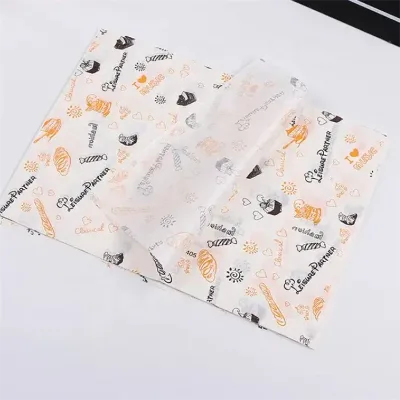


Unbleached Non-Stick Parchment Wrapping Greaseproof Packaging Patty Paper
$1.18 - $2.68
MOQ: 5000 Pieces


Comprehensive Sourcing Guide
Greaseproof Biodegradable Butter Wrapping Paper Sourcing Guide
Procurement teams must first distinguish between standard greaseproof paper and true biodegradable variants, as the supplied data indicates a mix of virgin wood pulp and starch-coated options. While the raw material is consistently listed as 100% virgin wood pulp, the coating process varies between single-side and double-side applications, directly impacting the paper's ability to handle butter fats without degradation. Buyers should verify that the specific product model, such as the NXK-Greaseproof Paper or HR-SP-003, explicitly confirms biodegradability rather than relying solely on the "greaseproof" or "oil-proof" feature tags found in general listings.
The observed product range spans from basic food wrapping paper to specialized glazed paper with specific GSM weights between 26 and 38, or base paper weights up to 100g. This variance suggests that a single supplier may offer multiple grades, requiring buyers to match the paper's thickness and coating density to the specific viscosity of the butter being wrapped. Since the origin locations include Henan, Shandong, and Guangxi, sourcing strategies should account for regional manufacturing capabilities, ensuring the selected supplier can consistently deliver the required softness and translucency for high-quality butter packaging applications.
Product Scope and Observed Listing Signals
Buyers should analyze the listed product models to confirm they align with the specific dimensions required for butter wrapping, noting that standard sizes like 110 x 57 x 15mm or larger rolls up to 75x100cm are available. The data shows a wide range of packing formats, including OPP bags, export cartons, and palletized rolls, which indicates that suppliers are equipped to handle both small trial orders and large-scale industrial shipments. However, the presence of "Custom Size" specifications alongside fixed dimensions suggests that buyers must clearly define their slitting diameter requirements, which can range from 30cm to 85cm, to avoid receiving paper that is difficult to process on existing wrapping machinery.
The feature set observed includes moisture-proof, waterproof, and greaseproof attributes, yet the term "biodegradable" requires careful verification against the coating material, which is listed as starch in some entries. While the paper is described as having a soft hardness and translucent appearance, these physical traits do not automatically guarantee environmental compliance without explicit certification. Procurement teams must scrutinize the "Type" field, distinguishing between anti-oil paper and glazed paper, to ensure the selected product meets the specific functional needs of butter packaging while adhering to sustainability goals.
Technical Specifications to Verify
Technical validation must begin with the GSM and thickness ranges, as the data indicates a loose thickness between 0.04mm and 0.12mm and a GSM range of 26-38 for specific models. Buyers should request physical samples to confirm that the paper maintains structural integrity when wrapped around butter, ensuring the 76mm paper core diameter and slitting capabilities match their production line speed. The layered structure is noted as basic level, which implies that for high-moisture environments, the double-side coating process may be necessary to prevent oil penetration and maintain the paper's barrier properties during storage.
Verification of the coating side is critical, as the listings show both single-side and double-side coated options, with starch serving as a potential biodegradable coating agent. Buyers must confirm whether the coating is applied uniformly to ensure consistent grease resistance across the entire sheet, particularly for products requiring hot closure capabilities. The transparency and color, typically white, should be checked against brand standards, as the visual appeal of the packaging is often as important as its functional barrier properties in the food and pharmaceutical sectors.
Compliance and Safety Documentation
Safety compliance is paramount for food contact applications, and the supplied facts list a broad spectrum of certifications including FDA, SGS, BRC, LFGB, and Kosher. Buyers should prioritize suppliers who can provide current, valid certificates for the specific product model being ordered, as the presence of these certifications in a general listing does not guarantee they apply to every batch or size variation. The inclusion of MSDS and ISO9001 indicates a commitment to quality management and safety data transparency, which is essential for maintaining regulatory compliance in international markets.
Procurement teams must verify that the "Food Packaging" and "Medicine Packaging" usage claims are backed by the specific test results associated with the listed certifications. While the raw material is virgin wood pulp, the biodegradability claim requires confirmation that the starch coating and any other additives do not introduce toxic residues. Buyers should request the specific SGS test reports referenced in the data to ensure the paper meets the migration limits for food contact materials, particularly for high-fat products like butter that can accelerate chemical leaching if the barrier is compromised.
Cost Drivers and Commercial Terms
Cost structures are heavily influenced by the customization level, as the data shows "Customizable" standards and "OEM" branding options alongside fixed model numbers. Buyers should anticipate that custom sizes, specific GSM weights, or unique coating applications will incur higher unit costs compared to standard inventory items like the 24x36" or 30x40" rolls. The observed MOQ range of 1 to 100,000 units suggests significant flexibility, but larger orders may benefit from economies of scale, provided the supplier can maintain consistent quality across the increased volume.
Payment terms and sample availability are key commercial factors, with T/T and Western Union listed as standard methods and samples explicitly supported. Buyers should negotiate sample costs and lead times before committing to large orders, as the production origin in China Mainland implies potential shipping variables that affect the total landed cost. The "25000 Tons/Year" capacity mentioned in packing details indicates a high-volume supplier, which may offer better pricing stability but requires careful contract management to ensure delivery schedules align with production needs.
Supplier Qualification and Quality Control
Supplier qualification should focus on verifying the consistency of the "Virgin Wood Pulp" material source and the reliability of the starch coating process across different production batches. The presence of multiple origin locations, including Henan, Shandong, and Guangxi, suggests a distributed manufacturing network, which requires buyers to audit specific facilities rather than relying on general company credentials. Quality control protocols must include regular checks for the "Soft" hardness and "Translucent" appearance to ensure the paper does not become brittle or opaque during storage or transport.
Buyers must establish a rigorous incoming quality control process to verify that the "Greaseproof" and "Waterproof" features meet the required performance standards for butter packaging. The data indicates a "Basic Level" of layered structure, which may necessitate additional testing for high-fat content applications to prevent oil seepage. Establishing a clear communication channel for defect reporting and ensuring the supplier adheres to the "Custom" standard requirements will help maintain product integrity and minimize the risk of supply chain disruptions.
Long-Term Procurement Checks
Long-term procurement strategies should include periodic re-verification of certification status, as standards like FDA, BRC, and ISO9001 require regular renewal and audit. Buyers should schedule annual reviews of the supplier's quality management systems to ensure that the "Food Packaging" and "Industrial Use" capabilities remain consistent with evolving regulatory requirements. The "OEM" branding option allows for brand differentiation, but long-term contracts should include clauses that mandate the supplier to maintain the specific material and coating specifications without unauthorized changes.
Sustainability goals must be monitored through regular audits of the biodegradability claims, ensuring that the starch coating and virgin wood pulp sourcing remain environmentally compliant. Buyers should track the supplier's ability to meet the "Custom Size" and "Slitting Diameter" requirements over time, as changes in machinery or raw material sources can impact the final product dimensions. Establishing a feedback loop for performance data, such as grease resistance test results, will help identify any degradation in product quality and allow for proactive adjustments to the procurement strategy.
FAQs
How is Greaseproof Biodegradable Butter Wrapping Paper manufactured?
It is made from virgin wood pulp that is coated with starch on one or both sides to create greaseproof properties. The coating blocks oil and moisture while keeping the paper biodegradable. Many food wrapping papers in this category use 100% virgin wood pulp with GSM ranges around 26-38, and thickness can vary depending on the required application.
What certifications should Greaseproof Biodegradable Butter Wrapping Paper have for food contact?
Look for certifications such as FDA, SGS, BRC, LFGB, MSDS, ISO9001, QS, and Kosher, which appear among listed credentials for food wrapping papers in this category. These confirm the paper is suitable for direct food contact. Always request current certificates from the specific supplier before ordering, since certification coverage can differ between individual products and listings.
Can greaseproof butter wrapping paper be customized in size and packaging?
Yes, customization is available for many products in this category. Standard sizes include 24x36 inch, 30x40 inch, 50x70cm, and 75x100cm, and custom sizes are offered by several listings. Packaging options include OPP bags with export cartons, cartons, pallets, or rolls. Confirm your required dimensions, GSM weight, and packing format with the supplier before placing an order.
Which features make this paper suitable for butter and food wrapping?
Key features include greaseproof performance, moisture proofing, and waterproofing, which protect butter and other fatty foods during storage and handling. The paper is typically coated on one or both sides with starch-based material. Softness, translucency, and food-safe certification also matter for direct-contact wrapping applications like butter portions, sandwiches, and bakery products.
What is the typical weight range for greaseproof butter wrapping paper?
Base paper weight ranges from about 30g to 100g, with some food wrapping papers listed at 26-38 GSM for lighter applications. Loose thickness generally falls between 0.04mm and 0.12mm. Lighter weights suit single butter portions, while heavier grades work better for greasier or heavier food items. Choose the weight based on the fat content and handling requirements of your product.
How is greaseproof butter wrapping paper packed for export orders?
Common packing includes OPP bags with export cartons, plain cartons, pallets, or roll formats depending on the product type. Paper is often supplied on cores with a 76mm diameter and slitting diameters from 30cm to 85cm. Export packaging protects the coated surface from moisture and damage in transit. Confirm the exact packing arrangement with your supplier when requesting a quotation.
Can I request samples before ordering Greaseproof Biodegradable Butter Wrapping Paper?
Yes, sample support is available for products in this category, and payment methods typically include T/T and Western Union. Requesting a sample lets you verify greaseproof performance, coating quality, thickness, and print finish before committing to volume. Ask whether the sample matches your intended custom size and GSM, since sample specifications can differ from mass-production output.
Which industries use greaseproof biodegradable wrapping paper besides food packaging?
Beyond food packaging, this type of coated paper is used in agriculture, apparel, pharmaceutical, medicine, and gift packaging applications. Its oil proof, waterproof, and heat-sealable characteristics make it versatile across sectors that need barrier protection. The industrial use varies by product listing, so verify with the supplier that the specific grade meets the requirements of your intended application.