Source Ground Mount LED Dancing Floor for Advertising, Stage, Events
Compare 30 Ground Mount LED Dancing Floor options from verified Chinese suppliers. Buyers can evaluate pixel pitch, brightness, cabinet materials, and power consumption to select the right unit for advertising, stage performances, or event displays.
Key considerations
Products List


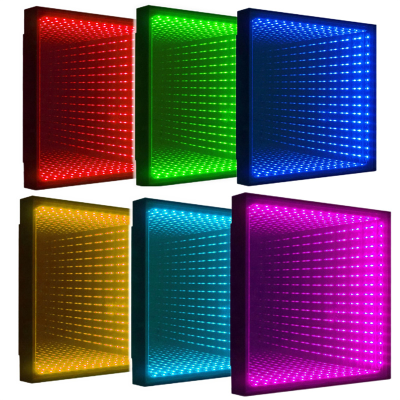


Dance Floor 3D Dance Floor Infinity Deep Tunnel Waterproof LED Dance Floor
$40.00 - $45.00
MOQ: 1 pieces


Comprehensive Sourcing Guide
Strategic Sourcing Guide for Ground Mount LED Dancing Floors
Procuring a Ground Mount LED Dancing Floor requires a nuanced understanding of the intersection between high-performance display technology and the rigorous safety demands of event infrastructure. Unlike static advertising displays, these units serve as interactive flooring where human traffic, dynamic lighting, and structural integrity converge. The market offers a spectrum of solutions, from modular video panels to specialized stage units, each defined by specific pixel pitches, cabinet materials, and control systems. This guide synthesizes available product attributes and industry standards to assist procurement professionals in selecting the right equipment for stage performances, advertising events, and large-scale installations.
Technical Specifications and Performance Metrics
The foundation of any LED dancing floor selection lies in the precise technical specifications that dictate visual quality and operational reliability. A primary differentiator is the pixel pitch, which determines the optimal viewing distance and image clarity. Available data indicates models with pixel pitches of 4.81mm, 3.91mm, and 8mm. For a dancing floor where the audience may be closer to the action, a pitch of 3.91mm or 4.81mm is generally preferred to ensure high-resolution graphics and text displays are legible. The 8mm pitch is typically suitable for applications where the viewing distance is further, such as large outdoor stages.
Brightness is another critical metric, particularly for environments with variable lighting conditions. The observed brightness range for these units spans from 2500 to 4500 nits. High-brightness configurations are essential for indoor stage performances to combat overhead lighting, while the lower end of the spectrum may suffice for dimly lit venues. The refresh rate is equally vital to prevent flickering on camera recordings. Specifications show refresh rates of 3840 Hz and values exceeding 1920 Hz, ensuring smooth video playback and high-quality broadcast capture.
Power consumption and voltage requirements must align with the venue's electrical infrastructure. Units are observed to operate on AC220-240V or AC110-240V, offering flexibility for international deployments. Average power consumption varies, with documented figures of 300W/m² and 350W/m². Buyers should verify the specific power draw of the selected model to calculate total load requirements for the event. The LED lamps themselves are typically SMD 3 in 1 configurations, utilizing chip colors like Epistar or generic full-color options to achieve vibrant visual output.
Structural Integrity and Cabinet Design
The physical construction of the LED dancing floor is paramount for safety and durability. The cabinet material serves as the primary structural element, with options including Aluminum, Steel, and Die Casting Aluminium. Die casting aluminium is often favored for its high strength-to-weight ratio, which is crucial for floor applications. Weight per square meter is a significant factor in logistics and installation; observed weights range from 11kg/m² to 27kg/m². Lighter units, such as those at 11kg/m², facilitate easier transportation and faster assembly, while heavier units may offer enhanced rigidity for high-traffic areas.
Installation methods for ground mount systems typically include hanging or base standing configurations. The standard cabinet dimensions observed are 500x500mm and 500x1000mm, allowing for modular assembly. The pixel configuration is consistently noted as 1R, 1G, 1B, ensuring standard color reproduction. For the floor to function as a display, the system must support various display functions, including video, text, image and text, and market displays. The control system often relies on platforms like Windows or specific operating systems like WIN XP, paired with driver ICs such as Mbi or Constent Current drivers to manage signal processing.
Compliance, Certification, and Safety Standards
Safety compliance is non-negotiable for ground mount LED systems, especially those used in public events. The product data highlights several key certifications, including CCC, CE, ETL, and RoHS. The presence of CE and CCC certifications indicates compliance with European and Chinese safety standards, respectively, covering electrical safety and electromagnetic compatibility. RoHS certification ensures the absence of hazardous substances, which is critical for environmental and health safety.
When evaluating a supplier, buyers must verify that the specific unit being purchased carries these certifications. While the data lists these as available attributes, they should not be assumed for every listing without verification. The power supply unit (PSU) is a critical component for electrical safety; observed specifications include 5V 60A PSUs and CE-certified power supplies. The system voltage must be strictly matched to the venue's power grid to prevent electrical hazards. Additionally, the least viewing distance, observed at 4m and 5m for different models, should be considered to ensure the display meets safety sightlines and does not cause visual strain or distraction.
Cost Drivers and Procurement Economics
The cost of a Ground Mount LED Dancing Floor is influenced by a complex interplay of factors, including pixel pitch, brightness, cabinet material, and the sophistication of the control system. The observed price range in the market spans from 12 to 1800 USD, though this wide variance likely reflects differences in unit size, configuration, and the inclusion of ancillary equipment like processors or flight cases. The minimum order quantity (MOQ) varies between 1 and 100 units, offering flexibility for small-scale events or large-scale productions.
Logistics and packaging significantly impact the total cost of ownership. Products are typically packed in plywood cases or flight cases, with flight cases offering superior protection for repeated transport. The weight of the unit directly correlates with shipping costs; a 27kg/m² unit will incur higher freight charges than an 11kg/m² unit. Buyers should also consider the cost of the control system, such as the Nova system or Windows-based software platforms, which may be sold separately or included. Customization is available for many models, which can add to the initial cost but may reduce long-term operational expenses by tailoring the display to specific event needs.
Typical Applications and Usage Scenarios
Ground mount LED dancing floors are versatile assets deployed across various high-impact scenarios. The primary application identified is advertising, where the high brightness and dynamic display capabilities capture audience attention in public spaces. However, the data also explicitly lists stage performance as a key use case. In this context, the floor becomes an integral part of the visual production, displaying graphics, video, and text that synchronize with the performance.
The choice of pixel pitch and brightness is dictated by the specific application. For stage performances, a pixel pitch of 3.91mm or 4.81mm with a refresh rate above 1920 Hz ensures that the floor looks seamless on camera and to the live audience. The signal inputs, including DVI, HDMI, VGA, and SDI with a processor, allow for integration with existing audio-visual setups. The lifetime of the LEDs, ranging from 50,000 to 100,000 hours, supports long-term use in venues with frequent events. The scanning mode, typically 1/16 scan, balances power consumption with image quality, making it suitable for continuous operation.
Supplier Evaluation and Quality Assurance
Evaluating a supplier for LED dancing floors requires a rigorous approach to quality assurance. Buyers should verify the origin of the products, with China being the documented origin for the observed models. The supplier's ability to provide consistent quality is often reflected in the consistency of their specifications, such as the standard cabinet sizes and pixel configurations. When assessing a potential vendor, request detailed test results for brightness uniformity, refresh rate stability, and color accuracy.
The control channel count, observed at 31CH in some models, indicates the complexity of the display matrix. A supplier should be able to demonstrate the reliability of their driver ICs and PSU systems under load. The software platform compatibility is another area for scrutiny; ensuring the system supports the required operating environment, whether Windows or legacy systems like WIN XP, is essential for seamless operation. Buyers should also inquire about the warranty terms and the availability of spare parts, such as replacement modules or power supplies, to minimize downtime during events.
Long-Term Procurement and Maintenance Considerations
Long-term procurement strategies for LED dancing floors must account for maintenance, scalability, and technological obsolescence. The average power consumption of 300W to 350W per square meter suggests that energy efficiency is a factor in operational costs. Over time, the brightness of the LEDs may degrade, and the refresh rate or color accuracy may shift. A robust maintenance plan should include regular cleaning of the cabinet surfaces and inspection of the electrical connections.
The modular nature of the cabinets allows for easy replacement of individual modules if they fail, rather than replacing the entire floor. However, the compatibility of replacement parts with the original system is critical. Buyers should ensure that the supplier provides a clear roadmap for future upgrades, particularly regarding the control system and signal processing capabilities. The standard dimensions of 500x500mm and 500x1000mm facilitate the expansion of the floor area as event needs grow. Finally, the packing method, whether plywood or flight cases, should be durable enough to withstand the rigors of repeated transport and storage, ensuring the product remains in optimal condition for future deployments.
Comparative Analysis of Key Product Attributes
To assist in decision-making, the following table summarizes the key technical attributes observed in the market for ground mount LED dancing floors. This comparison highlights the variations in specifications that buyers must evaluate against their specific event requirements.
| Attribute | Model A (P4.81) | Model B (P4.8) | Model C (P3.9) |
|---|---|---|---|
| Pixel Pitch | 4.81mm | 4.8mm | 3.91mm |
| Brightness | 2500-4500 Nits | 2500-4000 Nits | Not Specified |
| Refresh Rate | 3840 Hz | >1920 Hz | Not Specified |
| Weight | 27kg/M2 | 11kg/M2 | Not Specified |
| Cabinet Material | Alu/Steel | Die Casting Aluminium | Not Specified |
| Power Consumption | 350W/m² | 300W/m² | Not Specified |
| Certification | CCC, CE, ETL, RoHS | CCC, CE | CE |
| Viewing Distance | Not Specified | 5m | 4m |
| System Platform | Nova | Windows | WIN XP |
| LED Lamps | SMD 3 in 1 | Epistar | Not Specified |
| Driver IC | Mbi | Constent Current | Not Specified |
This table illustrates that while there is significant overlap in functionality, the specific combination of weight, brightness, and control system varies. A buyer prioritizing portability might select the 11kg/M2 unit, while one requiring maximum brightness for outdoor advertising might opt for the 4500 Nits model. The variation in certification levels also suggests that buyers must verify the specific compliance status of the unit they intend to purchase, as not all models may carry the full suite of CCC, ETL, and RoHS certifications.
In conclusion, sourcing a Ground Mount LED Dancing Floor involves a careful balance of technical performance, safety compliance, and logistical feasibility. By focusing on the verified attributes of pixel pitch, brightness, refresh rate, and certification, buyers can make informed decisions that ensure the safety and success of their events. The availability of customization and the modular nature of the cabinets provide the flexibility needed to adapt to diverse applications, from stage performances to large-scale advertising campaigns.
FAQs
What certifications do ground mount led dancing floors typically have?
These units typically carry CCC, CE, ETL, and RoHS certifications. Buyers must verify specific listings as not every product includes all listed certifications, ensuring compliance with safety and environmental standards for event use.
How does pixel pitch affect the viewing distance for these floors?
Pixel pitches of 3.91mm and 4.81mm support viewing distances of 4m to 5m respectively. The 8mm pitch is suitable for further distances, ensuring clear graphics and text displays for stage performances and advertising applications.
Which cabinet materials are used for structural integrity in these units?
Cabinets are constructed from Aluminum, Steel, or Die Casting Aluminium. Die casting aluminium offers a high strength-to-weight ratio, while weights range from 11kg to 27kg per square meter depending on the specific model configuration.
Can these floors operate on different international voltage standards?
Yes, units operate on AC110-240V or AC220-240V to match venue infrastructure. This flexibility allows for international deployment, but buyers must confirm the specific voltage requirement of the selected model before installation.
What is the refresh rate for preventing flicker on camera?
Refresh rates are observed at 3840 Hz or greater than 1920 Hz. These high rates ensure smooth video playback and prevent flickering during broadcast capture, which is critical for stage performances and professional video production.
How much does a Ground Mount LED Dancing Floor cost per unit?
The observed price range spans from 12 to 1800 USD. This variance reflects differences in unit size, pixel pitch, brightness, and whether ancillary equipment like processors or flight cases are included in the purchase.
What are the standard cabinet dimensions for modular assembly?
Standard cabinet dimensions are 500x500mm and 500x1000mm. These modular sizes facilitate easy assembly and expansion, allowing the floor area to be adjusted to fit specific event requirements and venue layouts.