Source GWM Poer Ball Joint Assembly for Steering and Suspension
Find 30 listings for the GWM Poer Ball Joint Assembly to compare specifications and pricing. These components support steering and suspension repair, featuring steel construction and OEM-standard dimensions for reliable vehicle maintenance; compare the available evidence and request quotations based on your requirements.
Key considerations
Products List




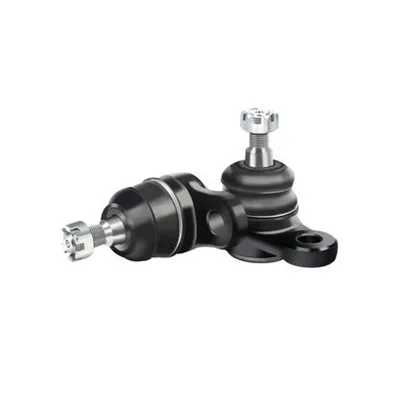
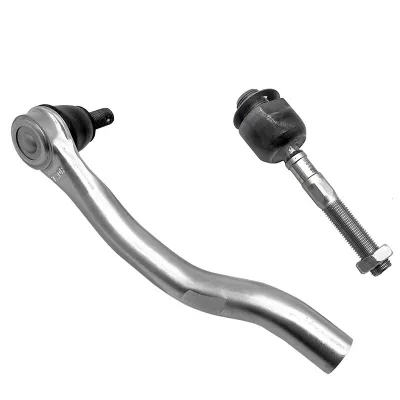


Comprehensive Sourcing Guide
GWM Poer Ball Joint Assembly Sourcing Guide
Sourcing the correct ball joint assembly for the GWM POER requires precise alignment with the vehicle's specific suspension architecture and original equipment manufacturer specifications. Buyers must prioritize listings that explicitly reference the GWM POER model to ensure compatibility, as suspension components are often engineered for specific chassis geometries and load requirements. The observed market data indicates that suppliers frequently list this component under various OE numbers, necessitating a careful cross-reference between the vehicle's service manual and the supplier's provided part numbers to avoid installation errors.
Procurement decisions should be grounded in the verified attributes of the product, such as the confirmed "New" condition and the specific model number 2904100XPW01A associated with the GWM POER. While some listings may display broader compatibility with other brands like Mazda, the primary focus for this specific vehicle must remain on parts designed to meet the exact engineering tolerances of the GWM platform. Buyers should verify that the single package dimensions and gross weight align with the expected logistics profile to ensure efficient shipping and handling upon delivery.
Product Scope and Observed Listing Signals
The current market for GWM POER ball joints presents a range of listings that vary significantly in their stated minimum order quantities and packaging standards. Observations show that while some suppliers offer a single item for purchase, others enforce a minimum order quantity of twenty pieces, which can impact the initial capital outlay for small fleet repairs or individual replacements. This variation in commercial terms requires buyers to clearly define their volume needs before engaging with suppliers to avoid unexpected constraints on order flexibility.
Packaging and stock availability are critical signals that indicate the readiness of a supplier to fulfill immediate procurement needs. Listings frequently mention stock quantities of up to one thousand pieces and delivery times ranging from one to seven days for in-stock items, contrasting sharply with production lead times of thirty-five days for custom orders. Buyers should scrutinize the packing details, such as the use of nylon bags with boxes or customized cardboard packaging, to ensure the components arrive without damage and are ready for immediate installation in a workshop environment.
Technical Specifications to Verify
Technical verification begins with confirming the exact model number and OE number to guarantee that the replacement part matches the original design intent. The specific model number 2904100XPW01A and the alternative OE number 2904109XPW01A are critical identifiers that distinguish the correct assembly for the GWM POER from similar components used in other vehicle platforms. Relying on generic descriptions without these specific alphanumeric codes can lead to the procurement of parts that do not fit the mounting points or suspension geometry of the target vehicle.
Beyond identification, buyers must validate the physical dimensions and material composition to ensure the component meets the durability standards required for heavy-duty operation. The observed specifications indicate a standard size matching the OEM requirements and a steel material composition, which is essential for withstanding the high stresses of front axle suspension systems. Additionally, the position of the component, typically listed as "Front," must be confirmed to ensure it is installed on the correct side of the vehicle, as front and rear ball joints often have distinct load-bearing characteristics and mounting configurations.
Compliance and Safety Documentation
Compliance with international quality management standards is a fundamental requirement for any suspension component intended for road use. The observed listings frequently cite ISO certifications, including references to ISO/TS and general ISO standards, which serve as indicators that the manufacturing process adheres to established quality control protocols. Buyers should request specific documentation proving that the production facility holds valid ISO certification to ensure that the ball joints are manufactured in a controlled environment that minimizes the risk of defects.
Safety documentation must also address the warranty and the intended purpose of the component to protect the buyer from liability and performance failures. A standard warranty period of twelve months is commonly observed, providing a safety net for defects in material or workmanship that may arise after installation. Furthermore, the product purpose is explicitly stated as "for replace/repair," which clarifies that the item is a direct replacement part rather than a modification, ensuring that the installation maintains the vehicle's original safety ratings and structural integrity.
Cost Drivers and Commercial Terms
The final cost of the GWM Poer Ball Joint Assembly is influenced by several factors, including the minimum order quantity, the complexity of the packaging, and the urgency of the delivery timeline. While the observed price range spans from 0.5 to 105 USD, the actual unit cost is heavily dependent on the volume ordered, with lower prices often associated with bulk purchases that meet the supplier's minimum order thresholds. Buyers must calculate the total landed cost, including shipping and potential customs duties, rather than focusing solely on the unit price listed in the catalog.
Commercial terms regarding delivery time and stock availability play a significant role in the overall procurement strategy and operational continuity. Suppliers offering immediate dispatch for stock items with a one-to-seven-day delivery window provide a distinct advantage for urgent repairs, whereas production orders requiring thirty-five days necessitate advanced planning and inventory buffering. Understanding these lead time variations allows buyers to negotiate better terms and select suppliers that align with their specific operational timelines and budget constraints.
Supplier Qualification and Quality Control
Supplier qualification should be based on a rigorous assessment of their production capabilities and their ability to maintain consistent quality across large batches. The presence of customization options and the ability to provide "Eep Brand Packing" or customer-specific packaging suggests a level of flexibility and maturity in the supplier's operations. Buyers should verify that the supplier has a proven track record of meeting OEM standards, as indicated by the "OEM: Yes" attribute, to ensure that the parts are manufactured to the exact specifications required by the vehicle manufacturer.
Quality control processes must be transparent and verifiable to mitigate the risk of receiving substandard components that could compromise vehicle safety. The observation of "High-Quality" as a product attribute is a positive signal, but it must be backed by concrete evidence such as inspection reports or third-party testing results. Buyers should inquire about the specific quality assurance measures in place, including material testing for the steel components and dimensional checks to ensure that every unit meets the standard size and weight requirements before it leaves the factory.
Long-Term Procurement Checks
Establishing a long-term procurement relationship requires regular audits of the supplier's ability to maintain consistent product quality and supply chain stability. Buyers should implement a system for tracking the performance of each batch of ball joints, monitoring for any recurring issues related to fitment, material fatigue, or premature failure. This data-driven approach allows for the early identification of potential quality drifts and provides leverage to negotiate improvements or switch suppliers if performance standards are not met over time.
Continuous verification of the supplier's certifications and compliance status is essential to ensure ongoing adherence to safety and quality regulations. As standards evolve, suppliers must demonstrate their ability to adapt their manufacturing processes to meet new requirements, which can be verified through updated certification documents and regular quality audits. By maintaining a proactive stance on supplier qualification, buyers can secure a reliable supply of GWM POER ball joints that support the long-term operational efficiency and safety of their vehicle fleets.
FAQs
What is the warranty period for the GWM Poer Ball Joint Assembly?
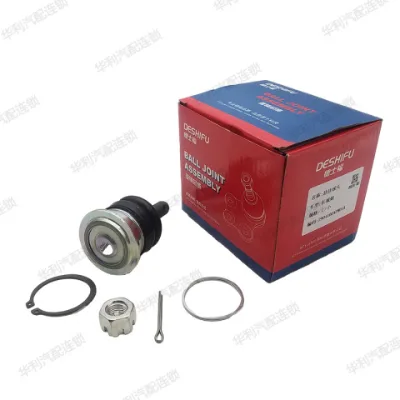
The warranty period is 12 months. This coverage applies to the new condition parts supplied by DESHIFU. Buyers can rely on this standard warranty for replacement or repair purposes. The product is designed for direct installation on compatible GWM POER models. This ensures long-term reliability and support for automotive maintenance needs.
Can I customize the packaging for bulk orders of ball joints?
Yes, customization is available for packaging requirements. Suppliers offer options such as nylon bags with boxes or customized cardboard packaging. This flexibility allows buyers to meet specific logistical or branding needs. The standard packing ensures safe transit, while custom options provide tailored solutions for large-scale procurement projects in the automotive parts industry.
What is the minimum order quantity for these suspension components?
The minimum order quantity varies by supplier, ranging from 1 to 100 pieces. Some listings specify an MOQ of 20 pieces, while others allow single-item purchases. This range accommodates both small repair shops and large distributors. Buyers should verify the specific MOQ with the supplier before placing orders to ensure alignment with their inventory requirements.
How long does delivery take for stock items of ball joints?
Delivery time is typically 1-7 days for stock items. For production items, the lead time is approximately 35 days. This rapid turnaround for in-stock parts ensures quick replacement for urgent repairs. Buyers planning larger orders should account for the longer production timeline to avoid delays in their supply chain operations.
Which car models are compatible with this ball joint assembly?
This assembly is primarily designed for the GWM POER model. Some listings also indicate compatibility with Mazda M6 GG Gy models. The product serves as a direct replacement for OE number 2904100XPW01A. Buyers should verify the specific car make and model to ensure proper fitment before purchasing these suspension components.
What certifications do the ball joint suppliers hold?
Suppliers hold ISO certifications, including ISO/TS standards. These certifications indicate adherence to quality management systems for automotive parts manufacturing. The products are produced in China, with origins in Hebei and Chongqing. Buyers can trust these credentials for quality assurance when sourcing replacement parts for vehicle maintenance and repair applications.