Source Halloween Handbag Candy Bag for Parties, Events, and Gifts
Find 30 Halloween Handbag Candy Bag options including PU, non-woven, and pumpkin designs for children and adults. Compare prices, MOQs, and customization features from verified suppliers to match your bulk needs.
Key considerations
Products List


Halloween Tote Bag Halloween Children′ S Candy Gift Bag Pumpkin Bag
$1.32 - $1.40
MOQ: 100 Pieces

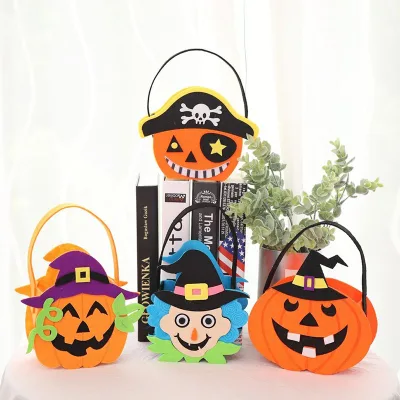


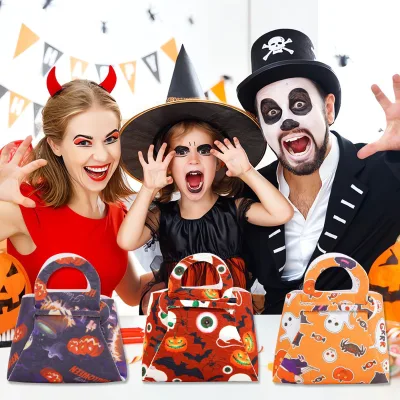


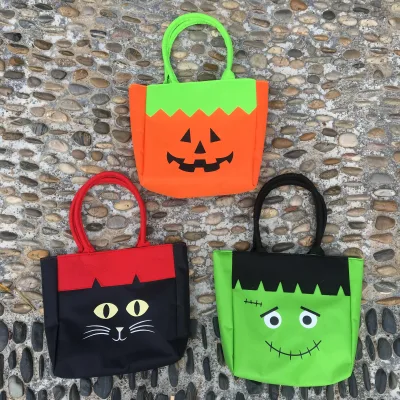
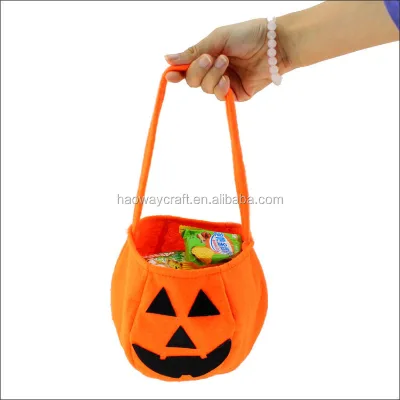
New Halloween Non-Woven Handbag Candy Bag Ghost Festival Pumpkin Bag Decoration Props
$0.67 - $0.70
MOQ: 1500 Pieces






Comprehensive Sourcing Guide
Strategic Sourcing Guide for Halloween Handbags and Candy Bags
Understanding Product Specifications and Material Variations
When sourcing Halloween handbags and candy bags, buyers must first navigate a diverse landscape of product specifications that vary significantly based on intended use, target demographic, and aesthetic requirements. The core keyword "Halloween Handbag Candy Bag" encompasses items ranging from small, single-use pouches for trick-or-treating to larger, reusable tote bags designed for carrying substantial amounts of candy. Analysis of available market data reveals distinct material compositions that define the utility and durability of these products.
One prominent category utilizes Polyurethane (PU) as the primary exterior material, often paired with a Polyester interior lining. These bags frequently feature a "Crocodile Grain" texture, offering a premium aesthetic that aligns with "Antique" or "Fashion" styles. Such products are typically designed as unisex accessories, available in colors like Brown, and often include functional elements such as a "Zipper" closure with an integrated "Code Lock." The weight of these structured bags is generally around 0.5kg, though some variations may be lighter, falling under the 0.5kg threshold. These items are often sold as a single piece per set, with dimensions that can be customized to specific order requirements, such as 17*26 inches or other custom specifications.
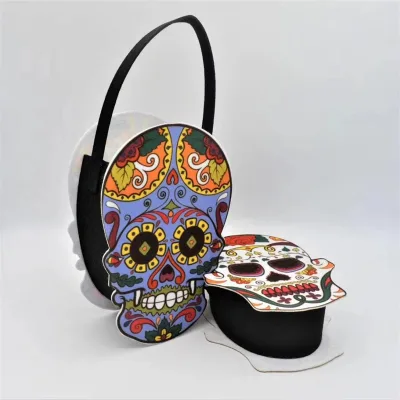
In contrast, another significant segment of the market focuses on disposable or lightweight options suitable for mass distribution. These products are frequently manufactured from Non-Woven materials, which are cost-effective and environmentally friendly for single-event use. A specific example in this category is the "Halloween Pumpkin" type, which comes in "Multicolor" options and is specifically designed for children. These bags often feature unique shapes, such as a "Heart" or pumpkin silhouette, and are packaged individually in OPP bags. The standard weight for these lightweight items is approximately 43g, making them ideal for high-volume distribution where portability and low cost are paramount.
The following table summarizes the key specification differences observed between the two primary product categories:
| Feature | Premium PU/Leather Style | Lightweight Non-Woven Style |
|---|---|---|
| Primary Material | PU (Exterior), Polyester (Interior) | Non-Woven Fabric |
| Texture/Finish | Crocodile Grain, Antique Style | Smooth, Custom Print |
| Target Audience | Unisex, General Fashion | Children |
| Shape/Design | Rectangular, Zippered, Code Lock | Pumpkin, Heart, Cartoon Style |
| Weight | ~0.5 kg | ~43g |
| Packaging | 1PC/Polybag, Export Carton | OPP Bag |
| Customization | Logo Printing Available | Custom Size/Design Available |
Buyers must carefully distinguish between these categories during the initial sourcing phase, as the manufacturing processes, material costs, and minimum order quantities (MOQs) differ substantially. The premium PU bags require more complex assembly and hardware integration, while the non-woven options rely on high-speed printing and cutting techniques.
Compliance, Certification, and Safety Standards
Ensuring that Halloween handbags and candy bags meet international safety and compliance standards is a critical step in the procurement process, particularly when the target market includes children. The primary concern for candy bags is the safety of the materials used, as these items often come into direct contact with food products or are handled by young children.
In the context of the observed product data, specific certifications are available to validate product quality and safety. One notable certification mentioned in the supply chain data is the SGS certification. This indicates that the product has undergone testing by a recognized third-party inspection agency, which is a strong indicator of compliance with various international safety standards. Buyers should explicitly request SGS test reports or equivalent documentation to verify that the materials used, such as the PU leather or non-woven fabric, do not contain harmful substances like lead, phthalates, or other heavy metals that could pose health risks.
For products intended for children, such as the "Halloween Pumpkin" style bags, compliance with specific toy safety standards is essential. While the provided data does not list specific regulatory codes (such as ASTM F963 in the US or EN71 in Europe), buyers must verify that the supplier can demonstrate adherence to these regional standards. The "SGS" certification serves as a proxy for this rigor, but it is not a substitute for region-specific compliance documentation.
Furthermore, the "Waterproof" attribute observed in the premium PU bags suggests a functional benefit that may also relate to durability and hygiene. However, buyers should verify that the waterproofing treatment does not introduce chemical hazards. The "Non-Woven" material used in the lightweight category is generally considered safe, but the inks used for printing designs must be non-toxic and food-safe if the bag is intended to hold candy directly.
When evaluating suppliers, procurement teams should prioritize those who can provide a comprehensive compliance package. This package should include:
- Valid SGS or equivalent third-party test reports.
- Declaration of Conformity (DoC) for the specific region of sale.
- Material Safety Data Sheets (MSDS) for all components, including zippers, locks, and inks.
- Evidence of adherence to local labor and environmental standards, particularly for products originating from manufacturing hubs like Hebei, China, or Yiwu, Zhejiang.
Cost Drivers and Pricing Dynamics
The pricing structure for Halloween handbags and candy bags is influenced by a complex interplay of material costs, customization levels, order volume, and logistical factors. The observed price range in the market spans from $0.01 to $5.00 USD, reflecting the vast difference between mass-produced, single-use items and higher-end, durable accessories.
The most significant cost driver is the material selection. Bags made from PU leather with a crocodile grain texture and polyester lining are inherently more expensive than those made from non-woven fabric. The additional processing required to create the "Antique" or "Fashion" finishes, along with the inclusion of hardware like zippers and code locks, further increases the unit cost. In contrast, non-woven bags are produced using a more streamlined process, resulting in a significantly lower price point, often approaching the lower end of the observed range.
Order volume plays a crucial role in determining the final price. The Minimum Order Quantity (MOQ) varies widely, ranging from as low as 2 pieces for small trials or custom prototypes to as high as 12,000 pieces for large-scale industrial orders. Suppliers typically offer tiered pricing, where the unit cost decreases as the order quantity increases. For instance, an order of 500 pieces might carry a specific MOQ requirement and a corresponding price point, while an order of 10,000 pieces would likely benefit from economies of scale.
Customization is another major factor affecting cost. Products that offer "Logo Printing," custom dimensions (e.g., 17*26 inches or 9.8'' × 11.8''), or unique shapes (like the "Halloween Pumpkin" or "Heart") require additional setup costs and potentially longer production runs. The "Customization: Available" attribute indicates that buyers can tailor the product to their brand, but this flexibility comes at a premium compared to standard, off-the-shelf inventory.
Logistical costs, including packaging and shipping, also impact the total landed cost. The standard packaging for these items varies from individual polybags to export cartons containing multiple sets. For example, some products are packed as 1PC/Polybag with 3PCS/Set, while others are packed at 100PCS/CTN with a specific weight of 17.6lbs. These packaging specifications affect the volume and weight of the shipment, which in turn influences freight charges. Buyers should factor in the "Delievery: 15-25 Days After Deposit" lead time when calculating their total procurement timeline and budget, as expedited shipping options may incur additional costs.
Typical Applications and Market Segmentation
Halloween handbags and candy bags serve diverse applications across different market segments, driven by the specific needs of the consumer base. Understanding these applications is vital for aligning product selection with market demand.
The primary application for these products is the Halloween holiday season, where they function as essential accessories for trick-or-treating. The "Halloween Pumpkin" style bags, specifically designed for children, are the most common choice in this category. Their bright colors, fun shapes, and lightweight nature make them ideal for young trick-or-treaters who need to carry a large volume of candy without the burden of a heavy bag. These items are often sold in bulk to schools, community organizations, and retail stores for distribution.
Beyond the holiday season, there is a growing market for reusable Halloween-themed bags that double as fashion accessories. The "Antique" style PU bags with "Crocodile Grain" textures appeal to a broader demographic, including unisex consumers who appreciate a more sophisticated aesthetic. These bags are not limited to Halloween use; they can serve as everyday handbags, travel accessories, or promotional items for events. The inclusion of features like a "Code Lock" and "Waterproof" capabilities enhances their utility for travel and outdoor activities, expanding their application beyond the holiday season.
The "Main Market" data indicates that these products are in high demand in North America, West Europe, South Korea, and Australia. In North America and West Europe, the Halloween tradition is deeply ingrained, driving consistent demand for both disposable and reusable candy bags. In South Korea and Australia, while the Halloween tradition may be less traditional, the influence of pop culture and the rise of themed events have created a niche market for these products.
Buyers should also consider the "Occasion: Party" attribute, which suggests that these bags can be used for various other events, such as birthday parties, costume parties, and corporate events. The "Cartoon" style and "Multicolor" options make them versatile for different themes, allowing buyers to source a single product line that can be marketed for multiple occasions throughout the year.
Supplier Evaluation and Quality Control Protocols
Selecting the right supplier is a critical determinant of procurement success, especially for products with specific aesthetic and functional requirements. When evaluating potential suppliers for Halloween handbags and candy bags, buyers should focus on several key criteria: production capacity, quality control systems, and communication efficiency.
The production capacity of a supplier should be assessed based on their ability to meet the required MOQ and lead times. The observed data shows a "Prodution Time: 15 Days" and a "Sample Time: 6 Days" for certain product lines, indicating a standard production cycle. However, for large orders, buyers must verify that the supplier can scale up production without compromising quality. The "MOQ: 500PCS" requirement for some items suggests that suppliers are geared towards medium-to-large volume orders, which may not be suitable for small businesses or startups.
Quality control (QC) is paramount, particularly for products intended for children. Buyers should implement a rigorous QC protocol that includes:
- Pre-production samples: Reviewing samples for material quality, color accuracy, and print clarity before mass production begins.
- In-process inspections: Monitoring the production line to ensure consistency in stitching, zipper functionality, and logo placement.
- Final random inspections: Conducting a statistical sampling of the finished goods to verify that the product meets all specified standards and packaging requirements.
The "SGS" certification mentioned in the product data is a strong indicator of a supplier's commitment to quality. Buyers should request proof of this certification and verify its validity. Additionally, suppliers should have a clear process for handling defects and returns, ensuring that any non-conforming products are identified and addressed promptly.
Communication is another vital aspect of supplier evaluation. The "Customization: Available" attribute implies a need for close collaboration between the buyer and the supplier. Buyers should ensure that the supplier has a dedicated account manager who can provide timely updates on production status, address any concerns, and facilitate the customization process. The "Delievery: 15-25 Days After Deposit" lead time should be clearly agreed upon in the contract, with provisions for penalties in case of delays.
Long-Term Procurement Considerations and Sustainability
As the market for Halloween handbags and candy bags evolves, buyers must consider long-term procurement strategies that balance cost, quality, and sustainability. The shift towards more eco-friendly materials and practices is becoming increasingly important, driven by consumer demand and regulatory pressures.
The use of "Non-Woven" materials for disposable bags is a step towards sustainability, as these materials are often recyclable and biodegradable compared to traditional plastics. However, buyers should verify the specific composition of the non-woven fabric to ensure it meets environmental standards. For the premium PU bags, the durability and reusability of the product are key sustainability factors. By offering a high-quality, long-lasting alternative to disposable bags, buyers can reduce waste and promote a more sustainable consumption model.
Another consideration is the packaging. The observed packaging options, such as "1PC/Polybag" and "100PCS/CTN," should be evaluated for their environmental impact. Buyers should explore options for reducing packaging waste, such as using recycled materials for cartons and minimizing the use of single-use plastics. The "Packaging: 1PC/Polybag, 3PCS/Set, 1set/Carton" specification offers a modular approach that can be optimized for efficiency and sustainability.
Finally, buyers should consider the long-term relationship with their suppliers. Building a strong partnership with a reliable supplier can lead to better pricing, improved quality, and more flexible customization options. The "Main Market" data suggests a global demand, which means that buyers should look for suppliers with the capacity to serve international markets and navigate complex logistics. By focusing on these long-term considerations, buyers can ensure a sustainable and profitable procurement strategy for Halloween handbags and candy bags.
FAQs
What materials are used for Halloween handbag candy bags?
These bags are made from PU leather with a polyester interior or non-woven fabric. The PU versions feature a crocodile grain texture, while the non-woven options are lightweight and suitable for children.
Can I get custom logo printing on these bags?
Yes, customization including logo printing is available for these products. Buyers can request specific dimensions and designs, though this may affect the minimum order quantity and production timeline.
Which certification do these bags have for safety?
The products carry SGS certification to validate quality and safety standards. This indicates third-party testing, which is essential for items intended for children or food contact in international markets.
How long is the delivery time after deposit?
The standard delivery time is 15 to 25 days after the deposit is received. Sample production typically takes 6 days, while full production runs require about 15 days depending on order volume.
What is the minimum order quantity for these bags?
The minimum order quantity ranges from 2 pieces to 12,000 pieces depending on the supplier and product type. Specific models like the non-woven bags often have an MOQ of 500 pieces.
Where are these Halloween bags manufactured?
Manufacturing locations include Hebei, China, and Yiwu, Zhejiang. These regions are known for producing a wide variety of bag styles, from premium PU leather to lightweight non-woven options.