Source Halloween Performance Medieval Costume for Events
Find 30 options for a Halloween Performance Medieval Costume suitable for holiday parties, business gatherings, and Halloween events. Compare styles, materials, and sizes from suppliers in China to match your specific cosplay needs.
Key considerations
Products List


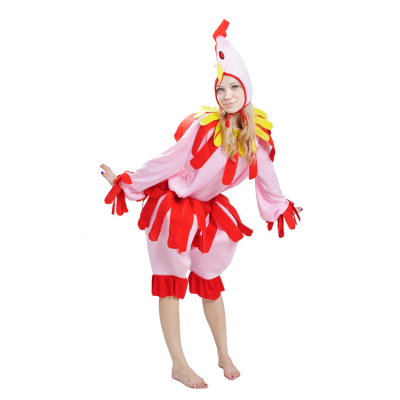
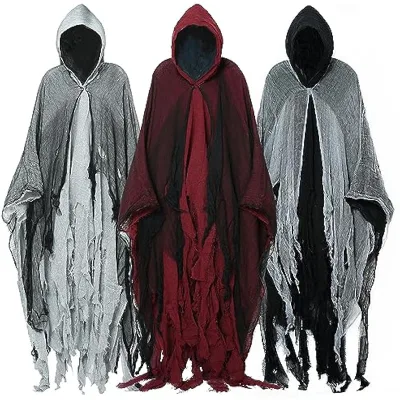


high Quality Vampire Baron Cloak Halloween Stage Character Performance Cosplay Costumes
$5.47 - $6.43
MOQ: 200 Pieces

Hot-Selling Halloween Cosplay Women Death Hell Witch Devil Vampire Uniform Opera Costume
$5.23 - $6.15
MOQ: 170 Pieces


Hot Selling Halloween Party Masquerade Performance Props Devil Wings Costume
$1.88 - $2.11
MOQ: 473 Pieces

Hot Selling Scary Halloween Party Horror Cosplay Costume Latex Kills Michael Myers Masks
$3.05 - $3.58
MOQ: 300 Pieces
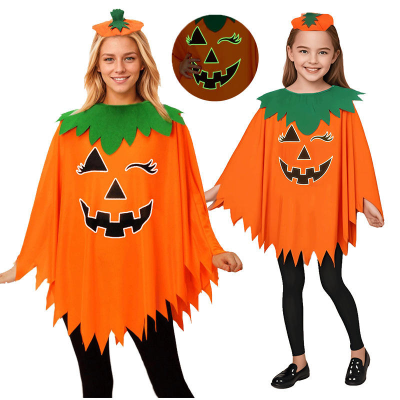


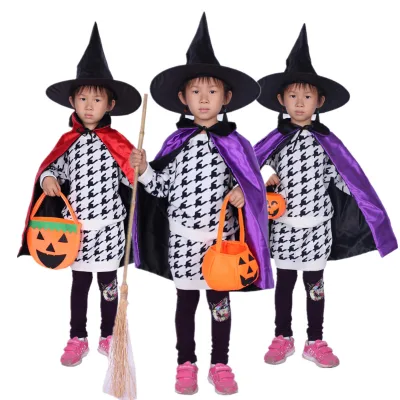
Halloween Children Witch Double Cape Cosplay Party Wizard Show Costume Set
$2.91 - $6.37
MOQ: 10 Minimum
Comprehensive Sourcing Guide
Strategic Sourcing Guide for Halloween Performance Medieval Costumes
Understanding Product Attributes and Market Segmentation
When sourcing Halloween performance medieval costumes, buyers must first distinguish between the specific attributes observed in the current market and generalized claims. The available product data indicates a diverse range of offerings that cater to various demographic and functional needs. A critical observation from the current inventory is the variation in target age groups. Some listings explicitly define the age group as "Children," with specific size specifications ranging from 110cm to 150cm, while other entries cover a broader spectrum including "12 YEARS, 10 Years, 13 years, 14 years, adults, 15, 16, 17, 18." This distinction is vital for procurement planning, as a single SKU rarely satisfies both a pediatric and an adult demographic without specific sizing adjustments.
The material composition also presents a significant variable in this category. The observed data lists "Polyester Fiber (Polyester)" as a primary material, which is standard for durable, vibrant costumes. However, other entries cite "Polyester/Cotton" blends or "Modal" fabric. For performance costumes, the choice between pure polyester and blended fabrics impacts breathability, drape, and durability under stage lighting. Buyers should verify the exact fiber content for each order, as "Polyester/Cotton" may offer better comfort for long-duration wear compared to 100% polyester, while "Modal" might provide a softer, more premium hand-feel suitable for high-end theatrical productions.
Furthermore, the "Style" and "Party Type" attributes reveal a bifurcation in the market. While the core keyword focuses on "Halloween," the data shows products categorized under "Holiday Party," "Business Party," and specifically "Halloween." This suggests that suppliers often produce versatile garments that can be marketed across multiple seasonal events. A "Western" style is also noted in the inventory, which may indicate a specific sub-genre of medieval or historical costume that blends traditional medieval aesthetics with Western frontier elements. Procurement teams must ensure that the "Style" selected aligns precisely with the intended performance narrative, as a "Western" style may not meet the requirements for a strict medieval fantasy setting.
Technical Specifications and Sizing Standards
Technical specifications are the backbone of successful procurement for performance costumes. The data highlights specific size ranges that buyers must navigate. For children's items, sizes are often listed in centimeters, such as "110cm, 120cm, 130cm, 140cm, 150cm," or as a range like "110-150cm." In contrast, adult or unisex items frequently utilize standard alphanumeric sizing: "S, M, L, XL." It is crucial to note that the "prod_standard" field sometimes mirrors the size list (e.g., "100~140cm"), while other times it lists specific model numbers like "CP022," "CP037," or "LLBYF4."
Buyers should treat these model numbers as unique identifiers for specific design iterations rather than generic size guides. The presence of a "Single package size" of "30X30X5 cm" and a "Single gross weight" of "0.500 kg" provides essential data for logistics planning. These dimensions suggest a compact, foldable garment, which is advantageous for shipping costs but requires verification that the costume does not suffer from excessive creasing during transit. The "prod_packing" is listed as "Carton" for some items and "PE Bag" for others. For performance costumes, the packaging method is a quality indicator; a sturdy carton is generally preferred for bulk orders to prevent damage, whereas PE bags might be used for individual retail units.
The "Technics" attribute offers another layer of technical detail. The inventory lists both "Handmade" and "Woven" techniques. "Handmade" implies a higher level of craftsmanship, potentially involving intricate embroidery or assembly that adds value but may increase the unit cost and lead time. "Woven" suggests a machine-produced fabric base, which is consistent for mass production. Buyers must clarify whether the "Handmade" designation applies to the entire garment or specific decorative elements, as this distinction affects the final quality and price point. Additionally, the "Season" attribute varies from "No Season Restrictions" to specific seasons like "Winter," "Autumn," and "Halloween." This indicates that some costumes are designed with thermal properties or layering in mind, which is a critical factor for outdoor Halloween events or winter-themed performances.
Compliance, Certification, and Safety Verification
In the realm of performance costumes, particularly those intended for children, compliance and safety verification are non-negotiable. The provided data does not explicitly list specific certification standards (such as ASTM F963 or EN71), nor does it mention fire retardancy ratings. Therefore, buyers must treat the "Quality: High Qualiy" (noting the spelling variation in the source) as a marketing observation rather than a certified guarantee. It is the procurement team's responsibility to request and verify third-party test reports for flammability, chemical content, and physical safety.
For costumes targeting the "Children" age group, the risk of fire hazards is a primary concern. Medieval costumes often feature long, flowing fabrics and accessories that can easily catch fire. Buyers should insist on documentation proving that the materials, including the "Polyester Fiber" and "Polyester/Cotton" blends, meet the relevant flammability standards for the destination market. While the data mentions "prod_standard" in the context of sizing, it does not confirm adherence to safety standards. Consequently, suppliers must be asked to provide test results from accredited laboratories.
Furthermore, the "Product name" includes terms like "Octopus costume" and "performance costume," which suggests a mix of character types. While the core keyword is "medieval," the inventory shows a variety of themes. Buyers must ensure that any claimed "High Qualiy" extends to the safety of accessories. If the costume includes props or masks, these components must also be free from toxic materials and sharp edges. The "Place of Origin" is listed as "China" and "Shanghai, China." While this provides a geographical baseline, it does not imply a specific regulatory environment for the buyer's country. Procurement teams should verify that the supplier has experience exporting to the target region and understands the specific compliance requirements, such as CPSIA in the United States or the Toy Safety Directive in the European Union, even if the product is technically a costume and not a toy.
Cost Drivers and Pricing Dynamics
The observed price range in the market spans from $0.52 to $18.00 USD. This wide variance is driven by several key factors, including material composition, production techniques, and customization levels. The lower end of the spectrum likely corresponds to mass-produced, machine-woven polyester costumes with minimal detailing. In contrast, the higher price points are associated with "Handmade" techniques, complex designs, and the use of premium materials like "Modal" or high-quality blends.
Customization is a significant cost driver. The data confirms that "Customization: Available" is a standard offering. Buyers seeking bespoke medieval designs, specific color variations beyond the observed "Black," "Purple," "Grey," "Red," and "Green," or unique sizing requirements will incur additional costs. The "MOQ range" of 2 to 1500 units further influences the unit price. Smaller orders, such as those near the 2-unit minimum, typically carry a higher per-unit cost due to the setup and handling overhead. Conversely, orders approaching the 1500-unit maximum benefit from economies of scale, potentially bringing the price closer to the lower end of the observed range.
Lead time is another critical cost component. The "Delivery time" is listed as "5-20" days. This range suggests that standard stock items can be shipped quickly, while customized orders or bulk productions may require the full 20-day window. Buyers must factor this into their inventory planning, especially for seasonal events like Halloween. A delay in production could result in missed market windows, effectively rendering the inventory obsolete. Additionally, the "Packing" method affects shipping costs. Bulk cartons are more efficient for sea freight, while individual PE bags might be necessary for air freight or drop-shipping scenarios, impacting the overall landed cost.
Supplier Evaluation and Quality Control Protocols
Evaluating suppliers for Halloween performance costumes requires a rigorous approach to quality control. The data indicates that products originate from "China" and "Shanghai, China." While this identifies the manufacturing hub, it does not guarantee the quality of the specific factory. Buyers should verify the supplier's production capacity and their ability to maintain consistency across large batches. The "Handmade" attribute suggests a reliance on skilled labor, which can introduce variability. To mitigate this, buyers should implement a strict quality control protocol that includes pre-production sample approval, in-line inspections, and final random inspections before shipment.
The "Single gross weight" of 0.500 kg and "Single package size" of 30X30X5 cm provide a baseline for logistics, but buyers must verify that these figures are consistent across the entire order. Inconsistent packaging can lead to shipping errors and increased freight costs. Quality control should also focus on the "Technics" and "Material" claims. For instance, if a supplier claims a "Polyester/Cotton" blend, the buyer should request a fabric swatch to verify the fiber ratio. Similarly, the "Color" options observed (Black, Purple, Grey, Red, Green) must be matched against the buyer's requirements, as color consistency can vary between dye lots.
Buyers should also assess the supplier's responsiveness to the "Customization" requests. The availability of customization is a positive indicator, but the supplier's ability to execute these changes accurately is paramount. A supplier that can handle complex medieval designs with "Handmade" details is preferable to one that relies solely on mass production. The "Age group" and "Gender" specifications must also be validated to ensure the product fits the intended demographic. For example, a costume labeled for "Children" must have appropriate safety features and sizing, while "Adult" costumes should reflect the correct proportions and durability.
Typical Applications and Long-Term Procurement Strategy
The applications for these costumes extend beyond simple Halloween parties. The data lists "Party Type" as "Holiday Party," "Business Party," and "Halloween," indicating versatility. "Performance costume" and "Octopus costume" suggest use in theatrical productions, school plays, and community events. The "Western" style and "Medieval" theme cater to historical reenactments and themed events. Buyers should consider the durability requirements for these applications. A costume for a one-time party may differ significantly from one used for a multi-week theatrical run.
Long-term procurement strategies should focus on building relationships with suppliers who can offer consistent quality and flexibility. The "Season" attribute, ranging from "No Season Restrictions" to "Winter" and "Autumn," suggests that some costumes are suitable for year-round use. This versatility can help buyers manage inventory more effectively, reducing the risk of seasonal obsolescence. Additionally, the "Key words: Party" and "Product name" variations indicate a broad market appeal. Buyers should leverage this by diversifying their product mix to include various styles and themes, ensuring they can meet the diverse needs of their customers.
The "prod_model" numbers (CP022, CP037, CP032, CP042, CP020, CP003, LLBYF4) serve as a catalog reference. Buyers should maintain a detailed record of these models to track performance and customer feedback. Over time, this data can inform future purchasing decisions, allowing buyers to focus on high-performing models and discontinue those with quality issues. The "Delivery time" of 5-20 days also allows for a flexible supply chain strategy. Buyers can maintain a small buffer stock of popular items while relying on the supplier's rapid turnaround for custom orders.
In conclusion, sourcing Halloween performance medieval costumes requires a meticulous approach to technical specifications, compliance, cost analysis, and supplier evaluation. By leveraging the observed data and adhering to strict quality control measures, buyers can secure high-quality products that meet the diverse needs of their market. The key to success lies in understanding the nuances of the product attributes, verifying claims through testing, and building a resilient supply chain that can adapt to changing market demands.
FAQs
What materials are used for these costumes?
Materials include Polyester Fiber, Polyester/Cotton blends, and Modal fabric. Buyers should verify the exact fiber content for each order as it impacts breathability and durability under stage lighting.
Which age groups can wear these costumes?
Options exist for Children with sizes 110cm to 150cm and adults ranging from 12 years to 18 years. Procurement teams must ensure the selected SKU matches the specific demographic without sizing adjustments.
Can buyers request customization for these items?
Customization is available for bespoke designs and specific color variations beyond the standard black, purple, or grey. Buyers seeking unique sizing or details will incur additional costs based on the complexity.
How long is the delivery time for orders?
The delivery time ranges from 5 to 20 days depending on the order type. Standard stock items ship quickly, while customized orders or bulk productions may require the full 20-day window.
What packaging methods are used for shipping?
Packaging varies between Cartons for bulk orders and PE Bags for individual units. A sturdy carton is generally preferred for bulk shipments to prevent damage, while PE bags suit drop-shipping scenarios.
Are there specific size standards for children?
Children sizes are listed in centimeters such as 110cm, 120cm, 130cm, 140cm, and 150cm. Some entries also provide ranges like 100 to 140cm or 110 to 150cm for different models.