Source Hand Tool Welding Holder for MIG, TIG, and Stick Welding
Find and compare 30 Hand Tool Welding Holder options from Chinese manufacturers. These lightweight, heat-resistant tools feature insulated cables and customizable branding for professional MIG, TIG, and stick welding applications; compare the available evidence and request quotations based on your requirements.
Key considerations
Products List


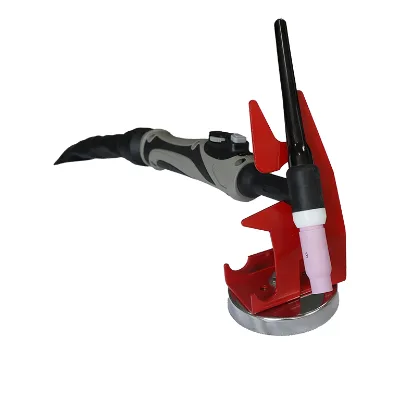


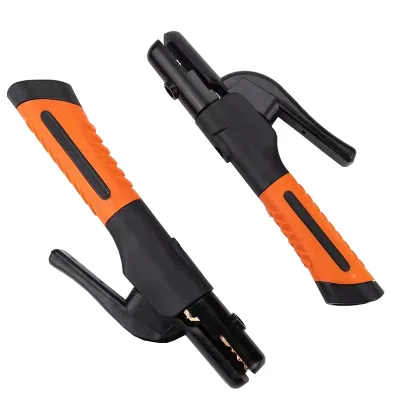




Comprehensive Sourcing Guide
Hand Tool Welding Holder Sourcing Guide
Procuring a Hand Tool Welding Holder requires careful attention to the specific interface requirements of your welding process, whether TIG or MIG. The market offers distinct models designed for different operational needs, with some units featuring lightweight construction and heat-resistant materials to ensure durability in high-temperature environments. Buyers must verify that the selected holder matches their specific workflow, as the interface design directly impacts operator comfort and long-term tool longevity.
Selection criteria should prioritize the physical attributes of the tool, such as weight and cable insulation, which are critical for reducing operator fatigue during extended use. The observed product range includes options with customized features, allowing for specific branding or material preferences like brass or iron construction. It is essential to confirm that the chosen model supports the required current ratings and voltage specifications to prevent equipment failure during critical welding operations.
Product Scope and Observed Listing Signals
The available inventory spans a wide range of configurations, from basic blister-packed units to premium color-boxed assemblies with custom branding capabilities. Listings indicate that suppliers offer various packing standards, including 1PC per blister card or 50PCS per carton, which influences logistics planning and storage requirements. Buyers should analyze these packaging variations to determine the most cost-effective shipping method for their specific order volume and destination.
Product models such as AM45032.025 and AM28202 demonstrate the diversity in standard specifications, with some units rated for currents up to 1000A and others designed for specific voltage inputs like 220V. The presence of features like easy-to-use interfaces and long-life components suggests a focus on operational efficiency, yet buyers must verify these claims against their actual production demands. Understanding the specific model numbers and their associated standards is vital for ensuring compatibility with existing welding setups.
Technical Specifications to Verify
Technical due diligence must focus on the electrical and mechanical ratings provided in the product data, such as current capacities ranging from 300A to 1000A. It is imperative to confirm that the voltage rating, often listed as AC220V, aligns with your facility's power supply to avoid electrical hazards or equipment malfunction. Additionally, verifying the material composition, which may include brass or iron, ensures the holder can withstand the thermal stress inherent in welding applications.
Dimensional accuracy is another critical factor, with observed lengths varying between 26.5cm and 28.5cm and weights ranging from 280g to 500g. Buyers should request detailed dimensional drawings to ensure the tool fits within their workspace constraints and meets ergonomic requirements for the operators. The control mode, typically manual, must be validated against the intended application to guarantee that the tool offers the necessary precision and responsiveness for the specific welding tasks.
Compliance and Safety Documentation
Safety compliance is non-negotiable, and buyers must request documentation proving adherence to recognized standards such as CE, GS, CCC, and ISO9000. While some listings mention these certifications, it is the buyer's responsibility to obtain valid certificates for the specific batch of products being purchased to ensure legal and operational safety. Relying on general claims without verified documentation can expose the procurement process to significant liability and safety risks.
Insulated cables and heat-resistant components are standard features that contribute to operator safety, but their effectiveness must be confirmed through independent testing reports. The product origin, often listed as China or specific provinces like Shandong and Shanghai, should be cross-referenced with the supplier's quality management system to ensure consistent manufacturing standards. Verifying that the insulation and material properties meet international safety norms is essential for protecting personnel in the workshop environment.
Cost Drivers and Commercial Terms
Pricing for welding holders varies significantly based on customization levels, material quality, and packaging requirements, with observed ranges spanning from $0.50 to $200. The decision to opt for OEM logo printing or specific color box packaging will directly impact the unit cost, requiring a clear cost-benefit analysis before finalizing orders. Buyers should negotiate based on the total landed cost, considering that higher customization often commands a premium price point.
Minimum Order Quantities (MOQ) are a critical commercial term, with observed ranges extending from 1 to 1200 units, influencing the feasibility of small-batch procurement. Suppliers may offer flexible terms for customized orders, but buyers must clarify lead times and production capacity to avoid supply chain disruptions. Understanding the relationship between order volume and unit price is essential for optimizing the procurement budget while maintaining sufficient inventory levels.
Supplier Qualification and Quality Control
Supplier qualification should begin with a thorough review of their manufacturing capabilities and history of producing welding accessories in regions like Shanghai or Shandong. Buyers must assess the supplier's ability to handle customized requests, such as specific model numbers or unique packing configurations, to ensure they can meet evolving project requirements. A supplier's track record in delivering consistent quality is a strong indicator of their reliability in the long term.
Quality control processes must be verified through on-site audits or third-party inspection reports, focusing on critical attributes like material integrity and electrical safety. The presence of certifications like ISO 9001 suggests a structured approach to quality management, but buyers should confirm that these standards are actively applied to the specific products being sourced. Establishing clear quality acceptance criteria before production begins is vital for preventing defects and ensuring product performance.
Long-Term Procurement Checks
Sustaining a successful procurement relationship requires regular performance reviews of the welding holders to ensure they continue to meet operational standards over time. Buyers should monitor the longevity of components, such as the heat-resistant materials and insulated cables, to identify any trends in wear or failure that might indicate a need for design adjustments. Continuous feedback loops with the supplier help in refining product specifications to better align with actual field conditions.
Future-proofing the supply chain involves maintaining open communication regarding updates in standards or technology that could affect the product's relevance. As welding technologies evolve, the ability of the supplier to adapt their offerings, such as supporting new current ratings or voltage standards, becomes a key differentiator. Establishing a long-term partnership based on mutual trust and verified performance data ensures a stable supply of high-quality welding holders for ongoing operations.
FAQs
What materials are commonly used for hand tool welding holders?
Listed holders are commonly made from brass, iron, or a magnet-based construction, depending on the model. Brass and iron bodies provide durable current transfer and structural strength for TIG and MIG work, while magnetic designs help position and hold workpieces at set angles. Confirm the exact material with the supplier before ordering, since construction varies between models and intended applications.
Which current ratings are available for welding holder models?
Available listed models cover current ratings of 300A, 400A, 500A, 600A, 800A, and up to 1000A. Lower ratings suit light fabrication and repair work, while higher ratings support heavier duty cycles and thicker sections. Choose a rating that matches your machine output and cable size, and verify the specific rating with the supplier for the model you intend to purchase.
Can welding holders be customized with our own branding and packaging?
Yes, customization is available. Suppliers listed offer OEM and ODM support, logo printing, neutral packing, or packaging to your requirement, with color also adjustable. Packing options include blister card, double blister, color box, or carton formats depending on the model. Provide your artwork and sample requirements early, as custom branding may affect minimum order quantities and production lead time.
How are welding holders typically packed for shipment?
Typical packing is one piece per blister card or color box, with cartons holding between 4 and 50 pieces depending on the model; one listed model packs 48 pieces per carton. Retail-ready blister or color box packing suits store display, while plain carton packing suits bulk buyers. Confirm carton quantity, gross weight, and carton dimensions with the supplier when calculating freight costs.
What certifications should I look for when sourcing welding holders?
Look for suppliers working to ISO 9001 quality management, and check product-level marks such as GS, CE, or CCC where applicable to your destination market. Certification needs vary by country, so confirm which marks your market requires before ordering. Request copies of valid certificates and test scope during supplier evaluation rather than relying on listing claims alone.
Which welding processes are these holders designed for?
Listed holders are used for TIG and MIG welding applications, covering electrode and wire-based processes. Some models, such as magnetic angle holders, assist with positioning workpieces at multiple angles during welding. Match the holder type to your process and duty requirements, and confirm compatibility with your torch, electrode size, or workpiece geometry directly with the supplier before placing an order.