Source Hand Tighten Butterfly Wing Nuts for Machinery, Chemical, Building
Compare 30 Hand Tighten Butterfly Wing Nuts from verified Chinese suppliers offering DIN, JIS, and GB standards. Buyers can evaluate stainless steel grades, zinc plating finishes, and packaging options for general industry applications.
Key considerations
Products List


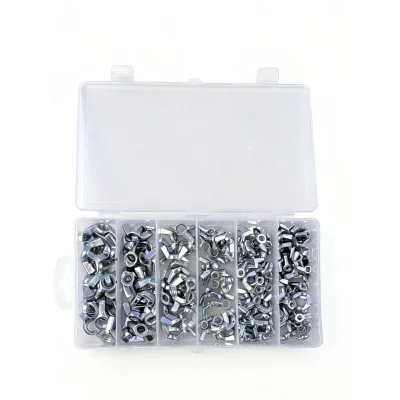


DIN 315 Carbon Steel Wing Nut Premium Quality Hand Tightening Butterfly Nuts
$0.01 - $0.04
MOQ: 2000 Pieces


Stainless Steel 304/316 DIN 315 Wing Nuts Butterfly Nuts for Hand Tightening
$0.00 - $0.00
MOQ: 1000 Pieces


Stainless Steel Hand Twist Tighten Butterfly Nut DIN315 Wing Nuts with Square Wings
$0.01 - $0.05
MOQ: 1000 Pieces

Wing Nut Butterfly Nut M4-M12 Zinc Plated / Stainless Steel Hand Tightening Type
$0.01 - $0.07
MOQ: 10000 Pieces


Comprehensive Sourcing Guide
Strategic Sourcing Guide for Hand Tighten Butterfly Wing Nuts
Technical Specifications and Material Composition
When sourcing Hand Tighten Butterfly Wing Nuts, buyers must first establish a clear understanding of the fundamental technical specifications that define product performance and compatibility. The core identity of these fasteners lies in their unique head design, which facilitates manual tightening without the need for wrenches or tools. The observed market data indicates a prevalence of the "T" head type and "Butterfly Wing Head" configurations, specifically aligned with standards such as DIN315. This specific model designation is critical for ensuring that the fastener meets international dimensional requirements for thread engagement and wing span.
Material selection is the second pillar of technical specification. The supplied product facts confirm that Stainless Steel is a primary material option, offering corrosion resistance essential for applications in chemical industries or outdoor environments. However, the data also reveals a variance in material grades, with some listings citing "10.9" or "A2, 12.9" grades, while others note "not rated." This inconsistency requires the buyer to exercise extreme caution. A grade of 10.9 typically denotes high-strength alloy steel, whereas A2 refers to a specific stainless steel grade. The presence of "not rated" entries suggests that some products may be generic or intended for low-stress applications. Buyers must explicitly verify the material grade against their load-bearing requirements to prevent structural failure.
Thread specifications are equally vital. The observed range spans from M3 to M50, with specific mentions of M3-M20 and M3-M36. The measurement system is predominantly Metric, though references to UNC, UNF, and BSW standards indicate that suppliers may offer both metric and imperial options. The "Hand Twist" drive type is a defining characteristic, meaning the wings are engineered to provide sufficient leverage for finger tightening. The body type is frequently described as "Swaged," which implies a manufacturing process where the metal is formed under pressure to create the wing shape, potentially enhancing strength compared to cast alternatives. The "Standard Height" attribute suggests that these nuts adhere to conventional profile dimensions, ensuring compatibility with standard bolt lengths.
Compliance, Standards, and Certification Verification
Navigating the complex landscape of international standards is essential for procurement professionals dealing with fasteners. The product data lists a wide array of standards, including DIN, JIS, GOST, GB, BSW, and ANSI. The specific mention of DIN315 for the "Butterfly Wing Head" provides a concrete anchor for verification. DIN315 is a recognized German standard for wing nuts, defining the geometry and tolerances necessary for interchangeability. However, the presence of other standards like DIN6923 (often associated with flange nuts) or general references to JIS and GOST indicates that suppliers may produce to multiple regional specifications.
Buyers must not assume that a product labeled with a standard automatically complies with that standard in its entirety. The data shows that while "DIN" is listed as a standard, the specific model "WSQ-N004" is also present, which may be a proprietary or internal manufacturer code rather than a public standard. Therefore, the procurement strategy must involve a direct request for the specific standard document number that the product claims to meet. For instance, if a supplier claims compliance with DIN315, the buyer should request a test report or a declaration of conformity referencing that specific document.
Certification status is another critical compliance factor. The supplied facts explicitly mention "ISO9001 : 2008" as a certificate held by at least one supplier. This certification indicates that the manufacturer has a quality management system in place, though it does not guarantee the quality of the individual fasteners. The mention of "Ce" in the low-confidence background section should be treated with skepticism and not cited as a verified attribute. Buyers should verify if the ISO certification is current and covers the specific manufacturing site. Furthermore, for applications in regulated industries such as construction or machinery, additional certifications may be required that are not listed in the general product data. The absence of specific test results in the provided facts means that buyers must insist on third-party testing data for critical applications to validate material strength and corrosion resistance claims.
Cost Drivers and Pricing Structure Analysis
Understanding the cost structure of Hand Tighten Butterfly Wing Nuts requires an analysis of the variables that influence the final price. The observed price range in the market is extensive, spanning from 0 to 5000 USD. This broad spectrum likely reflects differences in order volume, material grade, and packaging complexity rather than the unit cost of a single nut. A single unit price is rarely in the thousands of dollars; therefore, the upper end of this range likely represents bulk order totals or specialized custom configurations.
Material grade is a primary cost driver. Stainless steel variants, particularly those with higher grades like A2 or 12.9, will inherently cost more than carbon steel or lower-grade stainless options. The "not rated" entries suggest a lower-cost tier, but the lack of grade specification introduces risk that may offset initial savings. Packaging also plays a significant role in cost. The data lists various packaging methods, including "Small Inner Box + Outer Carton + Pallets," "Small Boxes Into Outer Carton," and "Bulk Packaging." Customized packaging, such as small inner boxes for retail or specific pallet configurations, adds labor and material costs that are passed on to the buyer.
Minimum Order Quantity (MOQ) is another critical factor affecting the effective unit cost. The observed MOQ range is vast, from 1 to 50,000 units. Some listings specify an MOQ of 1000 PCS, while others may allow for smaller trial orders. High MOQs generally result in lower per-unit costs due to economies of scale in production and shipping. However, for buyers with lower volume needs, the higher per-unit cost of small orders must be weighed against the inventory holding costs of buying in bulk. The "Selling Units" being listed as "Single item" in some contexts suggests that some suppliers may cater to sample orders, though the MOQ of 1000 PCS indicates a standard threshold for commercial transactions. Buyers should negotiate based on their specific volume requirements, understanding that the price per unit will fluctuate inversely with the order quantity.
Typical Applications and Industry Use Cases
The versatility of Hand Tighten Butterfly Wing Nuts makes them suitable for a diverse range of applications. The product data explicitly identifies "General Industry" as a primary application area. This broad category encompasses manufacturing, assembly lines, and maintenance tasks where frequent disassembly and reassembly are required. The "Hand Twist" feature is particularly valuable in environments where tools are impractical or where rapid adjustments are necessary, such as in equipment covers, access panels, or temporary fixtures.
Specific industry sectors mentioned in the data include "Machinery," "Chemical Industry," and "Building." In the chemical industry, the corrosion resistance of stainless steel butterfly nuts is paramount. The "Zinc Plate" and "Zinc Plated" finishes mentioned in the data are common protective measures for carbon steel nuts used in less corrosive environments, while stainless steel is preferred for harsh chemical exposure. In the building sector, these fasteners are often used for securing lightweight panels, fixtures, or temporary structures where aesthetic appeal and ease of use are important. The "Common Bolt" connection type suggests that these nuts are designed to work with standard threaded rods or bolts, making them adaptable to various structural needs.
The "Body Type: Swaged" and "Head Style: Hexagonal" or "Round" variations indicate different use cases. Swaged bodies may offer better durability for heavy-duty machinery, while round or hexagonal heads might be preferred for aesthetic reasons in building applications. The "Customized Colors" attribute suggests that these nuts can be used in consumer-facing applications where color-coding or branding is required, such as in retail displays or specialized equipment. The "Single gross weight" of 0.800 kg per package provides insight into the density and potential use in weight-sensitive applications, though this is likely a packaging weight rather than the nut weight itself. Buyers should match the specific application requirements with the available finishes and material grades to ensure longevity and safety.
Supplier Evaluation and Quality Control Protocols
Evaluating suppliers for butterfly wing nuts requires a rigorous approach to quality control and capability assessment. The data indicates that the place of origin is primarily "Zhejiang, China," a region known for its manufacturing capabilities in hardware. However, the presence of multiple suppliers with varying standards and grades necessitates a thorough vetting process. Buyers should prioritize suppliers who can provide clear documentation regarding their material grades and adherence to specific standards like DIN315.
Quality control should begin with the verification of the manufacturing process. The "Swaged" body type implies a specific forming process that should be consistent across batches. Buyers should request evidence of process control, such as statistical process control (SPC) data or regular inspection reports. The "ISO9001 : 2008" certification is a positive indicator, but it should be supplemented with product-specific testing. Since the provided data does not include specific test results, buyers must request tensile strength tests, salt spray tests for corrosion resistance, and hardness tests to validate the material claims.
Communication and responsiveness are also key evaluation criteria. The "Delivery Time" of 7-15 days suggests a relatively quick turnaround, but this can vary based on order size and customization. Buyers should confirm the lead time for their specific order volume and any potential delays due to raw material shortages or production bottlenecks. The "Payment" terms listed, including T/T, Paypal, Credit Card, and Mastercard, offer flexibility, but buyers should ensure that payment terms align with their risk management policies. For large orders, a letter of credit or escrow service may be preferable to direct wire transfers.
Long-Term Procurement and Supply Chain Considerations
Long-term procurement of Hand Tighten Butterfly Wing Nuts involves more than just securing a one-time supply; it requires building a sustainable relationship with reliable suppliers. The "Customization: Available" attribute is a significant advantage for long-term planning, allowing buyers to tailor products to specific needs over time. However, customization can introduce variability in lead times and costs. Buyers should establish clear specifications and quality benchmarks early in the relationship to ensure consistency across future orders.
Packaging and logistics are critical for long-term supply chain efficiency. The data mentions various packaging options, from "Small Inner Box" to "Bulk Packaging." Standardizing packaging can reduce handling costs and minimize damage during transit. The "Single package size" of 50x23x22 cm and "Single gross weight" of 0.800 kg provide baseline data for logistics planning, but buyers should verify these figures for their specific order configurations. Efficient palletization and container loading can significantly reduce shipping costs, especially for high-volume orders.
Inventory management is another consideration. With an MOQ range of 1 to 50,000 units, buyers must balance the cost of holding inventory against the risk of stockouts. For critical applications, maintaining a safety stock is advisable. The "7-15 days" delivery time allows for relatively quick replenishment, but buyers should monitor the supplier's performance to ensure they can meet deadlines consistently. Regular audits of the supplier's quality and delivery performance can help identify potential issues before they impact production.
Finally, buyers should remain vigilant about changes in standards and regulations. The fastener industry is subject to evolving requirements, particularly regarding material safety and environmental compliance. Staying informed about updates to DIN, ISO, and other relevant standards ensures that the procurement strategy remains compliant and effective. By focusing on technical verification, supplier reliability, and supply chain efficiency, buyers can secure a steady supply of high-quality Hand Tighten Butterfly Wing Nuts that meet their operational needs.
Comparative Analysis of Product Attributes
To facilitate informed decision-making, the following table summarizes the key product attributes observed in the market data, highlighting the variations that buyers must consider during the sourcing process.
| Attribute Category | Observed Variations | Procurement Consideration |
|---|---|---|
| Material Grade | Stainless Steel, 10.9, A2, 12.9, Not Rated | Verify grade against load and corrosion requirements; "Not Rated" implies lower assurance. |
| Standard Compliance | DIN315, DIN, JIS, GOST, GB, BSW, ANSI | Request specific standard documentation; do not assume compliance based on general labels. |
| Thread Size | M3-M20, M3-M36, M2-M50, UNC, UNF, Metric | Match thread size to bolt specifications; verify measurement system (Metric vs. Imperial). |
| Finish Type | Zinc Plate, Zinc Plated, Plain, Customized Colors | Select finish based on environmental exposure; Zinc for corrosion, Plain for general use. |
| Head Type | T, Butterfly Wing, Hexagon, Round, Square | Ensure head style matches application (manual tightening vs. tool-driven). |
| Packaging | Small Box + Carton + Pallet, Bulk, Single Item | Optimize packaging for logistics and storage; bulk for high volume, boxes for retail. |
| MOQ | 1, 1000, up to 50,000 | Negotiate MOQ based on volume needs; higher MOQs often yield lower unit costs. |
| Origin | China (Zhejiang) | Verify supplier location and production capabilities; consider logistics implications. |
| Certification | ISO9001:2008 | Confirm current certification status; request product-specific test reports. |
This comparative overview underscores the importance of detailed specification checks. The diversity in attributes means that a "one-size-fits-all" approach is ineffective. Buyers must carefully align their specific application requirements with the precise product attributes offered by potential suppliers to ensure optimal performance and value.
FAQs
What material grades are available for Hand Tighten Butterfly Wing Nuts?
Stainless Steel is the primary material, with grades including A2, 12.9, and 10.9, though some items are not rated. Buyers must verify the specific grade against load requirements to ensure structural integrity and corrosion resistance for their application.
Which standards do these butterfly wing nuts comply with?
Products comply with multiple standards including DIN, JIS, GOST, GB, BSW, and ANSI, with DIN315 being a specific model for the wing head. Buyers should request documentation confirming the specific standard document number for compliance verification.
Can I customize the color and packaging for these nuts?
Yes, customization is available for colors and packaging options like small inner boxes or bulk packaging. Suppliers offer small inner boxes with outer cartons and pallets, allowing buyers to tailor packaging to retail or industrial shipping needs.
What is the typical lead time for delivery of these fasteners?
The delivery time is typically 7 to 15 days for standard orders. This lead time may vary based on order volume and customization requirements, so buyers should confirm specific timelines before placing large orders.
How do I verify the quality certification of the manufacturer?
Some suppliers hold ISO9001:2008 certification, indicating a quality management system is in place. Buyers should verify if this certification is current and covers the specific manufacturing site, and request third-party test results for critical applications.
What is the minimum order quantity for purchasing these nuts?
The minimum order quantity ranges from 1 to 50,000 units, with some listings specifying an MOQ of 1000 pieces. Higher order volumes generally result in lower per-unit costs due to economies of scale in production.