Source Handheld Leeb Shore Hardness Tester for Metal, Stone, Plastic
Find 30 Handheld Leeb Shore Hardness Tester options from verified Chinese manufacturers. Compare specifications like measuring range, impact type, and accuracy for industrial metal, stone, and plastic testing applications.
Key considerations
Products List


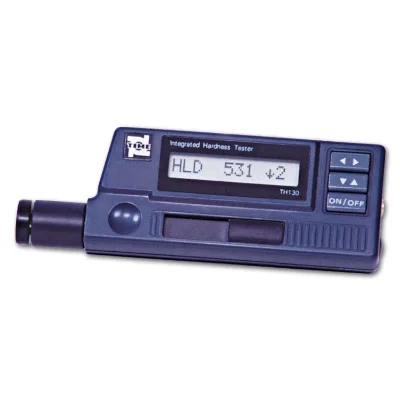
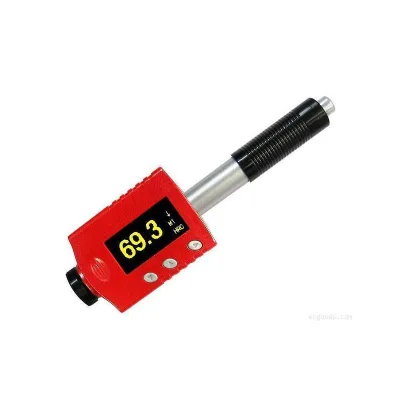
Digital Portable Hardness Tester HARTIP 1800 Leeb Hardness Measurement
$1000.00 - $1500.00
MOQ: 1 Minimum


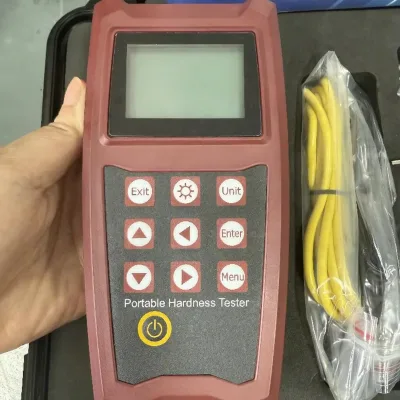


Comprehensive Sourcing Guide
Strategic Sourcing Guide for Handheld Leeb Shore Hardness Testers
The global industrial landscape relies heavily on non-destructive testing (NDT) to ensure material integrity, with handheld Leeb Shore hardness testers emerging as a critical tool for field operations. These devices offer a unique advantage by allowing technicians to assess the hardness of metal components directly on the production line or in situ, eliminating the need to transport bulky samples to a laboratory. For procurement professionals, navigating the market for these instruments requires a disciplined approach that distinguishes between verified product attributes and general market expectations. This guide synthesizes observed market data and technical specifications to provide a robust framework for sourcing decisions, ensuring that buyers can identify equipment that meets rigorous operational standards without relying on unverified claims.
Technical Specifications and Operational Capabilities
When evaluating handheld Leeb Shore hardness testers, the primary focus must be on the device's measurement principle and its adaptability to various workpiece geometries. The core technology relies on the Leeb measure principle, which determines hardness by measuring the rebound velocity of an impact body. This method is particularly effective for large, heavy, or difficult-to-move components where traditional static load methods are impractical. Buyers should verify that the specific unit under consideration supports the required impact types, as different alloys and geometries demand specific impact mechanisms. Observed market data indicates a range of available impact types, including DC, D+15, G, C, and Dl, each designed for specific material densities and surface conditions.
The measuring range is another critical technical parameter. High-performance units in the current market typically offer a range of 200-900L, which covers a broad spectrum of metallic applications. However, accuracy is not uniform across all devices; some units specify an accuracy of ±0.8% at Ld=900, a metric that should be validated against the specific tolerance requirements of the buyer's industry. Furthermore, the memory capacity of the device plays a vital role in data management. Units with memory capacities ranging from 240 to 1000 groups allow for extensive data logging, which is essential for quality control audits and traceability.
Power supply considerations are equally important for field operations. While some industrial-grade units utilize AC220V power sources for stationary applications, true handheld portability often relies on battery power. Specific models are observed to operate on 2x1.5V AAA Size Battery, ensuring extended field use without the need for immediate recharging or external power connections. The working temperature range is also a decisive factor for equipment deployed in harsh environments; reliable units typically function within a range of -10°C to +50°C. Buyers must confirm that the selected device can withstand the ambient conditions of their specific work sites.
Compliance, Certification, and Standard Adherence
In the realm of industrial testing equipment, compliance with international standards is non-negotiable. Procurement teams must prioritize suppliers who can provide verifiable documentation of certification. The most common certifications observed in the market for these devices include CE and ISO. The CE marking indicates conformity with health, safety, and environmental protection standards for products sold within the European Economic Area, while ISO certification suggests adherence to international quality management systems. It is crucial to note that while "CE & ISO" are frequently listed as attributes, buyers should request specific certificate numbers and validity dates rather than accepting a general claim.
Standard adherence extends beyond general certifications to specific testing protocols. The market data references ISO standards as a baseline for product standards, and some units explicitly list ISO and CE as their compliance framework. Additionally, the calibration process is a key compliance indicator. Reliable devices utilize standard hardness test blocks for calibrating methods, ensuring that the readings remain consistent and traceable over time. The accuracy of the device is often tied to its calibration method; for instance, the use of standard hardness test blocks is a verified practice for maintaining measurement integrity.
Buyers should also be aware of the distinction between different product standards. While some units are associated with specific dimensions like 520190650mm or 268 x 86 x 47mm, these often refer to the physical dimensions of the device or its packaging rather than the testing standard itself. The physical standard of the device, including its weight and dimensions, impacts portability. Units with a weight scope of 0-100Kg for the workpiece they test, or a mass scope of less than 900kg, indicate the scale of components the tester is designed to handle. However, the device itself must be lightweight enough for handheld operation, a characteristic often highlighted by the "Portable" attribute.
Cost Drivers and Pricing Structures
The pricing of handheld Leeb Shore hardness testers varies significantly based on the complexity of the technology, the brand reputation, and the included accessories. The observed price range in the market spans from $170 to $5,000 USD. This wide disparity suggests that the lower end of the spectrum may represent entry-level models with basic functionality, while the higher end likely includes advanced units with enhanced memory, specialized impact types, and comprehensive software integration.
Several factors drive these costs. First, the accuracy grade and measurement range are primary cost determinants. A device offering ±0.8% accuracy at Ld=900 will typically command a higher price than a unit with a broader but less precise range. Second, the power source and battery life influence the cost; units with proprietary battery systems or long-life capabilities may be priced higher. Third, the inclusion of calibration tools, such as standard hardness test blocks, adds to the overall cost but is essential for maintaining compliance.
Minimum Order Quantity (MOQ) is another consideration in the cost structure. The observed MOQ range is consistently 1-1, indicating that most suppliers are willing to sell single units, which is favorable for small to medium-sized enterprises or for pilot testing. However, buyers should verify if bulk purchasing offers any discounts, as this can significantly impact the total cost of ownership for large-scale procurement. Additionally, the warranty period, typically observed as 1 Year, is a factor in the long-term cost calculation. A longer warranty or extended service agreements may increase the initial purchase price but reduce the risk of future repair costs.
Typical Applications and Industry Suitability
Handheld Leeb Shore hardness testers are versatile tools designed for a wide array of industrial applications. The primary application domain is metal testing, where these devices are used to verify the hardness of steel, iron, and other alloys. However, the observed data also indicates that these testers are suitable for stone and plastic applications, expanding their utility beyond traditional metalworking. This versatility makes them ideal for industries such as automotive manufacturing, aerospace, construction, and heavy machinery maintenance.
The specific application of the device often dictates the required impact type and measuring range. For example, testing large structural components in the construction industry may require the DC impact type, while smaller, precision parts in the automotive sector might necessitate the D+15 or G impact types. The "Application" attribute is frequently listed as "Metal," "Metal, Stone, Plastic," or "Industrial," reflecting the broad scope of these instruments. Buyers should match the device's capabilities to their specific material types to ensure accurate results.
Furthermore, the loading method and mass scope of the workpiece are critical for application suitability. While the device itself is handheld, it is designed to test workpieces with a mass scope of less than 900kg. The loading method is typically mechanical, meaning the impact body is launched mechanically against the test surface. This method is suitable for static load applications where the component does not move during testing. For dynamic or high-temperature environments, buyers must verify that the device's working temperature range and material compatibility are sufficient for the specific application.
Supplier Evaluation and Product Verification
Selecting the right supplier is as important as selecting the right device. The market data reveals that suppliers often originate from regions like Shangdong, China, and other parts of China, which are known hubs for manufacturing testing equipment. When evaluating suppliers, buyers should look for transparency in product attributes. For instance, the "Brand Name" is a key identifier, with some suppliers listing specific brands like DUBAN. However, buyers should not rely solely on brand names; they must verify the specific model numbers, such as TH5100, HST 5300, TH170, TH210/TH160, HT6561, DB22-HM455, and DB20-LX-DW, to ensure the device matches their technical requirements.
Product attributes such as "Customization" and "Customized" indicate that suppliers may offer tailored solutions. This is particularly relevant for buyers with unique requirements, such as specific packaging needs (e.g., Plywood or Carton) or custom calibration protocols. The "Support Language" is another factor; most suppliers offer English support, which is essential for international procurement. Buyers should also check the "Small Orders" policy, as the acceptance of small orders suggests flexibility in procurement terms.
Verification of the product's origin and packaging is crucial for logistics planning. The observed origin is primarily China, and packaging methods include Plywood and Carton, which affect shipping costs and protection during transit. Buyers should confirm the packaging details to ensure the device arrives in good condition. Additionally, the "Type" of the device, such as "Leeb Hardness Tester," should be explicitly stated to avoid confusion with other hardness testing methods like Rockwell or Brinell.
Quality Control and Long-Term Procurement Considerations
Quality control in the procurement of handheld Leeb Shore hardness testers involves a multi-layered approach. The first layer is the initial inspection of the device upon receipt, verifying that the physical dimensions, weight, and packaging match the specifications. The second layer involves functional testing, where the device is calibrated using standard hardness test blocks to ensure accuracy. The "Calibrating Method" should be clearly defined, and the device should come with the necessary tools for this process.
Long-term procurement considerations include the availability of spare parts, software updates, and technical support. The "Warranty" period, typically 1 Year, is a baseline, but buyers should inquire about extended warranty options and the cost of service contracts. The "Memory" capacity of the device, ranging from 240 to 1000 groups, should be sufficient for the buyer's data logging needs, and the ability to export this data is a valuable feature for quality management systems.
The "Alarm Form" is another quality control feature; an audible alarm can alert operators to out-of-spec readings or device errors, ensuring immediate corrective action. The "Portable" nature of the device is a key quality attribute for field operations, but buyers should verify the durability of the casing and the reliability of the battery life under various conditions. Finally, the "Hardness Test" application should be validated against the specific standards of the buyer's industry to ensure that the device meets all regulatory and operational requirements.
Conclusion
Sourcing a Handheld Leeb Shore Hardness Tester requires a meticulous evaluation of technical specifications, compliance standards, and supplier capabilities. By focusing on verified attributes such as the Leeb measure principle, specific impact types, and recognized certifications like CE and ISO, buyers can make informed decisions that align with their operational needs. The wide price range and diverse model numbers available in the market offer flexibility, but the key to successful procurement lies in matching the device's capabilities to the specific application requirements. Through careful supplier evaluation and rigorous quality control, organizations can ensure that their hardness testing operations are accurate, efficient, and compliant with international standards.
FAQs
What is the measuring range for handheld Leeb Shore hardness testers?
The typical measuring range is 200-900L for high-performance units. This range covers a broad spectrum of metallic applications, though accuracy may vary between devices.
Which impact types are available for different material densities?
Available impact types include DC, D+15, G, C, and Dl. Each type is designed for specific material densities and surface conditions to ensure accurate hardness readings.
Can these testers operate in harsh environmental conditions?
Yes, reliable units function within a working temperature range of -10°C to +50°C. This ensures the device can withstand the ambient conditions of various industrial work sites.
What certifications are commonly required for these devices?
Common certifications include CE and ISO. These indicate conformity with safety standards and adherence to international quality management systems for industrial testing equipment.
How is the device calibrated to ensure accuracy?
Devices utilize standard hardness test blocks for the calibrating method. This practice ensures that readings remain consistent and traceable over time for quality control audits.
What power sources support portable operation of these testers?
Portable units often operate on 2x1.5V AAA Size Battery. This allows for extended field use without the need for immediate recharging or external power connections.
Which industries commonly use handheld Leeb Shore hardness testers?
These testers are used in metal, stone, and plastic applications across automotive, aerospace, and construction industries. They verify material integrity directly on the production line.