Source Handheld Portable LCR Meter for Industrial Testing
Find and compare 30 Handheld Portable LCR Meter options from verified Chinese manufacturers. Evaluate key specifications such as accuracy, test frequency, and display type to select the right tool for electronic component analysis and quality control.
Key considerations
Products List


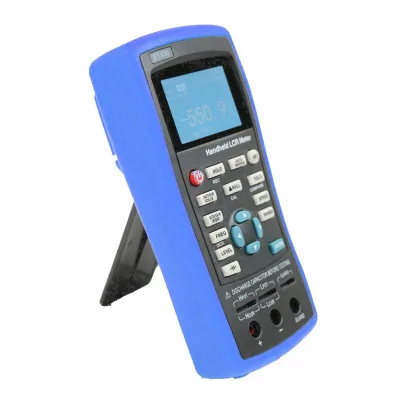
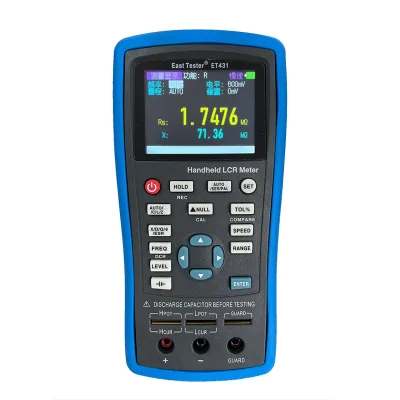


GF312b2 Portable Three Phase Standard Reference Meter High Accuracy 0.02%
$14500.00 - $15000.00
MOQ: 1 Sets
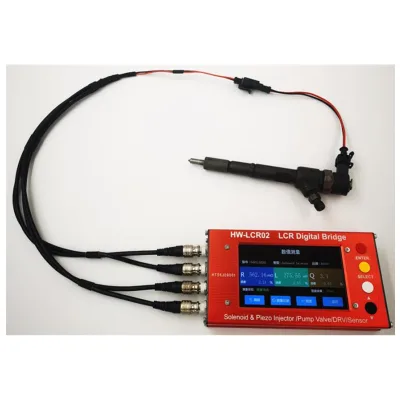
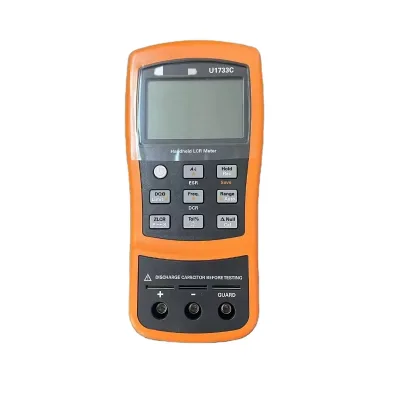






Comprehensive Sourcing Guide
Handheld Portable LCR Meter Sourcing Guide
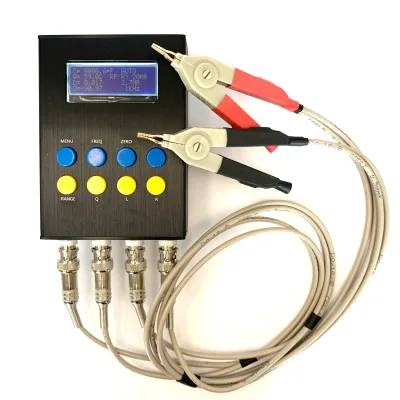
The Handheld Portable LCR Meter serves as a critical diagnostic tool for verifying the electrical characteristics of passive components such as inductors, capacitors, and resistors in both manufacturing and field service environments. These devices are designed to provide rapid, accurate measurements of impedance, capacitance, inductance, and resistance, enabling technicians to assess component quality without the need for stationary laboratory equipment. The portability factor is essential for applications where space is constrained or where measurements must be taken directly on production lines, in the field, or during maintenance of complex electronic assemblies.
Procurement of these instruments requires a clear understanding of the specific measurement parameters and environmental conditions they must withstand. Buyers should prioritize models that offer a broad frequency range, as different components exhibit varying behaviors at different frequencies. The ability to switch between measurement speeds and display formats is equally important for balancing throughput with precision. When sourcing, it is vital to match the device's technical capabilities, such as its measuring range and accuracy, to the specific tolerance requirements of the components being tested to ensure reliable quality control outcomes.
Product Scope and Observed Listing Signals
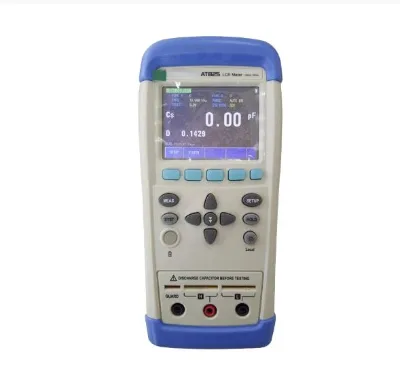
The current market for handheld LCR meters presents a diverse range of specifications, with observed listing prices spanning from $1 to over $25,000, reflecting significant variations in build quality, feature sets, and intended industrial applications. While some units are designed for general-purpose testing with basic digital displays, others feature advanced interfaces like 2.8-inch TFT LCD screens that provide detailed visualization of complex electrical parameters. The minimum order quantities (MOQ) observed in the market are generally low, ranging from 1 to 10 pieces, which facilitates flexible procurement strategies for small workshops or large-scale industrial deployments alike.
Buyers must carefully distinguish between different product models and their associated capabilities, as the market includes specialized variants such as the ET430 and ET432, alongside other industrial-grade instruments. Some listings highlight specific attributes like the "Lithium Chloride Hygrometer" type or specific thermocouple materials, indicating that product listings may sometimes conflate distinct instrument categories or offer specialized configurations. It is crucial to verify that the specific model number, such as the ET430 or TDS-139C, aligns with the intended measurement tasks, as the scope of measurement parameters can vary significantly between a basic digital display unit and a high-precision instrument with SCPI communication interfaces.
Technical Specifications to Verify
When evaluating technical specifications, the measurement frequency range is a primary determinant of a meter's versatility, with high-end models supporting frequencies from 100Hz up to 100kHz or higher. The ET430, for instance, supports a wide array of test frequencies including 100Hz, 120Hz, 1kHz, 10kHz, 40kHz, and 100kHz, allowing for comprehensive analysis of components under various operating conditions. Buyers should verify that the selected device covers the specific frequency bands relevant to their components, as inductors and capacitors often require testing at multiple frequencies to fully characterize their performance and parasitic effects.
Accuracy and measurement range are equally critical factors that define the utility of the instrument for specific industrial applications. The observed accuracy for high-performance units can be as precise as 0.2% or 0.30%, with measuring ranges extending from microhenries to thousands of henries and picofarads to millifarads. Additionally, the display speed, which can be adjusted between slow, medium, and fast modes (1/s to 4/s), impacts the efficiency of high-volume testing workflows. Procurement decisions should be based on a rigorous comparison of these parameters against the tolerance requirements of the components being produced, ensuring the instrument can reliably detect defects within the specified limits.
Compliance and Safety Documentation
Compliance with international safety and quality standards is a non-negotiable aspect of sourcing industrial measurement equipment, particularly for devices used in high-voltage or high-temperature environments. Many suppliers provide certifications such as ISO9001 for quality management systems and CE marking for conformity with European health, safety, and environmental protection standards. These certifications serve as evidence that the manufacturing processes and the final product adhere to recognized benchmarks, reducing the risk of equipment failure and ensuring operator safety during routine use.
Beyond general certifications, buyers must verify specific protection classes and environmental ratings that align with the operational conditions of their facility. For example, certain handheld meters are rated with an IP67 protection class, indicating they are dust-tight and capable of withstanding temporary immersion in water, which is essential for rugged industrial environments. It is also important to confirm the power supply requirements, such as AC220V/50Hz, and ensure that the device's power dissipation and electrical safety features are compatible with the local power infrastructure and safety protocols of the workplace.
Cost Drivers and Commercial Terms
The total cost of ownership for a handheld LCR meter is influenced by several factors beyond the initial purchase price, including the complexity of the measurement capabilities, the quality of the display interface, and the inclusion of advanced communication interfaces like USB, RS-485, or SCPI. Devices featuring high-resolution TFT LCD screens and extensive measurement parameters, such as the ability to test electrolytic capacitors or measure sub-parameters like Q and ESR, typically command higher price points. Buyers should evaluate whether the additional features justify the cost increase based on their specific testing volume and the precision required for their quality control processes.
Commercial terms, including packaging, shipping, and customization options, play a significant role in the final procurement decision. Most suppliers offer standard packaging in cartons with pallets, but some may provide customized support such as OEM branding, which can be valuable for companies looking to integrate the instrument into their branded service offerings. The observed MOQ of 1 piece allows for low-risk trial purchases, but buyers should also consider the single gross weight and package dimensions, which can impact shipping costs and logistics planning, especially when importing from origins like Qingdao, Shandong Province, or Zhejiang, China.
Supplier Qualification and Quality Control
Supplier qualification should focus on verifying the manufacturer's ability to consistently produce instruments that meet the stated technical specifications and safety standards. The presence of a brand name like "East Tester" or "EastTester" and the availability of OEM support suggest a level of established manufacturing capability, but buyers must independently verify the supplier's track record and quality control processes. It is advisable to request documentation that confirms the consistency of the product model numbers, such as the ET430 or LC-600, and to ensure that the supplier can provide traceability for the components used in the assembly of the meter.
Quality control extends to the verification of the product's physical attributes and performance consistency across batches. Buyers should inspect the single package size and gross weight to ensure they match the specifications provided, as discrepancies can indicate quality control issues or incorrect product shipments. Furthermore, the supplier's ability to provide accurate data on the measuring time, such as the 4-6 second range for certain thermocouple-based instruments, and the working temperature range of 0-2000 degrees, is essential for ensuring the instrument will perform reliably in the intended industrial environment.
Long-Term Procurement Checks
Establishing a long-term procurement strategy requires regular checks on the supplier's ability to maintain product consistency and provide ongoing technical support. Buyers should monitor the supplier's adherence to the stated standards, such as the S/R/B/W types for thermocouples or the specific accuracy tolerances, to ensure that future orders match the initial sample performance. It is also important to verify that the supplier continues to offer the necessary communication interfaces and software compatibility, as the integration of LCR meters with automated testing systems often requires stable and updated firmware.
Finally, long-term success depends on the availability of spare parts, calibration services, and the supplier's responsiveness to any performance issues that may arise over time. Buyers should confirm the availability of accessories and the ease of obtaining replacement parts for the specific model, such as the ET432, to minimize downtime. Regular audits of the supplier's quality management system and certification status, including the renewal of ISO9001 and CE certifications, will help ensure that the procurement relationship remains robust and that the instruments continue to meet the evolving demands of the industrial sector.
FAQs
What is the accuracy of the handheld LCR meter?
The handheld LCR meter offers a basic accuracy of 0.30% or 0.2% depending on the specific model. This precision allows for reliable measurement of main parameters like inductance, capacitance, and resistance across various test frequencies.
Can the device measure electrolytic capacitors?
Yes, the device supports an electrolytic capacitor mode for comprehensive testing. It measures sub-parameters such as X, D, Q, theta, and ESR alongside main values to ensure component integrity in industrial applications.
What display type does the handheld LCR meter use?
The instrument features a 2.8 inch TFT LCD display for clear visibility of data. Some models utilize a standard LCD display, ensuring that users can easily read main and secondary parameters during operation.
Which certifications are available for these meters?
Available certifications include ISO9001 and CE compliance for quality and safety standards. These credentials verify that the manufacturing processes meet international requirements for industrial electrical measurement instruments.
How fast is the measurement display speed?
The measurement display speed can be set to 1 per second for slow mode, 2 per second for medium, or 4 per second for fast mode. This flexibility allows users to balance speed and data stability as needed.
What is the minimum order quantity for purchase?
The minimum order quantity is one piece, allowing for single-item purchases without bulk requirements. This low MOQ makes it accessible for testing, prototyping, or small-scale industrial deployment needs.
Does the product support customization services?
Yes, the product supports OEM customization to meet specific client requirements. Buyers can request tailored solutions while maintaining the core functionality of the digital display and measurement capabilities.