Source handheld oscilloscope with built-in signal source for testing, repair, and design
Compare 30 listings for a handheld oscilloscope with built-in signal source from verified suppliers. Buyers can evaluate bandwidth, sampling rates, and channel counts to find the right tool for field testing and circuit diagnostics.
Key considerations
Products List


Shell Oscilloscope Kit Handheld Oscilloscope with BNC-Clip Cable P6100 Probe Power Adapter
$24.30 - $25.30
MOQ: 5 Pieces
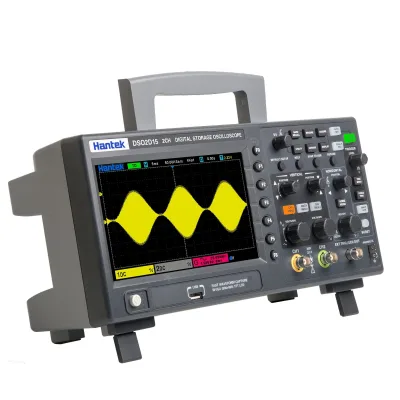


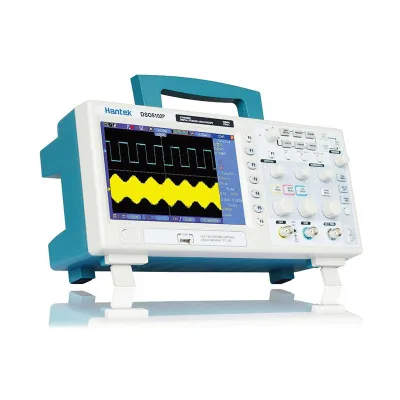


Automatic Oscilloscope 2 in 1 Dual Channel Analog Bandwidth 1gsa/S Portable Digital Storage
$175.00 - $215.00
MOQ: 1 Pieces
Comprehensive Sourcing Guide
Strategic Sourcing Guide for Handheld Oscilloscopes with Built-in Signal Sources
The procurement of handheld oscilloscopes equipped with built-in signal sources represents a critical investment for engineering teams requiring portable, multi-functional diagnostic tools. These instruments combine the waveform analysis capabilities of a digital storage oscilloscope (DSO) with the stimulus generation features of a function generator, creating a compact solution ideal for field service, embedded system debugging, and rapid prototyping. When sourcing these devices, buyers must navigate a complex landscape of specifications, certifications, and supply chain variables. The following guide outlines the essential factors for evaluating potential suppliers and products, ensuring that the selected equipment meets rigorous technical and operational requirements without relying on unverified claims.
Technical Specifications and Performance Verification
The primary differentiator in this category is the balance between bandwidth, sampling rate, and storage depth. Buyers must scrutinize the analog bandwidth, which typically ranges from 100MHz to 2.5GHz depending on the model class. For general electronics repair and lower-frequency embedded work, a bandwidth of 100MHz or 200MHz is often sufficient. However, for high-speed digital designs, models offering 1GHz or 2.5GHz analog bandwidth are necessary to capture fast rise times accurately. The maximum real-time sampling rate is equally critical; high-end units may support rates up to 10GSa/s, ensuring that transient glitches are not missed.
Storage depth, measured in points (pts), determines the duration of the waveform that can be captured at high resolution. Advanced models feature storage depths reaching 1Gpts or 240Kpts, allowing for the analysis of long, complex signal sequences. The number of analog channels is another key specification; while 2-channel units are common for general use, 4-channel models provide the necessary parallelism for analyzing multi-phase power systems or complex digital buses. The screen size, often observed at 7 inches in portable units, impacts the user interface and the ability to view multiple waveforms simultaneously. Additionally, the inclusion of a multimeter function adds value by allowing voltage and current measurements without switching devices.
Buyers should verify the mathematical model of the device, as linear models are standard for accurate signal processing. The physical dimensions of the unit also matter for portability; standard sizes observed in the market range from compact handheld units measuring approximately 114mm x 74mm x 33mm to larger benchtop-style handhelds around 330mm x 300mm x 48mm. It is essential to confirm that the specific model number, such as the MSO2000, UPO1000HD, or UPO7000 series, aligns with the required performance metrics before placing an order.
Compliance, Certification, and Safety Standards
In the global electronics market, compliance with international safety and electromagnetic compatibility standards is non-negotiable. Procurement teams must verify that the oscilloscope carries recognized certifications, such as ISO and CE marks, which indicate adherence to European safety directives and quality management systems. These certifications ensure that the device is safe to operate in industrial environments and meets the necessary electromagnetic interference (EMI) limits.
When evaluating a supplier, buyers should request documentation proving that the product has undergone rigorous testing against relevant standards. The physical dimensions of the packaging, often listed as carton or box sizes, should be consistent with the product specifications to ensure safe transport. For example, a standard package size might be 378mm x 218mm x 120mm, while more compact units may fit into boxes measuring 150mm x 200mm x 48mm. Verifying these details helps prevent damage during shipping and ensures that the device arrives in "New" condition, as specified in most high-quality listings.
Furthermore, the origin of the product plays a role in compliance. Products originating from established manufacturing hubs like China, specifically regions such as Xi'an or Shandong, often have access to robust supply chains and quality control infrastructure. However, the location of origin does not automatically guarantee compliance; buyers must explicitly check for the presence of valid certification documents for each batch of equipment purchased.
Cost Drivers and Pricing Structures
The pricing of handheld oscilloscopes with built-in signal sources varies significantly based on the technical specifications and brand reputation. The observed price range in the market spans from $1 to $30,000, reflecting the diversity from entry-level diagnostic tools to high-performance laboratory-grade instruments. Several factors drive these costs, including the analog bandwidth, the maximum sampling rate, and the storage depth. A unit with 2.5GHz bandwidth and 10GSa/s sampling rate will naturally command a higher price than a 100MHz model with 240Kpts storage.
Minimum Order Quantity (MOQ) is another critical cost driver. While some suppliers accept small orders with an MOQ of 1, others may require bulk purchases with an MOQ up to 100 units. Buyers should negotiate based on their specific volume needs, as higher volumes often unlock better pricing tiers. The inclusion of accessories, such as probes and user manuals, also affects the total cost. Some listings indicate that the material package includes probes and manuals, while others may require these as separate line items.
Additionally, the condition of the product is a significant factor. "Genuine Original" units from reputable brands like Hantek or All-Sun typically carry a premium over refurbished or generic alternatives. The warranty period, often cited as 1 year, adds value to the purchase price by mitigating the risk of early failure. Buyers must weigh the upfront cost against the long-term value provided by the warranty and the availability of after-sales support, such as video technical support and online assistance.
Typical Applications and Use Cases
Handheld oscilloscopes with built-in signal sources are versatile tools used across various industries. In the automotive sector, they are employed for diagnosing engine control units (ECUs) and sensor networks, where the ability to inject signals and observe responses simultaneously is crucial. In telecommunications, these devices assist in troubleshooting network infrastructure and verifying signal integrity in data transmission lines.
For industrial automation, the 4-channel capability of certain models allows for the monitoring of multiple motor phases or control signals, while the built-in signal source can simulate fault conditions to test system resilience. In the field of renewable energy, technicians use these instruments to analyze inverter outputs and battery management systems, where portability is essential for working on remote sites. The 7-inch screen and robust build quality make these devices suitable for harsh environments, provided they meet the necessary safety certifications.
The ability to capture 2,000,000 waveforms per second is particularly valuable in applications requiring the detection of rare glitches or intermittent faults. This high waveform capture rate ensures that even infrequent anomalies are recorded for analysis. Whether for educational purposes in university laboratories or for professional maintenance in manufacturing plants, the flexibility of these instruments makes them a staple in the modern engineer's toolkit.
Supplier Evaluation and Quality Control
Selecting the right supplier is as important as selecting the right product. Buyers should prioritize suppliers who offer customization options, such as OEM support, which allows for branding or specific configuration requirements. The availability of after-sales service, including video technical support, online support, and free spare parts, is a strong indicator of a reliable supplier. These services ensure that any issues encountered during the device's lifecycle can be resolved quickly, minimizing downtime.
Quality control processes should be a key part of the supplier evaluation. Buyers must verify that the products are "New" and "Genuine Original," avoiding refurbished units that may have hidden defects. The packaging standard, whether box or carton, should be robust enough to protect the device during transit. Additionally, the lead time, typically ranging from 3 to 7 working days, should be factored into the procurement schedule to ensure timely delivery.
Suppliers should also be transparent about their product models and specifications. For instance, models like the DSO2C10, DSO2C15, DSO2D10, and DSO2D15 offer specific bandwidth and channel configurations that buyers should match to their needs. The absence of isolated input support in certain models is a critical technical detail that must be verified before purchase, as it affects the safety and applicability of the device in high-voltage environments.
Long-Term Procurement Considerations
When planning for long-term procurement, buyers should consider the scalability of their equipment needs. As technology evolves, the demand for higher bandwidth and faster sampling rates will likely increase. Investing in a modular system or a supplier that offers upgrade paths can future-proof the procurement strategy. The availability of customized support, including OEM capabilities, allows organizations to tailor the equipment to their specific branding and operational requirements.
Warranty and maintenance are also long-term considerations. A standard 1-year warranty provides a baseline of protection, but buyers should inquire about extended warranty options or service level agreements (SLAs) for critical applications. The condition of the product upon arrival must be meticulously checked against the "New" specification to ensure that no compromises were made during shipping or handling.
Finally, the total cost of ownership (TCO) should be calculated, including the initial purchase price, shipping costs, potential import duties, and the cost of consumables like probes. By carefully evaluating these factors, buyers can make informed decisions that balance immediate technical needs with long-term strategic goals, ensuring a reliable and efficient procurement process for handheld oscilloscopes with built-in signal sources.
Comparative Analysis of Key Specifications
To facilitate a clearer understanding of the market offerings, the following table summarizes the key specifications observed in the current product landscape. This comparison highlights the variance in bandwidth, sampling rates, and storage depths, aiding buyers in selecting the most appropriate model for their specific application.
| Specification Category | Entry-Level / General Use | Mid-Range / Industrial | High-Performance / Lab |
|---|---|---|---|
| Analog Bandwidth | 100MHz / 200MHz | 1GHz | 2.5GHz / 2GHz |
| Sampling Rate | Standard (GS/s) | High (GS/s) | Up to 10GSa/s |
| Storage Depth | 240Kpts | 1Gpts | 1Gpts |
| Channels | 2 Channels | 2 Channels | 4 Channels |
| Waveform Capture Rate | Standard | Standard | 2,000,000 wfms/s |
| Screen Size | Standard | 7-inch | 7-inch |
| Typical Model Series | DSO2C/D Series | MSO2000 / UPO1000HD | UPO7000 / UPO7000N |
| Certification | ISO / CE | ISO / CE | ISO / CE |
| Warranty | 1 Year | 1 Year | 1 Year |
This table serves as a reference point for buyers to quickly identify the tier of equipment that aligns with their technical requirements. It is important to note that specific model numbers and their associated specifications may vary by manufacturer, and buyers should always verify the exact details against the product datasheet provided by the supplier. By adhering to these guidelines and conducting thorough due diligence, procurement teams can secure high-quality handheld oscilloscopes that enhance operational efficiency and diagnostic capabilities.
FAQs
What is the maximum analog bandwidth for high-performance models?
High-performance models support analog bandwidths up to 2.5GHz or 2GHz. Some mid-range units offer 200MHz or 100MHz, while specific series like UPO7000N provide 1GHz options for varied engineering needs.
Can I find handheld oscilloscopes with a 7-inch screen?
Yes, certain handheld units feature a 7-inch screen for better waveform visibility. These devices often include multimeter functions and are designed for portable field diagnostics in various industrial settings.
Which certification standards do these oscilloscopes typically meet?
Many models carry ISO and CE certifications to ensure safety and compliance. These standards verify electromagnetic compatibility and quality management, making the devices suitable for use in regulated industrial environments.
How fast is the maximum real-time sampling rate available?
The maximum real-time sampling rate can reach 10GSa/s on advanced units. This high speed ensures accurate capture of fast transient signals and complex digital waveforms without missing critical data points.
What is the typical lead time for delivery from China?
The typical delivery time is 3 to 7 working days from origins like Xi'an or Shandong. This short lead time applies to new condition units and depends on the specific supplier and order volume.
Can suppliers accept small orders with an MOQ of 1?
Yes, many suppliers accept small orders with a minimum quantity of 1 unit. While some vendors may require bulk purchases up to 100 units, flexible options exist for single-unit procurement needs.
Which models offer four analog channels for multi-phase analysis?
Some models provide four analog channels to monitor complex multi-phase power systems. These units often include features like 240Kpts storage depth and are suitable for advanced embedded system debugging tasks.