Source Handmade Glazed Ceramic Bowl for Home Hotel Restaurant
Explore 30 listings for Handmade Glazed Ceramic Bowl options suitable for daily use, hotel service, and restaurant dining. Buyers can compare features like eco-friendly design, custom logos, and microwave safety across multiple suppliers in Guangdong, China.
Key considerations
Products List
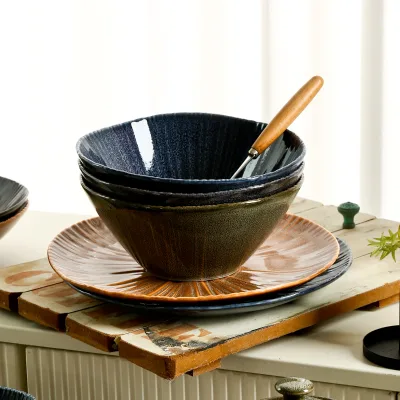


White Ceramic Food Storage Bowl Hand Painted Soup Bowl Custom Ceramic Fruit Bowl
$0.55 - $1.00
MOQ: 5000 Pieces


Simple Glazed Salad Porcelain Bowl Round Custom Ceramic Soup Bowl for Dinner
$0.50 - $1.00
MOQ: 5000 Pieces


Hot Selling 5.5 Bowl Hand Drawn Color Glaze Porcelainware Ceramics Tableware
$0.46 - $0.52
MOQ: 2000 Pieces
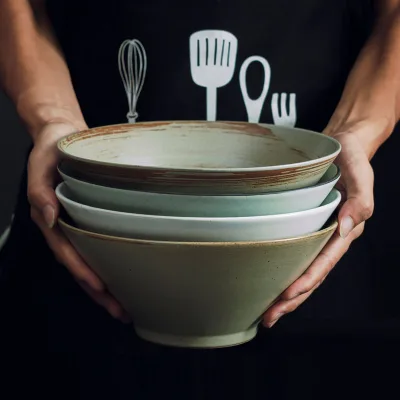


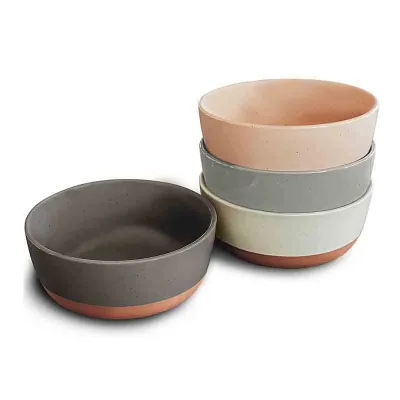


Comprehensive Sourcing Guide
Strategic Sourcing Guide for Handmade Glazed Ceramic Bowls
Understanding Product Attributes and Material Composition
When sourcing handmade glazed ceramic bowls, buyers must first distinguish between the material classifications and the specific manufacturing techniques that define the product's integrity. The core keyword "Handmade Glazed Ceramic Bowl" implies a specific intersection of artisanal production and functional utility. Based on available market data, the primary material composition for these items is often listed as a combination of ceramic and porcelain. While "porcelain" suggests a finer, more vitrified clay body often associated with translucency and high strength, "ceramic" is a broader term that encompasses a wider range of clay types and firing temperatures. In the context of this specific product category, the distinction is critical because the glazing process interacts differently with each material.
The manufacturing technique is a defining characteristic. The observed data indicates that "handmade" is a verified attribute for a significant portion of these listings. This method contrasts sharply with mass-produced, machine-pressed alternatives. Handmade production often results in slight variations in shape and weight, which are considered features rather than defects in the artisanal market. The glazing technique is equally important; listings frequently cite "under-glazed" and "glazed" as distinct processes. Under-glazing involves applying color beneath the clear glaze layer, which can enhance durability and prevent fading, while standard glazing applies the finish on top. The technology used for decoration often includes "pad printing," which allows for precise logo application or pattern transfer on the curved surfaces of the bowls. Buyers should verify whether the "handmade" claim extends to the glazing application or if the glazing is a separate, automated step applied to hand-formed bodies.
Technical Specifications and Dimensional Standards
Precision in technical specifications is vital for procurement, particularly when these bowls are intended for commercial use in hotels, restaurants, or as promotional gifts. The physical dimensions of the bowls vary significantly based on their intended application. Data indicates that diameter and height are often customizable, with specific standard examples including a top diameter of 13.1 cm, a bottom diameter of 10.3 cm, and a height of 7.2 cm. Another common specification observed is a diameter of 14 cm with a height of 8.2 cm. However, the "Custom" designation for diameter appears frequently, suggesting that buyers can request bespoke dimensions to fit specific serving needs or branding requirements.
The single package size is another critical logistical parameter, often listed as "XX cm" in generic listings, which necessitates direct inquiry with the supplier to determine the exact cubic volume for shipping calculations. The weight and thickness of the bowl walls are not explicitly quantified in the provided data but are inherent to the "handmade" and "ceramic" classification. Buyers should request specific weight data to ensure the bowls meet the durability requirements for their supply chain. Furthermore, the "Dinnerware Type" is confirmed as "Bowls," with applications ranging from salad and noodle service to general daily use. The "Color" options observed include white, gray, multicolor, and unicolor variants, allowing for customization to match specific interior design themes or brand identities. The "Design" attribute confirms that customized designs are accepted, which is a key differentiator for this product category.
Compliance, Certification, and Safety Standards
For B2B procurement, especially in the food service and hospitality sectors, compliance with international safety standards is non-negotiable. The provided facts highlight a robust set of certifications that buyers should look for to ensure product safety. These include CE/EU, FDA, CIQ, and LFGB. The presence of FDA certification is particularly relevant for the North American market, indicating that the materials are safe for food contact. LFGB (Lebensmittel- und Bedarfsgegenständegesetz) is the German food safety law, which is often stricter than EU standards, making its presence a strong indicator of high-quality material safety. CE marking confirms conformity with health, safety, and environmental protection standards for products sold within the European Economic Area. CIQ (China Inspection and Quarantine) is a domestic Chinese standard that often aligns with export requirements.
Buyers must verify that the specific batch of bowls being ordered carries these certifications. While the data lists these as available attributes, it does not guarantee that every single SKU from a supplier holds all of them simultaneously. The "Quality Standard" is noted as "According to Your Requirements," which implies that suppliers may adhere to specific client-driven standards rather than a single universal norm. This flexibility is advantageous but requires the buyer to explicitly define their compliance needs in the purchase order. Additionally, the "Function" attributes include "Eco-Friendly," "Health Care," and "Thermostability." These claims should be validated through the supplier's test reports, particularly regarding the "Special Feature" of being microwave, oven, and dishwasher safe. The "Non-Disposable" nature of the product reinforces the need for long-term durability and resistance to thermal shock, which is a direct result of the glazing and firing processes.
Cost Drivers and Procurement Economics
The economics of sourcing handmade glazed ceramic bowls are influenced by several distinct factors, primarily the labor intensity of the "handmade" process and the complexity of the glazing and decoration. The observed price range in the market spans from 0.20 USD to 6.59 USD per unit. This wide variance is likely driven by the material quality (porcelain vs. standard ceramic), the intricacy of the handmade design, the type of glaze used, and the scale of the order. The Minimum Order Quantity (MOQ) is another significant cost driver. While some listings show an MOQ as low as 1 piece, others specify an MOQ of 1200 pieces. This discrepancy suggests that the 1-piece option may be a sample or a small-batch retail listing, whereas the 1200-piece MOQ reflects the economic threshold for wholesale production runs.
Lead times are also a critical component of the total cost of ownership. The data indicates a sample time of 7-15 days, followed by a delivery time of 45-60 days for production orders. These timelines are longer than those for mass-produced, machine-made ceramics, reflecting the time required for hand-forming, drying, and firing processes. The "Place of Origin" is consistently listed as Guangdong, China, specifically Chazhou, a region known for its ceramic industry. This location offers a mature supply chain but also means that logistics and shipping costs must be factored into the final landed cost. The "Selling Units" are listed as "Single item," which can be misleading for bulk buyers; procurement should be structured around the MOQ to achieve the lower price points within the observed range. The "Customized" nature of the product adds a layer of complexity that can increase costs, particularly if the design requires new molds or specialized glazing techniques.
Typical Applications and Usage Scenarios
The versatility of handmade glazed ceramic bowls makes them suitable for a wide array of applications, from residential use to high-volume commercial operations. The "Usage" attributes explicitly list "Home," "Hotel," "Restaurant," "Wedding," and "Party," indicating that the product is designed to bridge the gap between domestic utility and professional service. In a restaurant setting, the "Eco-Friendly" and "Health Care" features are selling points that align with modern consumer preferences for sustainable dining options. The "Special Feature" of being microwave, oven, and dishwasher safe is particularly valuable for commercial kitchens where efficiency and durability are paramount.
The "Application Scenario" data further refines the potential use cases, including "Kitchen," "Hotel," "Restaurant," "Market," "Gift," and "Promotion." This broad scope suggests that these bowls can serve as functional dinnerware or as branded promotional items. The ability to customize the "Logo" and "Design" makes them ideal for corporate gifts or promotional campaigns, where the bowl acts as a lasting brand ambassador. The "Age" attribute of "All People" confirms that the design is universally applicable, avoiding niche aesthetic limitations. However, the "Vintage" style mentioned in the data suggests a specific aesthetic direction that may appeal more to certain demographics or interior design trends. Buyers should align their product selection with their target market's aesthetic preferences, whether that leans towards the "Vintage" look or a more modern, "Multicolor" design.
Supplier Evaluation and Quality Control Protocols
Evaluating suppliers for handmade ceramic products requires a rigorous approach to quality control, given the inherent variability of handcrafted items. The "Making Method" is explicitly "Handmade," which means that slight variations in size, shape, and glaze thickness are expected. Buyers should establish clear tolerance limits in their quality control agreements. The "Standard" of "Top Dia. 13.1xbottom10.3xH7.2cm" or "Dia. 14xH8.2cm" provides a benchmark, but the "Custom" nature of the diameter means that specifications must be clearly defined in the technical drawings provided to the supplier.
Quality control should focus on the integrity of the glaze and the structural soundness of the bowl. The "Under Glazed" and "Glazed" techniques should be inspected for defects such as cracking, pinholing, or uneven color distribution. The "Pad printing" technology used for logos must be checked for registration accuracy and adhesion, especially since the bowls are intended to be dishwasher safe. The "Certification" list (CE/EU, FDA, CIQ, LFGB) serves as a baseline, but buyers should request third-party test reports to verify these claims for the specific production batch. The "Production Origin" in Guangdong, China, is a hub for ceramics, but the concentration of suppliers means that due diligence is essential to distinguish between high-quality artisans and mass-market producers. Buyers should verify the "Sample time" and "Delivery time" reliability by requesting a pilot order before committing to a full production run. The "Fob" (Free on Board) packing term indicates that the buyer is responsible for shipping costs from the port of origin, which requires careful logistics planning.
Long-Term Procurement and Relationship Management
Sourcing handmade glazed ceramic bowls is not merely a transactional activity but a long-term partnership that requires strategic planning. The "Customized" aspect of the product means that the supplier becomes an extension of the buyer's design team. Maintaining a consistent relationship with the supplier is crucial for ensuring that the "Handmade" quality remains consistent over multiple production cycles. The "Design" acceptance of "Customized Designs" implies an ongoing collaboration that can evolve as market trends shift.
Buyers should consider the "Lead time" of 45-60 days when planning their inventory and sales cycles. This extended timeline necessitates accurate demand forecasting to avoid stockouts or overstocking. The "MOQ" of 1200 pieces suggests that buyers should plan for larger, less frequent orders to optimize shipping and production costs, rather than frequent small orders. The "Eco-Friendly" feature is a growing market trend, and maintaining this attribute in the long term can provide a competitive advantage. Buyers should also monitor the "Material" consistency, ensuring that the balance between "Ceramic" and "Porcelain" remains stable to preserve the product's functional properties. Finally, the "Special Feature" of thermal stability and dishwasher safety should be re-verified periodically to ensure that the supplier's firing processes have not drifted, which could compromise the product's longevity and safety. By focusing on these long-term considerations, buyers can secure a reliable supply of high-quality handmade glazed ceramic bowls that meet their evolving business needs.
FAQs
What certifications do handmade glazed ceramic bowls typically have?
These bowls often carry CE/EU, FDA, CIQ, and LFGB certifications to ensure food safety. Buyers should verify that specific batches hold these credentials, as standards may vary by supplier batch and region.
How long does it take to receive samples of these bowls?
Sample preparation typically requires 7 to 15 days before shipping. This timeframe accounts for the handmade nature of the product and the time needed for glazing and drying processes.
Can I customize the logo and design on these ceramic bowls?
Yes, customized designs and logos are available for these products. Suppliers accept bespoke requests, allowing buyers to tailor dimensions, colors, and branding to match specific requirements.
What is the minimum order quantity for wholesale purchases?
The minimum order quantity can range from 1 piece for samples to 1200 pieces for wholesale production. Buyers should confirm the specific MOQ with the supplier to align with their procurement volume.
Are these bowls safe for use in microwaves and dishwashers?
Yes, many of these handmade glazed ceramic bowls are microwave, oven, and dishwasher safe. This durability depends on the specific glazing technique and firing process used by the manufacturer.
Which dimensions are standard for these ceramic salad bowls?
Standard dimensions often include a top diameter of 13.1 cm with a height of 7.2 cm or a diameter of 14 cm with a height of 8.2 cm. Custom sizes are also available upon request.