Source Handmade Organic Tin Scented Candle for Home, Prayer, and Gym
Explore 30 listings for the Handmade Organic Tin Scented Candle, featuring options for home, prayer rooms, and gyms. Buyers can compare customization, scent strength, and packaging specifications across suppliers offering modern styles and various wax types.
Key considerations
Products List


Handmade Soy Wax Scented Candles Covered with Yarn Glass Scented Candles
$1.24 - $1.39
MOQ: 100 Pieces


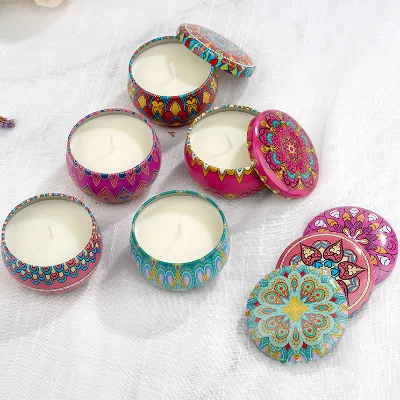


Natural Scented Candles Organic Soy Wax Decaled Glass Jar Fragrance Candle
$0.85 - $3.00
MOQ: 1000 Pieces


Decorative Scented Candle From China Candle Manufacturer Scented Candles
$4.20 - $4.70
MOQ: 1000 Pieces

Comprehensive Sourcing Guide
Strategic Sourcing Guide for Handmade Organic Tin Scented Candles
Understanding Product Attributes and Material Composition
When sourcing handmade organic tin scented candles, buyers must first distinguish between the container material and the wax composition, as these define the product's core value proposition. The supplied data indicates a significant variation in container materials, with many listings specifying Glass containers rather than tin. However, the specific search term "tin" implies a need for verification regarding the actual vessel material, as some products may utilize tin-plated steel or aluminum for specific aesthetic or functional reasons not explicitly detailed in the general observations. The wax composition is a critical differentiator; the available data confirms the use of Soy Wax in specific listings, which aligns with the "organic" descriptor often sought by eco-conscious buyers. This natural wax is paired with Plant Essential Oils, ensuring the fragrance profile is derived from botanical sources rather than synthetic compounds.
The craftsmanship method is explicitly noted as Handmake, which suggests a production process that may vary in consistency compared to fully automated manufacturing. This manual element often results in unique batch variations, which buyers should anticipate during quality control. The scent strength observed in the data ranges from Moderate to Strong, indicating that fragrance load is not uniform across all suppliers. Buyers must verify the specific scent strength required for their target market, as a "Strong" candle may be suitable for large commercial spaces, while a "Moderate" scent is better for intimate settings like prayer rooms or bedrooms. The available scent profiles are extensive, including Vanilla, Tea Tree, Rosemary, Peppermint, Ocean, Lavender, Frankincense, Chamomile, Agalloch, Sandalwood, Rose, Eucalyptus, Cinnamon, and Wormwood. This diversity allows for highly customized product lines, provided the supplier can maintain the integrity of these natural essential oils during the hand-molding process.
Technical Specifications and Dimensional Standards
Technical specifications for handmade candles vary significantly based on the intended usage and container size. The data reveals a wide spectrum of product dimensions, with specific examples including a 6*6.5 unit, an 8*9 unit, and a 7.5*8.3 unit. These measurements likely refer to the diameter and height in centimeters, though the exact unit of measurement should be confirmed with the supplier. The weight specifications are equally varied, with observed standards ranging from 150g to 250g, and specific cup sizes noted as 248g (Small Cup) and 358g (Big Cup). This variance in weight directly impacts the burn time and scent throw; a 150g candle typically offers a shorter burn duration compared to a 358g variant.
The packaging specifications are equally critical for logistics planning. Outer box sizes observed include 543322, 45.533.525.5, and 6.56.56.8 for individual units. The packing quantity per carton varies, with examples showing 120 units per box and 24 units per box, suggesting that suppliers offer different bulk packaging configurations. The total packing weight for a standard carton is noted at 15.4kg, which is essential for calculating shipping costs and freight class. The burn time is a key performance metric, with one specific observation citing 12 hours of burn time. However, this figure is likely specific to a particular size and wax-to-wick ratio, and buyers should not assume this applies to all variants without testing. The fragrance diffusion range is also a technical parameter, with one listing specifying a range of 15-20 Square Meters, which helps in determining the suitability of the candle for specific room sizes.
Compliance, Certification, and Safety Verification
Compliance is a paramount concern when sourcing candles, particularly those marketed as organic or handmade. While the supplied data mentions FSC and REACH certifications in a low-confidence background section, these should not be treated as guaranteed attributes for every product listed. Buyers must actively verify if the supplier holds valid REACH compliance for the essential oils and wax used, as this regulation governs the safety of chemical substances in the European Union. Similarly, FSC certification would apply to the paper packaging materials, ensuring that the cardboard boxes are sourced from responsibly managed forests.
The product standard is listed as middle in some contexts, and specific weights like 240g and 250g are noted as standards. These likely refer to internal quality benchmarks rather than international safety standards. Buyers should request documentation regarding the No Toxic claim, ensuring that the soy wax and essential oils are free from heavy metals, phthalates, and other harmful additives. The Cotton wick type is a standard observation, but the presence of lead or other metal cores in the wick must be explicitly ruled out through third-party testing. Since the product origin is listed as China, buyers should be aware of the specific export regulations and safety standards applicable to Chinese manufacturers, which may differ from domestic standards in the destination market.
Cost Drivers and Economic Considerations
The cost structure for handmade organic tin scented candles is influenced by several factors, including the complexity of the hand-molding process, the quality of the essential oils, and the packaging requirements. The observed price range in the market is 0.3-6.7 USD, a wide disparity that reflects differences in size, scent complexity, and brand positioning. A candle priced at the lower end of this spectrum likely uses a smaller wax volume, a simpler scent profile, or less premium packaging. Conversely, the higher price points may correspond to larger sizes (e.g., 358g), complex multi-note fragrances, or specialized Glass or Tin containers.
The Minimum Order Quantity (MOQ) is a significant economic driver. The data shows an observed MOQ range of 5-3000, with a specific high-confidence fact listing an MOQ of 500. This suggests that while some suppliers may accept small trial orders, the standard economic threshold for custom or bulk production is often around 500 units. Customization is Available, which can increase costs due to the setup required for custom labels, specific scent blends, or unique packaging designs. The Custom label attribute indicates that branding is a key value-add, but it also introduces variable costs for label printing and design. Buyers should calculate the total landed cost, including freight, duties, and potential customs delays, as the product origin is China. The Carton and Packaging Box types also impact the cost, as heavier or more complex packaging increases shipping weight and volume.
Typical Applications and Market Segmentation
The versatility of handmade organic scented candles allows them to serve multiple market segments. The data indicates suitability for Home, Prayer Room, Gymnasium, and Decoration purposes. This broad applicability suggests that buyers can target diverse customer bases, from residential consumers to commercial spaces like yoga studios or wellness centers. The usage categories extend to Health Care, Fresh Air, and Everyday Use, highlighting the functional benefits of the essential oils, such as aromatherapy and air purification. The Modern style and Black color options observed in the data cater to contemporary interior design trends, making these candles attractive for modern retail environments.
The specific scents listed, such as Lavender and Chamomile, are often associated with relaxation and sleep, making them ideal for bedroom or prayer room use. Scents like Peppermint and Eucalyptus are energizing and suitable for gyms or offices. The Travel usage category suggests that smaller, portable versions of these candles are also available, which could be marketed as gift sets or travel accessories. The Whole Year reason attribute implies that these products are not seasonal but have year-round demand, making them a stable category for inventory planning. The Decoration usage further expands the market, as these candles can be sold as home decor items rather than just functional lighting sources.
Supplier Evaluation and Quality Control Protocols
Evaluating suppliers for handmade organic candles requires a rigorous approach to ensure consistency and quality. Since the product is Handmake, buyers must assess the supplier's ability to maintain uniformity in wax pouring, wick placement, and scent blending. The Craftsmanship attribute suggests that human error is a potential risk, so suppliers should have robust quality control measures in place. Buyers should request samples to verify the Scent Strength and Burn Time claims, as these can vary between batches. The No Toxic claim must be backed by laboratory test results, particularly for the essential oils and wax composition.
The Customization availability is a key differentiator, but it also introduces complexity. Buyers should evaluate the supplier's capacity to handle custom labels, specific packaging sizes, and unique scent formulations without compromising quality. The Packing Specifications and Outer Box Size data should be used to verify that the supplier can meet the buyer's logistical requirements. For instance, if a buyer needs 120 units per carton, they must confirm that the supplier can consistently pack to this specification. The Standard of 250g or 240g should be verified against the actual product weight to ensure there is no short-filling. Finally, buyers should check the supplier's track record for Lead Times and MOQ flexibility, as these factors directly impact the supply chain's responsiveness.
Long-Term Procurement and Supply Chain Stability
Long-term procurement of handmade organic candles requires a focus on supply chain stability and scalability. The Origin of China offers competitive pricing but may present challenges related to geopolitical tensions or shipping disruptions. Buyers should consider diversifying their supplier base to mitigate these risks. The Custom label and Packaging options allow for brand differentiation, which is crucial for long-term market positioning. However, maintaining the Organic and Handmade narrative requires consistent quality, which can be difficult to scale without compromising the artisanal nature of the product.
Buyers should establish clear communication channels with suppliers to monitor changes in raw material costs, particularly for Soy Wax and Plant Essential Oils, which are subject to market volatility. The Fragrance Diffusion Range and Burn Time should be regularly tested to ensure the product continues to meet customer expectations. The Modern style and Black color options may evolve with fashion trends, so buyers should remain agile in updating their product offerings. Finally, the Quality assurance process should be ongoing, with regular audits and third-party testing to maintain the No Toxic and REACH compliance standards. By focusing on these long-term considerations, buyers can build a resilient and profitable supply chain for handmade organic tin scented candles.
FAQs
What container materials are used for handmade organic scented candles?
Most listings specify glass containers rather than tin, though some may use tin-plated steel. Buyers must verify the actual vessel material as the data shows significant variation in container types across different suppliers.
Can buyers request custom labels and specific scent blends?
Yes, customization is available for custom labels and specific scent formulations. However, this may increase costs due to the setup required for unique designs and the need to maintain the integrity of natural essential oils.
What is the typical burn time for these handmade soy wax candles?
One specific observation cites a burn time of 12 hours for certain sizes. This figure depends on the wax-to-wick ratio and candle weight, so buyers should not assume this applies to all variants without testing.
Which minimum order quantities are common for custom candle production?
The observed MOQ range spans from 5 to 3000 units, with a high-confidence fact listing 500 as a standard threshold. While some suppliers accept small trial orders, bulk production often requires meeting the 500-unit mark.
How does the scent strength vary across different product listings?
Scent strength ranges from moderate to strong depending on the specific listing and intended usage. A strong scent is suitable for large commercial spaces, while moderate scents are better for intimate settings like prayer rooms or bedrooms.
What certifications should buyers verify for safety and compliance?
Buyers must actively verify REACH compliance for essential oils and FSC certification for paper packaging. The data mentions these in low-confidence sections, so they are not guaranteed attributes for every product listed without documentation.
Which packaging specifications are standard for bulk shipping?
Packing quantities vary, with examples showing 120 units per box or 24 units per box. Outer box sizes like 54 by 33 by 22 centimeters are observed, which is essential for calculating shipping costs and freight class.