Source HDPE 4-Way Euro Pallet for Warehouse Storage and Transport
Compare 30 HDPE 4-way euro pallet options from verified suppliers. These plastic pallets feature single-face designs, blue coloring, and load capacities up to 4 tons for warehouse storage, racking, and transport applications.
Key considerations
Products List

Factory Solid Deck HDPE Euro Plastic Pallet From 4 Way Plastic Euro Pallets
$22.30 - $32.00
MOQ: 100 Pieces

Anti-Slip Plastic Pallet Euro Large Size Plastic Pallet HDPE Euro Pallet
$19.60 - $29.00
MOQ: 100 Pieces


Heavy Duty HDPE Euro 4-Way Entry Recycled Plastic Pallet for Warehouse Use
$19.00 - $29.90
MOQ: 100 Pieces


HDPE Plastic Pallet Euro Size Plastic Pallet Uses Four-Way Entry Plastic Pallet
$22.00 - $30.00
MOQ: 100 Pieces


Food Grade Heavy Duty Industrial Rackable Euro HDPE Warehouse Storage Plastic Pallet
$15.00 - $25.00
MOQ: 50 Pieces


High Quality Virgin HDPE Plastic Euro Plastic Pallet for Transportation
$19.00 - $29.00
MOQ: 100 Pieces
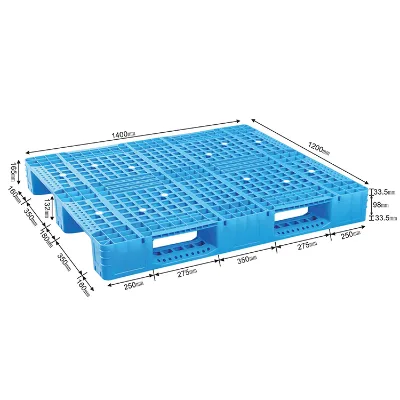
HDPE Euro Heavy-Duty Plastic Pallets Steel-Reinforced and Euro Rack Compatible
$10.00 - $10.40
MOQ: 300 pieces


Comprehensive Sourcing Guide
Strategic Sourcing Guide for HDPE 4-Way Euro Pallets
The global logistics landscape increasingly relies on durable, standardized, and sustainable material handling equipment. Among the most critical assets in this domain is the HDPE 4-way Euro pallet. Sourcing these units requires a disciplined approach that balances technical specifications, supply chain reliability, and total cost of ownership. Buyers must navigate a market where product attributes vary significantly between suppliers, even when the core description remains identical. This guide provides a structured framework for evaluating HDPE 4-way Euro pallets, ensuring that procurement decisions are grounded in verifiable facts rather than marketing assertions.
Technical Specifications and Structural Integrity
The foundation of a successful pallet procurement lies in understanding the precise technical specifications. For the core keyword of an HDPE 4-way Euro pallet, the primary material is High-Density Polyethylene (HDPE). This material choice is distinct from Polypropylene (PP) or composite blends, offering superior impact resistance and chemical stability. The "4-way" designation indicates that the pallet is designed to be entered by a forklift from all four sides, a critical feature for maximizing warehouse throughput and flexibility.
When evaluating product listings, buyers should look for specific dimensional standards. The Euro pallet format typically aligns with the 1200mm x 1000mm footprint, a standard observed in multiple product entries. However, dimensions can vary; some listings specify 1000mm x 1000mm or include height variations such as 150mm. It is essential to verify the exact length, width, and height against the specific racking systems and storage containers used in the facility. The structural design often features a single-face configuration, which is common for warehouse storage and transport applications.
Load capacity is another non-negotiable technical parameter. The data indicates that dynamic load capacities can range from 1 ton to 2 tons, while static load capacities may reach up to 4 tons. These figures are not universal; a specific model like the TB158 or RLD-239 may have different ratings. Buyers must request the specific load test data for the exact model number they intend to purchase. Furthermore, the weight of the pallet itself is a factor in shipping costs and handling efficiency, with observed weights around 19.6 kg for certain heavy-duty models. The "Entry Type" must be explicitly confirmed as 4-way to ensure compatibility with automated or semi-automated material handling equipment.
Compliance, Certification, and Standard Verification
In the B2B procurement of industrial equipment, compliance is often a prerequisite for market entry. While the provided data mentions "standard" as a general attribute, it does not specify a particular international certification body or standard number (such as ISO 8611 or EPAL standards) for every listed product. Therefore, buyers must treat the term "standard" as a claim that requires independent verification.
The sourcing guide emphasizes that buyers should explicitly ask suppliers for documentation proving compliance with relevant international or regional standards. For Euro pallets, the EPAL (European Pallet Association) standard is a common benchmark, but not all HDPE pallets meet this strict requirement. If a buyer requires EPAL certification, they must verify this status directly, as the generic term "standard" in product descriptions does not guarantee it. Similarly, claims of being "Environmentally Friendly" or "Heat Resistant" should be supported by test reports or material safety data sheets (MSDS).
Buyers should also verify the "prod_standard" field in supplier catalogs. Some entries list dimensions as the standard (e.g., 1200x1000 mm), while others list it as a general compliance term. It is the buyer's responsibility to cross-reference these claims with the specific regulatory requirements of their destination market. For instance, if the pallets are intended for export to the European Union, phytosanitary requirements (though less relevant for plastic than wood) and specific weight limits may apply. The absence of a specific certification name in the product listing is a signal to request formal documentation before finalizing the order.
Cost Drivers and Pricing Dynamics
Understanding the cost structure of HDPE pallets is vital for budgeting and negotiation. The observed price range in the market spans from $5 to $47.17 USD per unit. This wide variance is driven by several factors, including the specific model, load capacity, material thickness, and customization requirements. A pallet priced at the lower end of the spectrum may be a lighter-duty unit with a lower static load capacity, while the higher-end units likely offer heavy-duty performance, such as the 4-ton static load capacity observed in specific listings.
Material costs are a primary driver. HDPE is a premium plastic compared to recycled or lower-grade polymers. The use of virgin HDPE versus recycled HDPE significantly impacts the price. Additionally, the "Customization" attribute is a major cost variable. While standard blue pallets are common, options for customized colors, logos, or specific dimensions will increase the unit price. The "prod_packing" method, whether "Pallet" or "Normal," also influences the final landed cost due to differences in shipping efficiency and packaging materials.
Buyers should also consider the Minimum Order Quantity (MOQ) as a cost driver. The observed MOQ ranges from 1 to 500 units, with some specific listings requiring 100 pieces. Ordering below the MOQ may result in higher per-unit costs or the inability to secure the order at all. Conversely, bulk orders often unlock volume discounts. The "Lead Time" is another hidden cost factor; while not explicitly quantified in the provided facts, longer lead times from distant origins like Qingdao or Shandong can impact inventory carrying costs and supply chain agility.
Typical Applications and Operational Fit
The versatility of HDPE 4-way Euro pallets makes them suitable for a wide array of applications. The primary use cases identified include warehouse storage, transport, and racking systems. The "Single Face" style is particularly noted for its suitability in these environments. The pallets are designed for "Forklift Use" and are "Rackable," meaning they can be safely stored on pallet racking systems without collapsing.
The "4-Way" entry type is a significant operational advantage. It allows forklifts to approach the pallet from any direction, which is crucial in high-density storage areas where maneuvering space is limited. This feature reduces the time required for loading and unloading, thereby increasing overall warehouse efficiency. The "Heat Resistant" attribute suggests these pallets can withstand environments with temperature fluctuations, making them suitable for cold storage or areas with varying ambient temperatures.
Furthermore, the "Environmentally Friendly" claim aligns with modern sustainability goals. HDPE pallets are fully recyclable, unlike wood pallets which can suffer from pest infestation and require chemical treatments. The "Perforated" or "One-Piece" design mentioned in some listings aids in cleaning and hygiene, making them ideal for industries with strict sanitation requirements, such as food and beverage or pharmaceuticals. The "Application" field explicitly lists "Warehouse Storage/Rack," confirming their primary role in material handling logistics.
Supplier Evaluation and Origin Considerations
Selecting the right supplier is as important as selecting the right product. The provided data indicates that the primary production origins are in China, specifically in regions like Qingdao and Shandong. These locations are known for their manufacturing capabilities in plastic molding. However, the presence of a location does not guarantee quality or reliability. Buyers must evaluate suppliers based on their ability to provide consistent quality, adhere to lead times, and offer responsive customer service.
When evaluating suppliers, buyers should verify the "prod_model" numbers. A supplier offering a wide range of models, such as TB158, TB129, TB045, TB080, TB120, and TB093, demonstrates a robust production line capable of meeting diverse needs. The "Product Name" variations, such as "Heavy Duty/Strong Plastic Pallet" or "Injection-Molded Plastic/Rackable Pallet," suggest different product tiers. Buyers should ensure that the supplier's description matches the technical requirements of their operation.
It is crucial to avoid relying solely on the "Customized" attribute for logo or color options. While customization is available, the quality of the printing or molding must be verified. Suppliers should provide samples or detailed images of previous customization work. Additionally, the "Load Capacity" claims must be backed by evidence. A supplier stating a 2-ton dynamic load should be able to provide test certificates or third-party validation. The "MOQ" of 100 pieces for some models indicates a threshold for production runs; buyers should negotiate based on their volume needs to ensure cost-effectiveness.
Quality Control and Long-Term Procurement
Quality control (QC) is the final barrier between a successful procurement and a logistical failure. Given the variability in observed load capacities (1T to 4T) and dimensions, a rigorous QC process is essential. Buyers should implement a sampling plan for incoming pallets to verify dimensions, weight, and load-bearing capabilities. The "Static Load" and "Dynamic Load" ratings must be tested to ensure they meet the claimed specifications.
Long-term procurement considerations involve the durability and lifecycle of the pallets. HDPE pallets are known for their longevity, but they can degrade under UV exposure or extreme mechanical stress. Buyers should inquire about the UV stability of the material, especially if the pallets will be used in outdoor storage. The "One-Piece" construction reduces the risk of delamination, a common issue with wooden or composite pallets, but the integrity of the mold must be high to prevent weak points.
Sustainability is also a long-term consideration. The "Environmentally Friendly" attribute should be backed by a clear end-of-life recycling program. Buyers should ask suppliers about their recycling policies and whether the pallets can be returned for remanufacturing. The "Color" options, such as "Blue or Customized," can also play a role in long-term identification and sorting processes within the warehouse. Consistent color coding can streamline operations and reduce errors.
Comparative Analysis of Pallet Attributes
To facilitate decision-making, the following table summarizes key attributes observed in the market for HDPE 4-way Euro pallets. This comparison highlights the variability in specifications that buyers must navigate.
| Attribute | Observed Range / Options | Critical Verification Point |
|---|---|---|
| Material | HDPE, PP, HDPE/PP Blend | Confirm virgin vs. recycled content. |
| Dimensions | 1200x1000mm, 1000x1000mm, 1200x1000x150mm | Match exactly to racking system specs. |
| Load Capacity (Dynamic) | 1T to 2T | Request specific test data for the model. |
| Load Capacity (Static) | 2T to 4T | Verify with third-party certification. |
| Entry Type | 4-Way | Confirm forklift compatibility. |
| Color | Blue, Customized | Check color fastness and UV resistance. |
| MOQ | 1 to 500 units (100 common) | Negotiate based on volume needs. |
| Origin | Qingdao, Shandong, China | Assess logistics lead times. |
| Standard | Generic "Standard", 1200x1000mm | Verify specific ISO or EPAL compliance. |
Conclusion
Sourcing HDPE 4-way Euro pallets requires a meticulous approach that prioritizes technical verification over marketing claims. The market offers a wide range of options, from lightweight units to heavy-duty 4-ton capacity pallets, with prices varying significantly based on material quality and customization. Buyers must rigorously check load capacities, dimensions, and compliance standards to ensure the selected pallets meet their operational needs. By focusing on these evidence-based criteria, procurement teams can secure reliable, high-performance pallets that enhance warehouse efficiency and support long-term sustainability goals. The diversity of models and specifications available from Chinese manufacturers provides ample opportunity for tailored solutions, provided that due diligence is maintained throughout the selection process.
FAQs
What is the typical load capacity for HDPE 4-way euro pallets?
Dynamic load capacities typically range from 1 ton to 2 tons, while static loads can reach up to 4 tons. Specific models like TB158 or RLD-239 may have different ratings, so buyers must request test data for the exact unit.
Can I customize the color and logo on these plastic pallets?
Yes, customization is available for both color and logo. Standard blue is common, but buyers can request customized colors and logos, though this may affect the unit price and minimum order quantity requirements.
What are the standard dimensions for a Euro HDPE pallet?
The standard footprint is typically 1200mm by 1000mm, though some models measure 1000mm by 1000mm. Heights often vary around 150mm, so verify exact dimensions against your specific racking systems before ordering.
Which entry type ensures forklift access from all sides?
The 4-way entry type allows forklifts to approach the pallet from all four sides. This design maximizes warehouse throughput and flexibility, making it ideal for high-density storage areas with limited maneuvering space.
How much does a heavy-duty HDPE pallet typically weigh?
Heavy-duty models like the TB158 weigh approximately 19.6 kg. This weight impacts shipping costs and handling efficiency, so consider the total weight when calculating logistics expenses for bulk orders.
What is the minimum order quantity for sourcing these pallets?
MOQs vary significantly, ranging from 1 unit to 500 units depending on the supplier and model. Some specific listings require a minimum of 100 pieces, so check the exact requirement for your chosen product model.
Where are these HDPE pallets primarily manufactured?
Production origins are primarily in China, specifically in regions like Qingdao and Shandong. Buyers should verify the specific factory location and lead times associated with these manufacturing hubs for accurate supply chain planning.