Source Eco Friendly Plastic Blister Box for Food, Medical, and Electronics
Find 30 verified suppliers offering eco friendly plastic blister box solutions for food, medical, and electronics packaging. Compare customizable options, materials like PET and PVC, and certifications including ISO13485 to find the right fit for your needs; compare the available evidence and request quotations based on your requirements.
Key considerations
Products List




Comprehensive Sourcing Guide
Eco Friendly Plastic Blister Box Sourcing Guide
Procurement teams must first distinguish between traditional rigid plastics and emerging recyclable alternatives when sourcing eco-friendly blister packaging. The observed market data indicates a clear split in material composition, with listings explicitly citing PET, APET, and PVC alongside paper-based options. Buyers should prioritize suppliers who can demonstrate the recyclability of their specific plastic formulations, as the term "eco-friendly" often masks the use of non-recyclable PVC without proper disclosure.
Verification of the product's intended application is critical before finalizing a supplier, as the same packaging format serves vastly different industries. Current listings show these blisters are utilized for medical devices, food items, electronics, and cosmetics, each requiring distinct barrier properties and safety certifications. A buyer sourcing for medical use must ensure the material meets ISO 13485 standards, whereas food-grade applications demand specific migration testing that may not be relevant for general electronics packaging.
Product Scope and Observed Listing Signals
The observed product range reveals significant variation in customization capabilities, with many suppliers offering fully customized models to meet specific branding needs. Listings frequently highlight "OEM" and "ODM" design services, allowing buyers to tailor dimensions and structural integrity to their unique product requirements. However, the presence of standardized models like the "Happ Mt50000" suggests that some vendors also stock pre-engineered solutions for faster deployment, though these may lack the specific eco-friendly material composition required for sustainability goals.
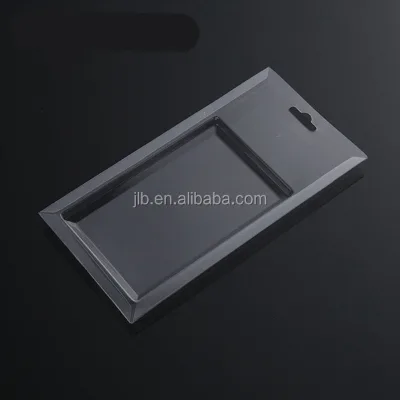
Color and finish options are another key signal in the current market, with transparent, blue, white, and black variants widely available. Buyers should note that while "recyclable" is a common feature claim, the physical appearance of the blister, such as a crystal device look or smooth finish, does not guarantee environmental compliance. It is essential to cross-reference visual attributes with material specifications, as a sleek design often relies on additives that can complicate the recycling process if not properly managed by the end-user.
Technical Specifications to Verify
Thickness and material type are the primary technical variables that determine both the structural integrity and the environmental footprint of the blister pack. Market data indicates a thickness range of 0.3mm to 1.2mm, with specific mentions of PETG, APET, and PVC as the dominant plastic types. Buyers must explicitly request the exact polymer grade, as APET is generally more recyclable than PVC, and the thickness directly impacts the amount of raw material consumed per unit.
Printing and packaging specifications also play a vital role in the overall sustainability profile of the order. Listings show options for single or two-sided printing, with packing methods ranging from simple plastic bags to export cartons with PE protective film. Procurement teams should verify if the printing inks are water-based or solvent-free to align with eco-friendly goals, and ensure that the outer carton packaging is also recyclable rather than relying on non-recyclable plastic liners that contaminate the waste stream.
Compliance and Safety Documentation
Certification status is a non-negotiable element for buyers in regulated industries, particularly when sourcing medical or food-grade blister packaging. The observed listings frequently cite ISO 13485, a standard specific to medical device quality management, alongside ISO 19001, which indicates a robust management system. However, buyers must be cautious not to assume that a general ISO certification covers environmental claims; specific documentation regarding the recyclability of the plastic resin is required to substantiate "eco-friendly" marketing.
Safety documentation must extend beyond quality management to include material safety data sheets and compliance with regional regulations. While some background knowledge suggests FSC or ISO 14001 might be relevant, these are not confirmed in the primary product facts and should not be assumed. Instead, buyers should demand test reports confirming that the plastic does not leach harmful substances into food or medical products, ensuring that the eco-friendly label does not come at the cost of product safety or regulatory non-compliance.
Cost Drivers and Commercial Terms
Pricing in this sector is highly volatile and influenced by raw material costs, order volume, and the complexity of customization. The observed price range spans from $0.03 to $1.69 per unit, a wide disparity that reflects differences in material quality, thickness, and the extent of OEM design work required. Buyers should expect that higher-end recyclable materials like APET will command a premium over standard PVC, and that custom molds will significantly increase the initial unit cost compared to stock items.
Commercial terms such as Minimum Order Quantity (MOQ) and lead times are critical factors that impact the total cost of ownership. Listings show MOQs ranging from 50 pieces to 100,000 units, with lead times varying from 3-7 days for EU warehouse stock to 20-40 days for custom production. Procurement strategies must balance the need for immediate inventory against the higher costs of small-batch orders, while also accounting for shipping fees which are often excluded from the base unit price in supplier listings.
Supplier Qualification and Quality Control
Supplier location and production capacity are key indicators of reliability and logistical efficiency. The data points to manufacturers primarily located in Jiangsu and Shenzhen, China, with daily production capacities reaching 20,000 units. Buyers should verify that the supplier has the infrastructure to handle large-scale orders without compromising quality, especially when dealing with custom molds that require precise temperature and pressure control during the thermoforming process.
Quality control protocols must be rigorously defined to ensure consistency across large batches. The observed use of "Export Carton with PE Protective Film" suggests a standard approach to protecting goods during transit, but buyers should insist on in-process quality checks for thickness uniformity and seal integrity. It is advisable to request a sample batch for independent testing before committing to a full production run, ensuring that the supplier's quality control measures align with the buyer's specific sustainability and safety requirements.
Long-Term Procurement Checks
Sustainability commitments require ongoing verification rather than a one-time audit of initial samples. Buyers should establish a protocol for periodic re-testing of material composition to ensure that the supplier has not switched to cheaper, non-recyclable alternatives to cut costs. The "recyclable" feature claimed in listings must be validated against current local recycling infrastructure, as a material that is recyclable in one region may be considered waste in another.
Relationship management and supply chain transparency are essential for mitigating long-term risks. Given the variability in lead times and the potential for supply chain disruptions, buyers should maintain open communication channels with suppliers to monitor production schedules and inventory levels. Regular reviews of supplier performance against agreed-upon standards, including delivery reliability and defect rates, will help ensure that the eco-friendly blister packaging continues to meet both operational and environmental goals over the life of the contract.
FAQs
What materials are used for eco friendly plastic blister boxes?
These packaging solutions typically utilize recyclable plastics such as PET, APET, and PVC. Some variants also incorporate paper-based materials for enhanced sustainability. The materials are selected to ensure the blister trays are suitable for food, electronic, and medical applications while maintaining structural integrity and clarity.
Can these blister boxes be customized for specific products?
Yes, customization is available for both design and specifications. Buyers can request OEM or ODM services to tailor the packaging to their needs. The standard size is 24*36, but thickness can be adjusted between 0.3 and 1.2mm to accommodate different product dimensions and protection requirements.
What certifications do these plastic packaging suppliers hold?
Reputable manufacturers often hold ISO13485 certification, which is critical for medical packaging applications. Some suppliers may also comply with ISO19001 standards. These certifications ensure that the production processes meet rigorous quality and safety requirements, particularly when the blister boxes are used for sensitive medical or electronic devices.
What is the typical lead time for ordering these boxes?
The standard order lead time ranges from 20 to 40 days. This duration accounts for the customization, production, and quality control processes. Buyers should plan their inventory accordingly, as the daily production capacity is approximately 20,000 units, ensuring steady supply for large-scale commercial requirements.
How are the blister boxes packed for shipping?
The packaging usually involves export cartons with PE protective film to prevent damage during transit. Some suppliers use plastic bags combined with cartons for added protection. The packing density varies, with options like 10 pieces per box and 200 pieces per carton, optimizing space and safety.
What is the minimum order quantity for these packages?
The minimum order quantity typically ranges from 2 to 100,000 units, depending on the supplier and customization level. Some vendors may require a minimum of 50 pieces for specific samples or small batches. This flexibility allows businesses of various sizes to source appropriate packaging solutions without excessive inventory commitment.