Find Heavy Duty Metal Adjustable Feet for Sofa, Table, and Bed
Source 30 verified listings for Heavy Duty Metal Adjustable Feet designed for sofas, tables, and beds. Buyers can compare specifications like screw diameter, base size, and material options including stainless steel and silicone rubber to find the right leveling solution.
Key considerations
Products List




Comprehensive Sourcing Guide
Strategic Sourcing Guide for Heavy Duty Metal Adjustable Feet
Understanding Product Specifications and Variability
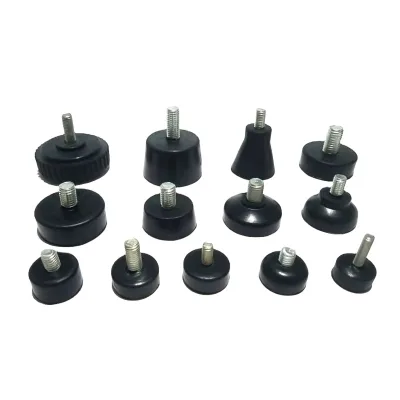
When sourcing Heavy Duty Metal Adjustable Feet, buyers must first navigate a landscape of diverse technical specifications that define the functional capability of the component. The core product category encompasses items described variously as self-leveling feet, machine feet, and leveling legs, all designed to provide stability for furniture and industrial equipment. A critical observation from the available market data is the variance in material composition. While some listings explicitly identify the material as stainless steel, others indicate a composite construction involving silicone rubber or plastic components. This distinction is vital for procurement decisions, as stainless steel offers superior corrosion resistance and load-bearing capacity for heavy-duty applications, whereas silicone or plastic elements may be prioritized for vibration dampening or specific chemical resistance in medical or agricultural settings.
The dimensional specifications for these components are equally varied, requiring precise verification against the intended application. Available data points to specific screw diameters of 8mm and base diameters of 35mm for certain models, such as the AF01. However, other entries list sizes like 60M12100 or reference custom dimensions, indicating that a "one-size-fits-all" approach is rarely viable. The screw length can vary significantly, with observed values ranging from 80mm to custom configurations. Buyers must verify the thread type and pitch, as the data mentions M12 threads in specific contexts. Furthermore, the standardization of these parts is inconsistent; some products adhere to international standards, while others are defined by proprietary model numbers like sp02, sp129, sp206, sp46, and sp42. This lack of universal standardization necessitates that buyers request detailed engineering drawings in formats such as .STP, .Step, .Igs, .Stl, .Dwg, or .Pdf to ensure compatibility with existing machinery or furniture frames.
Compliance, Certification, and Safety Standards
Ensuring that Heavy Duty Metal Adjustable Feet meet regulatory and safety requirements is a paramount step in the procurement process. The market data indicates that suppliers often provide certifications such as ISO and CE, which are fundamental for products entering international markets. For applications in the automotive or industrial sectors, more rigorous standards like IATF16949 may be required, alongside compliance with Reach, RoHS, MSDS, and LFGB regulations. These certifications are particularly relevant when the feet are used in environments where chemical exposure, food contact, or strict safety protocols are enforced, such as in cookers, freezers, or workbenches.
However, buyers must exercise caution when interpreting certification claims. The presence of a certification label does not automatically guarantee that every SKU within a supplier's catalog is compliant. For instance, while some listings mention a standard of "International," others list specific numerical ranges like 40, 50, 60, 80, 100, and 120, which may refer to load capacities, height adjustments, or specific standard codes. It is the buyer's responsibility to verify that the specific batch of goods being purchased carries the valid documentation for the intended application. For medical or household equipment, the distinction between a product labeled as "New" and one with a specific surface treatment like "Light, Sanding" can impact the final finish and hygiene standards. Therefore, procurement teams should request current, batch-specific certificates of analysis or conformity rather than relying on general supplier claims.
Cost Drivers and Pricing Dynamics
The pricing structure for Heavy Duty Metal Adjustable Feet is influenced by several tangible factors, including material costs, customization levels, and order volume. The observed price range in the market is notably low, spanning from 0 to 5 USD, which suggests that these components are often low-cost consumables or accessories. However, this low unit price can be misleading if the total cost of ownership is not considered. The material choice is a primary cost driver; stainless steel components will inherently cost more than those utilizing silicone rubber or plastic blends. Additionally, the complexity of the surface treatment, such as sanding or specific finishing processes, adds to the manufacturing cost.
Customization is another significant variable affecting price. While some products are available as standard items with a minimum order quantity (MOQ) as low as 1 bag, others require custom specifications. The data indicates that customization is available, but it often involves a shift from standard models to bespoke designs, which can alter the unit cost. The MOQ ranges widely from 1 to 5000 units, meaning that small buyers may face higher per-unit costs due to the lack of economies of scale, while large buyers can leverage bulk purchasing to reduce costs. Furthermore, the packaging method, whether in poly bags within cartons or simply in cartons, impacts logistics costs. Buyers should evaluate the total landed cost, including shipping and handling, rather than focusing solely on the unit price, as the low observed price range may not reflect the true cost for specialized or high-volume orders.
Typical Applications and Usage Scenarios
Heavy Duty Metal Adjustable Feet serve a broad spectrum of applications, ranging from domestic furniture to complex industrial machinery. The observed usage data highlights their integration into sofas, tables, cabinets, beds, and chairs, where they provide essential leveling and stability. In the industrial sector, these components are critical for cookers, freezers, workbenches, and western kitchen equipment, where precise leveling is necessary for operational efficiency and safety. The versatility extends to medical, household, vehicle, agricultural, and industrial uses, demonstrating the adaptability of the product across different sectors.
The design of these feet often incorporates specific features to meet application needs. For example, some models feature a European style gravity pin design, which may offer unique locking or adjustment mechanisms. The "Adjustable" attribute is a key feature, allowing users to compensate for uneven floors or to fine-tune the height of the equipment. This adjustability is crucial for maintaining the structural integrity of heavy furniture or ensuring that industrial machinery operates without vibration-induced wear. Buyers should match the specific application requirements with the product's design features. For instance, a foot used in a medical setting might require specific surface treatments or material compositions to meet hygiene standards, while a foot for a heavy workbench might prioritize load capacity and durability over aesthetic finishes.
Supplier Evaluation and Service Capabilities
Selecting the right supplier involves more than just comparing prices; it requires a thorough evaluation of service capabilities and reliability. The market data indicates that many suppliers offer OEM (Original Equipment Manufacturer) and ODM (Original Design Manufacturer) services, allowing buyers to customize products with their own branding or specific design requirements. Services often include custom logo and packaging options, as well as 3D design support. The availability of samples is another critical factor, with many suppliers offering sample availability to allow buyers to test product quality before committing to large orders.
When evaluating suppliers, buyers should verify their ability to handle the full range of product attributes observed in the market. This includes the ability to produce parts with specific screw diameters, base diameters, and lengths, as well as the capacity to handle custom sizes. The condition of the product, typically listed as "New," should be confirmed to ensure that no refurbished or used items are being sold. Additionally, the warranty period, often cited as 1 year, should be clearly understood and documented in the purchase agreement. Buyers should also assess the supplier's response to specific drawing formats, ensuring they can accept and work with the required file types like .STP or .Dwg. A supplier's ability to provide comprehensive documentation and support throughout the procurement lifecycle is a strong indicator of their reliability.
Quality Control and Long-Term Procurement Considerations
Implementing a robust quality control (QC) strategy is essential for ensuring the longevity and performance of Heavy Duty Metal Adjustable Feet. The data suggests that surface treatments like light sanding are common, but the extent and consistency of these treatments can vary. Buyers should establish clear QC criteria regarding the finish, material integrity, and dimensional accuracy of the feet. The "Long Service Life" is cited as an advantage, but this claim must be validated through testing or historical data from the supplier. For critical applications, such as those in the medical or industrial sectors, buyers should consider requesting third-party test results to verify load-bearing capacity and durability.
Long-term procurement considerations also involve managing the relationship with the supplier to ensure consistent supply and quality. The wide range of MOQs, from 1 bag to 5000 units, offers flexibility but also requires careful inventory management. Buyers should plan for potential lead times and ensure that the supplier can maintain production capacity during high-demand periods. The origin of the products, consistently listed as China, should be factored into logistics planning and potential tariff considerations. Finally, buyers should maintain open communication regarding any changes in product standards or specifications, as the market data shows a mix of standard and custom models. By proactively managing these aspects, buyers can mitigate risks and ensure a steady supply of high-quality adjustable feet for their operations.
FAQs
What materials are used for Heavy Duty Metal Adjustable Feet?
Stainless steel and silicone rubber are common materials for these feet. Stainless steel offers superior corrosion resistance for heavy loads, while silicone rubber provides vibration dampening for medical or agricultural applications.
Which certifications are available for Heavy Duty Metal Adjustable Feet?
ISO and CE certifications are standard for international markets. Additional compliance like IATF16949, RoHS, and Reach may be available for automotive or food-grade equipment such as cookers and freezers.
How can I find Heavy Duty Metal Adjustable Feet with custom sizes?
Custom sizes are available for many models including sp02 and sp129. Buyers must provide engineering drawings in formats like .STP or .Dwg to ensure the manufacturer can produce the exact dimensions required.
Can I order samples of Heavy Duty Metal Adjustable Feet before bulk purchase?
Yes, samples are available for testing product quality before committing to large orders. This allows buyers to verify material integrity and surface treatments like light sanding before placing a full production run.
What is the typical warranty period for Heavy Duty Metal Adjustable Feet?
A one-year warranty is typically offered for these components. This coverage applies to new products and helps ensure reliability for applications in furniture, industrial workbenches, and medical equipment.
Which specifications define the screw size for Heavy Duty Metal Adjustable Feet?
Common specifications include an 8mm screw diameter with an 80mm length for model AF01. Other models may use M12 threads with varying base diameters like 35mm or custom configurations.
How does the MOQ affect pricing for Heavy Duty Metal Adjustable Feet?
Minimum order quantities range from one bag up to 5000 units. Lower MOQs allow for small trials but may result in higher per-unit costs compared to bulk orders that leverage economies of scale.