Source Rice Mill Machine for Flour, Rice Flour, and Beans
Find 30 Rice Mill Machine listings with varying capacities from 10 to 500 tons per day. Buyers can compare specifications such as voltage, milled rice rates, and final product types like white or parboiled rice across different models.
Key considerations
Products List

$5300.00 - $11000.00
MOQ: 1




Comprehensive Sourcing Guide
Strategic Sourcing Guide for Rice Mill Machines
Procuring a Rice Mill Machine represents a significant capital investment for agricultural processors, millers, and food manufacturing enterprises. The decision-making process requires a rigorous analysis of technical capabilities, operational efficiency, and supplier reliability. The global market offers a diverse array of machinery, ranging from compact home-use units to large-scale industrial complexes capable of processing hundreds of tons daily. This guide provides a structured approach to evaluating rice milling equipment, ensuring that procurement decisions are grounded in verified specifications and operational realities rather than marketing assertions.
Technical Specifications and Operational Capacity
The first critical step in sourcing is defining the technical requirements based on the intended production volume and the type of rice being processed. The market presents machines with varying voltage configurations, primarily operating at 220V for smaller, potentially residential or small-scale commercial units, and 380V for industrial-grade machinery requiring three-phase power. Buyers must align the voltage specification with their facility's electrical infrastructure to avoid costly retrofits.
Capacity is another defining variable. Specifications observed in the market range from small units with outputs of 180kg/h for milling and 250kg/h for crushing, to large-scale systems designed for capacities between 5 tons and 500 tons per day. The rated power also varies significantly, with some units utilizing electric motors rated at 3HP (2.2kw) or gasoline engines ranging from 5 to 7HP, while larger industrial models scale their power consumption directly to their capacity.
The physical configuration of the machine is equally important. The market includes both horizontal and vertical designs. Horizontal units may offer specific advantages in floor space utilization, while vertical units might be preferred for gravity-fed processing lines. The choice between these configurations often depends on the existing layout of the processing facility. Furthermore, the final product specification is a key technical driver. Some machines are optimized to produce parboiled rice, while others are designed specifically for white rice. The extraction rate and milled rice rate are critical performance metrics; observed data indicates extraction rates around 70% and milled rice rates near 75%, with broken rice percentages typically ranging between 2% and 3%. Buyers should verify these metrics against their specific grain quality requirements.
Compliance, Certification, and Standards Verification
In the international trade of agricultural machinery, compliance with international standards and certifications is a non-negotiable aspect of risk management. While specific certification statuses can vary by manufacturer, the presence of ISO 2008 certification is a notable indicator of a supplier's adherence to quality management systems. Buyers should explicitly request proof of such certifications before finalizing any contract.
It is essential to distinguish between verified facts and general market claims. For instance, while CE certification is often mentioned in the broader context of machinery exports, buyers must verify the specific validity and scope of such certifications for the exact model being purchased. Do not assume that a supplier's general reputation guarantees compliance for every unit in their catalog.
Standards regarding the physical dimensions and output capacity also require verification. Observed standard dimensions for certain models include measurements such as 12704401150mm, while capacity standards are often defined by the throughput, such as 5 to 500 tons per day. Buyers must ensure that the machine's standard motor speed, observed at 2800r/Min for certain electric motor models, aligns with the mechanical requirements of the specific rice variety being processed. The raw material input, typically paddy rice, must be compatible with the machine's design to ensure optimal performance and minimize wear.
Cost Drivers and Financial Considerations
The price of a Rice Mill Machine is influenced by a complex matrix of factors, including capacity, automation level, power source, and the complexity of the milling process. The observed price range in the market is extensive, spanning from approximately $66 to $55,000 USD. This vast disparity reflects the difference between small-scale, manual or semi-automatic units and fully automated, high-capacity industrial lines.
When evaluating costs, buyers must look beyond the initial purchase price. The minimum order quantity (MOQ) is another financial factor, with observed ranges typically between 1 and 10 units. For small businesses, an MOQ of 1 may be ideal, whereas larger operations might negotiate bulk pricing. The packing method, whether in shipping containers, wooden cases, or cartons, also impacts the total landed cost due to variations in shipping and insurance expenses.
Negotiability is a key feature in this sector. Discounts are often available and should be actively discussed during the procurement process. Buyers should also consider the long-term operational costs, such as energy consumption. Machines marketed with "Low Consumption" features may offer significant savings over their useful life, which is observed to be around 20 years for high-quality units. However, these claims should be validated through energy audits or performance data provided by the supplier.
Typical Applications and Process Integration
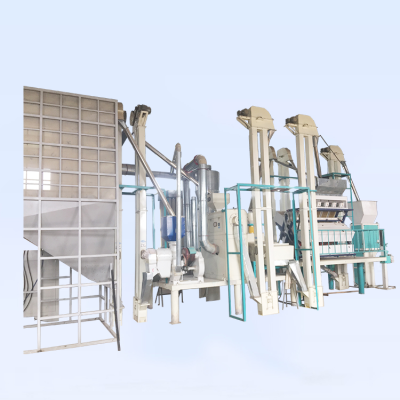
Rice mill machines are designed for a variety of applications, ranging from small-scale community processing to large industrial flour and rice flour production. The versatility of these machines is evident in their ability to process multiple raw materials, including paddy rice, wheat, beans, and general grains. Some advanced models are described as "Combined Machines" that integrate cleaning and destoning functions, streamlining the production line and reducing the need for separate equipment.
The final product application dictates the necessary machine features. For instance, a facility producing parboiled rice requires specific milling parameters distinct from those needed for white rice. Similarly, machines intended for flour production must handle different grain hardness and moisture levels. The "Product Name" variations in the market, such as "Polished Rice Mill Machine," "Home Use Rice Mill," or "Grain Processing Rice Mill," often signal the intended application scope. Buyers should match these product names to their specific operational goals.
Integration with existing infrastructure is also a consideration. Some machines are designed for "Responsible Installation," implying a level of technical support and on-site setup that is crucial for complex industrial systems. The ability to process rice into flour or other derivatives adds value to the machinery, allowing for diversified product lines.
Supplier Evaluation and After-Sale Support
Selecting a reliable supplier is as critical as selecting the machine itself. The origin of the machinery, often China, provides a broad market base, but it necessitates rigorous vetting. Buyers should prioritize suppliers who offer robust after-sale services, such as video support, which can be invaluable for troubleshooting and maintenance without the need for immediate physical travel.
The "Condition" of the machine is typically listed as "New," but buyers must verify the manufacturing date and the status of any components. Customization is a significant factor in supplier evaluation. Many suppliers offer "Customized" solutions, allowing buyers to tailor the machine to specific production needs. The availability of customization options can be a decisive factor for unique operational requirements.
Supplier reliability is further indicated by their commitment to installation and training. "Responsible Installation" suggests a service level that goes beyond mere delivery, ensuring the machine is set up correctly and operators are trained. The "Useful Life" of the machine, observed at 20 years, implies a long-term partnership with the supplier for spare parts and maintenance. Buyers should inquire about the availability of spare parts and the supplier's track record in supporting their equipment over the long term.
Quality Control and Long-Term Procurement Strategy
Implementing a robust quality control (QC) strategy is essential to ensure that the purchased Rice Mill Machine meets all performance expectations. Buyers should establish clear acceptance criteria based on the observed specifications, such as the broken rice percentage (2-3%), extraction rate (70%), and milled rice rate (75%). These metrics should be tested during the factory acceptance test (FAT) or on-site commissioning.
The packing method, whether "Container by Sea Shipping" or "Shipping Container," plays a role in the condition of the machine upon arrival. Proper packaging is vital to prevent damage during transit, especially for heavy machinery. Buyers should verify that the packing method aligns with the shipping route and the handling capabilities of the destination port.
Long-term procurement considerations include the scalability of the solution. As production needs grow, the ability to upgrade or expand the milling line becomes crucial. The "Press Series" and "Press Materials" specifications indicate the machine's adaptability to different processing stages. Buyers should also consider the "Discount" and "Negotiable" nature of the pricing, planning for future purchases or expansions.
Finally, the standard of the machine, whether defined by capacity (10-20 tons) or output (180kg/h), should be aligned with the buyer's long-term growth strategy. A machine that is too small may become obsolete quickly, while one that is too large may incur unnecessary operational costs. By carefully analyzing the technical specifications, compliance standards, and supplier capabilities, buyers can make informed decisions that ensure operational efficiency and financial viability in the rice milling industry.
FAQs
What voltage options are available for rice mill machines?
Rice mill machines are available in 220V and 380V configurations to suit different facility infrastructures. Smaller units typically operate at 220V, while industrial-grade machinery often requires 380V three-phase power for optimal performance.
What is the typical capacity range for these machines?
Capacity ranges widely from small units producing 180kg per hour to large industrial systems handling 500 tons per day. Buyers must select a model based on their specific daily production volume requirements.
Can buyers customize the Rice Mill Machine specifications?
Yes, customization is available for many rice mill machines to meet specific production needs. Buyers can request tailored solutions regarding capacity, configuration, and final product output to align with their operational goals.
What certifications should I look for in a Rice Mill Machine?
ISO 2008 certification is a verified indicator of adherence to quality management systems for these machines. Buyers should request proof of such certifications to ensure the supplier meets international quality standards.
How long is the useful life of a Rice Mill Machine?
High-quality rice mill machines typically have a useful life of around 20 years. This longevity depends on proper maintenance and the quality of the initial manufacturing and components used.
What is the minimum order quantity for purchasing these machines?
The minimum order quantity ranges from 1 to 10 units depending on the supplier and model. Small businesses can often purchase single units, while larger operations may negotiate bulk pricing for multiple units.
What after-sale support is typically provided for rice mill machines?
Suppliers often provide video support for troubleshooting and maintenance assistance after the sale. This service helps operators resolve issues remotely without the need for immediate physical travel or on-site technician visits.