Source Heavy Duty Timber Grab for Logging, Dock, and Yard
Compare 30 Heavy Duty Timber Grab options from Chinese manufacturers. These hydraulic grapples suit 5-30 ton excavators and support log yard, dock, and construction applications with customizable sizes and materials; compare the available evidence and request quotations based on your requirements.
Key considerations
Products List


Customized China Manufacture Grab Timber Grabs for Sale Operation on Port
$2000.00 - $30000.00
MOQ: 1 Pieces

China Manufacture Grabber Rock Stone Log Timber Tree Wood Grab Timber Grabs for Sale
$2000.00 - $30000.00
MOQ: 1 Pieces


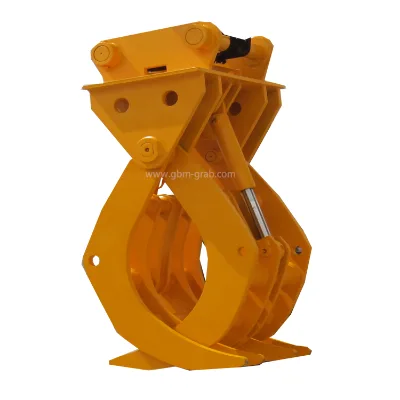


Robust Excavator Mechanical Timber Grabber for Timber Loading and Handling
$500.00 - $4000.00
MOQ: 1 Pieces


Wood Grapple Hydraulic Rotating Wood Grab Timber Grab Log Grab for Excavator
$235.00 - $245.00
MOQ: 6 Pieces

Heavy-Duty Hydraulic Wood Grabber for Efficient Log Handling and Transport
$500.00 - $1800.00
MOQ: 1 Pieces

Heavy-Duty Hydraulic Wood Grabber for Excavators in Forest Operations
$500.00 - $1800.00
MOQ: 1 Pieces


Comprehensive Sourcing Guide
Heavy Duty Timber Grab Sourcing Guide
Sourcing a Heavy Duty Timber Grab for excavator-based log handling requires buyers to balance mechanical specification, material durability, and supplier credibility in a market where listings vary widely. These hydraulic attachments are used across log yards and dockside operations, connecting to excavators and, in some configurations, ship or deck cranes for lifting round timber. Because the grab becomes a load-bearing interface between machine and cargo, mistakes in specification translate directly into safety exposure and unplanned downtime.
This guide organizes the procurement decision into the areas buyers most often get wrong: matching grab capacity and model series to the carrier machine, verifying material and hydraulic components, confirming documentation, and structuring commercial terms. The listings observed in this category show new-build, customizable products with minimum order quantities starting at one set, which lowers the barrier to trial orders but places greater responsibility on the buyer to qualify the factory. Treat every listing attribute as a starting point for verification, not a guarantee, and use the checklist logic below to convert marketing claims into contractual commitments before any deposit is paid.
Product Scope and Observed Listing Signals
The observed category centers on hydraulic excavator timber grabs for carriers in the 5–30 ton range, with dedicated model series such as MHL5.5-400, MHL11.0-800, MHL22.0-2500, and MHL30.0-3200. These designations encode capacity and opening-size characteristics, and larger variants list dead weights around 5.7 t with capacities near 3.2 cbm at a stated log density of 0.8 t/cbm. Listings also reference standards spanning 3.2–16 T and 30 T/15 cbm configurations, indicating a wide capacity ladder rather than a single product. Buyers should first map their carrier tonnage, log bundle dimensions, and duty cycle to the correct series.
Application context matters as much as tonnage. Listings describe use in log yards and on docks, with some units designed to connect with ship cranes and deck cranes rather than excavators alone. Operating mode also differs: some listings specify ground operation for crane-suspended use, while excavator-mounted grabs are controlled through the carrier's hydraulic system. Confirm whether the unit is a rotating hydraulic grapple or a fixed lift-style attachment, and confirm the lifting capacity is stated "as required" versus fixed—several listings state a 16 t SWL, so match that figure to your rigging plan before shortlisting.
Technical Specifications to Verify
Material selection drives wear life in abrasive, high-impact timber handling. Observed listings cite Q345, NM400, Bis450, and Hardox450 wear-resistant steels, plus combinations such as Q345 + HQ60 for structural frames and "AAA cylinder" hydraulic components. Ask each supplier to state which grade is used for which component—shell, tines, pins, and cylinder barrels—and request the mill certificates backing those designations. A grab quoted only as "steel" without grade-level detail should be treated as unverified, since wear-plate substitution is one of the most common cost-cutting moves in this category.
Hydraulic and mechanical interface details require equal scrutiny. Confirm working pressure and flow compatibility with your carrier's hydraulic system, the rotation motor specification if a hydraulic rotating function is included, and the lock method—twistlock is listed in crane-connected variants. Verify pin and bushing dimensions, mounting ear spacing, and the SWL rating relative to your lifting plan; one listing states 16 t SWL with lifting capacity "as required," so force the supplier to commit to a fixed rated capacity in writing. Finally, confirm size and colour customization scope in the specification sheet, since several listings promise both but rarely document tolerances.
Compliance and Safety Documentation
Certification claims in this category are inconsistent and must be reconciled with your destination market. Observed listings reference CE and ISO 9001, with some adding RoHS, GS, and class certificates including BV, CCS, LR, RINA, and ABS—class approvals being relevant primarily for marine and port-mounted units. Do not accept a logo on a product page as proof. Request the actual certificate numbers, issuing body, scope of certification, and expiry dates, then verify them against the issuing body's public database. A CE mark on a component drawing is not the same as a machine-level conformity assessment.
Safety documentation should cover the complete lifting system, not just the grab. Ask for a rated capacity chart, load test records, and instructions covering inspection intervals for tines, rotation bearings, hoses, and locking devices. For crane-connected or ground-operation variants, clarify the lifting point design, sling configuration, and any stated SWL margin. Because timber grabs are frequently classified as lifting accessories in many jurisdictions, your own regulatory regime may require specific declarations or conformity paperwork—identify that requirement before ordering so the supplier can prepare documentation during production rather than after shipment, when retroactive compliance becomes costly or impossible.
Cost Drivers and Commercial Terms
Observed listing prices range from roughly 200 to 30,000 USD, a spread that reflects everything from small hydraulic grapples to large crane-mounted units. The main cost drivers are wear-plate grade and thickness, cylinder brand quality, rotation functionality, capacity class, and customization level. Steel content alone can dominate cost at higher tonnages—a unit with a 5.7 t dead weight carries substantial raw material value—so a quote far below comparable specifications usually signals thinner sections, lower-grade plate, or unbranded cylinders. Ask for a bill-of-materials-level breakdown when comparing quotes.
Commercial terms in this category are flexible: minimum order quantities start at one set, customization is widely offered, and packaging ranges from wooden cases to nude packing or plywood boxes and pallets. That flexibility benefits buyers but shifts risk onto contract terms. Fix in writing the incoterm, payment schedule, delivery window, acceptance criteria, and remedy for non-conforming goods. Define exactly what "customized" includes—colour, size, standards, and spare parts such as replacement tines or cylinder seals should be itemized. Agree on inspection rights before shipment, and confirm spare-parts availability and pricing for wear items, since lifetime cost is driven more by consumables than by the initial purchase price.
Supplier Qualification and Quality Control
Qualify suppliers as manufacturers rather than traders where possible, prioritizing those with in-house cutting, welding, machining, and cylinder assembly. Chinese origins, including Shandong, dominate the observed listings, and ISO 9001 certification appears frequently—but verify the certificate covers the actual production site. Request factory audit evidence or commission a third-party pre-shipment inspection covering weld quality, dimensional conformity to drawings, plate grade verification, and hydraulic pressure testing. For a first order, an inspection report tied to payment release is the single most effective quality control.
Assess capability through evidence of comparable deliveries. Ask for photographs or references of prior timber grab shipments in your capacity class, and request test records for the rotation mechanism and cylinder sealing. Evaluate engineering responsiveness: a supplier who returns marked-up drawings, confirms material substitutions transparently, and states which standards apply to your build is more reliable than one offering only catalogue pages. For customized units, require a pre-production sample approval step or detailed drawing sign-off. Finally, probe warranty terms—duration, coverage of cylinders and rotation bearings, and the process for shipping replacement parts—because hydraulic grapple failures typically emerge within the first high-hour season of operation.
Long-Term Procurement Checks
Plan the relationship beyond the first order. Wear parts—tine tips, bushes, pins, rotation motor components, and cylinder seal kits—should be orderable by part number for years after delivery, so secure a drawing package and recommended spares list as a contractual deliverable. Standardize on one model series across your fleet where possible; the observed MHL series ladder from roughly 5.5 t to 30 t capacity allows fleet-standardization benefits in spare parts, operator familiarity, and maintenance documentation. Track actual wear life against supplier projections to build internal benchmarks for future negotiations.
Operationally, build a verification loop: record hours, incidents, hydraulic leaks, and structural cracks, and feed that data back to the supplier before reorder. For marine-adjacent installations, review whether class certificates such as BV, CCS, LR, RINA, or ABS require renewal or re-inspection at defined intervals, and keep conformity files current for any regulatory audits. Reconfirm certification validity annually, since certificates lapse faster than procurement cycles. Finally, maintain a second qualified source for critical spares, even if your primary supplier performs well, because single-sourced hydraulic components for rotating timber grabs are among the most common causes of extended dockside and log yard downtime.
FAQs
What materials are used for heavy duty timber grabs?
Heavy duty timber grabs are typically constructed from high-strength steel grades such as Q345, NM400, Bis450, and Hardox450. These materials ensure durability and resistance to wear during the handling of logs and various bulk materials. Some models also utilize AAA cylinder components combined with wear-resistant steel to extend service life under demanding operational conditions.
Can heavy duty timber grabs be customized for specific excavators?
Yes, customization is available for heavy duty timber grabs to fit specific excavator requirements. Buyers can request customized sizes, colors, and standards to match their machinery. The products support OEM services and can be tailored to suit excavators ranging from 5 to 30 tons, ensuring optimal compatibility and performance for various construction and logging applications.
What certifications do heavy duty timber grabs typically hold?
Heavy duty timber grabs commonly hold certifications such as CE, ISO9001, RoHS, and GS. For marine or dock applications, they may also possess class certificates from BV, CCS, LR, Rina, and ABS. These certifications verify that the equipment meets international safety and quality standards, ensuring reliability and compliance for global industrial and maritime operations.
How is the lifting capacity determined for these grabs?
The lifting capacity is determined by the specific model and hydraulic system design, ranging from 3.2 tons to 30 tons. Some models are designed for maximum lifting weights between 20 and 50 tons, with lifting heights up to 25 meters. The capacity can be adjusted as required, allowing for flexible handling of logs and other materials in log yards or docks.
What is the typical packaging for heavy duty timber grabs?
Packaging options for heavy duty timber grabs include wooden cases, nude packing, or plywood boxes on pallets. The choice depends on customer requests and shipping requirements. Wooden cases provide robust protection for international transport, while nude packing is often used for larger, more durable units. Custom packaging solutions are available to ensure safe delivery and handling of the equipment.
Where are heavy duty timber grabs manufactured?
Heavy duty timber grabs are primarily manufactured in China, with specific production hubs located in Shandong province. These regions are known for their robust construction machinery industry, providing access to high-quality steel materials and advanced manufacturing techniques. The origin ensures competitive pricing and reliable supply chains for global buyers seeking durable and efficient timber handling equipment.