Source Heavy Duty Transparent PVC Curtain for Factory, Hotel, Freezer
Compare 24 listings of Heavy Duty Transparent PVC Curtain designed for factory, hotel, and freezer applications. Buyers can evaluate specifications like thickness, tensile strength, and surface finish to find suitable options for protection and decoration.
Key considerations
Products List


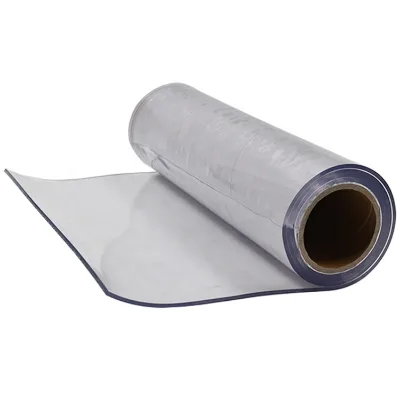
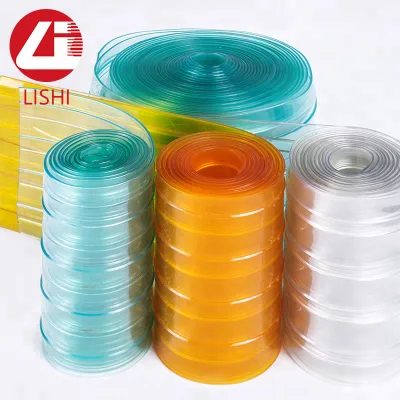
Comprehensive Sourcing Guide
Strategic Sourcing Guide for Heavy Duty Transparent PVC Curtains
Understanding Technical Specifications and Material Integrity
When sourcing heavy-duty transparent PVC curtains, the primary objective is to identify materials that balance optical clarity with mechanical resilience. The product landscape for these industrial and commercial barriers is defined by specific physical attributes that dictate their performance in demanding environments. Based on available market data, the core material composition is consistently identified as PVC (Polyvinyl Chloride). This polymer choice is fundamental to achieving the "heavy-duty" classification, which implies resistance to tearing, abrasion, and chemical exposure.
A critical technical parameter for buyers to verify is the hardness and flexibility profile. The observed product attributes indicate a "Soft" hardness classification, which is essential for curtains that must hang freely and seal effectively against drafts without becoming brittle in cold conditions. However, "heavy-duty" applications often require a specific thickness range to ensure longevity. The market data presents a thickness spectrum ranging from 1mm to 12mm, with specific sub-ranges such as 1.3mm to 10mm noted for customizable sizes. Buyers must align their selection with the specific load requirements of their facility; thinner gauges (1mm-3mm) may suffice for light traffic areas, while high-traffic zones or freezer applications typically necessitate the upper end of this spectrum (5mm-12mm) to prevent sagging and tearing.
Transparency is another non-negotiable specification for safety and visibility. The product facts confirm that these curtains are "Transparent," a feature that allows for natural light transmission and visual monitoring of operations without opening the barrier. This is particularly vital in environments where forklift traffic or personnel movement requires clear sightlines to prevent accidents. The surface finish also plays a role in performance and aesthetics. Available surface treatments include Glossy, Matte, Frost, Lined, Plain, Ribbed, and Flat options. A glossy or plain finish is standard for general transparency, while ribbed or lined surfaces may offer enhanced insulation or anti-static properties. Buyers should verify that the selected surface treatment does not compromise the clarity required for their specific operational safety protocols.
Compliance, Certification, and Regulatory Standards
In the B2B procurement of industrial PVC products, regulatory compliance is as critical as physical specifications. The sourcing of heavy-duty transparent PVC curtains often involves navigating a complex web of international safety and environmental standards. The provided data highlights several key standards that buyers should look for in supplier documentation. These include ROHS (Restriction of Hazardous Substances), REACH (Registration, Evaluation, Authorization, and Restriction of Chemicals), and ISO9001:2000. Additionally, EN71 and SGS certification are mentioned as relevant quality markers.
The presence of ROHS and REACH compliance indicates that the manufacturer adheres to strict limits on hazardous substances, which is a prerequisite for exporting to the European Union and many other global markets. For buyers operating in food processing, healthcare, or hospitality sectors, this compliance is often a legal requirement rather than a preference. The data also references "100% Virgin Raw Material" as a standard option. This is a crucial verification point; virgin material ensures consistent mechanical properties and transparency, whereas recycled content can introduce variability in strength and color. Buyers must explicitly request certificates of analysis (CoA) or material safety data sheets (MSDS) to confirm that the product is made from virgin PVC and meets the stated environmental standards.
Furthermore, the "Eco-Friendly" feature noted in the product attributes suggests that some manufacturers are moving toward formulations that minimize environmental impact. However, buyers should treat this as a claim requiring verification rather than a guaranteed attribute. The standard "ISO9001:2000" mentioned points to a quality management system, but buyers should verify if the supplier has upgraded to more recent iterations of the ISO standard, as this reflects a commitment to continuous improvement. When evaluating suppliers, request proof of these certifications directly from the manufacturer rather than relying on third-party marketing claims. The origin of the product, specifically noted as Jiangsu, China, is a major manufacturing hub, but the location itself does not guarantee compliance; the specific factory's audit history and certification validity are what matter.
Cost Drivers and Pricing Structure Analysis
The pricing structure for heavy-duty transparent PVC curtains is influenced by a confluence of factors, including material composition, thickness, customization requirements, and order volume. The observed market price range for these products spans from $0.90 to $2.68 USD. This significant variance suggests that price is not merely a function of the base material but is heavily dependent on the specific configuration of the order. Buyers should understand that the lower end of this range likely corresponds to thinner gauges, standard widths, and non-customized lengths, while the higher end reflects thicker, heavy-duty variants with custom dimensions and specialized surface treatments.
Material cost is the primary driver. The use of "100% Virgin Raw Material" commands a premium over recycled alternatives. Similarly, the thickness of the curtain directly correlates with the amount of PVC resin required per square meter. A 12mm heavy-duty curtain will inherently cost more than a 1mm light-duty version due to the volume of material. Customization is another significant cost factor. The data indicates that "Customization" is available for length, width, and thickness. Custom orders often incur setup fees or higher per-unit costs due to the need for specialized extrusion runs. The "Multiple Extrusion" molding method mentioned in the product facts implies a flexible manufacturing process, but complex custom profiles may still impact the final price.
Order volume plays a pivotal role in determining the unit cost. The observed Minimum Order Quantity (MOQ) ranges from 1 to 10,000 units. This wide range indicates that suppliers are willing to accommodate both small trial orders and large-scale industrial deployments. Buyers should anticipate that unit prices will decrease as the order quantity increases, leveraging economies of scale in production and logistics. However, the "Lead Time" of 3-15 days after sample confirmation suggests that rush orders or small custom batches might have tighter scheduling constraints, potentially affecting logistics costs. Buyers must also consider packaging costs. The data lists various packaging methods, from simple "Plastic Bag" to complex "Paper Core+Pearl Wool+Craft Paper+Pallet+Wrapping." The latter is more expensive but necessary for protecting heavy-duty rolls during international shipping.
Typical Applications and Operational Environments
Heavy-duty transparent PVC curtains are versatile solutions designed for a wide array of industrial and commercial applications. The product facts explicitly list applications ranging from "Home, Outdoor, Hotel, Wedding, Party, Banquet" to more rigorous industrial settings like "Factory, Anti-Bacterial Protection, Freezer, Hospital." This breadth of use cases underscores the adaptability of the material when configured correctly.
In industrial environments, the primary function is often containment and separation. The "Freezer" and "Cold Storage" applications highlight the curtain's ability to maintain temperature differentials, preventing cold air from escaping and warm air from entering. This is critical for energy efficiency in refrigerated warehouses and food processing plants. The "Anti-Bacterial Protection" and "Hospital" applications suggest that the material can be formulated to resist microbial growth, which is essential for maintaining hygiene in sensitive environments. The "Sound Reduction" attribute, noted as greater than 35dB, indicates that these curtains can also serve as acoustic barriers, reducing noise pollution in noisy factory floors or busy commercial spaces.
For commercial and event settings, the focus shifts to aesthetics and temporary separation. The "Wedding, Party, Banquet" applications leverage the "Transparent" and "Eco-Friendly" features to create elegant, open-air partitions that do not obstruct views. The "Windproof" capability is particularly relevant for outdoor events or building entrances, where the curtains act as a buffer against wind and dust. The "Moistureproof" and "No Powder, No Impurities" attributes ensure that the curtains remain clean and functional in humid or dusty environments. Buyers should match the specific application to the appropriate thickness and surface finish; for instance, a glossy, transparent finish is ideal for retail or hospitality, while a ribbed or lined finish might be better for heavy industrial use where durability and insulation are paramount.
Supplier Evaluation and Manufacturing Capabilities
Selecting the right supplier is a critical step in the procurement process, requiring a thorough evaluation of their manufacturing capabilities and quality assurance systems. The data indicates that the product origin is primarily "China," with specific mentions of "Jiangsu, China" as a manufacturing hub. This region is known for its robust PVC production infrastructure, but buyers must verify the specific capabilities of the supplier they choose.
Key evaluation criteria should include the supplier's ability to handle "Multiple Extrusion" processes and their capacity for "Customized" production. The "OEM" (Original Equipment Manufacturer) acceptance noted in the attributes suggests that suppliers are willing to produce under the buyer's brand or with specific design modifications. Buyers should assess the supplier's flexibility in meeting custom requirements for width (50mm-2300mm) and length (as Request). The ability to produce a wide range of widths is essential for covering large industrial doorways or creating custom enclosures.
Quality control is another vital aspect of supplier evaluation. The "Pinhole: No" attribute is a specific quality claim that buyers should verify through sample testing. Pinholes can compromise the integrity of the curtain, leading to air leaks or structural failure. Suppliers should have a rigorous inspection process to ensure the absence of defects. The "Standard Export Package" and "Standard Packing" options indicate that the supplier is experienced in international logistics, but buyers should confirm that the packaging is robust enough to prevent damage during transit, especially for heavy-duty rolls.
Additionally, the "Sample: Free" attribute is a positive indicator of supplier confidence and willingness to engage in the procurement process. Buyers should request samples to physically test the material's flexibility, transparency, and thickness before committing to a large order. The "Leading Time" of 3-15 days after sample confirmation suggests a relatively agile production cycle, but buyers should confirm this timeline for their specific order size and customization level. Finally, verify the supplier's adherence to the "ISO9001:2000" and other mentioned standards through valid certificates, ensuring that their quality management systems are up to date and effective.
Quality Control Protocols and Long-Term Procurement Strategy
Implementing a robust quality control (QC) protocol is essential for ensuring that the heavy-duty transparent PVC curtains meet the required performance standards. The "Tensile Strength" is a critical mechanical property, with observed values ranging from 3.46MPa to 30-40MPa. This significant variance highlights the importance of verifying the specific tensile strength for the intended application. For heavy-duty use, a higher tensile strength (closer to 30-40MPa) is necessary to withstand the mechanical stress of frequent opening and closing. Buyers should request tensile test reports to confirm that the product meets the specified strength requirements.
The "Contraction Percentage" of less than 0.4% and "Water Absorption" of less than 0.01% are also critical metrics for long-term performance. Low contraction ensures that the curtain maintains its dimensions over time, preventing gaps in the barrier. Low water absorption is vital for applications in humid or wet environments, such as freezers or outdoor settings, to prevent material degradation. Buyers should verify these properties through independent testing or certified test reports from the supplier.
For long-term procurement, buyers should consider the total cost of ownership, not just the initial purchase price. The "Feature: Eco-Friendly" and "No Smell" attributes suggest that the material is safe for indoor use and does not emit volatile organic compounds (VOCs), which is important for employee health and regulatory compliance. The "Advantage: Safe, Anti-Static, Transparent, No Smell" further reinforces the suitability of the product for sensitive environments.
When establishing a long-term relationship with a supplier, buyers should negotiate clear terms regarding quality guarantees, replacement policies for defective goods, and consistency in material supply. The "Shipment: Within 15 Days" and "Leading Time: 3-15 Days After The Sample Are Confirmed" provide a baseline for logistics planning, but buyers should ensure that these timelines are realistic for their specific order volume and customization needs. Regular audits of the supplier's production line and quality control processes can help maintain high standards and prevent issues before they impact operations. By focusing on these technical and operational details, buyers can secure a reliable supply of heavy-duty transparent PVC curtains that meet their specific industrial and commercial needs.
FAQs
What is the hardness and transparency of heavy duty transparent PVC curtains?
These curtains are classified as soft and transparent to ensure flexibility and visibility. The soft hardness allows them to hang freely and seal effectively against drafts without becoming brittle in cold conditions, while transparency maintains clear sightlines for safety.
Which thickness range is suitable for freezer applications?
Heavy-duty curtains suitable for freezers typically range from 5mm to 12mm in thickness. While the general product range spans 1mm to 12mm, thicker gauges are necessary to prevent sagging and tearing in high-traffic zones or cold storage environments.
Can buyers request custom sizes and surface finishes for these curtains?
Yes, customization is available for length, width, and thickness to meet specific requirements. Surface finishes can be selected from glossy, matte, frost, lined, plain, or ribbed options to suit different operational safety protocols and aesthetic needs.
What certifications ensure compliance for European market exports?
Products compliant with ROHS, REACH, and ISO9001 standards are available for export. These certifications indicate adherence to strict limits on hazardous substances, which is a legal requirement for many industrial and commercial sectors in the European Union.
How does the pricing structure vary based on material and order volume?
Prices range from 0.90 to 2.68 USD depending on thickness, material quality, and order quantity. Thicker gauges and virgin raw materials cost more, while larger order volumes leverage economies of scale to reduce the unit price significantly.
What are the typical lead times after sample confirmation?
The standard lead time is 3 to 15 days after the sample is confirmed. This timeframe applies to both small custom batches and larger orders, though rush requests may have tighter scheduling constraints depending on factory capacity.
How are heavy duty transparent PVC curtains typically packed for shipping?
Packaging options include plastic bags, paper cores with pearl wool, or standard export packages. Complex packaging like pallets with wrapping is used for heavy-duty rolls to ensure protection during international shipping and prevent damage to the material.