Source Heavy Duty Truck Brake Lining for Volvo, Scania, Renault
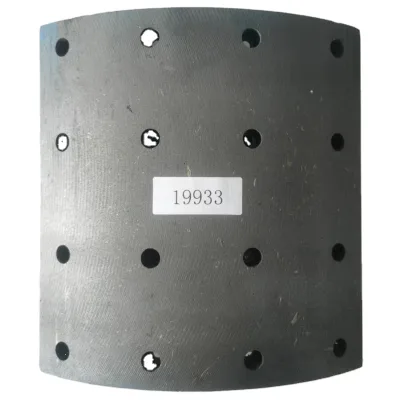
Find 30 listings for Heavy Duty Truck Brake Lining compatible with Volvo, Scania, and Renault vehicles. Buyers can compare specifications like width and friction levels from suppliers in Shandong, China with competitive pricing and timely delivery options.
Key considerations
Products List




Comprehensive Sourcing Guide
Strategic Sourcing Guide for Heavy Duty Truck Brake Lining
The global market for heavy-duty truck components relies heavily on the reliability of friction materials, with brake lining serving as a critical safety interface between the vehicle and the road. For procurement professionals managing fleets across South America, North America, Eastern Europe, the Middle East, Southeast Asia, Africa, and Central America, sourcing high-performance brake linings requires a disciplined approach to technical verification, regulatory compliance, and supply chain stability. The following guide outlines the essential factors for evaluating heavy-duty truck brake lining products, grounded in observed market data and industry standards.
Technical Specifications and Material Composition
When evaluating heavy-duty truck brake linings, the primary technical differentiator is the material composition and its classification. The market predominantly features non-asbestos formulations, a standard driven by global health regulations and environmental concerns. Buyers must verify that the product explicitly states "Non-Asbestos" as a material attribute, ensuring compliance with modern safety mandates. The friction level is another critical specification; observed data indicates an FF friction level for heavy-duty applications, which is suitable for the high-torque demands of commercial vehicles.
Dimensions and physical fitment are equally vital. Heavy-duty brake systems vary significantly by manufacturer and model year. Sourcing guides must account for specific width specifications observed in the market, including widths of 175mm, 178mm, 203mm, and 254mm. These measurements correspond to specific part numbers and vehicle models, such as those designated for Volvo, Renault, and Scania trucks. The positioning of the lining is also a key specification; while some components are designed for the front axle, others are specifically engineered for the rear position. Procurement teams should cross-reference the "Rear" position attribute with the specific axle configuration of their fleet to ensure compatibility.
Furthermore, the classification of the braking system is essential. While the core product is the brake lining, it often interfaces with drum brake systems. Buyers should confirm the "Drake Drum Brakes Classification" to ensure the lining matches the drum geometry. The "Heavy Duty" performance attribute is a standard requirement for long-haul logistics, indicating that the material is engineered to withstand high thermal loads and repeated braking cycles without premature degradation.
Compliance and Certification Verification
In the international trade of automotive parts, certification is not merely a formality but a prerequisite for market access and liability protection. The supply chain for heavy-duty brake linings is heavily regulated, with buyers needing to verify a robust suite of certifications. The most frequently observed certifications in this sector include SGS, ISO, and ECE standards. Specifically, the ECE R90 certification is a critical benchmark for friction materials, ensuring that the product meets European safety standards for replacement brake linings.
The origin of the product also influences certification validity. Many high-volume suppliers operate out of Shandong, China, a major hub for automotive manufacturing. Products originating from this region often carry a combination of standards, including ISO/TS, TS16949, and EAC. The presence of ISO/TS certification suggests adherence to specific technical specifications for automotive quality management. Additionally, the "ECE" mark, particularly noted as being from Holland in some market listings, serves as a stamp of approval for European market entry.
Buyers must also consider the "Standard size" attribute. While some products are manufactured to standard dimensions, others may require custom specifications. The availability of customization is a significant advantage for fleets with older or non-standard vehicle models. However, customization should not compromise the integrity of the certification. A product that is customized must still retain its core certifications, such as SGS and DOT, to remain compliant in international markets. The "Long Life Time" attribute, often associated with a three-month warranty, provides a baseline expectation for product durability, though actual performance depends on driving conditions and maintenance schedules.
Cost Drivers and Pricing Structures
The pricing of heavy-duty truck brake linings is influenced by a complex interplay of material costs, certification fees, and logistics. The observed price range in the market is extensive, spanning from $0.88 to $860 per unit. This wide variance is not indicative of quality differences alone but reflects the scale of the order, the specific part number, and the packaging requirements. For instance, standard sizes like the 175mm or 203mm widths may be priced differently than specialized, custom-molded linings.
The "Competitive" and "Reasonable" price attributes often cited by suppliers suggest that the market is price-sensitive, yet buyers should not equate low cost with high value. The cost drivers include the "Non-Asbestos" material formulation, which is generally more expensive than traditional asbestos-based alternatives due to the complexity of the manufacturing process. Additionally, the packaging details play a role in the final cost. Products packaged in "White/Colored Box" or "Cartons/Pallets" may incur higher costs than those in simple shrink bags, but the former offers better protection during transit and easier inventory management.
Minimum Order Quantity (MOQ) is another significant factor affecting the unit cost. The observed MOQ range is 1 to 2000 units, with a common baseline of "1 Pallet." This flexibility allows small fleet operators to test products without committing to large inventories, while large logistics companies can leverage bulk purchasing to reduce per-unit costs. The "Delivery Time" of 30-45 days after receiving the order deposit is a standard lead time that buyers must factor into their total cost of ownership. Longer lead times may necessitate higher safety stock levels, indirectly increasing holding costs.
Typical Applications and Vehicle Compatibility
Heavy-duty truck brake linings are designed for a specific set of applications, primarily focusing on commercial vehicles that operate under high stress. The "Vehicle Type" attribute highlights compatibility with major manufacturers such as Volvo, Renault, and Scania. These brands represent a significant portion of the global heavy-duty truck market, and their specific braking system requirements dictate the design of the lining.
The "All Models" specification suggests that some suppliers offer universal or adaptable linings, but buyers should exercise caution. While a product may claim compatibility with "All Models," the specific width and friction level must match the vehicle's original equipment manufacturer (OEM) specifications. For example, a 178mm width lining is distinct from a 254mm width lining, and using the wrong dimension can lead to brake failure. The "Part No." system, such as 19365 or 19094, provides a precise method for matching parts to specific truck models, reducing the risk of errors.
The "Driving System Parts" and "Brake System Parts" attributes further clarify the application. These linings are integral components of the braking system, often located on the front or rear axles. The "Front Axle" designation indicates linings designed for steering axles, which require precise friction characteristics for stability. Conversely, "Rear" position linings are designed for drive axles, where the primary concern is torque management and heat dissipation. Understanding these distinctions is crucial for maintaining fleet safety and operational efficiency.
Supplier Evaluation and Supply Chain Stability
Evaluating suppliers for heavy-duty truck brake linings requires a focus on reliability, logistics, and communication. The "Main Market" data indicates that suppliers are active in diverse regions, including South America, North America, and Eastern Europe. This global reach suggests that suppliers have experience in navigating different regulatory environments and logistics networks. However, buyers should verify the supplier's ability to meet the specific demands of their target market.
The "Port" of origin, typically Qingdao, is a major shipping hub for Chinese exports. Buyers should assess the supplier's experience with this port to ensure smooth logistics. The "Payment Term" options, including T/T, L/C, and Moneygram, offer flexibility but also carry different risk profiles. Letters of Credit (L/C) provide security for large transactions, while Telegraphic Transfers (T/T) are faster but require more trust. The "Delivery Detail" of 30-45 days after deposit is a standard timeframe, but buyers should confirm if this includes customs clearance and inland transportation.
Packaging is another critical aspect of supplier evaluation. The "Packaging Details" often include options for "Our Brand Box or Yours," indicating a willingness to customize packaging for branding purposes. This can be beneficial for private label strategies. However, the "Colored Boxes" and "Cartons/Pallets" options also suggest a focus on product protection. Buyers should inspect the supplier's packaging standards to ensure that the linings arrive in pristine condition, free from damage that could compromise performance.
Quality Control and Long-Term Procurement Considerations
Quality control in the brake lining industry is paramount, as failures can lead to catastrophic accidents. The "Standard" attributes, such as SGS, TS16949, and EAC, provide a framework for quality assurance. Buyers should request test reports and certification documents to verify that the products meet these standards. The "Long Life Time" attribute, often accompanied by a three-month warranty, offers a baseline guarantee, but buyers should also inquire about the supplier's quality control processes during manufacturing.
Long-term procurement considerations include the availability of spare parts and the consistency of product quality. The "Customization" attribute is a key factor here, as it allows buyers to adapt products to specific fleet needs. However, customization should not lead to variability in quality. Buyers should establish clear specifications and maintain open communication with suppliers to ensure consistency. The "Performance" attribute, described as "Heavy Duty," should be validated through real-world testing or third-party verification.
Finally, buyers should consider the total cost of ownership, not just the purchase price. Factors such as the "Delivery Time," "MOQ," and "Packaging" all contribute to the overall cost. A supplier with a lower unit price but longer lead times or higher shipping costs may not be the most economical choice. By balancing these factors, buyers can build a resilient supply chain that ensures the safety and efficiency of their heavy-duty truck fleets. The combination of technical precision, regulatory compliance, and strategic supplier selection forms the foundation of successful procurement in this critical sector.
FAQs
What certifications do heavy duty truck brake linings have?
Products typically carry SGS, ISO, TS16949, ECE, and EAC certifications. These standards ensure compliance with international safety mandates and quality management systems for automotive parts.
Which friction level is standard for heavy duty applications?
The observed friction level for heavy duty applications is FF. This rating is suitable for the high-torque demands and repeated braking cycles found in commercial vehicle operations.
Can buyers request customization for specific vehicle models?
Yes, customization is available for brake linings to fit specific needs. This allows adaptation for older or non-standard vehicle models while maintaining core certification integrity.
What is the typical delivery time after placing an order?
The standard delivery time is 30 to 45 days after receiving the order deposit. Buyers should factor this lead time into their inventory planning and total cost of ownership.
How are the brake linings packaged for international shipping?
Packaging options include white or colored boxes, cartons, and pallets. Some suppliers offer shrink bag in carton configurations to ensure product protection during transit.
What are the common width specifications for these linings?
Common width specifications include 175mm, 178mm, 203mm, and 254mm. These dimensions correspond to specific part numbers and vehicle models like Volvo, Renault, and Scania.
Which payment terms are accepted for bulk purchases?
Accepted payment terms include T/T, L/C, and Moneygram. These options provide flexibility for different transaction sizes while balancing risk profiles for international trade.