Source Heavy-Duty Truck Air Filter for Industrial, Hydraulic, and Cabin Use
Find and compare 30 Heavy-Duty Truck Air Filter options from China. These products include panel, folded, and hydraulic types with HEPA filtration grades, paper cores, and OEM specifications for industrial and vehicle applications; compare the available evidence and request quotations based on your requirements.
Key considerations
Products List


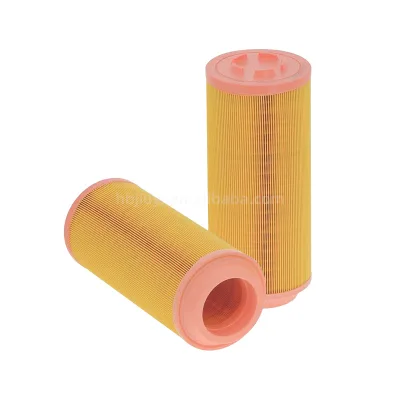
Truck Air Filter Heavy Duty Truck Air Filter for Cartridge Air Filter Mr552951
$5.00 - $100.00
MOQ: 500 Pieces

Truck Air Filter Heavy Duty Truck Air Filter 2789301 for Cartridge Air Filter
$5.00 - $100.00
MOQ: 500 Pieces


High Efficiency Air Filter 1433690 for Heavy Duty Trucks and Commercial Vehicles
$10.00 - $15.00
MOQ: 20 Pieces


Comprehensive Sourcing Guide
Heavy-Duty Truck Air Filter Sourcing Guide
Procuring heavy-duty truck air filters requires distinguishing between general industrial filtration and components engineered for high-load diesel engines. The available market data indicates a diverse range of products, including cabin filters, oil filters, and specific air filtration units with HEPA-grade capabilities. Buyers must verify that the listed "Dry" pattern and "Panel Filter" or "Folded Filter" structures align with the specific airflow requirements of their fleet's engine intake systems.
Sourcing decisions should prioritize the physical dimensions and connector types observed in listings, such as the "Flat Connector" or specific model numbers like UVO-10013. Since the observed product range includes various OEM references and standard sizes, it is critical to match the filter's physical profile to the truck's housing. Relying solely on the generic classification of "Air Filter" without confirming the exact model number or standard dimensions can lead to installation failures in heavy-duty applications.
Product Scope and Observed Listing Signals
The current market listings reveal a broad spectrum of filtration products, ranging from simple paper core units to complex hydraulic and oil-water separators. While the core keyword focuses on air filtration, the observed data includes items classified as "Hydraulic Filter" or "Centrifugal Type," which are distinct from the primary air intake needs of a truck. Buyers must carefully filter these results to isolate units explicitly designed for air intake, ensuring the "Filtration Grade" matches the required HEPA or industrial efficiency standards for heavy-duty environments.
Listing signals such as "Activated Carbon Filter Type" and "Bulk Type" suggest specialized applications for odor control or large-scale industrial dust separation rather than standard engine protection. The presence of "Paper" and "Synthetic Fiber" as medium materials indicates varying levels of filtration efficiency and durability. Procurement teams should scrutinize the "Product Type" field to ensure the item is not a generic industrial panel filter but a component specifically rated for the high-velocity airflow and particulate load of heavy-duty truck engines.
Technical Specifications to Verify
Dimensional accuracy is paramount when sourcing heavy-duty truck air filters, as the observed listings show a wide variance in standard sizes, from 71.5/66*25/20H121 mm to larger packaging dimensions like 55x55x36cm. Buyers must verify the exact internal dimensions and the "Filter Element Form," such as the "Radial Seal," to ensure a perfect fit within the engine's air cleaner housing. Mismatched dimensions can compromise the seal, allowing unfiltered air to bypass the media and cause rapid engine wear.
The structural integrity of the filter media must also be confirmed, with observed options including "Paper Core," "Glass fiber material," and "Synthetic Fiber." The "Mechanical Principle" of "Adsorption" and the "Efficiency" ratings, such as "HEPA Filter," are critical indicators of the filter's ability to capture fine particulates. Procurement teams should request technical datasheets that explicitly state the maximum working differential pressure, noting that observed values like 10 bar may apply to specific hydraulic or oil filters rather than standard air intake units.
Compliance and Safety Documentation
Certification status is a primary indicator of a supplier's commitment to quality, with "ISO" certification appearing in the observed product data. Buyers should verify that the specific air filter model holds relevant international standards for heavy-duty vehicle components, ensuring the manufacturing process meets rigorous safety and performance benchmarks. The presence of an "OEM" designation, such as 43863224 or 21337546, suggests compatibility with established truck manufacturers, but this should be cross-referenced with official OEM documentation to confirm validity.
Safety documentation must also address the "Mode of Transportation" and "Packaging" standards to ensure the filters arrive in optimal condition. Observed packaging methods include "Boxed," "Carton," and "Individually Wrapped" configurations, which protect the filter media from moisture and physical damage during transit. For heavy-duty applications, the "Clapboard" feature and "Pallets Are Available" options indicate robust handling protocols, which are essential for maintaining the integrity of the filter before installation.
Cost Drivers and Commercial Terms
Pricing in the heavy-duty truck filter market is influenced by the complexity of the filtration media and the specific OEM compatibility required. The observed price range of 0.89 to 100 USD reflects a wide disparity between basic industrial panels and specialized, high-efficiency units. Buyers should analyze the cost per unit against the "Filtration Grade" and "Material" composition, understanding that synthetic fibers or HEPA-grade media typically command a premium over standard paper cores.
Commercial terms such as the "Payment" structure of "T/T. 30%" and the "Delivery Time" of 25-35 days are standard variables that impact total procurement costs. The "MOQ" range of 1 to 1000 units allows for flexibility, but larger orders may offer better unit economics. Procurement teams must factor in the "Shipping Port" options, such as Tianjin or Shanghai, and calculate the total landed cost, including freight and insurance, to ensure the final price aligns with the fleet's budget constraints.
Supplier Qualification and Quality Control
Supplier qualification should begin with verifying the "prod_origin," which is consistently listed as "Hebei, China" or generally "China" in the observed data. While this provides a geographic baseline, buyers must conduct deeper due diligence to ensure the supplier has a proven track record in manufacturing heavy-duty truck components. The "Customization: Available" attribute suggests flexibility, but it also requires strict quality control protocols to ensure that custom specifications do not compromise the filter's structural integrity or filtration efficiency.
Quality control processes must be validated through the "Certificate" status and the specific "Standard" dimensions provided. Buyers should request evidence of the "Efficiency" claims, such as the "FFilter Number" or "HEPA Filter" ratings, to confirm that the product meets the necessary performance thresholds. The "Usage" applications listed, including "Solid-Liquid Separation" and "Oil Impurities," highlight the need to distinguish between general industrial filters and those specifically engineered for the harsh conditions of heavy-duty truck engines.
Long-Term Procurement Checks
Establishing a long-term procurement strategy requires monitoring the consistency of "prod_model" numbers and "OEM" references across multiple orders. The observed list includes specific models like UVO-10007 and UVO-10014, which serve as critical identifiers for maintaining supply chain continuity. Buyers should implement a system to track these model numbers against actual field performance, ensuring that the filters continue to meet the "Efficient Filtration" requirements over time.
Regular audits of the "Delivery Time" and "Shipping Port" reliability are essential for maintaining fleet uptime. The observed lead time of 25-35 days must be factored into inventory planning to prevent stockouts during peak maintenance periods. Additionally, buyers should verify that the "Packaging" remains consistent, as changes in "Boxed" or "Carton" specifications could indicate shifts in manufacturing processes that might affect the product's durability and protection during transit.
FAQs
What materials are used in these air filters?
The filters utilize a paper core and synthetic fiber medium for effective filtration. This combination ensures high efficiency in capturing airborne dust and impurities. The design supports various applications including industrial and automotive uses, providing reliable performance for heavy duty truck operations.
Can I request custom specifications for these filters?
Yes, customization is available for these air filters to meet specific operational needs. Buyers can request tailored dimensions or structural adjustments. This flexibility allows for precise integration into different truck models or industrial machinery, ensuring optimal fit and performance for specialized heavy duty applications.
What is the typical delivery time for orders?
The standard delivery time ranges from 25 to 35 days after order confirmation. This timeframe accounts for production and preparation processes. Buyers should plan their procurement schedules accordingly to ensure timely receipt of the filters for their heavy duty truck maintenance or industrial supply chains.
Which certifications do these filters hold?
These filters are produced under ISO certification standards. This ensures consistent quality and adherence to recognized manufacturing protocols. The certification provides assurance of reliability for buyers sourcing heavy duty truck air filters, supporting compliance with industry requirements for industrial and automotive filtration components.
How are the filters packaged for shipping?
The filters are packaged in boxes, cartons, or cardboard containers. Some items are individually wrapped to protect against damage during transit. This secure packaging ensures that the filters arrive in pristine condition, ready for installation in heavy duty trucks or industrial machinery without risk of contamination or physical harm.
What is the minimum order quantity for these filters?
The minimum order quantity ranges from 1 to 1000 units depending on the specific product model. This flexibility accommodates both small-scale testing and large-scale industrial procurement. Buyers can select quantities that align with their inventory needs for heavy duty truck maintenance or broader industrial filtration supply chains.