Find Compare Source HEPA Forklift Air Filter for Warehouse, Mining, Construction
Source 30 HEPA Forklift Air Filter options from verified suppliers in China. Compare specifications like filtration efficiency, material, and customization to find cost-effective OEM parts for industrial vehicles.
Key considerations
Products List




Comprehensive Sourcing Guide
Strategic Sourcing Guide for HEPA Forklift Air Filters
Understanding Technical Specifications and Filter Architecture
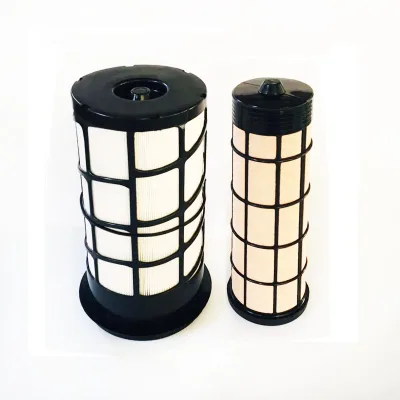
When sourcing a HEPA Forklift Air Filter, buyers must first distinguish between the specific architectural requirements of the equipment and the filtration media capabilities. The market presents a diverse array of configurations, ranging from panel filters to cartridge filters, each serving distinct operational needs. Observations of available inventory indicate that products are frequently categorized by their physical form, such as "Panel Filter" or "Cartridge Filter," which dictates the mounting method and airflow dynamics within the forklift engine bay. The core function of a HEPA (High-Efficiency Particulate Air) filter is to remove at least 99.9% of airborne particles, a standard explicitly noted in several product attributes where "Filtration Efficiency" is listed as 99.9% or "HEPA Filter."
The physical dimensions and structural integrity of the filter are critical for compatibility. Sourcing data reveals a wide variance in standard sizes, with specific models adhering to precise dimensional constraints such as φ10060H270, R130H230, or 13060*230. These measurements are not merely descriptive but are functional requirements; a mismatch in diameter or height can lead to air bypass, rendering the filtration system ineffective. Furthermore, the structural composition often involves a "Filter Element/Assy," suggesting that the unit may include a housing or assembly rather than just the media itself. The medium material is another pivotal specification, with options ranging from "Fiberglass" to "Cotton" and "Filter Paper." While fiberglass is often associated with high-temperature resistance and durability, cotton and filter paper variants may offer different airflow resistance characteristics. Buyers must verify that the selected medium material aligns with the specific dust load and environmental conditions of their warehouse or industrial site.
Compliance, Certification, and Regulatory Standards
In the industrial procurement landscape, compliance is not optional; it is a prerequisite for operational safety and liability management. The presence of "ISO9001-2015" certification in product attributes signals that the manufacturer adheres to international quality management standards. This certification is a vital indicator of a supplier's ability to maintain consistent production processes and quality control measures. However, buyers should not assume that all listed products automatically possess this certification; it must be verified on a per-supplier basis. The standard "Standard" attribute often includes specific weight or dimensional references, such as 0.75kg or specific diameter-height ratios, which serve as baseline compliance metrics for the product's physical integrity.
Beyond general quality management, the filtration grade itself acts as a regulatory standard. The "HEPA Filter" designation implies a specific level of particulate capture efficiency. In environments where forklifts operate near sensitive goods or where operator health is a concern, ensuring the filter meets the 99.9% efficiency threshold is essential. Additionally, surface treatments like "Oxygenation" may be applied to enhance the durability of the filter frame or housing, particularly in stainless steel variants. This treatment can prevent corrosion and extend the working life of the component, which is crucial for maintaining compliance with equipment maintenance schedules. Buyers should request documentation proving that the specific batch of filters meets the claimed ISO standards and filtration efficiency ratings, rather than relying solely on marketing descriptions.
Cost Drivers and Economic Factors in Procurement
The economic landscape of sourcing HEPA forklift air filters is influenced by several variables, including material composition, customization levels, and packaging requirements. The observed price range in the market spans from 1.3 to 200 USD, a significant variance that reflects differences in quality, complexity, and volume. Lower-cost units often utilize standard materials like cotton or basic filter paper, while higher-priced options may incorporate stainless steel construction, advanced surface treatments, or custom engineering. The "Cost-Effective OEM Forklift Parts" attribute suggests that some suppliers position their products as budget-friendly alternatives to original equipment manufacturer (OEM) parts, but buyers must balance cost against the risk of premature failure.
Customization is a major cost driver. Products listed as "Customized" or "Customizable" allow for specific dimensions, such as the "Size: Customization" attribute, to fit unique forklift models. This flexibility comes at a premium compared to off-the-shelf standard models like the K1122 or SHYTGER series. Furthermore, packaging plays a role in the final landed cost. Options range from simple "Carton and Pallet" configurations to more robust "Corrugated Carton with Plywood Case" solutions. The latter is essential for international shipping to prevent damage during transit but adds to the overall expense. Buyers should also consider the Minimum Order Quantity (MOQ), which ranges from 1 to 300 units. Smaller MOQs offer flexibility for testing but may result in a higher unit price, whereas bulk orders can leverage economies of scale. The "Sample: Order Refund Sample Fee" policy indicates that suppliers may offer sample units with the option to recover the cost upon a larger order, a factor that can influence the initial cash flow requirements for procurement teams.
Typical Applications and Operational Environments
The application of HEPA forklift air filters extends beyond simple engine protection; it is integral to the longevity of the machinery and the safety of the operating environment. These filters are designed for "Air" applications, specifically targeting the intake systems of forklifts used in various industrial settings. The "Working Life" of these filters is a critical performance metric, with observed ranges extending from 2500 to 3000 hours. This duration suggests that the filters are suitable for medium-to-heavy duty operations, provided that the operating environment is managed correctly. In dusty environments, such as lumber yards, cement plants, or recycling facilities, the filter's ability to maintain 99.9% efficiency is paramount to preventing engine wear.
The "Pattern: Dry" attribute indicates that these filters are designed for dry air filtration, distinguishing them from oil-wet or mist-capturing systems. This is standard for most internal combustion engine forklifts. The "Structure: Filter Element/Assy" implies that the filter is a replaceable core unit, which simplifies maintenance procedures. Forklift operators and maintenance teams rely on the "Delivery Time" to ensure minimal downtime. Observed lead times of 2 to 3 days highlight the importance of having a reliable supply chain for critical spare parts. If a filter fails, the forklift must be taken out of service immediately to prevent engine damage. Therefore, the reliability of the supplier and the consistency of the product's "Filtration Grade" are directly linked to operational continuity. The "Clapboard" attribute, noted as either "with" or "without," may refer to specific mounting frames or protective covers that are necessary for certain forklift models, further emphasizing the need for precise application matching.
Supplier Evaluation and Verification Protocols
Evaluating a supplier for HEPA forklift air filters requires a rigorous approach that goes beyond price comparison. The geographic origin of the products, such as "Shandong, China" or "Guangzhou, China," provides context for logistics and potential trade barriers, but it does not inherently dictate quality. Buyers must verify the supplier's ability to meet the specific "Standard" and "Model" requirements of their fleet. The presence of model numbers like K1323, K1022, or 1022 suggests a catalog of compatible parts, but buyers must ensure that the specific model number matches their forklift's requirements exactly.
A critical aspect of supplier evaluation is the verification of the "Customization" capability. If a buyer requires a non-standard size or material, the supplier must demonstrate the technical capacity to produce these variations without compromising the "HEPA Filter" efficiency. The "Surface Treatment: Oxygenation" and "Material: Stainless Steel" attributes suggest that the supplier has advanced manufacturing capabilities. Buyers should request proof of these capabilities, such as production samples or technical data sheets. Additionally, the "Certificate: ISO9001-2015" should be validated through independent audits or third-party verification to ensure it is current and applicable to the specific product line. The "MOQ: 100" attribute for some products indicates a threshold for bulk pricing, which buyers should factor into their inventory planning. Finally, the "Sample: Order Refund Sample Fee" policy offers a low-risk method to test product quality before committing to a large order, a strategy that should be employed to mitigate procurement risks.
Quality Control and Long-Term Procurement Considerations
Ensuring long-term value in HEPA Forklift Air Filter procurement involves establishing robust quality control (QC) protocols. The "Filter Efficiency: 98%" and "Filtration Efficiency: 99.9%" attributes highlight the need for consistent performance testing. Buyers should implement incoming quality checks that verify the actual filtration efficiency of received batches against the claimed specifications. This is particularly important given the wide range of observed efficiencies and the critical nature of air filtration for engine health. The "Working Life: 2500h---3000h" specification sets a benchmark for performance; if filters fail significantly before this mark, it indicates a quality issue with the medium material or assembly.
Long-term procurement strategies should focus on building a relationship with suppliers who offer consistent "Delivery Time" and reliable "Standard" compliance. The variability in lead times, from 2 to 3 days, suggests that suppliers may have fluctuating production capacities. Buyers should secure agreements that guarantee lead times during peak demand periods to avoid operational disruptions. The "Product Packing: Carton or as Your Requirement" attribute indicates flexibility in logistics, which can be leveraged to optimize shipping costs and reduce damage rates. Furthermore, the "Pattern: Dry" and "Structure: Filter Element/Assy" specifications should be standardized across the fleet to simplify maintenance and inventory management. By focusing on these long-term factors, buyers can ensure that their forklift operations remain efficient, compliant, and cost-effective over the lifespan of the equipment.
FAQs
What filtration efficiency do these HEPA filters provide?
These filters provide a filtration efficiency of 99.9 percent to remove airborne particles. Some variants list a 98 percent efficiency rating, so verify the specific model grade before purchase.
Which materials are used to construct these air filters?
Common medium materials include fiberglass, cotton, and filter paper. The housing or frame may also be constructed from stainless steel with oxygenation surface treatment for durability.
How long is the typical working life of these filters?
The working life typically ranges from 2500 to 3000 hours of operation. This duration depends on the operating environment and the specific dust load encountered during use.
Can I order custom sizes for my specific forklift model?
Yes, customization is available with options for specific sizes like R130*H230 or φ100*60*H270. Buyers should confirm if the supplier offers custom dimensions to match their equipment exactly.
What is the minimum order quantity for these filters?
The minimum order quantity ranges from 1 to 300 units depending on the supplier. Some specific products list an MOQ of 100 units, while others allow smaller trial orders.
Do these filters come with ISO9001-2015 certification?
Some products are listed with ISO9001-2015 certification indicating adherence to quality management standards. Buyers must verify this certification for each specific batch rather than assuming it applies to all listings.
How quickly can suppliers deliver these air filters?
Delivery times observed in the market range from 2 to 3 days. This fast turnaround helps minimize downtime for forklift maintenance and ensures operational continuity in industrial settings.