Find Heterogeneous Catalyst Ozone Removal Filter for Air Purifiers, Industrial Exhaust, and HVAC Systems
Source 30 verified Heterogeneous Catalyst Ozone Removal Filter options from suppliers in China. Buyers can compare specifications like reaction speed, material composition, and customization availability for industrial and commercial applications.
Key considerations
Products List


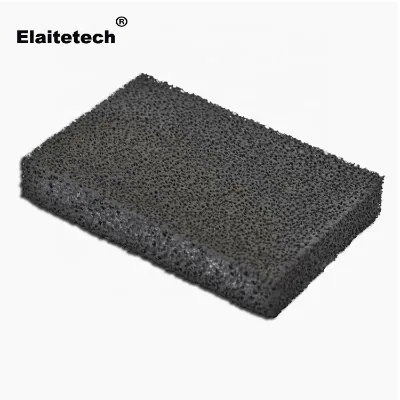


Ozone Oxidation Catalyst for Air Purification
$1200.00 - $1600.00
MOQ: 1 Tons
Pingxiang Rongjian Environmental Protection Chemical Packing Co., Ltd


Solid Ozone Decomposition Catalyst
$35.00 - $50.00
MOQ: 50 kg
Qingdao Pioneer Environmental Protection Technology Co., Ltd.


Comprehensive Sourcing Guide
Strategic Sourcing Guide for Heterogeneous Catalyst Ozone Removal Filters
Understanding the Technical Landscape of Heterogeneous Catalysts
When sourcing heterogeneous catalysts specifically designed for ozone removal, buyers must first distinguish between the physical forms and chemical mechanisms available in the current market. The core keyword "Heterogeneous Catalyst Ozone Removal Filter" implies a system where the catalyst exists in a different phase than the reactants, typically a solid catalyst interacting with gaseous ozone. Based on observed market data, these products are frequently classified under heterogeneous catalysts with a primary application in oxidation processes, though some listings also reference restoration capabilities.
The physical structure of the catalyst is a critical determinant of performance. Suppliers offer a variety of morphologies, including honeycomb, foam, strip, and particle types. The honeycomb structure is particularly prevalent for structured packing applications, offering high surface area and low pressure drop, which is essential for maintaining airflow in filtration systems. Other forms, such as granules or pellets, are often cited with standard sizes ranging from 3-5mm, while custom dimensions like 10010050mm are also available for specific industrial integration needs. The material composition is another vital technical variable; sources indicate the use of aluminum ceramic as a base, often impregnated with noble metal catalysts to facilitate the reaction.
The manufacturing method significantly influences the catalyst's porosity and active site distribution. Two primary methods observed in the supply chain are the method of precipitation and the hot melting method. The precipitation method is often associated with creating specific granulate structures, while the hot melting method may be utilized for different structural features. Buyers should verify which method aligns with their specific reaction kinetics requirements, as the "fast reaction" characteristic is a common claimed advantage, yet the actual performance depends heavily on the precise synthesis technique employed.
Compliance, Certification, and Standard Verification
In the B2B procurement of industrial catalysts, compliance with international standards and certifications is a non-negotiable aspect of supplier evaluation. While specific certification bodies like RoHS and REACH are frequently mentioned in the broader chemical industry context, buyers must treat these as verification targets rather than guaranteed attributes of every listed product. The absence of explicit certification data in product listings requires a proactive approach where the buyer requests current test reports and compliance documentation directly from the manufacturer.
Standardization in the industry often revolves around the physical form and chemical composition. Observed product standards include classifications such as "pellet, granule, powder, honeycomb," which serve as structural benchmarks. Additionally, specific product models like RJ-1039, RJ-725, RJ-724, and RJ-683 indicate a standardized nomenclature system used by manufacturers, though these model numbers should be cross-referenced with technical data sheets to ensure they meet the specific ozone destruction requirements of the buyer's application.
For ozone treatment efficiency, the industry often targets high performance metrics. Some product descriptions cite an ozone treatment efficiency of 100%, a figure that buyers must validate through independent testing or certified machinery test reports. The availability of machinery test reports is a positive indicator of a supplier's commitment to quality assurance, as it suggests that the product's performance has been documented under controlled conditions. However, the warranty status for these industrial components is often listed as unavailable, reflecting the high-risk nature of chemical processing equipment where failure can lead to significant operational downtime.
Cost Drivers and Pricing Dynamics
The pricing structure for heterogeneous ozone removal catalysts is influenced by a complex interplay of material costs, manufacturing complexity, and order volume. The observed price range in the market is extensive, spanning from $0.75 to $1600 USD. This wide variance is not arbitrary but is driven by several key factors. The inclusion of noble metals as core components is a primary cost driver; these precious metals are essential for the catalytic activity but are significantly more expensive than base metal alternatives. Consequently, products with higher noble metal content will naturally command a higher price point.
The manufacturing method also impacts cost. Processes like the method of precipitation or hot melting require specific equipment and energy inputs, which are factored into the final price. Furthermore, the physical form and customization level play a substantial role. Standard granules or pellets in common sizes (e.g., 3-5mm) are generally more cost-effective than custom-sized honeycomb structures or specialized foam types. The "Customization: Available" attribute suggests that buyers can request tailored dimensions, but this flexibility often comes with a premium compared to off-the-shelf inventory.
Minimum Order Quantity (MOQ) is another critical financial consideration. The observed MOQ range spans from 1 to 1000 units. For small-scale testing or pilot projects, buyers may find suppliers willing to ship single items, though the unit cost will likely be higher. Conversely, large-scale industrial deployments can leverage economies of scale by ordering in bulk, potentially reducing the per-unit cost. Buyers should also consider the packaging requirements; options like iron barrels with plastic lining, steel drums, or double-layer packaging add to the logistical cost but are necessary for protecting the catalyst during transit, especially given the solid state and specific density requirements.
Typical Applications and Operational Parameters
Heterogeneous catalyst ozone removal filters are deployed across a diverse range of industrial sectors where air purification and ozone destruction are critical. The primary application industry is broadly categorized as "Industry," but this encompasses specific sectors such as semiconductor manufacturing, medical sterilization, and industrial ventilation systems. In these environments, the catalyst is used to decompose ozone (O3) into oxygen (O2), ensuring that the air quality meets safety and operational standards.
The operational parameters of these catalysts are defined by specific performance metrics. The recommended space velocity, a measure of the flow rate relative to the catalyst volume, is typically cited in the range of 1x10^4 to 8x10^4. This parameter is crucial for system design, as it dictates the residence time of the gas within the catalyst bed. If the flow rate exceeds this range, the ozone may not have sufficient contact time to be fully decomposed, leading to reduced efficiency. Conversely, operating below this range may result in unnecessary pressure drops and energy consumption.
The moisture content of the catalyst is another operational constraint. Products are often specified with a maximum moisture content of 3%. Exceeding this threshold can degrade the catalytic activity or cause physical disintegration of the catalyst structure, particularly in ceramic or honeycomb forms. Buyers must ensure that their inlet gas conditions are controlled to prevent moisture accumulation. Additionally, the catalyst is described as having a bulk density of 0.5 g/ml, a figure that is essential for calculating the required volume of the catalyst bed to achieve the desired treatment capacity.
Supplier Evaluation and Quality Assurance
Evaluating a supplier for heterogeneous catalysts requires a rigorous assessment of their technical capabilities and quality control processes. The "brand name" and "place of origin" are initial data points, with China being a significant hub for production, specifically regions like Guangxi. However, the brand name alone is insufficient for determining quality. Buyers should prioritize suppliers who provide machinery test reports, as this indicates a commitment to validating product performance. The availability of such reports is a strong differentiator in a market where many products may lack third-party verification.
Quality assurance should also extend to the manufacturing process. Suppliers utilizing the method of precipitation or hot melting should be able to demonstrate consistency in their production lines. The "Status: Solid Catalyst" and "Structure Feature: Granulate" attributes must be verified against physical samples to ensure they match the specifications. Furthermore, the "Advantage: Process Stability" claimed by some suppliers should be backed by historical data or case studies demonstrating long-term performance without significant degradation.
Packaging is a critical component of quality assurance during logistics. The observed packaging methods, including carton boxes with plastic frames, bubble shock absorbers, and iron barrels with plastic linings, are designed to protect the catalyst from physical damage and environmental exposure. Buyers should verify that the packaging is robust enough to withstand the rigors of shipping, especially for fragile forms like honeycomb structures. The "Selling Units: Single item" option suggests flexibility, but for large orders, the integrity of the ton bag or steel drum packaging becomes paramount to prevent contamination or breakage.
Long-Term Procurement and Maintenance Strategies
Sourcing heterogeneous catalysts is not a one-time transaction but part of a long-term operational strategy. The "Warranty: Unavailable" status observed in many listings highlights the need for buyers to plan for replacement and maintenance proactively. Unlike consumer goods, industrial catalysts degrade over time due to poisoning, thermal aging, or physical attrition. Therefore, procurement strategies should include a plan for regular performance monitoring and scheduled replacement.
The "Customization: Available" attribute offers an opportunity for long-term optimization. By working with suppliers to customize the size, shape, or composition of the catalyst, buyers can tailor the product to their specific operational needs, potentially extending the service life and improving efficiency. However, this customization requires a deep understanding of the application requirements and close collaboration with the supplier to ensure that the custom specifications are met consistently over multiple production runs.
Inventory management is also a key consideration. Given the wide range of MOQs and the potential for high unit costs, buyers should balance the need for immediate availability with the cost of holding inventory. For critical applications where downtime is costly, maintaining a buffer stock of the catalyst is advisable. The "Product name: Ozone destruction catalyst" and specific model numbers should be used to standardize inventory, ensuring that replacement parts are compatible with existing systems.
Finally, buyers should remain vigilant regarding the "Response Type" of the catalyst. While some products are classified as "Oxidation" catalysts, others may be listed as "Restore" catalysts. Understanding the specific chemical mechanism is essential for predicting the catalyst's behavior under different operating conditions. By maintaining a comprehensive understanding of the technical specifications, compliance requirements, and operational parameters, buyers can make informed decisions that ensure the reliability and efficiency of their ozone removal systems over the long term.
Comparative Analysis of Product Attributes
To facilitate a clearer understanding of the market landscape, the following table summarizes key attributes observed in the supply of heterogeneous ozone removal catalysts. This comparison highlights the variability in specifications that buyers must navigate during the sourcing process.
| Attribute Category | Observed Specification / Option | Relevance to Procurement |
|---|---|---|
| Classification | Heterogeneous Catalysts | Defines the phase interaction; essential for reactor design. |
| Response Type | Oxidation / Restore | Determines the chemical mechanism; must match application needs. |
| Material | Aluminum Ceramic / Noble Metal | Influences cost, durability, and catalytic activity. |
| Structure | Honeycomb / Foam / Strip / Particle | Affects pressure drop and surface area; critical for airflow. |
| Manufacturing | Precipitation / Hot Melting | Impacts porosity and active site distribution. |
| Size | 3-5mm / 10010050mm / Custom | Determines bed volume and packing density. |
| Efficiency | 100% (Claimed) | Requires verification via test reports; high target metric. |
| Moisture Limit | 3% Max | Critical for preventing catalyst degradation. |
| Packing | Iron Barrel / Steel Drum / Carton | Ensures product integrity during transit. |
| Origin | China (Guangxi) | Indicates supply chain location; may affect lead times. |
| MOQ | 1 - 1000 | Impacts initial capital expenditure and inventory strategy. |
| Price Range | $0.75 - $1600 USD | Reflects material and customization complexity. |
This table serves as a reference for buyers to quickly identify the critical variables that influence the selection and procurement of heterogeneous catalysts for ozone removal. By systematically evaluating these attributes against specific project requirements, buyers can mitigate risks and optimize their sourcing strategies.
FAQs
What is the recommended space velocity for this catalyst?
The recommended space velocity ranges from 1x10^4 to 8x10^4. This parameter ensures sufficient contact time for ozone decomposition while maintaining system pressure. Operating outside this range may reduce efficiency or increase energy consumption.
Can I order custom sizes for the catalyst structure?
Yes, customization is available for specific dimensions like 100*100*50mm. Buyers can request tailored sizes to fit unique industrial integration needs. This flexibility allows for optimized performance in specialized filtration systems.
Which manufacturing method is used for the precipitation process?
The method of precipitation is used to create granulate structures with specific porosity. This technique helps distribute active sites effectively for oxidation reactions. It is one of the primary synthesis methods observed in the supply chain.
How is the product packed for safe international shipping?
Products are packed in iron barrels with plastic lining or steel drums. Additional protection includes carton boxes with plastic frames and bubble shock absorbers. This ensures the solid catalyst remains intact during transit.
What is the maximum moisture content allowed in the catalyst?
The maximum moisture content is specified as 3%. Exceeding this limit can degrade catalytic activity or cause physical disintegration. Buyers must ensure inlet gas conditions prevent moisture accumulation to maintain performance.
Which material forms the base of the ozone destruction catalyst?
The base material is aluminum ceramic, often impregnated with noble metal catalysts. This composition provides the necessary structural stability and active sites for ozone removal. The core components include noble metals for high reactivity.
Can I get a machinery test report for this product?
Yes, a machinery test report is provided by the supplier. This document validates the product's performance under controlled conditions. It serves as a key indicator of quality assurance and reliability for industrial applications.