Source High Elasticity Merino Wool Sock for Hiking, Skiing, and Daily Wear
Explore 30 listings for High Elasticity Merino Wool Sock options featuring antibacterial properties and winter suitability. Buyers can compare OEM services, customization options, and pricing details from Zhejiang suppliers.
Key considerations
Products List




Comprehensive Sourcing Guide
Strategic Sourcing Guide for High Elasticity Merino Wool Socks
The global demand for performance-oriented hosiery has surged, with high elasticity merino wool socks emerging as a premium segment driven by their unique ability to regulate temperature, manage moisture, and provide structural integrity during rigorous activity. For B2B procurement professionals, sourcing this specific category requires a nuanced understanding of material science, manufacturing capabilities, and supply chain logistics. The intersection of natural fiber properties and mechanical elasticity presents a complex sourcing landscape where buyers must distinguish between marketing claims and verifiable product attributes. This guide provides a structured approach to navigating the market, focusing on technical specifications, supplier evaluation, and quality assurance protocols without relying on unverified external data.
Technical Specifications and Material Composition
The foundation of a high-performance sock lies in its material composition and structural engineering. While the core keyword emphasizes merino wool, the supplied product data indicates a diverse range of material blends available in the current market, including "Wool / Acrylic" and "100% wool" variants. Buyers must recognize that "merino wool" is a specific subset of wool, and not all wool socks listed in a catalog are necessarily merino. When evaluating technical specifications, the primary focus should be on the fiber blend ratio, as this dictates the balance between the natural benefits of wool and the durability or cost-efficiency of synthetic additives like acrylic.
High elasticity is a critical functional requirement for this product category. In the context of sock manufacturing, elasticity is achieved through the knitting technique and the inclusion of elastic fibers such as spandex or elastane, though the specific blend ratios are often proprietary. The supplied data highlights "knitted" as the primary technics, which is the standard method for producing seamless or tubular socks. However, the presence of "Standard" thickness in some listings suggests that elasticity must be verified independently of thickness, as a standard thickness sock can still possess high elasticity if the knitting tension and fiber blend are optimized.
Buyers should scrutinize the "Craftsmanship" attributes listed in supplier catalogs, such as "Overlock Stitching" and "3D Digital Printing." These processes impact the final fit and comfort. For instance, overlock stitching ensures the toe and heel seams are durable and do not cause friction, which is essential for high-elasticity socks that undergo significant stretching during wear. Additionally, the "Anti-Slip Silicone DOT" feature mentioned in the data is a crucial technical specification for hiking and ski applications, ensuring the sock stays in place despite the high stretch of the material.
Compliance, Certification, and Regulatory Verification
In the B2B textile sector, compliance is not merely a formality but a prerequisite for market access and brand integrity. The supplied context mentions "ISO 9001" and "GOTS" (Global Organic Textile Standard) as background standards, but it explicitly categorizes these as low-confidence or background information rather than confirmed attributes of specific products. This distinction is vital for procurement teams. A supplier may claim to be ISO 9001 certified, but without a valid certificate number or recent audit report, this claim remains unverified.
When sourcing merino wool socks, buyers must verify specific regulatory requirements based on their target market. For example, the European Union has strict regulations regarding chemical substances (REACH), and the United States requires adherence to the Textile Fiber Products Identification Act. The "Made to order" standard noted in the data suggests a flexible production model, which can complicate compliance if the supplier lacks a standardized quality management system.
Buyers should request documentation for any claimed certifications rather than accepting them as inherent facts. If a supplier claims GOTS certification, they must provide a valid transaction certificate (TC) that traces the wool from the farm to the finished product. Similarly, for "Antibacterial" functions listed in the product attributes, buyers should demand third-party test reports from accredited laboratories (such as AATCC or ISO standards) that verify the efficacy of the treatment. Without such evidence, functional claims remain marketing assertions rather than verified product specifications.
Cost Drivers and Pricing Dynamics
Understanding the cost structure of high elasticity merino wool socks is essential for budgeting and negotiation. The observed price range in the market spans from $0.30 to $8.00 USD, a wide variance that reflects differences in material quality, production complexity, and order volume. The lower end of this spectrum likely corresponds to acrylic blends or lower-grade wool, while the upper end represents pure merino wool with advanced engineering features like 3D digital printing or specialized anti-slip treatments.
The "MOQ" (Minimum Order Quantity) is a significant cost driver. The data indicates an MOQ range of 1 to 3000 units, with a specific listing noting "100 pairs" as a threshold. For buyers seeking high elasticity merino wool socks, the cost per unit is inversely proportional to the order volume. Small batch orders, such as those with an MOQ of 1 or 100 pairs, often carry a premium due to the setup costs for custom knitting patterns and dyeing processes. Conversely, larger orders allow for economies of scale, reducing the per-unit cost but requiring higher capital commitment.
Other cost factors include the "Customization" options available. The data confirms that "Customized Logo Accept," "Custom Package Available," and "Custom Size Acceptable" are standard offerings. Each of these adds a layer of complexity to the production process. For instance, "Embroidery" and "Jacquard" craftsmanship require specialized machine setups and additional labor time compared to standard printing. Buyers must weigh the value of these customizations against the budget, understanding that features like "Heat Transfer" or "DIP Dye" may incur additional charges depending on the supplier's capacity and the complexity of the design.
Typical Applications and Functional Requirements
The versatility of high elasticity merino wool socks allows them to serve a wide array of applications, from casual wear to extreme outdoor sports. The supplied product data explicitly lists "Sporty," "Hiking Socks," and "Ski Socks" as product types, alongside "Casual" and "Outdoor Protective" functions. This diversity necessitates a tailored sourcing strategy where the specific application dictates the required technical specifications.
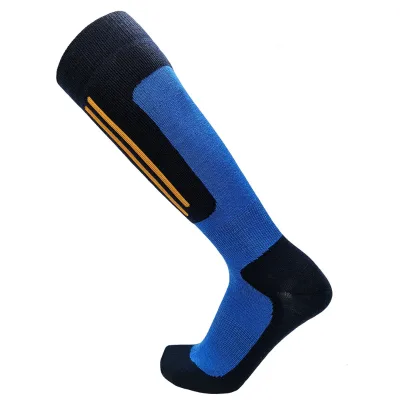
For hiking and skiing applications, the "Winter" season attribute is paramount. These socks must provide thermal insulation while managing moisture to prevent hypothermia. The "Knee Socks" length specification is particularly relevant for skiing, where extra coverage protects the lower leg from cold and boot friction. The "Anti-Slip Silicone DOT" feature is critical here, as it prevents the sock from bunching inside a stiff ski boot, which could lead to blisters or reduced circulation.
In contrast, "Casual" and "Sporty" socks may prioritize breathability and aesthetic customization over extreme thermal protection. The "Breathable" attribute listed in the data is a key selling point for everyday wear, ensuring comfort during moderate activity. The "Colored" and "Multi Color" options allow for brand differentiation in the casual market. Buyers should align their product selection with the intended use case, ensuring that the "Standard" thickness or "100% wool" material matches the performance expectations of the end-user. For example, a sock designed for high-intensity hiking requires a higher degree of elasticity and durability than a casual fashion sock.
Supplier Evaluation and Capability Assessment
Selecting the right supplier is perhaps the most critical step in the procurement process. The data indicates that the "Place of Origin" is primarily "Zhejiang, China," a region known for its robust textile manufacturing infrastructure. However, geographic location alone does not guarantee quality. Buyers must evaluate suppliers based on their "OEM service" and "ODM/OEM" capabilities. The presence of "Warmly Welcomed" OEM/ODM services suggests that many suppliers are flexible regarding design and branding, but this flexibility must be balanced with their ability to maintain consistent quality.
Key evaluation criteria should include the supplier's "7_days_sample_order_lead_time" support. This metric indicates the supplier's agility in producing prototypes, which is essential for validating the high elasticity and fit of the socks before committing to a large order. A supplier that can deliver samples within a week demonstrates a responsive production line and efficient logistics.
Furthermore, the "Craftsmanship" details provide insight into the supplier's technical sophistication. A supplier offering "3D Digital Printing," "Jacquard," and "Embroidery" likely possesses advanced machinery and skilled labor. Buyers should verify if the supplier has in-house quality control teams or if they rely on third-party inspections. The "Washing" and "Ironing & Setting" steps listed in the craftsmanship section are post-production processes that significantly affect the final product's appearance and durability. A supplier that neglects these steps may produce socks that lose their shape or color after the first wash, undermining the value of the high elasticity.
Quality Control and Long-Term Procurement Considerations
Implementing a robust quality control (QC) protocol is essential to mitigate risks associated with sourcing high elasticity merino wool socks. Given the variability in "Material" (e.g., "Wool / Acrylic" vs. "100% wool"), buyers must establish clear acceptance criteria for fiber content. Third-party testing should be conducted to verify the wool percentage and the absence of harmful substances. The "Antibacterial" function should be validated through standardized testing to ensure the treatment remains effective after multiple washes.
Long-term procurement considerations involve building a sustainable relationship with suppliers who can scale with demand. The "Custom Size Acceptable" and "Custom Package Available" attributes suggest that suppliers are willing to adapt to specific buyer needs, but this requires clear communication and documentation. Buyers should develop a detailed product specification sheet that outlines all critical attributes, including elasticity recovery rates, seam strength, and colorfastness.
Additionally, the "Standard" thickness and "Medium" size listed in the data serve as baseline references, but buyers must confirm if these apply to their specific order. The "Made to order" standard implies a flexible production model, which can be advantageous for custom projects but requires careful management of lead times. Buyers should negotiate clear terms regarding lead times, especially for "Winter" season products where demand may spike. Establishing a consistent supply chain with a supplier who has a proven track record in "Knitted" sock production will ensure reliability and quality consistency over the long term.
Comparative Analysis of Product Attributes
To facilitate decision-making, buyers can compare key attributes across different product listings. The following table summarizes the variations observed in the market data, highlighting the trade-offs between material, function, and customization.
| Attribute Category | Option A (Standard/Casual) | Option B (Performance/Sport) | Option C (Premium/Custom) |
|---|---|---|---|
| Material | Wool / Acrylic Blend | 100% Wool | 100% Merino Wool (Verified) |
| Length | Ankle Sock | Knee Socks | Custom Size Acceptable |
| Function | Casual, Breathable | Hiking, Ski, Antibacterial | Outdoor Protective, Sporty |
| Craftsmanship | Embroidery, Overlock | Anti-Slip Silicone DOT, 3D Print | Jacquard, DIP Dye, Custom Logo |
| MOQ | 100 Pairs | 3000 Pairs | 1 Pair (Sample) |
| Lead Time | 7 Days (Sample) | Standard | Variable (Made to Order) |
This comparison illustrates that while basic options focus on affordability and standard features, performance-oriented options require higher MOQs and specialized craftsmanship. Buyers must align their procurement strategy with their specific market needs, ensuring that the selected product attributes meet the functional requirements of the end-user while remaining within budget constraints. By rigorously applying these evaluation criteria, procurement professionals can secure high-quality, high-elasticity merino wool socks that deliver value and reliability in the competitive B2B market.
FAQs
What materials are used for high elasticity merino wool socks?
Materials include Wool / Acrylic blends and 100% wool variants. Buyers must verify fiber ratios as not all wool socks are merino, and blends affect durability and cost efficiency.
Can suppliers provide customized logos and packaging?
Yes, customized logo acceptance and custom package availability are standard. These options add production complexity and may require additional setup time compared to standard printing methods.
What is the minimum order quantity for these socks?
Minimum order quantities range from 1 to 3000 units, with some listings specifying 100 pairs. Lower MOQs often carry a premium due to setup costs for custom knitting patterns.
How long does it take to receive a sample order?
Support for 7-day sample order lead times is available. This metric indicates supplier agility in producing prototypes to validate fit and elasticity before committing to large orders.
Which certifications should buyers verify for these products?
Buyers should request documentation for claimed certifications like ISO 9001 or GOTS rather than accepting them as facts. Third-party test reports are needed to verify functional claims like antibacterial properties.
What is the typical price range for high elasticity merino wool socks?
The observed price range spans from 0.30 to 8.00 USD. Lower prices likely correspond to acrylic blends, while higher prices reflect pure merino wool with advanced engineering features.
Where are these socks typically manufactured?
The primary place of origin is Zhejiang, China. Buyers should evaluate suppliers based on their OEM capabilities and quality control systems rather than relying solely on geographic location.