Source High Performance Diesel Mechanical Camshaft for Trucks, Buses, and Construction Equipment
Explore 30 listings for High Performance Diesel Mechanical Camshaft options tailored for heavy-duty trucks, buses, and construction machinery. Buyers can compare specifications like material, stroke, and engine displacement to find the right fit for their fleet needs.
Key considerations
Products List


High-Performance Engine Camshaft for Enhanced Power and Torque Output
$12.00 - $30.00
MOQ: 1000 Pieces


High-Strength Steel Camshaft for Demanding Motor and Engine Applications
$12.00 - $30.00
MOQ: 1000 Pieces

Durable Motor Camshaft for Consistent Performance in Various Conditions
$12.00 - $30.00
MOQ: 1000 Pieces


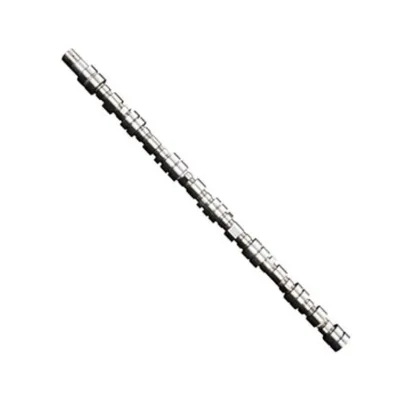
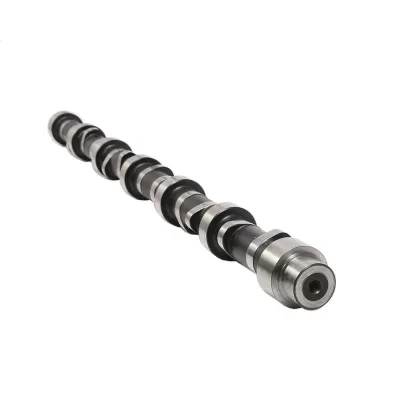


Precision Camshaft for Diesel Engine - OEM Specification, Chengdu Origin
$100.00 - $500.00
MOQ: 10 Pieces




Comprehensive Sourcing Guide
Strategic Sourcing Guide for High Performance Diesel Mechanical Camshafts
Technical Specifications and Design Parameters
When sourcing high-performance diesel mechanical camshafts, buyers must first establish a rigorous understanding of the physical and functional specifications that define the component's capability. The core of any camshaft assembly lies in its geometry and material integrity. Based on observed market data, the primary material composition for these critical engine components is consistently cast iron or ductile iron, with steel variants also present in specific high-load applications. The manufacturing technique is predominantly casting, a process that allows for the complex profiles required to optimize valve timing and lift in diesel engines.
The performance of a diesel camshaft is heavily influenced by its stroke configuration and camshaft layout. In the observed product range, four-stroke engines are the standard configuration, necessitating a camshaft designed to manage the intake and exhaust cycles precisely. The camshaft angle is a critical geometric factor; specific units observed feature a 180-degree camshaft angle, which dictates the firing order and valve overlap characteristics essential for high-torque diesel operation. Furthermore, the camshaft shape is often described in relation to the crankshaft, indicating a direct mechanical linkage that must maintain precise synchronization under high stress.
For high-performance applications, the engine type is a decisive specification. While naturally aspirated gasoline engines appear in the general market, the specific focus on high-performance diesel requires targeting components designed for turbocharged gasoline or heavy-duty diesel configurations. The displacement range observed includes 2.0t and 1.5L variants, though diesel engines typically operate with larger displacements to achieve the necessary torque. Buyers should verify that the camshaft model number aligns with the specific engine architecture, such as the 3801769 model number identified in specific listings, which is explicitly designated for diesel engine parts. The physical dimensions, including length and weight, are equally critical; standard observations indicate lengths around 350mm to 362mm with gross weights ranging from 1.422kg to 1.688kg. Any deviation from these standard specifications requires immediate verification against the engine's original equipment manufacturer (OEM) drawings.
Compliance, Certification, and Standard Verification
In the B2B procurement of automotive engine components, compliance is not merely a formality but a prerequisite for operational safety and warranty validity. The supply chain for high-performance diesel camshafts is heavily regulated, with certification serving as the primary indicator of quality assurance. The most frequently observed certification in the current market is ISO, specifically referenced as "Certification: ISO" or "Certification: ISOMaterial:Iron." This designation suggests adherence to international quality management standards, which is vital for components subjected to the extreme thermal and mechanical stresses of diesel combustion.
Buyers must distinguish between general ISO certification and specific product standards. The observed data includes references to "Gross Weight" and "Length" as part of the product standard, alongside specific mentions of "number of theeth" (teeth), which likely refers to gear drive specifications or timing gear compatibility. It is crucial to verify that the supplier provides documentation confirming the product meets the specific ISO standards relevant to the buyer's region and industry sector. For instance, the presence of "OEM: Yes" indicates that the component is manufactured to meet original equipment specifications, which often implies a higher level of compliance with strict engineering tolerances.
Furthermore, the "Standard" attribute in the product data often includes phrases like "According to drawing," which places the burden of verification on the buyer. This means the supplier claims adherence to a specific design, but the buyer must ensure that the drawing provided matches the exact engineering requirements of their application. The "Condition: New" attribute is a basic requirement, but it must be paired with proof that the new condition is achieved through a process that maintains the material integrity of the cast iron or steel. Buyers should request test reports or quality certificates that explicitly link the ISO certification to the specific batch of camshafts being purchased, ensuring that the compliance is not generic but applies to the actual goods delivered.
Cost Drivers and Pricing Dynamics
The pricing structure for high-performance diesel mechanical camshafts is influenced by a complex interplay of material costs, manufacturing complexity, and logistical factors. The observed price range in the market spans from 3 USD to 1000 USD, a wide variance that reflects differences in application, material grade, and order volume. The lower end of this spectrum likely corresponds to standard replacement parts or components with minimal customization, while the upper end represents high-performance, custom-engineered units or bulk industrial orders.
Material composition is a primary cost driver. Cast iron and ductile iron are generally more cost-effective than steel, yet steel variants are often required for high-performance applications due to their superior strength and fatigue resistance. The manufacturing technique, identified as casting, also impacts cost; high-precision casting processes that ensure the correct camshaft angle and shape require significant investment in tooling and quality control, which is reflected in the unit price. Additionally, the "Customization: Available" attribute suggests that bespoke camshafts will command a premium over standard off-the-shelf models.
Logistics and packaging play a significant role in the final landed cost. The observed packaging methods include "Colorful Export Carton Box," "in Bulk or Wooden Boxes," "Pallets and Crates," and "Wooden Case." The choice of packaging depends on the weight and fragility of the component. For heavy items like camshafts, wooden boxes and crates are standard to prevent damage during transit, adding to the overall cost. The "Place of Origin" is also a factor; products originating from Zhejiang, China, or Jinan, China, may have different cost structures based on local labor rates, raw material availability, and export logistics. Buyers should also consider the "MOQ" (Minimum Order Quantity), which ranges from 1 to 1000 units. Larger orders typically benefit from economies of scale, reducing the per-unit cost, while small orders may incur higher premiums.
Typical Applications and Industry Segments
High-performance diesel mechanical camshafts are integral to a diverse range of automotive and industrial applications. The primary application identified in the market data is the "Passenger Vehicle," indicating that these components are used in high-performance passenger cars that utilize diesel technology. However, the scope extends significantly into the commercial sector, with specific references to "Truck" applications and "Rear Axles" of the "American type." This suggests that the camshafts are not limited to light-duty vehicles but are also critical for heavy-duty trucks and commercial transport vehicles that require robust engine performance.
The "Engine Type" specification further clarifies the application landscape. While "Turbocharged Gasoline Engine" and "Naturally Aspirated Gasoline Engine" are noted, the specific focus on "Diesel Engine" parts highlights the component's role in diesel powertrains. The "Car Make: Diesel Engine" attribute reinforces this, indicating that the camshafts are designed to fit specific diesel engine families. The "Model Number: 3801769" and "Product Name: Camshaft 3801769 for Diesel Engine Parts" provide concrete examples of components tailored for specific engine models, likely in the heavy-duty or industrial sector.
Additionally, the "Max Payload: 1000kg" and "Number of Axles: Triple Axle" attributes point to applications in heavy transport and specialized machinery. These specifications suggest that the camshafts are part of a larger system designed to handle significant loads and complex mechanical demands. The "After-Sales Service: 24 Hours Online" and "Warranty: 6 Mounths" (likely 6 Months) indicate that these components are expected to perform reliably in demanding environments, with support structures in place to address any issues that arise during operation. Buyers should match the camshaft specifications to the specific demands of their application, ensuring that the component's performance characteristics align with the intended use case, whether it be a passenger vehicle, a heavy truck, or industrial machinery.
Supplier Evaluation and Selection Criteria
Selecting the right supplier for high-performance diesel mechanical camshafts requires a multi-faceted evaluation process that goes beyond price and availability. The "Brand Name: Wellco" and "Quality: High-Quality" attributes observed in the market provide initial indicators of supplier capability, but buyers must conduct deeper due diligence. A key criterion is the supplier's ability to provide "Customization: Available" services. High-performance applications often require specific modifications to standard camshaft designs, and suppliers who can adapt their manufacturing processes to meet these unique needs are highly valuable.
The "Place of Origin" is another critical factor. Suppliers located in Zhejiang, China, or Jinan, China, have established reputations in the automotive parts industry, but buyers should verify the specific capabilities of each facility. The "Installation Method: Portable" attribute suggests that the supplier may also offer support for installation or that the component is designed for easy integration, which can be a significant advantage in maintenance scenarios. Additionally, the "Sample: Avaiable" (Available) attribute is a crucial testing ground for buyers. Requesting samples allows for physical inspection of the casting quality, material consistency, and dimensional accuracy before committing to a large order.
Supplier reliability is further assessed through their "After-Sales Service" and "Warranty" terms. A "24 Hours Online" service commitment indicates a responsive support system, which is essential for resolving technical issues quickly. The "Warranty: 6 Mounths" (6 Months) term provides a baseline for product confidence, but buyers should negotiate terms that align with the expected lifespan of the component in their specific application. The "OEM: Yes" status is a strong indicator of a supplier's ability to produce parts that meet original equipment standards, reducing the risk of compatibility issues. Buyers should also evaluate the supplier's "prod_packing" capabilities, ensuring they can provide the necessary packaging (e.g., Wooden Case, Pallets and Crates) to protect the components during shipping.
Quality Control and Long-Term Procurement Considerations
Ensuring the long-term reliability of high-performance diesel mechanical camshafts requires a robust quality control (QC) framework. The "Condition: New" attribute is a starting point, but buyers must verify that the "New" condition is achieved through rigorous manufacturing processes that maintain the integrity of the cast iron or steel material. The "Standard" attribute, which includes specific weight and length measurements, serves as a benchmark for QC. Buyers should implement incoming inspection protocols that verify these dimensions against the supplier's specifications, ensuring that the camshaft falls within the acceptable tolerance ranges.
The "Number of theeth" (teeth) specification highlights the importance of precision in gear drive compatibility. Any deviation in the number of teeth or the gear profile can lead to timing errors, which can be catastrophic in high-performance diesel engines. Therefore, QC processes must include detailed inspection of the gear teeth and the overall camshaft geometry. The "Material: Cast Iron" and "Material: Steel" attributes also necessitate material testing to ensure that the composition meets the required strength and durability standards.
Long-term procurement considerations involve building a sustainable relationship with suppliers who can consistently deliver high-quality products. The "Customization: Available" attribute suggests that suppliers should be willing to engage in ongoing collaboration to refine product designs and improve performance over time. The "Warranty: 6 Mounths" (6 Months) term provides a safety net, but buyers should aim for suppliers who offer extended warranty options or performance guarantees for critical applications. Additionally, the "After-Sales Service: 24 Hours Online" feature indicates a commitment to long-term support, which is essential for maintaining operational continuity.
Buyers should also consider the "prod_packing" and "Location" factors in their long-term strategy. Consistent packaging standards ensure that the components arrive in optimal condition, reducing the risk of damage and associated costs. The "Place of Origin" in Zhejiang or Jinan, China, offers access to a robust supply chain, but buyers should monitor geopolitical and logistical risks that could impact delivery times. By focusing on quality, customization, and supplier reliability, buyers can secure a steady supply of high-performance diesel mechanical camshafts that meet their demanding operational requirements.
Comparative Analysis of Product Attributes
To facilitate informed decision-making, the following table summarizes the key attributes observed in the market for high-performance diesel mechanical camshafts. This comparison highlights the variations in specifications, materials, and standards that buyers should consider during the sourcing process.
| Attribute Category | Specific Observation | Relevance to Procurement |
|---|---|---|
| Material | Cast Iron, Steel, Ductile Iron | Determines strength, durability, and cost; steel often required for high-performance. |
| Manufacturing | Casting | Impacts precision and surface finish; casting allows complex profiles. |
| Engine Type | Turbocharged Gasoline, Naturally Aspirated, Diesel | Must match the specific engine architecture; diesel requires specific timing. |
| Certification | ISO, ISOMaterial:Iron | Indicates adherence to international quality standards; essential for compliance. |
| Dimensions | Length: 350mm-362mm, Weight: 1.422kg-1.688kg | Critical for fitment; deviations require verification against OEM drawings. |
| Packaging | Wooden Case, Pallets, Export Carton | Affects shipping safety and cost; heavy items require robust packaging. |
| Origin | Zhejiang, Jinan, China | Indicates supply chain location; may impact lead times and logistics. |
| Customization | Available | Allows for tailored solutions; essential for unique high-performance needs. |
| Warranty | 6 Months | Provides baseline assurance; longer terms may be negotiable for bulk orders. |
| After-Sales | 24 Hours Online | Indicates support responsiveness; crucial for troubleshooting and maintenance. |
This comparative analysis underscores the importance of aligning product specifications with specific application requirements. By carefully evaluating these attributes, buyers can make data-driven decisions that ensure the procurement of high-quality, reliable camshafts for their high-performance diesel applications.
FAQs
What certifications do High Performance Diesel Mechanical Camshaft suppliers provide?
Suppliers typically provide ISO certification for these components to ensure quality management standards. Some listings also reference specific material certifications like ISOMaterial:Iron to verify the cast iron composition meets international requirements for durability.
Which materials are used to manufacture High Performance Diesel Mechanical Camshaft parts?
The primary materials observed are cast iron and ductile iron, with steel variants available for specific high-load applications. These materials are selected for their ability to withstand the thermal and mechanical stresses inherent in diesel engine operations.
Can buyers request customization for High Performance Diesel Mechanical Camshaft designs?
Yes, customization is available for buyers requiring specific modifications to standard designs. Suppliers can adapt manufacturing processes to meet unique engineering drawings, though this may affect lead times and pricing compared to off-the-shelf models.
How long is the warranty period for High Performance Diesel Mechanical Camshaft units?
The standard warranty period observed for these units is six months from the date of delivery. This coverage applies to defects in material or workmanship, provided the installation method and operating conditions match the supplier's specifications.
What packaging options are available for shipping High Performance Diesel Mechanical Camshaft orders?
Packaging options include colorful export carton boxes, bulk wooden boxes, pallets, crates, and wooden cases. The choice depends on the weight and fragility of the component, with heavier items like camshafts often requiring wooden protection for transit safety.
Which engine types are compatible with the observed High Performance Diesel Mechanical Camshaft models?
These camshafts are designed for turbocharged gasoline engines, naturally aspirated gasoline engines, and specific diesel engine configurations. Buyers must verify the model number, such as 3801769, against their specific engine displacement and architecture to ensure proper fitment.
What is the typical lead time for sourcing High Performance Diesel Mechanical Camshaft from China?
Lead times vary based on customization needs and order volume, with origins in Zhejiang and Jinan, China. While specific lead time values are not universally fixed, buyers should expect variations depending on whether the order requires standard stock or custom manufacturing.