Source High-Precision Temperature Controller for Boiler, Laminator, Drying
Find and compare 30 High-Precision Temperature Controller options from Chinese manufacturers. Buyers can review specifications like LCD display, CE certification, and voltage ratings for industrial applications including boilers, laminators, and drying equipment.
Key considerations
Products List


Greenhouse Temperature Controller Digital Temperature Controller Thermostat
$3.69 - $11.99
MOQ: 200 Pieces


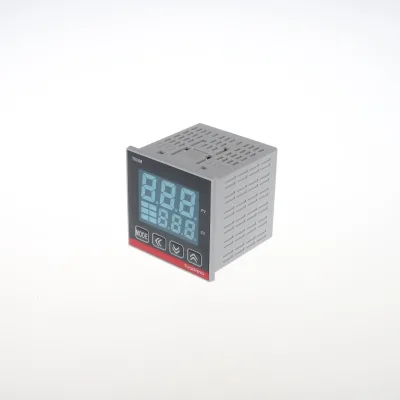


High Performance Temperature Sensor for Temperature Monitor and Control
$30.00 - $150.00
MOQ: 1 Pieces


Comprehensive Sourcing Guide
Strategic Sourcing Guide for High Precision Temperature Controllers
The global industrial landscape relies heavily on thermal management systems where stability and accuracy are non-negotiable. For procurement professionals seeking high precision temperature controllers, the market presents a diverse array of options ranging from simple digital displays to complex numerical control instruments. This guide synthesizes available market data to provide a disciplined approach to sourcing, ensuring that buyers can navigate the complexities of specifications, certifications, and supplier capabilities without relying on unverified claims. The objective is to align technical requirements with verified product attributes to mitigate risk and ensure operational continuity.
Technical Specifications and Model Variability
When evaluating high precision temperature controllers, the first step is to scrutinize the specific model numbers and their associated technical parameters. The market contains distinct product lines, such as the XCM-18-O and the CY-1 numerical control instrument, each designed for different operational contexts. A critical observation in the current supply landscape is the variance in display technologies. Some units feature LCD displays, while others utilize digital interfaces. The choice between these display types often correlates with the intended environment; for instance, an LCD might be preferred for high-contrast visibility in a control room, whereas a digital display could offer robustness in harsher industrial settings.
Accuracy is a paramount specification for high-precision applications. Available data indicates that certain controllers achieve an accuracy of 1°C, which serves as a benchmark for specific industrial processes. However, buyers must not assume this accuracy applies universally across all models. The model SKP-04 and the IP-01 represent different engineering approaches, and their performance metrics must be verified against the specific needs of the application. Furthermore, the operating principle is a key differentiator. Many units rely on electronic temperature sensors, which provide real-time feedback loops for maintaining stability. In contrast, other systems may utilize magnetic detectors or specific heating types, such as electric heating systems, which dictate the controller's response time and control logic.
The physical dimensions of the controller are equally critical for integration. While some standards reference specific dimensions like 67.567.5mm, others may be defined by packaging standards such as 1010*10cm. Procurement teams must verify the actual footprint of the unit against the available space in their control panels or machinery. Additionally, power supply requirements vary significantly. Units operating at 220VAC or with a rated voltage of 220V are common, but the rated current, such as 16A, must be matched to the load capacity of the facility. Load power specifications, ranging from 750W to 2200W, further influence the selection process, as the controller must be capable of handling the thermal mass of the target equipment without overheating or failing.
Compliance, Certification, and Regional Standards
Navigating the regulatory landscape is essential for ensuring that purchased equipment meets international and local safety standards. The supply chain for temperature controllers is geographically diverse, with origins spanning Ningbo, Shandong, Anhui, Wuhan, Shenzhen, and Yueqing in China. Each region may have different manufacturing practices and compliance focuses. A thorough due diligence process requires verifying the certification status of each potential supplier. Common certifications observed in the market include CE, ISO, RoHS, CCC, and ISOCCC.
The presence of CE certification is a frequent indicator of compliance with European safety standards, while CCC certification is mandatory for products sold within the Chinese market. The combination of CE and ISO/RoHS suggests a higher level of adherence to environmental and safety regulations, which is often required for export-oriented manufacturing. However, the mere presence of a certification label does not guarantee that every unit in a batch meets the standard. Buyers must request valid certification documents and verify their authenticity with the issuing bodies. The standard "Standard performance" mentioned in some product listings is vague and should be treated as a baseline requirement rather than a specific technical guarantee.
Furthermore, the origin of the product can influence the applicable standards. For example, products originating from Anhui (Mainland) or Wuhan, Hubei, may adhere to specific national standards that differ from those in Guangdong. The temperature range is another critical compliance factor. Some controllers are rated for a specific range, such as 10-60 Celsius, which is suitable for applications like hot water pipelines or boiler water pumps. Exceeding these ranges can lead to equipment failure or safety hazards. Therefore, procurement teams must ensure that the selected controller's temperature range aligns precisely with the operational limits of the machinery it will control.
Cost Drivers and Economic Considerations
The pricing structure for temperature controllers is influenced by a complex interplay of factors, including customization, packaging, and technical complexity. The observed price range in the market spans from 0.99 to 6000 USD, a wide disparity that reflects the diversity of product capabilities. Lower-priced units often correspond to standard, non-customized models with basic functionalities, such as simple digital displays and standard packaging. In contrast, higher-priced units may feature advanced numerical control, custom configurations, and specialized packaging like wooden crates or standard export paper boxes.
Customization is a significant cost driver. While many suppliers offer customized options, some products are listed as non-customized. The decision to opt for a customized controller involves additional engineering time and tooling costs, which are reflected in the final price. The minimum order quantity (MOQ) also plays a role in cost efficiency. The observed MOQ range of 1 to 500 units allows for flexibility, but larger orders often benefit from economies of scale. However, buyers must balance the cost savings of bulk purchasing against the risk of inventory obsolescence or overstocking.
Packaging standards also impact the overall cost. Products shipped in wooden packages or carton boxes may incur different logistics costs compared to those in neutral packaging or standard export paper boxes. The choice of packaging should consider the fragility of the electronic components and the shipping distance. For instance, a controller destined for international transport might require a wooden package to prevent damage, whereas a domestic shipment might suffice with a carton. Additionally, the cooling purpose, such as production cooling, can influence the design and cost of the unit, as specialized cooling mechanisms may be required for high-load applications.
Typical Applications and Operational Context
Understanding the intended application is crucial for selecting the right temperature controller. The market data highlights several specific use cases, including laminator temperature control, drying equipment, and boiler water pump management. In the context of laminators, the controller must maintain a precise temperature to ensure consistent bonding of materials. The accuracy of 1°C is particularly relevant here, as deviations can lead to product defects. Similarly, for drying equipment, the controller must manage the heating cycles efficiently to ensure uniform drying without overheating the product.
The application of hot water pipelines and boilers requires controllers that can handle high temperatures and resist corrosion. The rated voltage and current ratings, such as 220V and 16A, are critical for these applications to ensure safe and reliable operation. The detector type, such as a magnet, may be used in specific scenarios where non-contact sensing is required. The operating principle, whether electronic temperature sensor or other mechanisms, must be compatible with the thermal dynamics of the application. For example, an electronic sensor might be preferred for its speed and accuracy in a production environment, while a magnetic detector might be more suitable for specific mechanical setups.
The versatility of these controllers is evident in their ability to serve multiple industries. From industrial settings requiring robust performance to specialized applications like hot water pipelines, the selection process must account for the specific environmental conditions. Factors such as humidity, dust, and vibration can affect the performance of the controller. Therefore, buyers should evaluate the durability and environmental resistance of the unit, ensuring it can withstand the conditions of its intended deployment. The cooling purpose, whether for production or other industrial processes, further dictates the design and functionality of the controller.
Supplier Evaluation and Quality Assurance
Evaluating suppliers requires a systematic approach that goes beyond price and basic specifications. The diversity of origins, from Ningbo to Shenzhen, indicates a competitive market with varying levels of quality control. Buyers should prioritize suppliers who can provide comprehensive documentation, including detailed technical datasheets, certification copies, and quality assurance protocols. The presence of certifications like CE, ISO, and CCC is a positive indicator, but the depth of the supplier's quality management system is equally important.
Quality control should be integrated into the procurement process from the outset. This includes verifying the accuracy of the temperature readings, the stability of the control loop, and the durability of the components. The standard performance mentioned in some listings should be validated through testing or third-party verification. Buyers should also consider the supplier's ability to provide after-sales support, including technical assistance and spare parts availability. The packaging standards, such as wooden or carton boxes, should be assessed for their ability to protect the product during transit.
Supplier reliability is another critical factor. The lead time, although not explicitly detailed in the provided data, is a key consideration for procurement planning. Buyers should establish clear communication channels with suppliers to ensure timely delivery and address any potential issues promptly. The ability to customize the product, as indicated by the availability of customization options, can also be a differentiator. Suppliers who offer flexible customization are better positioned to meet the specific needs of their clients, reducing the risk of mismatches between the product and the application.
Long-Term Procurement and Lifecycle Management
Sourcing high precision temperature controllers is not a one-time transaction but part of a long-term lifecycle management strategy. Buyers must consider the total cost of ownership, which includes not only the initial purchase price but also maintenance, energy consumption, and potential replacement costs. The durability of the controller, influenced by factors such as the operating principle and the quality of the electronic components, will determine its lifespan and reliability.
Energy efficiency is another long-term consideration. Controllers that optimize heating cycles and minimize energy waste can lead to significant cost savings over time. The load power specifications, ranging from 750W to 2200W, should be evaluated in the context of the facility's energy management strategy. Additionally, the compatibility of the controller with existing systems and the ease of integration are important for long-term operational efficiency.
Future-proofing the procurement strategy involves selecting suppliers who are committed to innovation and continuous improvement. As technology evolves, the demand for higher precision and more advanced features will increase. Buyers should look for suppliers who can adapt to these changes and provide upgrades or replacements as needed. The ability to customize the product and the availability of spare parts are also key factors in ensuring the long-term viability of the procurement decision. By focusing on these aspects, buyers can build a resilient supply chain that supports their operational goals and adapts to changing market conditions.
FAQs
What display types are available for high precision temperature controllers?
Available display types include LCD and digital interfaces. Buyers should verify the specific display technology against their visibility needs, as LCDs suit high-contrast control rooms while digital displays offer robustness in harsher industrial environments.
Which certifications are commonly found on these controllers?
Common certifications include CE, ISO, RoHS, CCC, and ISOCCC. Procurement teams must verify the authenticity of these documents, as CE indicates European safety compliance while CCC is mandatory for the Chinese market.
How accurate are the high precision temperature controllers available?
Some units achieve an accuracy of 1°C, serving as a benchmark for specific industrial processes. Buyers must not assume this accuracy applies universally and should verify performance metrics against the specific needs of their application.
Can these controllers be customized for specific applications?
Customization is available for many models, though some products are listed as non-customized. Opting for a customized controller involves additional engineering time and tooling costs, which are reflected in the final price and lead time.
What is the typical price range for these industrial controllers?
The observed price range spans from 0.99 to 6000 USD. Lower-priced units often correspond to standard models, while higher-priced units may feature advanced numerical control, custom configurations, and specialized packaging.
Which locations are the primary origins for these products?
Products originate from diverse Chinese regions including Ningbo, Shandong, Anhui, Wuhan, Shenzhen, and Yueqing. Each region may have different manufacturing practices, so buyers should verify the origin against applicable regional standards.
What power supply voltages do these controllers support?
Units commonly operate at 220VAC or with a rated voltage of 220V. The rated current, such as 16A, must be matched to the load capacity of the facility to ensure safe and reliable operation.