Source Hollow PP Plastic Formwork for Wall, Slab, and Scaffolding
Find 30 listings for Hollow PP Plastic Formwork suitable for wall, slab, and scaffolding applications. Buyers can compare specifications like thickness, reuse time, and customization options to select the right material for construction projects.
Key considerations
Products List


Reusable Building Material PP Hollow Plastic Formwork for Construction
$15.00 - $40.00
MOQ: 100 Pieces


High-Quality PP Hollow Plastic Formwork for Reliable Building Construction
$10.00 - $100.00
MOQ: 1000 Pieces



Comprehensive Sourcing Guide
Strategic Sourcing Guide for Hollow PP Plastic Formwork
Understanding the Technical Profile of PP Plastic Formwork
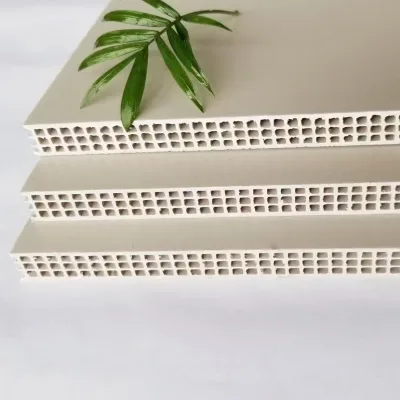
The procurement of hollow PP (polypropylene) plastic formwork requires a precise understanding of the material's structural characteristics and dimensional tolerances. Unlike traditional timber or steel alternatives, this product category is defined by its specific composition and manufacturing process. The core material is consistently identified as polypropylene, often processed into a hollow slab or wall configuration to reduce weight while maintaining rigidity. Buyers must recognize that the product is available in specific slab formwork and wall formwork configurations, catering to different structural requirements on a construction site.
A critical aspect of the technical specification is the dimensional standardization. The most frequently observed normal size for these units is 1220mm by 2440mm, with thicknesses typically ranging from 18mm to 21mm. However, the market also presents variations where thickness can be specified as 12mm, 15mm, 18mm, or 20mm, and widths may vary between 20cm and 140cm. Lengths are often customizable to fit specific project needs, though standard lengths like 1830mm or 2440mm are common. The surface treatment often involves a PVC layer, which is essential for the release properties during concrete pouring. The formwork is designed with specific hole types, such as round holes, which facilitate the insertion of bolts and ties for securing the panels during the pouring process.
The physical properties of the formwork are equally vital for operational planning. The product is engineered to be 100% waterproof, ensuring that moisture does not compromise the structural integrity of the mold or the quality of the concrete finish. The material allows for significant customization, including the ability to cut, nail, and screw the panels on-site to accommodate unique architectural details. This adaptability is a key differentiator from rigid steel systems. The color of the formwork is typically grey or black, though options for green, white, or custom colors upon request are available. These visual attributes can assist in site organization and safety identification.
Compliance, Certification, and Regulatory Standards
When sourcing Hollow PP Plastic Formwork, verifying compliance with international and regional standards is a non-negotiable step for risk mitigation. The supply chain for these products, particularly those originating from major manufacturing hubs in China, often references specific certifications. Buyers should expect to see documentation indicating compliance with CE (Conformité Européenne) and ROHS (Restriction of Hazardous Substances) standards. These certifications are critical for ensuring that the materials do not contain hazardous substances and meet safety requirements for export to European and other regulated markets.
In addition to product-specific certifications, manufacturers often adhere to quality management systems. ISO certification is a common benchmark observed in this sector, indicating that the production facility follows standardized procedures for quality control. While some background information may reference ISO9001, buyers must verify the specific scope of this certification in the supplier's documentation. It is important to distinguish between product certifications and facility certifications. The product itself must meet the physical performance criteria required for construction formwork, while the facility certification ensures the consistency of the manufacturing process.
Buyers should also be aware of specific product standards that define the formwork's performance. Standards such as EN 13501-1 may be referenced regarding fire performance, though the specific application of this standard to plastic formwork requires careful verification against the actual product data sheet. The procurement process must include a request for valid, up-to-date certification documents for every batch of goods. Relying on general claims without physical proof of certification can lead to compliance failures at the project site or during customs clearance. The origin of the product, often listed as Tianjin, China, or generally China, should be clearly stated on all compliance documentation to ensure traceability.
Cost Drivers and Economic Analysis
The economic evaluation of Hollow PP Plastic Formwork extends beyond the initial unit price. While the observed listed price range for these products can vary significantly, typically falling between 2 and 100 USD depending on the specific model, thickness, and order volume, the true value proposition lies in the lifecycle cost. One of the primary advantages cited for this material is the potential to save up to 50% compared to traditional plywood formwork. This saving is not merely a reduction in material cost but a result of the extended reuse time.
The reuse potential is a major cost driver. High-quality PP plastic formwork is designed to withstand repeated use, with observed reuse times ranging from 60 to over 100 cycles. This durability contrasts sharply with plywood, which often degrades after a few uses due to water absorption and mechanical stress. The ability to reuse the formwork 80 to 100 times significantly amortizes the initial investment. Buyers must calculate the cost per use rather than the cost per unit to understand the true economic benefit.
Other cost factors include the customization requirements and the minimum order quantity (MOQ). The MOQ for these products typically ranges from 50 to 1000 pieces, with some suppliers specifying a minimum of 500 pieces or even 1 pallet. Customization, such as specific dimensions or colors, may incur additional charges or require higher MOQs to be economically viable. The packaging method, whether by pallet or bundle, also influences logistics costs. Efficient packaging reduces the risk of damage during transit and optimizes container loading, thereby reducing the overall freight cost per unit. Buyers should negotiate based on the total landed cost, including shipping, duties, and handling, rather than focusing solely on the ex-factory price.
Typical Applications and Construction Properties
Hollow PP Plastic Formwork is versatile and finds application across various construction scenarios. The primary use case is in general construction, specifically for casting concrete walls and slabs. The product is designed to provide a smooth finish to the concrete surface, reducing the need for extensive post-pouring finishing work. The "Easy Installing" property is a significant advantage for concrete wall construction, allowing for faster assembly and disassembly compared to traditional systems.
The formwork is suitable for building scaffolding applications and general building structures. Its lightweight nature, achieved through the hollow design, makes it easier for workers to handle and position without the need for heavy lifting equipment in many cases. The ability to cut, nail, and screw the panels allows for on-site modifications, making it ideal for projects with complex geometries or changing design requirements. The waterproof nature of the material ensures that it performs well in wet conditions, which is common in foundation work and below-grade construction.
The specific models available, such as the SF2601, TR1218, or various PF series models, may have specialized applications. For instance, certain models might be optimized for specific wall thicknesses or load-bearing requirements. The standard sizes like 1220x2440mm are suitable for standard wall heights and lengths, while customized lengths allow for taller structures or specific architectural features. The product's adaptability makes it a strong candidate for residential, commercial, and infrastructure projects where speed of construction and finish quality are paramount.
Supplier Evaluation and Procurement Strategy
Selecting the right supplier for Hollow PP Plastic Formwork requires a rigorous evaluation process that goes beyond simple price comparison. Buyers should prioritize suppliers who can demonstrate a clear understanding of the technical specifications and can provide detailed product data sheets. The origin of the product, often Tianjin, China, is a common hub for this manufacturing, but buyers must verify the specific factory location and its capacity to meet production timelines.
Key criteria for supplier evaluation include the consistency of the product model numbers and the availability of customization. Suppliers offering a wide range of models, from standard sizes to custom dimensions, demonstrate greater flexibility. The ability to provide the product in different colors, such as grey, green, or white, or to match specific client requests, is a sign of a responsive manufacturing partner. Additionally, the supplier's commitment to quality control, evidenced by their adherence to ISO and other relevant standards, is crucial.
Buyers should also assess the supplier's logistical capabilities. The port of loading, often Tianjin, China, should be clearly defined to facilitate accurate freight planning. The packaging method, whether palletized or bundled, should be discussed to ensure that the goods arrive in optimal condition. The supplier's responsiveness to inquiries regarding certification documents and technical support is another indicator of reliability. It is advisable to request samples or visit the manufacturing facility if possible to verify the quality of the raw materials and the production process.
Quality Control and Long-Term Procurement Considerations
Ensuring the quality of Hollow PP Plastic Formwork is essential for the success of any construction project. Quality control measures should be implemented at every stage of the procurement process, from raw material selection to final packaging. The raw material, polypropylene, must be of high grade to ensure the formwork's durability and resistance to environmental factors. The surface treatment, often PVC, must be applied evenly to prevent adhesion issues with the concrete.
Buyers should establish clear acceptance criteria based on the observed specifications, such as the thickness range of 12mm to 20mm and the standard dimensions of 1220x2440mm. Regular inspections during production and pre-shipment checks are recommended to verify that the products meet these criteria. The reuse time, which can range from 60 to 100 cycles, should be validated through testing or historical data provided by the supplier.
Long-term procurement considerations involve building a sustainable relationship with the supplier. This includes negotiating favorable terms for repeat orders, ensuring consistent quality across batches, and maintaining open communication channels for technical support. The ability to customize the product for future projects is a valuable asset, and suppliers who offer flexible customization options are preferable. Additionally, buyers should consider the environmental impact of the product, as the reusability of PP plastic formwork contributes to waste reduction in the construction industry. By focusing on quality, compliance, and long-term value, buyers can effectively leverage Hollow PP Plastic Formwork to enhance their construction projects.
FAQs
What certifications does Hollow PP Plastic Formwork have?
The product holds CE, ROHS, and ISO certifications. These documents verify compliance with safety and environmental standards required for export to regulated markets like Europe.
How many times can I reuse the plastic formwork?
You can reuse the formwork between 60 and 100 times depending on the specific model. This high durability significantly reduces long-term costs compared to single-use plywood alternatives.
What are the standard dimensions for the formwork panels?
Standard sizes are typically 1220mm by 2440mm with thicknesses ranging from 12mm to 21mm. Custom lengths and widths are available to meet specific project requirements.
Can I cut or nail the plastic formwork on site?
Yes, the panels can be cut, nailed, and screwed to accommodate unique architectural details. This flexibility allows for on-site modifications without compromising the structural integrity of the mold.
What is the minimum order quantity for this product?
The minimum order quantity ranges from 50 to 1000 pieces, with some suppliers requiring a minimum of 500 pieces or one pallet. Buyers should verify specific MOQs before placing orders.
Where are the manufacturers of this formwork located?
Most manufacturers are located in China, with specific origins noted in Tianjin. The port of loading is typically Tianjin, China, facilitating international shipping logistics.
How much cost can I save compared to plywood?
You can save up to 50% compared to traditional plywood formwork. This saving is driven by the extended reuse time and the waterproof nature of the polypropylene material.