Source Honey Filling Machine for Seasoning, Drinks, and Food
Find and compare 30 Honey Filling Machine options from China. These automatic units support bottle and can packaging for beverages and condiments, featuring linear piston or cup dosing with CE certification and online after-sales support; compare the available evidence and request quotations based on your requirements.
Key considerations
Products List


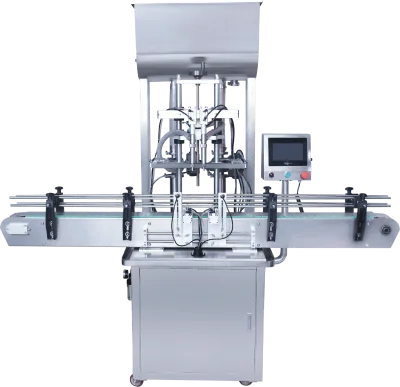


$50000.00 - $60000.00
MOQ: 1 Pieces


Automatic Honey Filling Machine Cosmetic Cream Filling Machine for Honey Cream Liquid
$11125.00 - $12015.00
MOQ: 1 Pieces

Automatic Honey Filling Machine Honey Packing Machine Packaging Machine for Honey and Milk
$5024.40 - $5426.36
MOQ: 1 Pieces


Filling Machine Fully Automatic Honey Paste Filling and Sealing Integrated Machine
$13400.00 - $13900.00
MOQ: 1 Pieces


Comprehensive Sourcing Guide
Honey Filling Machine Sourcing Guide
Selecting the right Honey Filling Machine requires balancing viscosity handling with precise volumetric control. Buyers must evaluate whether a piston or plunger dosing device suits their specific product consistency, as honey varies significantly in flow characteristics. The choice between linear and rotary structures impacts throughput, with linear models often offering flexibility for smaller batch sizes or multi-product lines. Understanding these mechanical distinctions ensures the selected equipment aligns with operational capacity and product quality standards.
Commercial viability depends on verifying automatic grade capabilities and power requirements against facility infrastructure. Fully automatic systems reduce labor costs but demand stable electrical supplies, typically three-phase four-wire systems at AC220V or 380V. Buyers should also consider customization availability and OEM support, as these factors influence long-term adaptability. Confirming that the machine handles the intended packaging materials, such as glass or plastic bottles, prevents compatibility issues during installation and daily operation.
Product Scope and Observed Listing Signals
Market listings for honey filling equipment reveal a wide price range, typically spanning from $105 to $60,000 USD, reflecting diverse capabilities and build qualities. Minimum order quantities are generally low, often starting at one set, which facilitates entry for small-scale producers. Observed models include specific series like the MG-720 PM and GP series, indicating standardized industrial designs. Buyers should interpret these signals as indicators of market segmentation rather than universal specifications for every available unit.
The observed applications extend beyond honey to include other viscous or liquid commodities like ketchup, juice, and oil. This versatility suggests that many machines utilize pressure filling principles with multi-head valves to accommodate various product types. Packaging formats commonly supported include bottles and cans, with some units featuring pneumatic lifting structures for container handling. These signals help buyers identify machines that can future-proof their production lines against product line expansions or seasonal variations in demand.
Technical Specifications to Verify
Verify the filling accuracy and quantitative error margins to ensure product consistency and cost control. Observed specifications indicate dosing errors around 0.5% to 1%, which is critical for high-value products like honey. The filling principle, often pressure-based, must be matched with the appropriate dosing device, such as a plunger or capacity cup, depending on the honey’s viscosity. Confirming the number of nozzle heads directly influences the machine’s capacity, which can range from 60 bottles per minute to over 3,000 bottles per hour.
Assess the machine’s structural design and feeding cylinder configuration to match your factory layout. Linear structures with single-room or multi-room feeding cylinders offer different space and workflow efficiencies. The weight of the equipment, observed between 200 kg and 800 kg, impacts installation requirements and floor loading considerations. Additionally, check if the machine includes a buffer tank with level controls, which helps maintain steady flow and prevents air entrapment in the product line.
Compliance and Safety Documentation
Ensure the machine meets relevant safety and electrical standards for your operating region. Observed listings frequently cite CE certification, which is a baseline requirement for many international markets. Buyers must verify that the source voltage matches their local infrastructure, as discrepancies can cause equipment failure or safety hazards. Documentation should clearly state the machinery test reports, although some listings indicate these may not be available, requiring additional due diligence.
Review the warranty terms and after-sales service provisions to mitigate operational risks. A standard one-year warranty is common, but buyers should clarify the scope of coverage for core components like the engine. Online support is often provided, but on-site service availability varies. Confirming these details ensures that technical issues can be resolved promptly, minimizing downtime. Proper documentation also aids in insurance and regulatory compliance audits within your facility.
Cost Drivers and Commercial Terms
The total cost of ownership is influenced by the machine’s automatic grade and structural complexity. Fully automatic systems command higher prices but offer significant labor savings over time. The weight and material type, such as composite materials or stainless steel, also affect pricing. Buyers should request detailed quotations that break down costs for the main unit, packaging, and any optional accessories like specific nozzle heads or control panels.
Commercial terms often include customization options and OEM support, which can add value but may increase initial costs. The packaging type, whether wooden case or plywood case, impacts shipping costs and protection during transit. Lead times and production capacity are critical factors; machines with higher bottle-per-hour rates typically require longer manufacturing periods. Negotiating clear terms for delivery, installation, and training ensures that the total investment aligns with your budget and timeline expectations.
Supplier Qualification and Quality Control
Evaluate the supplier’s manufacturing location and production capabilities to ensure reliability. Many suppliers originate from regions like Henan, China, which have established industrial clusters for packaging machinery. Verify the supplier’s ability to provide OEM services and customize machines for specific needs. Requesting references or case studies from previous clients can provide insights into the supplier’s consistency and support quality.
Implement a robust quality control process before shipment. Inspect the machine’s core components, such as the engine and filling valves, for durability and precision. Check the packaging integrity to prevent damage during transit, especially for heavy units weighing up to 800 kg. If machinery test reports are not provided, consider hiring a third-party inspection agency to verify performance metrics like filling accuracy and operational stability. This step reduces the risk of receiving non-conforming equipment.
Long-Term Procurement Checks
Establish a maintenance plan that aligns with the machine’s design and usage patterns. Regular cleaning of the filling nozzles and buffer tanks is essential to prevent honey crystallization and blockages. Verify the availability of spare parts, particularly for wear items like seals and gaskets, to ensure uninterrupted operation. Suppliers offering online support should be responsive and knowledgeable about troubleshooting common issues related to pressure and viscosity changes.
Monitor the machine’s performance over time to identify any deviations in filling accuracy or speed. Keep detailed records of production data, including quantitative errors and downtime incidents. This data helps in negotiating service contracts and planning for future upgrades. As your business grows, assess whether the current machine’s capacity, such as 1200-3200 bph, remains sufficient or if expansion is needed. Continuous evaluation ensures that your packaging line remains efficient and competitive.
FAQs
What is the filling accuracy of the Honey Filling Machine?
The filling accuracy is typically ±1% or 0.5% depending on the specific model configuration. This precision ensures consistent product volume for high-value liquids like honey and ketchup. The system utilizes a plunger dosing device with pressure filling principles to maintain this standard across various packaging containers.
Can the Honey Filling Machine handle different packaging materials?
Yes, the machine supports composite materials, plastic, and glass packaging. It is designed to fill bottles and cans with various liquid consistencies. The linear structure and multi-head filling valves allow for versatile application across different container types, ensuring secure sealing and efficient operation for diverse product lines.
What is the production capacity of the Honey Filling Machine?
The capacity ranges from 60 bottles per minute to 3200 bottles per hour, depending on the number of nozzles installed. Higher nozzle counts increase throughput significantly. This flexibility allows manufacturers to scale production efficiently based on demand, making it suitable for both small batches and large-scale industrial operations.
Is customization available for the Honey Filling Machine?
Customization is available to meet specific production requirements. Buyers can select from different models like MG-720 PM or GP series to suit their needs. The machine supports OEM services and can be adapted for various applications including seasoning, drinks, and food commodities, ensuring a tailored solution for your facility.
What is the warranty and after-sales service for the machine?
The machine comes with a 1-year warranty and online support for after-sales service. This ensures that technical issues can be addressed promptly without requiring extensive downtime. The supplier provides remote assistance to help maintain optimal performance, making it a reliable choice for continuous industrial filling operations.
What is the power requirement for the Honey Filling Machine?
The machine operates on a three-phase four-wire system with AC220V or 380V source voltage. Some models may also support 110V power inputs. This electrical flexibility allows for installation in various industrial settings, ensuring compatibility with standard factory power supplies while maintaining stable operation for automatic filling and sealing processes.