Source Honey Uncapping Tray for Bee Farms, Retail Shops, Home Use
Compare 30 Honey Uncapping Tray options from verified Chinese manufacturers. Buyers can evaluate stainless steel trays, plastic models, and filling machines for beekeeping farms, retail shops, and home use applications.
Key considerations
Products List



Comprehensive Sourcing Guide
Strategic Sourcing Guide for Honey Uncapping Trays in the Beekeeping Industry
Understanding Product Variants and Core Specifications
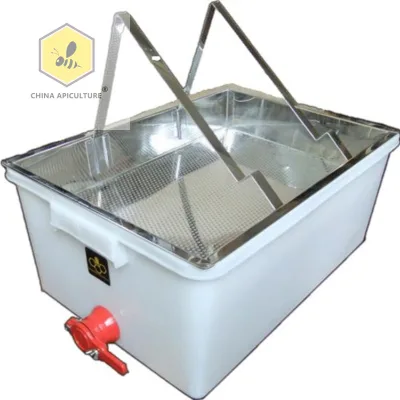
The Honey Uncapping Tray is a fundamental piece of equipment in beekeeping operations, designed to facilitate the extraction of honey from frames while managing wax cappings and excess honey flow. When sourcing this equipment, buyers must first recognize that the market presents distinct product categories rather than a single uniform item. The available inventory includes heavy-duty stainless steel extraction units, compact plastic-assisted filtering boxes, and specialized mechanical filling systems. A critical observation from current market data indicates that the term "Honey Uncapping Tray" often encompasses a broader ecosystem of related tools, including honey gates, wheels for mobility, and optional mesh filters.
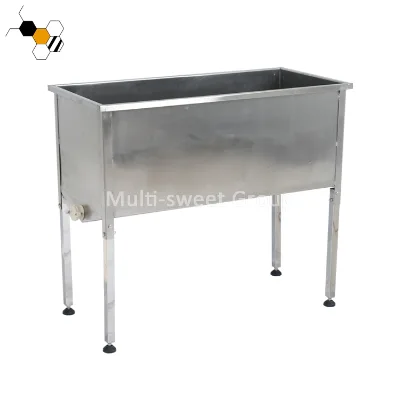
Technical specifications vary significantly depending on the intended scale of operation. For large-scale commercial farms, the primary focus is on structural integrity and capacity. Data points from current listings reveal a substantial unit constructed from 304 stainless steel with a total height of 867mm and a footprint of approximately 100cm by 90.5cm. This specific configuration features a plate thickness of 1.2mm, which is a crucial metric for durability under the weight of heavy honey frames. The outer groove size measures 1040mm by 503mm, providing ample space for frame placement, while the inner groove accommodates the honey flow at 996mm by 455mm. These dimensions are essential for ensuring that standard Langstroth frames fit securely without tipping.
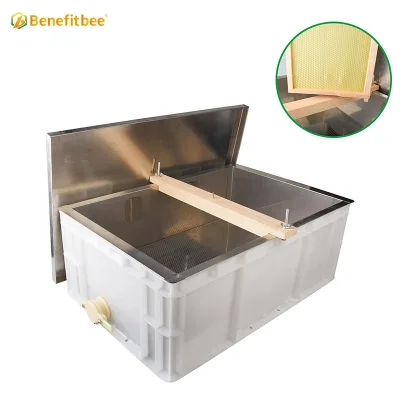
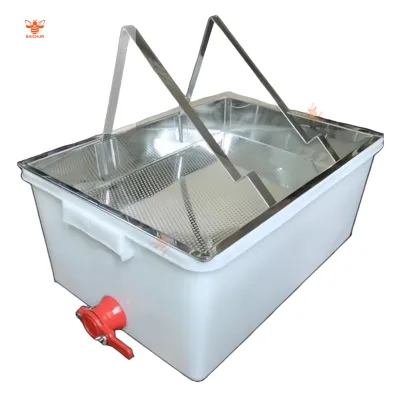
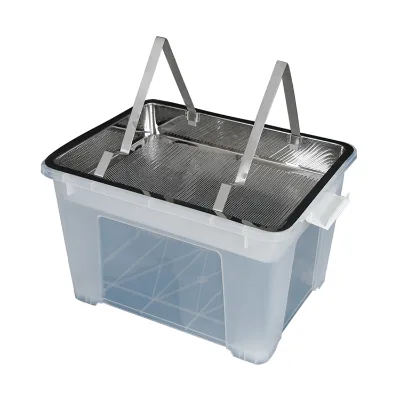
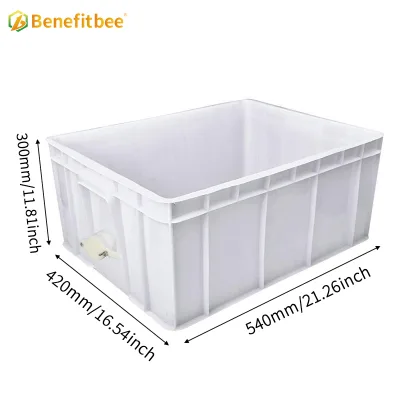
In contrast, smaller operations or home beekeepers may prioritize portability and cost-efficiency. Alternative listings show units with dimensions around 550mm by 365mm by 220mm, constructed from a combination of SUS201 stainless steel and polypropylene (PP) plastic. These lighter units, weighing approximately 6kg, are often packaged in compact boxes measuring 60cm by 40cm by 25cm. The material choice here reflects a trade-off between corrosion resistance and budget constraints. While 304 stainless steel offers superior resistance to acidic honey and cleaning agents, 201 steel provides a functional alternative for less intensive use. Buyers must verify the specific alloy composition before purchase, as the distinction impacts long-term maintenance and hygiene standards.
Material Composition and Structural Integrity
The material selection for a Honey Uncapping Tray is the single most critical factor determining the product's lifespan and food safety compliance. The primary material observed in high-end commercial units is 304 stainless steel. This grade is preferred in the food industry due to its non-reactive nature, which prevents contamination of the honey product. The thickness of the steel plate is another vital specification; a 1.2mm thickness is noted in robust models, ensuring the tray can support the dynamic load of wet frames and liquid honey without flexing or deforming.
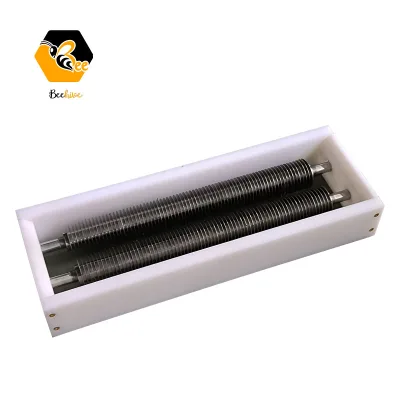
For buyers evaluating cost-effective options, the presence of polypropylene (PP) plastic components is common. These units often utilize a hybrid construction, combining stainless steel structural elements with PP plastic boxes or liners. The plastic components, such as those measuring 600mm by 400mm by 230mm, serve to contain spills and simplify the cleaning process. However, the durability of the plastic must be assessed against the rigors of industrial cleaning. In some configurations, the plastic box is designed to fit within a stainless steel frame, creating a composite unit that balances weight and strength.
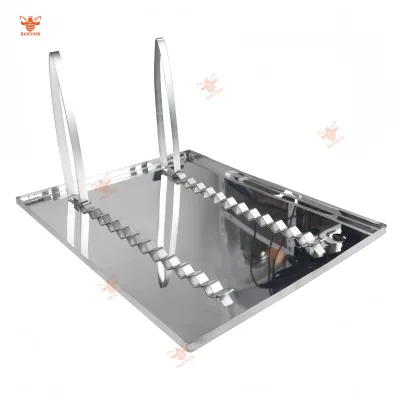
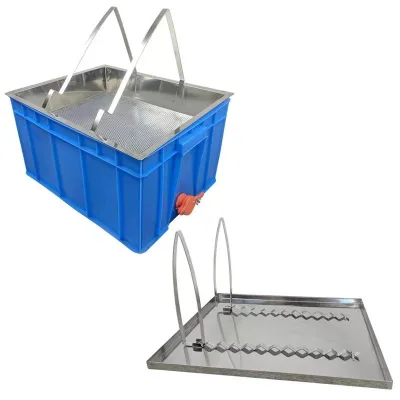
It is imperative for buyers to distinguish between the structural frame and the optional filtration components. Many listings explicitly state that the mesh is not included in the base price and requires an additional purchase. The optional mesh is typically made of 304 stainless steel with a size of 991mm by 450mm and a hole diameter of 3mm. This specific mesh size is designed to filter out wax particles while allowing honey to pass through efficiently. Buyers should verify that the mesh material matches the frame material to prevent galvanic corrosion, which can occur when dissimilar metals are in contact in a wet environment. The absence of the mesh in the standard package is a common cost-saving measure, but it must be factored into the total procurement budget.
Operational Applications and Functional Requirements
The application of honey uncapping trays extends beyond simple extraction; they are integral to the workflow of bee farms, retail honey processing, and home use scenarios. The design of the tray directly influences the efficiency of the uncapping process. Units equipped with wheels and honey gates offer significant operational advantages. The inclusion of wheels allows for the easy transport of the heavy, honey-filled tray from the extraction room to the filtering station, reducing physical strain on workers. The honey gate, often included as an accessory, provides a controlled method for draining honey into storage containers, minimizing spillage and waste.
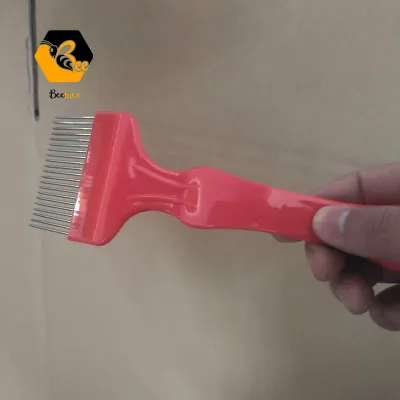
Different models cater to different operational scales. Large units with a single gross weight of 32kg are designed for commercial bee farms where volume and throughput are paramount. These heavy-duty trays can handle multiple frames simultaneously, streamlining the harvest process. Conversely, lighter units weighing around 1.8kg to 4kg are suitable for small-scale beekeepers or retail environments where space is limited and mobility is less critical. The "Multifunctional honey cutting 3-piece set" represents a specialized category, likely combining the tray with cutting tools for a more integrated workflow.
When selecting a tray for a specific application, buyers must consider the environment in which it will operate. For farms, the unit must withstand frequent washing with high-pressure water and potentially harsh cleaning chemicals. The warranty periods observed in the market, ranging from 3 months to 1 year, often reflect the manufacturer's confidence in the product's durability for its intended use. A 1-year warranty on a heavy stainless steel unit suggests a higher expectation of longevity compared to a 3-month warranty on a lighter, plastic-heavy model. Buyers should align the warranty terms with their operational intensity to ensure adequate protection against premature failure.
Cost Drivers and Procurement Economics
The pricing structure for honey uncapping trays is influenced by several key variables, including material grade, dimensions, and included accessories. The observed price range in the market is exceptionally wide, spanning from $0.04 to $32,000. This broad spectrum indicates that the keyword "Honey Uncapping Tray" is used to describe a diverse array of products, from small accessories to large industrial machinery. Buyers must be cautious not to equate the lowest price points with the functional trays required for serious extraction work. The high-end prices likely correspond to fully equipped systems, such as quantitative honey filling machines or large-scale stainless steel units with complex mechanical components.
Material costs are a primary driver of the final price. The difference between 304 stainless steel and 201 stainless steel, combined with the inclusion of polypropylene, creates a significant variance in manufacturing costs. Additionally, the thickness of the steel plate directly impacts the amount of raw material used, thereby influencing the unit price. Accessories such as wheels, honey gates, and optional mesh filters add to the base cost. Since the mesh is often sold separately, buyers must calculate the total cost of ownership by adding the price of the necessary filtration components to the base tray price.
Minimum Order Quantities (MOQ) also play a role in procurement economics. The market data shows an MOQ range from 1 to 300,000 units. This suggests that while individual units are available for small buyers, significant volume discounts may be available for large-scale orders. However, the high upper limit of the MOQ range implies that some suppliers may be targeting bulk industrial contracts or wholesale distributors. Buyers should verify the specific MOQ for their desired model to avoid unexpected financial commitments. The single package size and weight, which can reach 110cm by 57cm by 56cm and a gross weight of 32kg, also affect shipping costs, which should be factored into the total landed cost.
Supplier Evaluation and Quality Assurance
Evaluating suppliers for honey uncapping trays requires a rigorous approach to verifying product attributes and business credibility. The market data reveals multiple brand names associated with these products, including "Multi-sweet," "Benefitbee," and "BAICHUN." While these names provide a starting point for research, buyers should not rely on brand reputation alone. Instead, the focus should be on the specific product attributes listed in the supplier's documentation. Key verification points include the exact model number, such as MS-UT, FT14, or BCFJ953, and the precise material composition.
Geographic origin is another critical factor in supplier evaluation. The data indicates that products originate from major manufacturing hubs in China, specifically Henan and Guangdong provinces. Buyers should understand that different regions may have different manufacturing specializations. Henan-based units appear to focus on heavy-duty stainless steel construction, while Guangdong-based listings often feature hybrid plastic and steel designs. Verifying the place of origin can help buyers anticipate shipping times and potential logistical challenges.
Quality assurance should be conducted through a detailed review of the product specifications. Buyers must confirm that the stated dimensions, such as the 10090.549cm size or the 534225cm dimensions, match their operational needs. The condition of the product, typically listed as "New," should be verified to ensure that no refurbished or used items are being sold as new. Furthermore, the warranty terms, ranging from 3 months to 1 year, should be clearly understood. A longer warranty period often indicates a higher level of confidence in the product's quality, but it is essential to read the terms and conditions to understand what is covered.
Long-Term Procurement and Maintenance Considerations
Sourcing a Honey Uncapping Tray is not merely a one-time transaction but the beginning of a long-term relationship with the equipment. Maintenance and longevity are paramount, especially in a food processing environment where hygiene is non-negotiable. The choice of material directly impacts the maintenance regimen. 304 stainless steel units generally require less intensive maintenance than those with plastic components, which may degrade over time when exposed to UV light or harsh chemicals. Buyers should plan for the replacement of optional mesh filters, as these are consumable items that will eventually wear out or become clogged.
The packaging and shipping logistics also have long-term implications. The single package size for large units can be substantial, requiring adequate storage space and handling equipment. Buyers should ensure their facilities can accommodate the dimensions of the packaged product, which can reach 110cm in length. Additionally, the weight of the packaged unit, up to 32kg, necessitates proper lifting equipment or manual handling protocols to prevent injury during unloading.
Future scalability is another consideration. As a beekeeping operation grows, the need for larger or more specialized equipment may arise. Buyers should consider whether the current model can be easily upgraded or if a modular system is available. The availability of accessories, such as additional honey gates or different mesh sizes, should be confirmed to ensure that the initial investment remains relevant as operational needs evolve. Finally, maintaining clear communication channels with the supplier, such as the provided mobile or WhatsApp contact numbers, is essential for troubleshooting and securing spare parts or replacements in the future. By focusing on these long-term factors, buyers can ensure a sustainable and efficient honey extraction process.
FAQs
What material is used for the heavy-duty Honey Uncapping Tray?
The heavy-duty model is constructed from 304 stainless steel to ensure food safety and corrosion resistance. This specific grade prevents contamination while handling acidic honey, unlike the 201 steel found in lighter hybrid units.
Does the standard package include the honey mesh filter?
No, the mesh is not included in the base price and requires an extra cost. Buyers must purchase the optional 304 stainless steel mesh separately, which measures 991 by 450mm with a 3mm hole diameter.
What are the dimensions of the large stainless steel tray?
The large unit measures 100 by 90.5 by 49cm with a total height of 867mm. Its outer groove size is 1040 by 503mm, providing ample space for standard Langstroth frames during extraction.
Which accessories are included with the stainless steel model?
The heavy-duty model comes equipped with a honey gate and wheels for mobility. These accessories facilitate easy transport and controlled drainage, reducing physical strain during the honey extraction workflow.
What is the warranty period for the different tray models?
Warranty periods vary by model, ranging from 3 months to 1 year depending on the manufacturer. The large stainless steel unit typically offers a 1-year warranty, while smaller plastic-assisted models may have shorter coverage.
How much does the large stainless steel tray weigh?
The large unit has a net weight of 26kg and a single gross weight of 32kg. This substantial weight supports the dynamic load of wet frames and liquid honey without structural flexing.
Can I find a smaller tray for home use or retail?
Yes, compact models are available with dimensions around 550 by 365 by 220mm and a weight of 6kg. These lighter units often combine stainless steel with PP plastic for cost-effective home or retail applications.