Source Honeycomb Evaporative Cooling Pad for Greenhouses
Find and compare 30 Honeycomb Evaporative Cooling Pad options for greenhouses, livestock breeding, and industrial machinery. Evaluate PVC and paper materials with cooling efficiencies up to 90% and temperature reductions of 5-15°C to select the right system for your ventilation needs.
Key considerations
Products List

Stable Cooling Performance Honeycomb Evaporative Plastic Cooling Pad
$30.00 - $45.00
MOQ: 50 Square Meters


Honeycomb Cooling Wall Evaporative Cooling Pad for Industrial Air Cooler
$1.00 - $100.00
MOQ: 1 Pieces




Comprehensive Sourcing Guide
Honeycomb Evaporative Cooling Pad Sourcing Guide
Buyers must first align product selection with specific operational environments, as the supply data indicates these units are primarily designed for greenhouses, horticulture industries, and livestock breeding facilities. The observed listings confirm that applications extend to general industry and machinery cooling, requiring procurement teams to verify that the selected pad matches the humidity and airflow demands of their specific agricultural or industrial setting.
Secondary applications include general air conditioning usage, though the core functionality relies on the pad's ability to reduce ambient temperatures by 5 to 15 degrees Celsius through evaporative processes. Sourcing teams should prioritize suppliers who explicitly list these application fields to ensure the cooling efficiency, which can reach up to 90%, is suitable for the intended thermal management goals of the facility.
Product Scope and Observed Listing Signals
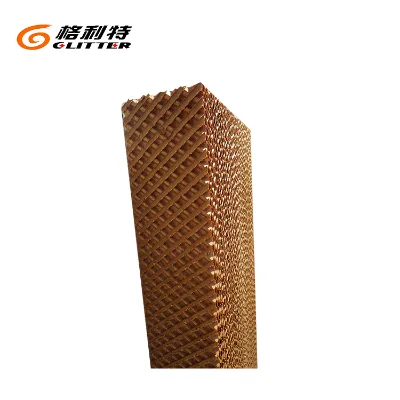
The market offers distinct material variations, with listings showing both PVC plastic and raw paper constructions, each serving different durability and cost requirements. Buyers should note that the plastic variants often feature aluminum, stainless steel, or galvanized steel frames, while paper-based models are typically lighter and designed for single-season or specific humidity control scenarios.
Listing signals reveal a wide range of customization options, including available colors like brown, black, green, blue, and yellow, alongside customizable dimensions such as 100mm, 150mm, or 200mm sheet pitches. Procurement teams must carefully review the packing specifications, which vary from export cartons and paper cartons to wooden cases, to ensure the chosen packaging protects the fragile honeycomb structure during international transit.
Technical Specifications to Verify
Verification of the cooling pad's physical dimensions is critical, as observed models range from standard thicknesses of 15cm to custom sizes like 1800600150mm. Buyers must confirm the sheet pitch, typically observed at 10mm, and ensure the water distribution system provides a uniform flow to maximize the evaporation efficiency and prevent dry spots that could compromise the cooling performance.
The operational lifespan is a key technical metric, with some listings citing a service life of 6 to 8 years for specific high-quality units. Sourcing teams should also verify the system type, noting that options include combined systems with cooling, irrigation, and ventilation, as well as specific fan configurations like double-speed fans, to ensure the entire assembly integrates seamlessly with existing infrastructure.
Compliance and Safety Documentation
Certification status varies significantly across suppliers, with some listings displaying RoHS compliance while others provide a broader suite including CE, ISO9001, UR, and ISO standards. Buyers must request specific documentation for the exact model ordered, as the presence of one certification does not guarantee that all listed attributes, such as color or thickness, meet the same regulatory requirements for the destination market.
Safety and material safety data sheets are essential for verifying that the raw materials, whether PVC or raw paper, meet environmental and health standards for the intended application. Procurement teams should explicitly check for the absence of hazardous substances in the cooling water contact areas, ensuring that the industrial water used in the system does not introduce contaminants that could affect livestock or crop safety.
Cost Drivers and Commercial Terms
Pricing in the observed market ranges widely from 0.9 to 137.87 USD, driven by material composition, frame durability, and the level of customization required. Buyers should anticipate that units with galvanized steel frames or specific color options may command higher prices compared to standard raw paper models, and the minimum order quantity can vary from single units to 1000 pieces depending on the supplier's capacity.
Commercial terms often include the availability of samples, which allows buyers to test the cooling effect and water distribution before committing to a bulk order. It is vital to clarify whether the quoted price includes the specific packing method, such as wooden cases for heavy-duty transport, and to confirm if the supplier offers OEM and ODM services to tailor the product to unique facility requirements.
Supplier Qualification and Quality Control
Supplier qualification should focus on those explicitly stating factory types as OEM and ODM capable, indicating a capacity for custom manufacturing rather than just standard reselling. The origin of the products is predominantly China, with specific mentions of locations like Bengbu, so buyers should verify the logistical capabilities of the supplier to handle export cartons and ensure consistent quality control throughout the production run.
Quality control checks must include a visual inspection of the honeycomb structure for uniformity and a verification of the installation type, which is typically wall-mounted. Buyers should request evidence of the new condition of the goods and confirm that the product standard is customized to their specific needs, ensuring that the final delivered units match the technical specifications agreed upon in the purchase order.
Long-Term Procurement Checks
Long-term success depends on verifying the durability of the cooling pad under continuous operation, specifically monitoring the evaporation efficiency and the structural integrity of the frame material over time. Buyers should establish a maintenance schedule that accounts for the 6 to 8-year lifespan of high-quality units, ensuring that the water distribution system remains free of clogs that could reduce the cooling effect below the observed 5 to 15°C reduction.
Regular audits of the supplier's ability to provide replacement parts or consistent stock of the specific model, such as the 8611 or 7090 series, are essential for uninterrupted operations. Procurement teams should also monitor the noise level, which is listed as low, to ensure that the double-speed fan and water-cooled system do not introduce excessive acoustic disturbance into the greenhouse or livestock environment over the long term.
FAQs
What materials are used for honeycomb evaporative cooling pads?
Honeycomb evaporative cooling pads are primarily manufactured from raw paper or PVC plastic. Some models utilize PP material for enhanced durability. The frame is typically constructed from aluminum, stainless steel, or galvanized steel to ensure structural integrity. These material choices support applications in greenhouses, horticulture, and livestock breeding environments effectively.
How effective is the cooling performance of these pads?
The cooling pads offer an evaporation efficiency of up to 90%. They provide a significant cooling effect, reducing ambient temperatures by 5-15°C. This performance is achieved through uniform water distribution across the pad surface. The system is designed to maintain optimal environmental conditions for industrial and agricultural applications.
Can I customize the size and specifications of the cooling pad?
Yes, customization is available for honeycomb evaporative cooling pads. Standard sizes include 100mm, 150mm, and 200mm thickness options. Custom dimensions such as 1800*600*150mm are also supported. Buyers can request specific sheet pitches, such as 10 mm, and choose from various colors like brown, black, or green to suit their facility requirements.
What certifications do these cooling pads typically hold?
Many honeycomb evaporative cooling pads hold RoHS certification, ensuring compliance with hazardous substance restrictions. Some manufacturers also provide CE and ISO9001 certifications for quality management. Additional certifications like UR may be available for specific models. These credentials verify product safety and manufacturing standards for international buyers in various industries.
What is the expected lifespan of a honeycomb cooling pad?
The typical service life of a Honeycomb Evaporative Cooling Pad is 6-8 years. This longevity depends on proper installation and regular maintenance. The pads are designed for new condition use in wall-mounted systems. Factors such as water quality and operating environment can influence the actual duration of effective performance in greenhouse or industrial settings.
How are the cooling pads packaged for shipping?
Honeycomb evaporative cooling pads are packaged in carton boxes or export cartons for standard orders. For larger or more fragile units, wooden cases may be used to ensure safe transit. Some suppliers offer paper carton packaging as an alternative. The packing method is selected to protect the pad structure during international shipping from origins like China or Bengbu.