Source Hospital Ethylene Oxide Sterilizer for Labs, Clinics, and Hospitals
Compare 30 Hospital Ethylene Oxide Sterilizer units featuring intelligent operation, stainless steel construction, and low-temperature disinfection. Buyers can evaluate models with LCD displays, automatic pressure steam or gas sterilization, and customizable features from suppliers in China.
Key considerations
Products List

Ethylene Oxide Gas Steriliser, Hospital Eto Oxide Ethylene Sterilizer for Operating Room
$2000.00 - $600000.00
MOQ: 1 Pieces


Ethylene Oxide Sterilizer/Low Temperature Sterilization/Medical & Laboratory
$999.00 - $9999.00
MOQ: 1 Pieces


Advanced Ethylene Oxide Sterilization Systems for Medical Equipment
$10000.00 - $100000.00
MOQ: 1 Pieces

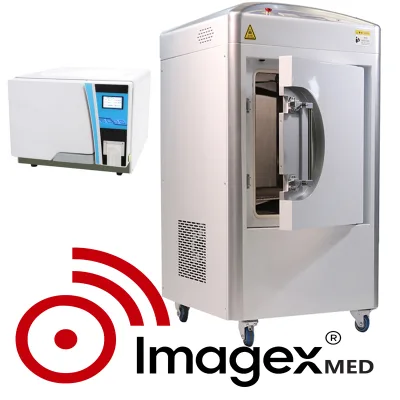

Industrial Ethylene Oxide Sterilization Chamber Equipment Sterilizer
$3800.00 - $4700.00
MOQ: 1 Pieces


Reliable Medical Ethylene Oxide Sterilizers for Instrument Sterilization
$4712.00 - $5024.00
MOQ: 1 Pieces


Advanced Medical Sterilizer for Safe Ethylene Oxide Sterilization Solutions
$5000.00 - $8000.00
MOQ: 1 Pieces


Good Quality Ethylene Oxide Sterilizer Ethylene Oxide Sterilization Equipment
$11000.00 - $16000.00
MOQ: 1 Pieces


Compact Medical Sterilizer with Ethylene Oxide for Hospitals and Clinics
$4277.00 - $4526.00
MOQ: 1 Pieces
Comprehensive Sourcing Guide
Strategic Sourcing Guide for Hospital Ethylene Oxide Sterilizers
Selecting the appropriate ethylene oxide (EO) sterilization equipment is a critical decision for hospital procurement teams, as it directly impacts patient safety, regulatory compliance, and operational efficiency. The market offers a diverse range of units, from compact models to large-scale industrial systems, each tailored to specific sterilization volumes and operational workflows. This guide synthesizes available product data and industry knowledge to assist buyers in navigating the complexities of sourcing these essential medical devices. The focus remains on evidence-based evaluation criteria, ensuring that procurement decisions are grounded in verifiable specifications rather than unverified marketing claims.
Technical Specifications and Operational Capabilities
When evaluating ethylene oxide sterilizers, the primary technical differentiator is the sterilization volume and the specific technology employed. The available market data indicates a clear segmentation between units designed for smaller batches and those built for high-throughput environments. For instance, specific models such as the "eos114" and "HTAJ-20" represent distinct configurations within the product lineup. The "eos114" is characterized by a volume capacity ranging from 2 to 20 cubic meters, suggesting it is suitable for medium-to-large hospital departments requiring significant throughput. In contrast, other models like the "HTAJ-10" or those specified with a "6cube" capacity cater to facilities with more constrained space or lower volume requirements.
The operational technology is another critical factor. The supplied facts highlight that modern units often feature "Intelligent Operation" and "Automatic Operation" capabilities. This automation extends to critical parameters such as disinfection time, which can be intelligently adjusted, and working temperature, which is automatically regulated. For low-temperature sterilization processes, the working temperature range is typically observed between 30 and 50 degrees Celsius, with specific models capable of maintaining a stable 50 degrees. This low-temperature profile is essential for heat-sensitive medical instruments that cannot withstand steam sterilization.
Furthermore, the physical construction of the sterilizer chamber dictates its durability and corrosion resistance. High-quality units utilize a composite material structure where the inner chamber is made of "304 Anticorrosive Stainless Steel" to ensure compatibility with the aggressive EO gas, while the outer shell may be constructed from "Carbon Steel" or "Stainless Steel" for structural integrity. The presence of an LCD display facilitates user interaction, allowing operators to monitor real-time data regarding pressure, temperature, and cycle progress. The electric tension for these industrial-grade machines is typically standardized at 380V, reflecting their need for robust power supply to drive the heating and vacuum systems.
Compliance, Certification, and Regulatory Standards
Navigating the regulatory landscape is perhaps the most stringent aspect of sourcing medical sterilization equipment. Buyers must verify that the equipment meets the specific certification requirements of their target market. The product data explicitly lists certifications such as FDA, EEC (often referred to as CE in European contexts), and ISO standards. While the specific standard "ISO13485" or "ISO 11135" is mentioned in background knowledge as relevant to the industry, the supplied product facts confirm that certifications are a key selling point, with some models explicitly stating compliance with FDA and CE standards.
However, buyers must exercise caution regarding the interpretation of these certifications. The data notes that the product standard can "depend on the machine," implying that compliance is not universal across all models in a catalog. For example, the "HTAJ-20" model lists specific physical standards (495018702350 mm dimensions, 24KW power) and a weight of 4600kg, which must be cross-referenced with local building codes and electrical standards. The instrument classification is listed as "Class II," which aligns with the regulatory category for many medical devices, but the buyer must confirm that the specific model purchased holds the necessary clearance for the intended use in their jurisdiction.
Verification of the "Standard" attribute is crucial. Some listings mention "Standard" as a generic attribute, while others provide specific dimensional and power ratings. Buyers should not assume that a unit with a CE mark automatically meets all local safety codes without further verification. The presence of safety features like "Ultra High Temperature Alarm" is a mandatory requirement for preventing equipment failure and ensuring the sterilization cycle is not compromised. These alarms are integral to maintaining the integrity of the sterilization process and must be tested during the acceptance phase.
Cost Drivers and Pricing Dynamics
The pricing of ethylene oxide sterilizers is highly variable, driven by capacity, automation levels, and certification status. The observed price range in the market spans from $500 to $600,000 USD. This vast disparity reflects the difference between small, manual or semi-automatic units and large, fully automated, high-volume systems. The lower end of the spectrum likely corresponds to smaller capacity units or those with fewer automated features, while the upper end encompasses large chambers with advanced intelligent operation systems, complex safety protocols, and comprehensive certification packages.
Beyond the initial purchase price, buyers must consider the cost drivers associated with the Minimum Order Quantity (MOQ). The observed MOQ range is between 1 and 12 units. For hospitals planning to equip multiple departments or facilities, negotiating a bulk purchase within this range could yield significant cost savings. Additionally, the "Customization" attribute is listed as available, which can impact the final cost. Customizations such as specific chamber dimensions, unique control interfaces, or specialized packing requirements (e.g., "Container" vs. "Wooden Case") will inevitably increase the unit price.
The power consumption is another hidden cost driver. Models like the "HTAJ-20" are rated at 24KW, whereas others may be rated at 14KW. Higher power ratings generally correlate with faster cycle times and larger volumes but result in higher operational electricity costs. Buyers should calculate the total cost of ownership (TCO) by factoring in the rated power, the expected number of cycles per day, and the local cost of electricity. The "Working Pressure" of -60kpa to 0 also indicates the energy required to maintain the vacuum state, which is a continuous energy draw during the cycle.
Typical Applications and Workflow Integration
Ethylene oxide sterilizers are primarily designed for medical devices that are sensitive to heat and moisture, making them indispensable for hospitals utilizing a wide array of surgical instruments. The "Low Temperature" disinfection mode is the defining application characteristic, allowing the sterilization of plastics, electronics, and delicate optical instruments that would be damaged by steam or dry heat. The working humidity range, typically between 30% and 80% or 45% to 75% depending on the model, must be carefully controlled to ensure effective gas penetration without damaging the instruments.
The workflow integration is facilitated by the "Intelligent Adjustment" of disinfection time, which can range from 0 to 99 hours. This flexibility allows hospitals to run long cycles for large batches or shorter cycles for urgent needs. The "Sterilization Information Recording and Printing" feature is vital for documentation and traceability, ensuring that every sterilization cycle is recorded for audit purposes. This is particularly important for Class II instruments where traceability is a regulatory requirement.
The physical dimensions of the unit, such as the inner size of 335012001500 mm for certain models, dictate the layout of the sterilization room. Buyers must ensure that the facility has adequate space for the machine, including clearance for maintenance and the "Container" or "Wooden Case" packing used during shipping. The "Hydraulic" power source mentioned for some cylinder types suggests that specific models may utilize hydraulic systems for door sealing or chamber compression, which requires specialized maintenance protocols.
Supplier Evaluation and Quality Assurance
Evaluating suppliers requires a rigorous assessment of their after-sales support and warranty terms. The supplied data indicates a standard warranty period of 1 Year, which is a baseline expectation. However, the availability of "Online Technical Support" is a critical differentiator. Given the complexity of EO sterilization, immediate access to technical expertise is essential for troubleshooting cycle failures or calibration issues. Buyers should prioritize suppliers who offer robust support channels and have a proven track record in the region.
The origin of the equipment is another factor in supplier evaluation. The data specifies that the products originate from "China," with a specific mention of "Henan" as a production location. While this does not inherently indicate quality, it provides a geographical context for logistics and lead times. Buyers should verify the supplier's ability to handle the "Container" or "Wooden Case" packing requirements and ensure that the shipping process does not compromise the integrity of the sensitive electronic and mechanical components.
Quality control should be a joint effort between the buyer and the supplier. The "Double-Acting Cylinder Type" and "Common Cylinder" specifications suggest that the mechanical integrity of the sealing system is paramount. Buyers should request detailed documentation on the manufacturing process, including material certifications for the "304 Anticorrosive Stainless Steel" inner chamber. The "Special Cylinder Type" and "Pressurized Cylinder" attributes indicate that the pressure vessel design must be validated to withstand the specific working pressures of -60kpa.
Long-Term Procurement and Maintenance Considerations
Sourcing an EO sterilizer is not a one-time transaction but the beginning of a long-term operational relationship. The "After-Sale Service" component is critical for the longevity of the equipment. Buyers should inquire about the availability of spare parts, particularly for the "Cylinder" components and the "LCD Display" interface. The "Intelligent Operation" system relies on software and sensors that may require periodic updates or calibration.
The "Sterilization Time" of up to 99 hours implies that the machine may be used for extended cycles, which places stress on the heating and vacuum systems. Regular maintenance schedules should be established to prevent wear and tear. The "Ultra High Temperature Alarm" serves as a safety net, but it should not be the only line of defense. Buyers should ensure that the maintenance protocol includes regular checks of the "Working Humidity" and "Working Temperature" sensors to maintain the precision required for effective sterilization.
Finally, the "Standard" of the machine, whether it is the "495018702350" model or the "6cube" variant, dictates the specific maintenance requirements. The "24KW" power rating of larger units requires a dedicated electrical infrastructure that must be maintained. Buyers should factor in the cost of electricity and the potential need for electrical upgrades when planning the long-term procurement strategy. By focusing on these technical and operational details, hospitals can ensure a reliable and compliant sterilization workflow that supports patient safety and operational efficiency.
FAQs
What certifications do hospital ethylene oxide sterilizers typically hold?
These units commonly hold FDA, EEC, and CE certifications. However, the specific standard depends on the machine model, so buyers must verify compliance for their target market before purchase.
How is the sterilization volume determined for these machines?
Volume capacity ranges from 2 to 20 cubic meters for larger models like the eos114. Smaller units may be specified as 6 cubic meters, allowing selection based on facility throughput needs.
Can the working temperature be automatically adjusted during cycles?
Yes, the working temperature is automatically adjusted and typically ranges between 30 and 50 degrees Celsius. This low-temperature profile protects heat-sensitive medical instruments from damage during the process.
Which materials are used for the sterilizer chamber construction?
The inner chamber uses 304 anticorrosive stainless steel to resist gas corrosion. The outer shell is often constructed from carbon steel or stainless steel for structural integrity and durability.
What is the standard warranty period for these sterilization units?
The standard warranty period is 1 year for most models. Buyers should also confirm the availability of online technical support for troubleshooting and maintenance assistance after installation.
How is the sterilization time managed for different batch sizes?
Disinfection time is intelligently adjustable and can range from 0 to 99 hours. This flexibility allows hospitals to optimize cycles for urgent needs or large batch processing requirements.
What power requirements are needed for these industrial machines?
Electric tension is typically 380V to support industrial operations. Rated power varies by model, with some units requiring 14kW or 24kW depending on their volume and automation features.