Source Hospital Transport Patient Bed for Hospitals, Clinics, and Nursing Homes
Find 30 hospital transport patient beds with electric and manual options. Buyers can compare specifications, certifications, and customization features for medical facilities.
Key considerations
Products List
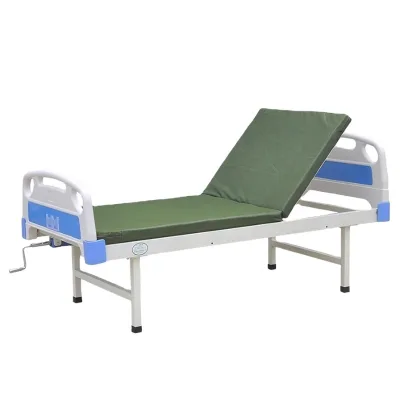


Versatile Adjustable Folding Ambulance Stretcher Bed for Patient Transport
$315.00 - $380.00
MOQ: 1 Pieces


Comprehensive Sourcing Guide
Strategic Sourcing Guide for Hospital Transport Patient Beds
Selecting the appropriate Hospital Transport Patient Bed is a critical procurement decision that directly impacts patient safety, clinical workflow efficiency, and long-term operational costs. The market for these medical devices is characterized by a wide variance in technical capabilities, from basic manual transfer beds to complex electric systems with multiple adjustable functions. Buyers must navigate a landscape where product attributes such as power source, material composition, and functional range vary significantly between suppliers. This guide provides a structured approach to evaluating potential suppliers and products, ensuring that the final selection aligns with specific institutional requirements while adhering to rigorous quality and compliance standards.
Technical Specifications and Functional Capabilities
The core technical differentiator for hospital transport beds lies in their power source and functional adjustability. The available market data indicates a clear split between manual and electric options, with many suppliers offering both as optional configurations. Electric beds typically utilize an electric power source to facilitate smooth, painless patient transfers, a feature explicitly highlighted in product descriptions as a primary function. These units often feature a three-function mechanism, allowing for independent adjustment of the backrest and footrest. The backrest tilting range is observed to extend from 0 to 75±5 degrees, while the footrest tilting range typically spans from 0 to 40±5 degrees. This precise angular adjustment is essential for patient comfort and medical procedures requiring specific positioning.
Material selection is another pivotal specification. The structural frame is predominantly constructed from steel, with some variations incorporating wood components. The surface materials often include ABS for head and foot boards, ensuring durability and ease of cleaning. The maximum loading capacity is a critical safety metric, with observed specifications supporting a load of up to 180kg during movement. Mobility is facilitated by a standard set of four 5-inch castors, two of which are equipped with brakes to ensure stability during patient transfer. Additional functional accessories, such as aluminum side rails, urine hooks, and infusion poles made of stainless steel, are frequently available as standard or optional features. Buyers should verify the specific configuration of these accessories, as some models may offer customization for IV poles, mattresses, overbed tables, or bedside lockers.
Compliance and Certification Verification
In the medical device sector, regulatory compliance is non-negotiable. When sourcing hospital transport beds, buyers must rigorously verify that products carry recognized certifications. The observed market data confirms that products are frequently listed with ISO and CE certifications. Specifically, the certification "ISOCE" appears as a combined attribute, suggesting adherence to both International Organization for Standardization and European Conformity standards. However, buyers must treat these listings as observations rather than universal guarantees. It is imperative to request current, valid certification documents for each specific model before finalizing a purchase.
Beyond the basic certifications, the manufacturing standards applied to the product frame and components should be scrutinized. Some suppliers reference adherence to a broad spectrum of international and national codes, including ASME, TEMA, JIS Code, China GB Code, and EN standards. The production process often involves advanced machining methods such as laser cutting, bending, and welding. Buyers should ensure that the supplier's quality management system aligns with these stated standards. While ISO 9001 is a common background standard, the specific application of these standards to the welding and structural integrity of the bed frame must be confirmed through direct supplier inquiry. Relying solely on the presence of a certification label without verifying the scope of the certificate can lead to compliance gaps.
Cost Drivers and Pricing Structures
The pricing for hospital transport beds is highly variable, influenced by the complexity of the mechanism, the materials used, and the level of customization required. The observed price range in the market spans from approximately $14.50 to $11,000 USD. This vast disparity reflects the difference between basic manual transfer beds and sophisticated electric hospital beds with extensive feature sets. The lower end of the spectrum likely corresponds to manual cranks systems and simpler frame constructions, while the higher end encompasses electric models with advanced control systems and premium materials.
Several factors drive these cost variations. The choice between manual and electric power sources is a primary cost driver, with electric systems commanding a premium due to the inclusion of motors and control panels. Customization is another significant factor; suppliers offering OEM and ODM services based on specific drawings or samples will incur higher costs compared to those selling standard off-the-shelf models. The packing method also influences the final price; options range from standard boxes to fixed wooden cases or plywood cases, with more robust packaging increasing the unit cost. Buyers should request detailed quotations that break down the cost of the base unit, the power system, and any optional accessories to understand the true cost drivers. Additionally, the Minimum Order Quantity (MOQ) can impact the per-unit price, with observed MOQs ranging from 1 to 100 units. Bulk purchasing may offer economies of scale, but the specific MOQ requirements must be confirmed with the supplier.
Typical Applications and Operational Context
Hospital transport beds are designed for specific clinical environments where patient mobility and safety are paramount. The primary application is within hospital settings, facilitating the painless transfer of patients between wards, operating theaters, and diagnostic imaging departments. The "Transfer Patient for Painless" function is a key operational requirement, ensuring that patient handling does not cause undue discomfort or injury to staff. These beds are particularly valuable in scenarios requiring frequent movement, such as emergency departments or intensive care units.
The versatility of these beds allows them to serve multiple functions. While some models are designated strictly as "Hospital Beds," others are classified as "Electric Beds" or "Transport Beds," indicating their suitability for different stages of patient care. The ability to fold the bed is a crucial feature for storage and transport efficiency, allowing facilities to maximize space in crowded corridors or storage areas. The inclusion of features like side rails and urine hooks makes these beds suitable for a wide range of patient conditions, from post-operative recovery to long-term care. Buyers should assess the specific workflow of their facility to determine if a three-function system is sufficient or if a model with 1, 2, 3, 4, or 5 functions is required to meet diverse patient needs.
Supplier Evaluation and Manufacturing Capabilities
Evaluating a supplier requires a deep dive into their manufacturing capabilities and geographic location. The observed data indicates that many suppliers originate from China, with specific manufacturing hubs noted in Chengdu and Jiangsu. These regions are known for their industrial capacity in medical equipment production. When evaluating a supplier, buyers should verify their production capacity and lead times. Observed lead times suggest that samples can be produced within 5-10 days, while mass production typically requires 15-30 days. These timelines are critical for procurement planning and should be confirmed in the purchase agreement.
The supplier's ability to customize products is a significant differentiator. Many suppliers offer OEM and ODM services, accepting drawings or samples to create bespoke solutions. The availability of various drawing formats, including Step, STP, Igs, Dwg, Dxf, and Pdf, indicates a level of technical proficiency in handling design specifications. Buyers should assess the supplier's engineering team to ensure they can interpret and execute complex customization requests. Furthermore, the machining method, such as welding, should be inspected to ensure high-quality construction. A supplier with a robust quality control process and a history of fulfilling custom orders is preferable to one offering only standard models.
Quality Control and Long-Term Procurement Considerations
Ensuring the long-term reliability of hospital transport beds requires a robust quality control strategy. The production process involves multiple stages, including laser cutting, bending, and secondary machining. Buyers should request evidence of quality control measures at each stage, particularly regarding the welding integrity and the finish of the metal and wood components. The condition of the product is typically listed as "New," but buyers must verify that the manufacturing process ensures the product meets this standard upon delivery.
Long-term procurement considerations include the availability of spare parts and the durability of the components. The frame, constructed from steel and wood, must withstand repeated use and movement. The castors, side rails, and mechanical systems should be designed for longevity. Buyers should inquire about the warranty period and the supplier's policy on after-sales support. The option for custom colors, such as RAL available, allows facilities to maintain a consistent aesthetic, but the durability of the paint or coating should be verified. Finally, the packaging method, whether box with fixed wood or plywood case, must be sufficient to protect the product during transit to prevent damage before installation. By focusing on these quality and support aspects, buyers can ensure a sustainable procurement strategy that minimizes downtime and maximizes patient care quality.
FAQs
What power sources are available for hospital transport patient beds?
Both manual and electric power sources are available as optional configurations. Electric models facilitate painless patient transfers, while manual options utilize cranks for adjustment without external power.
Which certifications should I verify for these hospital beds?
Products frequently list ISO and CE certifications, sometimes combined as ISOCE. Buyers must request valid documents for specific models rather than assuming universal compliance based on listings.
Can I customize the color and design of the bed frame?
Yes, customization is available including custom colors like RAL options. Suppliers offer OEM and ODM services based on specific drawings or samples provided by the buyer.
What is the maximum loading capacity during movement?
The observed maximum loading capacity is 180kg during movement. This metric ensures safety for patient transfers and must be verified against the specific model's structural frame.
How long does it take to produce samples and mass orders?
Sample production typically takes 5 to 10 days, while mass production requires 15 to 30 days. These lead times are critical for procurement planning and should be confirmed in agreements.
What materials are used for the bed frame and components?
Frames are predominantly constructed from steel with some wood components. Surface materials often include ABS for head and foot boards, ensuring durability and ease of cleaning.
Which adjustable functions are standard on these electric beds?
Three-function mechanisms are common, allowing independent adjustment of the backrest and footrest. Backrest tilting ranges from 0 to 75 degrees, and footrest tilting spans 0 to 40 degrees.