Source Hot-dip galvanized cable tray with elbow for Wiring, Hoisting, Construction
Compare 29 hot-dip galvanized cable tray with elbow options from verified Chinese manufacturers. Buyers can evaluate customization, load capacity, and surface treatments for indoor, outdoor, and high corrosion environments.
Key considerations
Products List


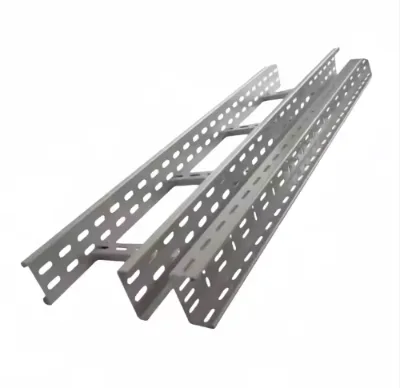
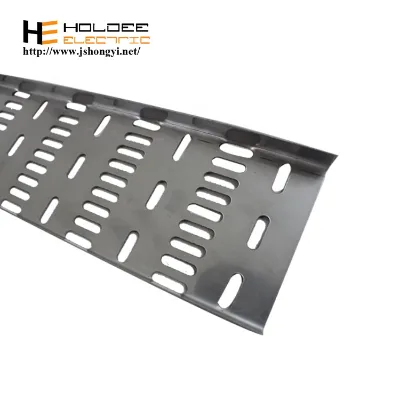
Customized Cable Tray/Hot-DIP Galvanized Cable Tray/Manufacturer Customized Cable Tray
$0.50 - $3.90
MOQ: 1000 Meters


Comprehensive Sourcing Guide
Strategic Sourcing Guide for Hot-Dip Galvanized Cable Trays with Elbows
Procuring hot-dip galvanized cable trays with elbows requires a rigorous approach that balances technical performance, regulatory compliance, and supply chain reliability. The core keyword "hot-dip galvanized cable tray with elbow" points to a specific subset of cable management infrastructure designed for demanding environments. Unlike standard trays, the inclusion of elbows introduces geometric complexity that affects both the manufacturing process and the structural integrity of the final assembly. Buyers must navigate a landscape where material composition, surface treatment quality, and dimensional precision are non-negotiable. This guide synthesizes available product data and industry standards to provide a framework for evaluating suppliers and selecting the right components for wiring, hoisting, and construction systems.
Technical Specifications and Dimensional Precision
The foundation of a successful procurement begins with defining precise technical specifications. The product data indicates that cable trays are available in a wide range of dimensions, with widths spanning from 50mm to 1200mm and heights ranging from 50mm to 200mm, or fully customizable based on specific project requirements. For elbows, which are critical for routing cables around corners, the geometry must align perfectly with the tray's width and height to ensure a smooth transition that prevents cable damage. The data suggests standard models such as 5050, 7550, 10075, 15075, 200100, 300100, and 400*100, though custom dimensions are frequently requested.
Thickness is another critical variable. While some listings indicate a thickness range of 1.0mm to 3.0mm, others specify "customized thickness." This variance highlights the need for buyers to explicitly state their load-bearing requirements during the inquiry phase. The maximum working load can vary significantly, with observed ranges between 50kg and 400kg depending on the size and configuration. When sourcing elbows, the buyer must ensure that the thickness of the elbow matches the tray to maintain uniform structural strength. Furthermore, the material composition is a primary driver of performance. The supply chain offers Carbon Steel, Stainless Steel (including grades 304 and 316), Aluminum, and FRP. For hot-dip galvanized applications, Carbon Steel is the most common substrate, as the galvanizing process is specifically designed to coat ferrous metals to prevent rust.
| Specification Parameter | Observed Range / Options | Procurement Verification Point |
|---|---|---|
| Width | 50mm - 1200mm or Custom | Verify fit with cable bundle diameter and future expansion needs. |
| Height | 50mm - 200mm or Custom | Ensure clearance for vertical cable runs and heat dissipation. |
| Thickness | 1.0mm - 3.0mm or Custom | Match to calculated load requirements (50-400kg range). |
| Material | Carbon Steel, Stainless Steel, Aluminum, FRP | Confirm compatibility with the intended surface treatment. |
| Length | 2m - 12m or Custom | Optimize for transport logistics and on-site installation efficiency. |
Surface Treatment and Corrosion Resistance Mechanisms
The term "hot-dip galvanized" refers to a specific industrial process where steel components are immersed in molten zinc. This process provides a superior layer of corrosion protection compared to cold galvanizing or standard painting. The product data confirms that "Hot Galvanizing" is a primary surface treatment option, alongside "Cold Galvanizing" and "Fire-Retardant Coating." For environments classified as "High Corrosion," "Indoor," or "Outdoor," the hot-dip process is generally the preferred choice due to its durability and thickness.
However, buyers must be vigilant about the distinction between different galvanizing standards. While the data lists "Gi/HDG/Eg/Ep" as surface finish options, the specific quality of the HDG (Hot Dip Galvanized) layer is not quantified in the provided facts. It is essential to verify that the zinc coating thickness meets the relevant international standards, such as ASTM A123 or ISO 1461, which are often referenced in the industry but not explicitly confirmed for every listed product. The presence of "Corrosion Resistance" as a key feature is a direct result of this treatment. Additionally, some suppliers offer "Dustproof" and "Antimagnetic" features, which may be relevant for specific industrial applications, though these should be validated through independent testing reports rather than assumed based on marketing terms.
Compliance, Certification, and Regulatory Standards
Navigating the regulatory landscape is a critical step in B2B procurement. The product data lists several certifications, including CE, ISO, RoHS, and CCC. The presence of these marks indicates that the manufacturer claims adherence to specific safety and environmental standards. For instance, CE certification is mandatory for products sold within the European Economic Area, while CCC (China Compulsory Certification) is required for goods entering the Chinese market. RoHS compliance ensures that the materials used do not contain restricted hazardous substances, which is increasingly important for global supply chains.
It is important to note that while "ISO" is frequently mentioned, the specific standard (e.g., ISO 9001 for quality management) is not always detailed in the summary data. Buyers should request the specific certificate numbers and validity dates from the supplier. Furthermore, the data mentions "Standard: 5050/7550..." which appears to be a model number rather than a regulatory standard. To ensure compliance, procurement teams must verify that the manufacturer holds valid, up-to-date certificates for the specific batch of goods being ordered. Relying solely on the generic mention of "ISO" without verifying the scope of the certification can lead to compliance gaps during audits or customs inspections.
Cost Drivers and Economic Factors
The cost of hot-dip galvanized cable trays with elbows is influenced by a complex interplay of factors. The primary driver is the raw material cost, specifically the price of steel or stainless steel, which fluctuates based on global market conditions. The thickness of the material is a direct cost multiplier; a tray with 3.0mm thickness will be significantly more expensive than one with 1.0mm, even if the dimensions are identical. The surface treatment process also adds to the cost. Hot-dip galvanizing is more expensive than cold galvanizing due to the energy-intensive nature of the molten zinc bath and the subsequent cooling and inspection processes.
Logistics and packaging play a secondary but significant role in the final price. The data indicates that products are shipped in "Waterproof Bundles," "Pallets," or "Double Layers Bubble Film Wrapped." Custom packaging solutions, such as those tailored to specific customer needs, may incur additional charges. The Minimum Order Quantity (MOQ) is another economic factor. While the observed MOQ range is 1 to 1000 units, a specific listing cites an MOQ of 50 PCS. Buyers must align their order volume with these thresholds to avoid premium pricing or production delays. Additionally, the "Customization" attribute suggests that non-standard elbows or dimensions will likely carry a higher unit cost due to the setup time required for tooling and production lines.
Supplier Evaluation and Capacity Assessment
Selecting the right supplier involves more than just comparing prices; it requires a deep dive into their operational capabilities. The data reveals that manufacturers are located in various regions of China, including Hebei Province and Zhejiang Hangzhou. This geographic diversity can impact lead times and shipping costs. A key metric for evaluation is production capacity. One supplier lists a capacity of 5000 tons per year, which suggests a robust ability to handle large-scale projects. However, buyers should verify if this capacity is dedicated to cable trays or if it is shared across other product lines, as this could affect priority during peak demand periods.
Lead time is another critical evaluation criterion. The data shows a wide range, from 3-20 days to 5-10 days. This variance likely depends on the complexity of the order, the availability of raw materials, and the current production schedule. For projects with tight deadlines, a supplier with a consistent 5-10 day lead time for standard items may be preferable, while custom orders will naturally require the longer 3-20 day window. Buyers should also assess the supplier's flexibility regarding "Customization." The ability to produce custom widths, heights, and thicknesses is a strong indicator of a manufacturer's technical competence. Finally, the "Transport Package" details, such as the use of pallets or specific bundling methods, should be reviewed to ensure they meet the buyer's requirements for damage-free delivery.
Quality Control and Long-Term Procurement Strategy
Quality control is paramount when dealing with structural components like cable trays. The "Max. Working Load" varies from 50kg to 400kg, and the integrity of the tray and its elbows is directly tied to the quality of the galvanizing and the steel grade. Buyers should insist on mill test reports (MTRs) that verify the chemical composition of the steel and the thickness of the zinc coating. The "Application Environment" is a crucial factor in quality assurance; a tray intended for "High Corrosion" environments must undergo rigorous testing to ensure the galvanizing layer is free from defects such as runs, drips, or bare spots.
For long-term procurement, establishing a relationship with a supplier that offers "Customizable" solutions is beneficial. As projects evolve, the need for specific tray sizes or elbow angles may change. A supplier with a flexible production line and a history of "Customized Thickness" and "Customizable Colour" can adapt to these changing needs without requiring a complete supplier switch. Additionally, the "Delivery Time" consistency is vital for maintaining project schedules. Buyers should negotiate clear terms regarding penalties for delayed deliveries, especially when the lead time is extended due to customization. Finally, the "Product Name" and "Type" (Tray vs. Slotted) must be clearly defined in all purchase orders to prevent miscommunication. A "Slotted" tray, for example, offers different ventilation and mounting characteristics compared to a solid tray, and this distinction must be preserved throughout the procurement lifecycle.
In conclusion, sourcing hot-dip galvanized cable trays with elbows requires a meticulous approach that integrates technical verification, regulatory compliance, and supplier capability assessment. By focusing on the specific attributes of material, thickness, and surface treatment, and by demanding clear evidence of certifications and production capacity, buyers can mitigate risks and ensure the procurement of high-quality cable management solutions. The flexibility offered by customization options allows for tailored solutions that meet the unique demands of diverse industrial applications, from indoor wiring systems to outdoor construction projects.
FAQs
What certifications do hot-dip galvanized cable trays typically have?
Products often carry CE, ISO, RoHS, and CCC certifications. Buyers should verify specific certificate validity and scope for their target market before ordering.
How can I find suppliers with a minimum order quantity of 50 pieces?
Some listings specify an MOQ of 50 pieces for standard orders. Buyers must confirm if this applies to custom dimensions or specific models like 50x50.
Which surface treatments are available for corrosion resistance?
Hot galvanizing is a primary option alongside cold galvanizing and fire-retardant coatings. Select hot galvanizing for high corrosion environments or outdoor applications.
Can I order custom dimensions for the cable tray width?
Yes, widths range from 50mm to 1200mm or can be fully customized. Ensure the custom width aligns with your cable bundle diameter and future expansion needs.
What is the typical delivery time for these cable trays?
Delivery times vary from 3 to 20 days depending on order complexity. Standard items may ship in 5 to 10 days while custom orders take longer.
Which materials are used for manufacturing hot-dip galvanized trays?
Carbon steel is the most common substrate for hot-dip galvanizing. Stainless steel, aluminum, and FRP are also available for specific environmental requirements.