Source Hot Galvanized Expanded Metal Lath for Construction, Road, and Water Projects
Find 30 listings for Hot Galvanized Expanded Metal Lath suitable for civil building, road construction, and water conservancy. Buyers can compare specifications like mesh width, sheet thickness, and surface treatment options including hot-galvanize and cold-galvanizing from suppliers in Hebei, China.
Key considerations
Products List


Galvanized Steel Diamond Metal Lath Building Material Expanded Metal Lath
$5.00 - $400.00
MOQ: 500 Pieces


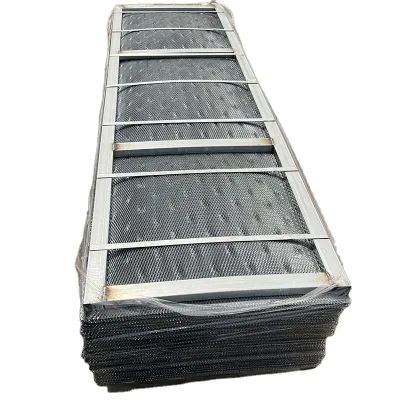

Expanded Metal Sheet Diamond Mesh Lath/25X25mm Galvanized Expanded Metal Lath
$1.55 - $2.75
MOQ: 100 Pieces


Galvanized or Stainless Steel Expanded Metal Rib Lath for Corner Protection
$1.55 - $2.75
MOQ: 100 Pieces

27 Inch X 97 Inch Expanded Metal Lath for Exernal Rendering Galvanized Steel
$1.55 - $2.75
MOQ: 100 Pieces

Comprehensive Sourcing Guide
Strategic Sourcing Guide for Hot Galvanized Expanded Metal Lath
Understanding Product Fundamentals and Technical Specifications
When sourcing Hot Galvanized Expanded Metal Lath, buyers must first distinguish the specific product attributes from the broader category of expanded metal mesh. The core material for these products is typically steel plate, specifically low carbon steel plate, which provides the necessary structural integrity for construction applications. The manufacturing process involves a unique stamping technique where the metal is slit and stretched, creating a diamond-shaped hole pattern. This "Stamping Expanded Metal Mesh Category" is distinct from woven wire meshes and offers a rigid, non-slip surface ideal for heavy-duty applications.
The surface treatment is a critical differentiator. While cold-galvanizing exists, the specific requirement for "hot galvanized" products involves a hot-galvanize process. This technique often utilizes wire annealing to ensure the metal retains its ductility while achieving a robust zinc coating that resists corrosion. The resulting product is classified under various application types, including protecting mesh, construction wire mesh, and filter sieving mesh. Buyers should verify that the specific listing confirms the "Hot-galvanize Technique" rather than a generic galvanized surface treatment, as the latter may imply a thinner, less durable coating.
Technical specifications vary significantly across suppliers, and the data indicates a wide range of dimensions. The mesh aperture, or opening size, can range from 2.0mm to 50mm, allowing for customization based on filtration or structural needs. The sheet thickness is another vital parameter, with observed ranges spanning from 0.5mm to 8mm. Specific models may be defined by weight classes, such as light-weight, middle-weight, or heavy-weight variants, which directly correlate to the material thickness and the density of the mesh. For instance, some specifications list a standard weight of 2.5lbs per square yard, while others may reference a thickness of 3.3mm for heavy-duty applications.
The physical dimensions of the sheets are equally important for logistics and installation. The mesh width typically falls between 0.5m and 2m, while the length can extend from 1m to 10m. However, some standard models are fixed at specific dimensions, such as 27 inches by 97 inches. The opening style can be either flattened or standard (raised), a choice that affects the surface profile and how the material interacts with plaster, concrete, or other building materials. The model identifiers, such as Hn, Hx, Nm, Bj, ZJ-GBW, or YQ-187, serve as internal references for manufacturers but do not always convey the exact physical properties without a detailed datasheet.
Compliance, Certification, and Standard Verification
Navigating the compliance landscape for expanded metal lath requires a careful distinction between observed product standards and external regulatory certifications. The supplied data indicates that product standards can be defined by weight (e.g., 2.5lbs) or specific thickness measurements (e.g., 0.6-1.2mm, 3.3mm). In many cases, the standard is "according to client's requirement," which places the burden of specification definition on the buyer. This flexibility is common in the industry but necessitates rigorous documentation to ensure the delivered product meets the project's engineering requirements.
Buyers must be cautious regarding external certifications. While background information may reference standards like ASTM C847 or ASTM C841, and certifications such as CE, these should not be assumed to apply to every listed product unless explicitly confirmed in the supplier's current documentation. The presence of a "CE" mark or a reference to a specific ASTM standard in a general catalog does not guarantee that a specific batch of hot galvanized lath complies with those standards. The verification process must involve requesting current test reports or certificates of conformity that specifically reference the product model and batch number in question.
The origin of the product is a significant factor in compliance and logistics. The primary production hubs identified are in Anping, Hengshui, Hebei, and generally China. Anping is historically known as the "Hometown of Wire Mesh" in China, suggesting a high concentration of specialized manufacturers in that region. However, the specific location of the factory affects shipping costs, lead times, and the ease of conducting on-site quality audits. Buyers should verify the exact origin of the goods, as "China" is a broad designation that does not guarantee consistent quality control across all facilities.
Furthermore, the "prod_standard" field often lists specific weight or thickness values rather than international codes. For example, a standard might be listed simply as "2.5lbs" or "Thickness: 0.6-1.2mm." This implies that the product is manufactured to a proprietary or client-specific standard rather than a universally recognized international code. In such scenarios, the buyer must ensure that the "client's requirement" is clearly defined in the purchase order and that the supplier acknowledges this requirement in writing. Relying on implied standards without explicit contractual agreement can lead to disputes regarding product acceptance.
Cost Drivers and Pricing Dynamics
The pricing of Hot Galvanized Expanded Metal Lath is influenced by a complex interplay of material costs, processing complexity, and order volume. The observed price range in the market spans from $0.50 to $400 USD, a variance that reflects differences in sheet size, thickness, weight class, and the extent of customization. A small sample or a thin, light-weight sheet will naturally fall at the lower end of this spectrum, while a large, heavy-duty sheet with a custom aperture or specialized coating will command a higher price.
Material costs are the primary driver of the base price. Since the core material is low carbon steel plate, fluctuations in the global steel market directly impact the cost of the lath. The weight of the product, categorized as light, middle, or heavy, is a direct proxy for the amount of steel used. A heavy-weight product with a thickness of 3.3mm will inherently cost more than a light-weight variant with a thickness of 0.5mm. Additionally, the hot-galvanizing process adds a layer of cost compared to cold-galvanizing or uncoated options, as it requires specialized furnaces and energy-intensive treatment to ensure a durable zinc coating.
Order volume, represented by the Minimum Order Quantity (MOQ), is another critical cost factor. The observed MOQ range is vast, extending from 1 unit to 10,000 units. For buyers seeking small quantities, such as for prototyping or small repair projects, the unit price may be significantly higher due to the setup costs associated with the stamping and galvanizing processes. Conversely, bulk orders of 10,000 units can leverage economies of scale, resulting in a lower per-unit cost. The packaging method also influences the final price; options include wooden boxes, metal pallets, or standard pallets (e.g., 250 pieces per pallet). More robust packaging, such as wooden boxes, adds to the cost but provides better protection during long-distance shipping.
Customization is a major variable in pricing. The availability of customization allows buyers to specify unique aperture sizes, sheet dimensions, and weight classes. However, custom orders often incur setup fees and higher unit costs because they disrupt the standard production run. Buyers should weigh the benefits of a custom specification against the potential cost premium. If a standard model, such as the 27"X97" or the 2.5lbs/yd2 variant, meets the project requirements, it is generally more cost-effective to select a standard product rather than requesting a custom modification.
Typical Applications and Performance Expectations
Hot Galvanized Expanded Metal Lath is a versatile material used across a diverse range of industries. The primary applications identified include water conservancy construction, road construction, railway construction, civil building, aquaculture, and general protection. In civil building, the lath serves as a reinforcing mesh for plaster and stucco, providing a key for the plaster to adhere to while preventing cracking. The diamond-shaped holes and the stamping characteristic create a mechanical bond that is superior to flat wire meshes in many plastering applications.
In water conservancy and aquaculture, the material is used for protection and filtration. The specific aperture range of 2.0mm to 50mm allows for tailored solutions where the mesh must allow water flow while preventing the passage of larger debris or animals. The hot-galvanize treatment is essential in these environments, as it provides the necessary corrosion resistance to withstand constant exposure to water and varying weather conditions. The "Protecting Mesh" application category highlights its use in fencing and barriers to secure areas or protect infrastructure from impact.
The versatility extends to industrial applications as well. The lath is used as a filter and sieve for diversified pellets, where the precise aperture size ensures accurate separation of materials. In construction, it functions as a construction wire mesh, providing structural support in concrete and masonry. The "Decorative Mesh" and "Barbecue Wire Mesh" applications indicate that the material can also be used for aesthetic purposes or in specialized equipment, where the visual appeal of the diamond pattern is as important as its structural function.
Performance expectations should align with the weight class and thickness of the selected product. Heavy-weight variants are suitable for high-stress environments like railway construction or heavy civil engineering projects, where the mesh must withstand significant loads. Light-weight variants are better suited for interior wall finishes or decorative applications where structural load is minimal. The "Flattened" opening style is often preferred for applications requiring a smooth surface, such as flooring or walkways, while the "Standard (Raised)" style is typically used for plastering where the raised profile aids in mechanical bonding.
Supplier Evaluation and Sourcing Strategy
Evaluating suppliers for Hot Galvanized Expanded Metal Lath requires a focus on their technical capabilities, production capacity, and quality assurance processes. Since the product origin is predominantly in China, specifically Hebei, Anping, and Hengshui, buyers should prioritize suppliers with a proven track record in these regions. These areas are known for their concentration of wire mesh manufacturers, but the quality can vary significantly between facilities. Buyers should verify the supplier's ability to produce the specific "Hot-galvanize" process required, rather than accepting a generic galvanized product.
The availability of customization is a key indicator of a supplier's flexibility and technical maturity. A supplier that offers customization in aperture size, sheet dimensions, and weight class is likely to have the necessary machinery and engineering expertise to handle complex orders. However, buyers must ensure that the customization does not compromise the structural integrity of the product. The "Weave Characteristic" of stamping must be maintained even in custom designs to ensure the diamond hole pattern remains consistent and the material retains its strength.
Quality control is paramount, especially given the wide range of observed specifications. Buyers should request detailed product datasheets that confirm the material composition (low carbon steel plate), the surface treatment method (hot-galvanize), and the specific dimensions (thickness, width, length). The "prod_packing" details, such as the use of wooden boxes or metal pallets, should also be verified to ensure the product arrives in good condition. Suppliers that offer free samples are a positive sign, as they demonstrate confidence in their product quality and allow buyers to physically inspect the material before committing to a large order.
When evaluating suppliers, buyers should also consider the logistical aspects of the transaction. The lead time and shipping terms can vary based on the order size and the specific model required. While specific lead times are not provided in the data, the MOQ range of 1 to 10,000 units suggests that suppliers are equipped to handle both small and large orders. Buyers should clarify the packaging requirements to avoid damage during transit, especially for heavy-weight products that may be prone to bending if not properly supported.
Quality Control and Long-Term Procurement Considerations
Ensuring the long-term value of Hot Galvanized Expanded Metal Lath requires a proactive approach to quality control and procurement planning. The "Hot-galvanize" process is critical for durability, and buyers must verify that the zinc coating is applied correctly to prevent rust and corrosion over time. This is particularly important for applications in water conservancy, aquaculture, and outdoor construction, where the material is exposed to harsh environmental conditions. Buyers should request evidence of the galvanizing process, such as coating thickness measurements or salt spray test results, to confirm the quality of the treatment.
The specification of the product must be precise to avoid mismatches between the ordered item and the project requirements. The wide range of observed specifications, from 0.5mm to 8mm in thickness and 2.0mm to 50mm in aperture, means that even small deviations can impact performance. Buyers should establish clear acceptance criteria in their purchase orders, including tolerances for thickness, aperture size, and weight. The "prod_standard" field, which often lists specific weight or thickness values, should be cross-referenced with the project's engineering drawings to ensure compliance.
Long-term procurement considerations also involve the stability of the supply chain. Given that the product origin is in China, buyers should assess the supplier's ability to maintain consistent quality and delivery schedules over time. Fluctuations in raw material prices, such as steel plate costs, can impact the supply chain, and buyers should be prepared for potential price adjustments or lead time variations. Establishing a long-term relationship with a reliable supplier can help mitigate these risks and ensure a steady supply of high-quality lath for ongoing projects.
Finally, the packaging and handling of the product play a crucial role in maintaining its quality until installation. The "prod_packing" options, including wooden boxes, metal pallets, and standard pallets, should be selected based on the fragility of the product and the shipping distance. Heavy-weight products require robust packaging to prevent deformation, while light-weight products may be adequately protected by standard pallets. Buyers should also consider the environmental impact of the packaging materials and opt for sustainable options where possible. By focusing on these quality control and procurement factors, buyers can ensure that their investment in Hot Galvanized Expanded Metal Lath delivers the expected performance and longevity.
FAQs
What material is used for Hot Galvanized Expanded Metal Lath?
The core material is typically low carbon steel plate or galvanized sheet plate. This steel provides the structural integrity required for construction and protection applications while supporting the hot-galvanize surface treatment.
Which hole shape is standard for this expanded metal mesh?
The standard hole shape is diamond, created through a stamping process. This specific geometry distinguishes the product from woven meshes and offers a rigid, non-slip surface ideal for heavy-duty civil building and water conservancy projects.
Can buyers request custom specifications for the mesh dimensions?
Yes, customization is available for aperture sizes, sheet thickness, and weight classes. Buyers can specify dimensions ranging from 0.5mm to 8mm thickness and apertures between 2.0mm and 50mm to meet unique project requirements.
How is the product packaged for shipment from China?
Products are typically packed on metal pallets, in wooden boxes, or as standard pallets. A common configuration involves 250 pieces per pallet, ensuring secure transport for applications like road construction and aquaculture protection.
What are the typical weight classes available for this lath?
The product is available in light-weight, middle-weight, and heavy-weight variants. Specific standards may reference weights like 2.5lbs per square yard or thicknesses up to 3.3mm depending on the intended structural application.
Which surface treatment ensures corrosion resistance for outdoor use?
Hot-galvanizing is the primary surface treatment used to ensure robust corrosion resistance. This process involves wire annealing and creates a durable zinc coating superior to cold-galvanizing for water conservancy and railway construction environments.