Source HVAC Systems CPVC for Villas, Hotels, and Offices
Explore 30 listings for HVAC Systems CPVC including ceiling mounted units and air cooled chillers. Buyers can compare specifications like cooling capacity, voltage, and material to find suitable options for commercial and residential projects.
Key considerations
Products List
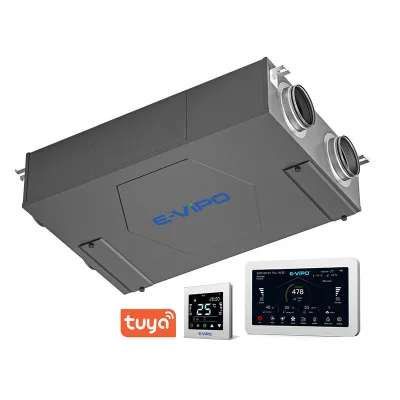


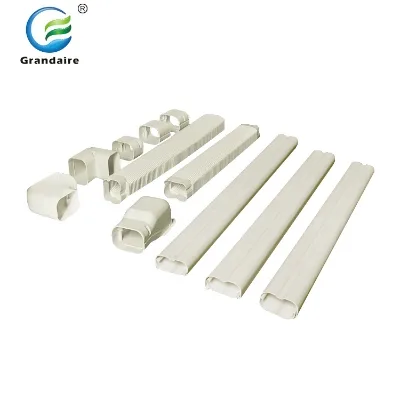


High-Efficiency 5-55t Rooftop Packaged HVAC System for Versatile Climate Control
$17545.00 - $17600.00
MOQ: 1 Pieces


Premium Industrial HVAC System for Efficient Air Ventilation Solutions
$250.00 - $350.00
MOQ: 10 Pieces
Comprehensive Sourcing Guide
Strategic Sourcing Guide for HVAC Systems and CPVC Components
Understanding the Product Landscape and Technical Specifications
When sourcing HVAC systems and associated components, buyers must navigate a complex array of technical specifications that define system performance and compatibility. The market presents distinct categories ranging from residential ventilation units to heavy-duty industrial chillers. For instance, ceiling-mounted ventilation units are frequently designed for modern applications in villas, hotels, and office buildings. These units often operate with specific design styles and feature energy-saving capabilities alongside easy installation protocols. The material composition is a critical differentiator; galvanized steel is a common choice for durability and corrosion resistance in ductwork and housing.
In the realm of industrial cooling, the specifications become significantly more granular. Buyers encounter air-cooled chillers that utilize semi-hermetic twin-screw compressors. These units often operate on a 380V/3-phase/50Hz power supply and are integral in structure. The cooling capacity for such large-scale units can reach approximately 496kW, with a corresponding power input of 159kW. The refrigerant choice, such as R134A, is a vital parameter for environmental compliance and thermodynamic efficiency. Heat exchanger configurations vary between shell-tube designs on the water side and tube-fin arrangements on the air side. The number of fans, which can be as high as eight in certain models, directly influences the sound level, often measured around 70dB(a).
Conversely, water-cooled systems are tailored for precision machine tools and plastic application fields. These systems may offer a broader range of cooling capacities, typically spanning from 150kW to 1350kW. The noise level for these industrial units is often categorized as ordinary rather than low, reflecting the high-power demands of the machinery they support. Packaging standards are equally important; while some units require export packaging, others necessitate wooden box packages to protect heavy components during transit. The origin of these products, frequently Shanghai, China, or other mainland locations, impacts logistics and supply chain transparency.
Compliance, Certification, and Regulatory Standards
Navigating the regulatory landscape is paramount for B2B procurement to ensure safety and market access. Certifications serve as the primary evidence of a manufacturer's adherence to international quality and safety standards. In the observed product data, ISO certification is explicitly mentioned, indicating a commitment to quality management systems. Additionally, CE certification is present, which is a mandatory requirement for products entering the European Economic Area, signifying conformity with health, safety, and environmental protection standards.
Buyers must verify that the specific models they intend to purchase carry these certifications. For industrial machinery, such as CNC machine tools or precision machine tools, the compliance requirements extend beyond general product safety to include specific operational standards. The product standard listed as 4530 kg likely refers to a weight specification or a specific standard code that must be cross-referenced with local regulations. Furthermore, the application of these systems in commercial settings requires adherence to building codes and energy efficiency standards that vary by region.
When evaluating suppliers, the presence of certifications should not be assumed for every listed product. Buyers should request current, valid certificates for the specific batch or model number. The distinction between different certification types is crucial; for example, a product certified for general ventilation may not automatically meet the rigorous standards required for industrial plastic processing machinery. The "EPP" standard mentioned in the context of packaging suggests specific environmental or performance protocols for the delivery materials, which is a secondary but necessary compliance check for sustainable logistics.
Cost Drivers and Pricing Structures
The pricing of HVAC systems and related components is influenced by a multitude of factors, resulting in a wide observed range from $0.80 to $17,600 USD. This disparity is not indicative of product quality alone but reflects the vast difference between small-scale ventilation accessories and large industrial chiller units. The minimum order quantity (MOQ) also plays a significant role in the unit cost, with observed ranges spanning from 1 to 1000 units. Bulk purchasing often yields economies of scale, but the MOQ threshold must be met to access lower price points.
Several technical attributes directly drive the cost. The cooling capacity is a primary determinant; a unit with a 496kW capacity will inherently cost more than a standard residential ventilation unit. The type of compressor, such as a semi-hermetic twin-screw compressor, adds to the manufacturing complexity and cost compared to simpler rotary or scroll compressors. The material quality, specifically the use of galvanized steel versus other alloys, also affects the final price. Additionally, the cooling method—whether air-cooled or water-cooled—impacts the system's complexity and the associated heat exchanger costs.
Customization is another significant cost driver. Products listed as "Customized" or those with specific model numbers like "100H" or "Multiple" often command a premium due to the engineering and tooling required. The packaging requirements, such as wooden box packages versus standard export packaging, add to the overall landed cost. Buyers should be aware that the "Selling Units" being listed as "Single item" does not necessarily imply a low total cost for the project, as the unit price for a single large chiller will be substantial. Understanding these variables allows buyers to budget accurately and negotiate effectively based on the specific technical requirements of their project.
Typical Applications and Installation Requirements
The application of HVAC systems is highly dependent on the building type and the specific operational needs of the facility. Residential and commercial spaces, including villas, apartments, hotels, and schools, often utilize ceiling-mounted ventilation units. These systems are designed with a modern design style and are intended to integrate seamlessly into living rooms, home offices, and public spaces. The feature set for these units typically emphasizes energy saving and ease of installation, making them suitable for retrofitting or new construction projects.
In contrast, industrial applications require robust systems capable of handling high thermal loads. CNC machine tools and precision machine tools often rely on water-cooled or air-cooled chillers to maintain optimal operating temperatures. The application fields for these systems include plastic processing, where precise temperature control is critical for product quality. The unit structure for these industrial machines is often integral, meaning the components are assembled into a single, cohesive unit for efficiency and reduced footprint.
Installation requirements vary significantly between these categories. Ceiling-mounted units generally require specific mounting hardware and ductwork integration, while industrial chillers demand a stable foundation and complex piping for water or air circulation. The selected voltage of 380V/50Hz is standard for many industrial applications but must be verified against local power infrastructure. The ventilation mode, whether natural or mechanical, also dictates the installation strategy. Buyers must ensure that the selected system matches the physical constraints and operational demands of the intended application site.
Supplier Evaluation and After-Sales Support
Evaluating a supplier extends beyond the initial product listing to include their capability to support the project throughout its lifecycle. The availability of after-sales service is a critical factor in supplier selection. Online technical support is a common offering, allowing buyers to resolve issues remotely without immediate on-site intervention. However, for complex industrial systems, the depth of this support must be verified. Does the supplier provide remote diagnostics, or is physical presence required for major repairs?
The project solution capability is another key metric. Suppliers that offer a "total solution for projects" are better equipped to handle the complexities of large-scale installations. This capability suggests that the supplier can manage the entire scope from design to commissioning, reducing the risk of coordination errors. The brand name, such as E-VIPO, serves as a marker of market presence, but buyers should investigate the brand's track record in their specific region.
Customization availability is a strong indicator of a supplier's flexibility. Suppliers that offer customization can tailor products to meet unique project requirements, such as specific voltage configurations or unique packaging needs. However, this flexibility must be balanced against lead times and cost implications. Buyers should also consider the location of the supplier, with origins in Shanghai, China, or other mainland locations being common. Proximity to the buyer's location can influence shipping costs and lead times, which are critical for project scheduling.
Quality Control and Long-Term Procurement Considerations
Quality control is the backbone of a successful HVAC procurement strategy. Buyers must implement rigorous inspection protocols to ensure that delivered products meet the specified technical parameters. This includes verifying the material composition, such as the use of galvanized steel, and checking the integrity of the heat exchangers. The noise level, whether listed as low or ordinary, should be measured against the project requirements to ensure compliance with acoustic standards.
Long-term procurement considerations involve planning for maintenance and spare parts availability. The cooling power input and refrigerant type are critical for future maintenance; buyers should ensure that the refrigerant, such as R134A, is readily available and that the system is compatible with current environmental regulations. The unit structure, whether integral or modular, affects the ease of maintenance and the availability of replacement parts.
Lead times and production capacity are also vital for long-term planning. While specific lead times are not provided in the general data, the MOQ and customization options can impact the delivery schedule. Buyers should establish clear communication channels with suppliers to monitor production progress and anticipate any delays. The packaging standard, whether export packaging or wooden box, must be sufficient to protect the equipment during transit and storage.
Comparative Analysis of System Types
To facilitate decision-making, buyers can utilize a comparative analysis of the different system types observed in the market. The following table summarizes the key differences between ceiling-mounted ventilation units and industrial chiller systems based on the provided data.
| Feature | Ceiling-Mounted Ventilation | Industrial Air-Cooled Chiller | Industrial Water-Cooled Chiller |
|---|---|---|---|
| Primary Application | Villa, Hotel, Office, Home | CNC Machine Tools, General | Precision Machine Tools, Plastic |
| Cooling Method | Air (Natural/Ventilation) | Air-Cooled | Water-Cooled |
| Compressor Type | N/A | Semi-Hermetic Twin Screw | N/A |
| Power Supply | Variable (often single phase) | 380V/3pH/50Hz | Variable (often 3-phase) |
| Cooling Capacity | Low (Residential scale) | Up to 496kW | 150-1350kW |
| Noise Level | Low | 70dB(a) | Ordinary |
| Material | Galvanized Steel | Galvanized Steel | Galvanized Steel |
| Certification | ISO, CE | ISO, CE | ISO, CE |
| Installation | Ceiling Mounted | Integral Unit | Integral Unit |
This comparison highlights the distinct roles each system plays in the HVAC ecosystem. Ceiling-mounted units are optimized for comfort and air quality in occupied spaces, while industrial chillers are engineered for process cooling and thermal management in manufacturing environments. Understanding these distinctions ensures that buyers select the appropriate technology for their specific needs, avoiding the pitfalls of over-specifying or under-specifying equipment.
Final Procurement Recommendations
In conclusion, sourcing HVAC systems and CPVC components requires a disciplined approach that balances technical specifications, regulatory compliance, and cost considerations. Buyers must carefully evaluate the product data, ensuring that all claims are supported by verifiable certifications and performance metrics. The wide range of available options, from residential ventilation to industrial chillers, offers flexibility but demands rigorous due diligence. By focusing on the specific application requirements, verifying supplier capabilities, and implementing robust quality control measures, buyers can secure reliable HVAC solutions that meet their project goals. The integration of trusted category knowledge with the observed product facts provides a solid foundation for making informed procurement decisions in this dynamic market.
FAQs
What installation type is common for modern ventilation units?
Ceiling mounted is the common installation type for modern ventilation units designed for villas and offices. These units often feature galvanized steel construction and energy-saving capabilities to ensure easy integration into living rooms and home offices.
Which certifications are typically available for these HVAC systems?
ISO and CE certifications are typically available for these HVAC systems to ensure compliance with international quality and safety standards. Buyers should verify these certificates for specific models to confirm adherence to health and environmental protection requirements.
Can these systems be customized for specific project needs?
Yes, customization is available for these systems to meet unique project requirements such as specific voltage or packaging needs. Suppliers often offer total solutions for projects, allowing for tailored configurations like the 100H model or other specific design styles.
What is the typical cooling capacity for large industrial chillers?
Large industrial chillers typically have a cooling capacity of approximately 496kW with a power input of 159kW. These units often utilize semi-hermetic twin-screw compressors and operate on a 380V power supply for heavy-duty applications.
How are these products packaged for international delivery?
Products are packaged using export packaging or wooden box packages depending on the specific unit requirements. This ensures protection during transit, with origins frequently listed as Shanghai, China, to support global logistics and supply chain transparency.
What after-sales support is provided for these ventilation systems?
Online technical support is provided as the primary after-sales service for these ventilation systems. This allows buyers to resolve issues remotely, though complex industrial systems may require additional verification of the supplier's project solution capabilities.