Source HVAC System Tube Bender for Construction, Auto, and Machinery
Compare 30 HVAC System Tube Bender options from verified Chinese manufacturers. These machines support manual and CNC automation for bending carbon steel, stainless steel, and aluminum pipes in various shapes.
Key considerations
Products List




Hydraulic tube bender Pipe Bender Square Tube Bender Exhaust Pipe Bender HTB-1000
$1500.00 - $3000.00
MOQ: 1 Pieces


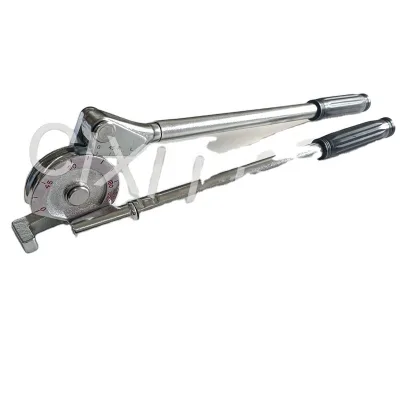
Manual Copper Tube Bender for HVAC Refrigeration and Air Conditioning Installation
$2200.00 - $2500.00
MOQ: 1 Sets


New HVAC Refrigeration Copper Pipe Bending Tools 90 Degree Tube Bender Kit Set
$9.99 - $49.99
MOQ: 100 Pieces

Comprehensive Sourcing Guide
HVAC System Tube Bender Sourcing Guide
The HVAC industry relies heavily on precision tube bending to ensure efficient airflow and structural integrity within complex ductwork and refrigerant line installations. Sourcing the right equipment requires distinguishing between manual hydraulic units and automated CNC solutions, as the choice directly impacts production speed and geometric accuracy. Buyers must evaluate whether their specific projects involve carbon steel, stainless steel, or alloy tubes, as the machine's bending formers and material compatibility are critical for preventing deformation during the forming process.
Procurement decisions should be grounded in the observed market signals where models like the HHW series and various CNC pipe benders are available with capacities ranging from 12 to 16 tons. These machines are designed for applications in machinery, hardware, construction, and automobile manufacturing, indicating a broad utility that extends beyond simple HVAC assembly. Understanding the distinction between manual and automatic automation levels is essential, as the latter offers higher consistency for large-scale production runs while the former may suffice for custom, low-volume fabrication tasks.
Product Scope and Observed Listing Signals
The current market presents a diverse range of pipe and tube bending machines, including hydraulic fold-bend units and CNC models capable of handling round, square, oval, and rectangular profiles. Listings indicate that suitable materials span carbon steel, stainless steel, aluminum, and copper, which aligns with the diverse metallurgical requirements of modern HVAC systems. Buyers should note that specific models, such as the 130cnc and 75cnc variants, are explicitly marketed for these applications, offering a clear signal of their intended use in industrial fabrication environments.
Observed product attributes reveal that packaging typically involves plywood or wooden cases, ensuring safe transit for heavy machinery with capacities up to 16 tons. The available bending formers range from 1/2" to 4", covering the standard tube diameters used in residential and commercial HVAC ducting. While some listings specify a capacity of 1/2" to 2" or 1/2" to 3", the broader scope suggests that suppliers offer modular configurations to match specific project needs. This variability requires buyers to carefully match the machine's physical capacity to the maximum tube dimensions required for their specific HVAC designs.
Technical Specifications to Verify
When evaluating technical specifications, the primary focus must be on the bending capacity and the automation level of the machine. Buyers should verify whether the unit is a manual hydraulic system or a fully automated CNC solution, as this dictates the operational workflow and labor requirements. The presence of CNC capabilities, as seen in models like the 130cnc and 63cnc, allows for precise control over bend angles and radii, which is crucial for maintaining the integrity of refrigerant lines and air ducts.
Material compatibility and shape versatility are equally critical technical factors to confirm before purchase. The equipment must be capable of processing the specific alloys used in the HVAC project, such as stainless steel or carbon steel, without causing cracks or wall thinning. Specifications regarding the bending formers, which range from 1/2" to 4" in observed listings, must align with the tube sizes in the project bill of materials. Additionally, the condition of the machine, typically listed as new, should be verified to ensure that the hydraulic systems and control interfaces are functioning at peak efficiency.
Compliance and Safety Documentation
Safety and regulatory compliance are non-negotiable aspects of sourcing industrial machinery, particularly for equipment operating under high hydraulic pressure. The observed listings frequently cite CE certification and ISO 9001 standards, which serve as indicators that the manufacturer adheres to specific safety and quality management protocols. Buyers must request and verify these certificates to ensure the machine meets the safety requirements of their local jurisdiction and internal safety policies.
Beyond general certifications, specific product standards such as HSB-130 and HSB-75CNC provide a framework for the machine's design and performance benchmarks. These standards often encompass electrical safety, mechanical guarding, and operational limits that protect operators from injury. It is essential to confirm that the documentation provided by the supplier includes detailed safety manuals and compliance declarations that match the specific model number, ensuring that the machine is legally compliant for use in the intended application areas like construction and automobile manufacturing.
Cost Drivers and Commercial Terms
The cost of an HVAC tube bending machine is influenced by several key drivers, including the level of automation, bending capacity, and the complexity of the control system. Manual hydraulic units generally present a lower initial investment compared to CNC models, which command higher prices due to their advanced programming capabilities and precision. The observed price range of 1.95 to 100,000 USD reflects this spectrum, with the lower end likely representing smaller, manual units and the higher end corresponding to large-scale, automated CNC systems.
Commercial terms such as Minimum Order Quantity (MOQ) and warranty provisions play a significant role in the total cost of ownership. Listings indicate an MOQ range of 1 to 100 units, offering flexibility for both single-unit procurement and bulk purchasing scenarios. A standard 1-year warranty is commonly observed, which provides a baseline for protection against manufacturing defects. Buyers should negotiate terms that extend beyond the standard warranty, particularly for high-capacity machines, to mitigate the risk of downtime and ensure long-term operational reliability.
Supplier Qualification and Quality Control
Supplier qualification requires a rigorous assessment of the manufacturer's origin and production capabilities, as the majority of observed listings originate from China, specifically regions like Jiaxing, Zhejiang. While this location is a hub for machinery manufacturing, buyers must verify the supplier's track record in producing equipment that meets international standards. The presence of ISO 9001 certification suggests a commitment to quality management, but it should be cross-referenced with the supplier's actual production history and client references.
Quality control processes should be validated through on-site audits or third-party inspection reports before finalizing the purchase. Buyers should ensure that the supplier has established protocols for testing the bending accuracy and hydraulic stability of each unit before shipment. The packaging method, typically wooden cases or boxes, is a critical component of the quality control chain, as it protects the machine from damage during transit. Verifying that the supplier uses robust packaging and provides detailed inspection reports can significantly reduce the risk of receiving damaged or non-compliant equipment.
Long-Term Procurement Checks
Long-term procurement success depends on establishing a reliable supply chain for spare parts and technical support. Buyers should confirm the availability of replacement parts, such as bending formers and hydraulic seals, which are essential for maintaining the machine's performance over time. The specific model numbers, such as QF-W5107 or HHW-2J, should be used to ensure compatibility when ordering components, preventing delays in maintenance and repair operations.
Regular maintenance and performance monitoring are vital to extending the lifespan of the tube bending equipment. Buyers should implement a schedule for checking hydraulic fluid levels, inspecting electrical connections, and verifying the accuracy of the bending angles. The condition of the machine, typically listed as new, will degrade over time, and proactive maintenance is necessary to prevent costly breakdowns. Establishing a relationship with the supplier for ongoing technical support and training ensures that operators can maximize the efficiency and safety of the equipment throughout its operational life.
FAQs
What certifications do HVAC System Tube Bender machines have?
These machines typically hold ISO 9001 and CE certifications. ISO 9001 ensures quality management for carbon steel and alloy components. CE marking confirms compliance with European safety standards. Buyers should verify specific model documentation to confirm these credentials are current and applicable to their regional regulatory requirements.
Which materials can an HVAC System Tube Bender process?
The equipment processes carbon steel, stainless steel, aluminum, and copper. It handles round, square, oval, and rectangular shapes. CNC models offer precise bending for complex geometries. Manual variants suit simpler tasks. Verify the specific machine model against your material thickness and alloy type to ensure optimal bending performance and tool longevity.
Can I customize the HVAC System Tube Bender specifications?
Customization is available for many models. Buyers can often adjust bending capacity or tooling for specific pipe sizes. CNC machines allow programmable shape adjustments. Contact manufacturers to discuss custom requirements. Ensure any modifications maintain CE or ISO compliance. Custom orders may affect lead times and pricing structures significantly.
What is the warranty period for these bending machines?
Most suppliers provide a one-year warranty. This covers manufacturing defects and mechanical failures under normal use. The warranty typically excludes wear parts like bending formers. Check the specific terms for each model. Extended warranty options may be available. Proper maintenance and adherence to operational guidelines are required to keep the warranty valid.
How is the HVAC System Tube Bender packed for shipping?
Machines are packed in plywood cases or wooden boxes. This protects the equipment during international transit. Heavy-duty models may require reinforced packaging. The packing ensures safety for sensitive CNC components. Buyers should verify packing dimensions to plan logistics. Some suppliers offer custom packing solutions for fragile or oversized machinery.
What bending capacities are available for these machines?
Capacities range from 12 to 16 tons. Bending formers typically support 1/2 to 4-inch pipes. Specific models handle 1/2 to 2-inch or 1/2 to 3-inch ranges. CNC variants offer precise control for various shapes. Select a machine based on your maximum pipe diameter and material hardness requirements to ensure efficient operation.